
Business
BPPL on fast growth trajectory, positions strongly for next phase of expansion

Group top and bottom-line up by 31% and 23% YoY respectively in FY 2020-21
One of Southeast Asia’s largest brush manufacturers and Sri Lanka’s pioneer in recycled plastic products, BPPL Holdings PLC, has recorded impressive improvements in all key financial indicators in the 2020-21 financial year, while strongly positioning the business for its next phase of expansion.
BPPL, a leader in sustainable business, which generates export earnings for the economy while addressing one of Sri Lanka’s critical issues in the form of plastic waste disposal, saw strong performances by its wholly-owned subsidiaries. These subsidiaries are Eco Spindles (Pvt.) Ltd. (a leading manufacturer of polyester yarn and mono-filaments using recycled plastics) and Beira Brush (Pvt.) Ltd. (one of Southeast Asia’s leading manufacturers and exporters of professional and household cleaning tools).
In the 2020-21 financial year ended 31st March 2021, overcoming pandemic-induced challenges, BPPL’s Consolidated Revenue grew by a robust 31% year-on-year (YoY) to LKR 3.4 billion. Group Gross Profit improved by a stellar 38% YoY to LKR 1.2 billion. Group Profit Before Tax (PBT) was up 20% YoY to LKR 609 million. Group Profit After Tax (PAT) and Profit Attributable to Shareholders increased by 23% YoY to Rs. 497 million.
BPPL also undertook a series of key strategic initiatives during the financial year, with the intention of propelling the Group to its next phase of expansion, while further enhancing its sound business fundamentals.
In December 2020, the company commenced the second phase of its expansion of yarn production, to set-up a second plant with 20% greater production capacity than the current facility. The additional capacity will be used to fulfil demand from existing clients, consisting of global sports and leisurewear brands.
The product and market diversification efforts of BPPL too yielded positive results, with the Group reducing its exposure to USA, its key export market, while expanding its overall exports.
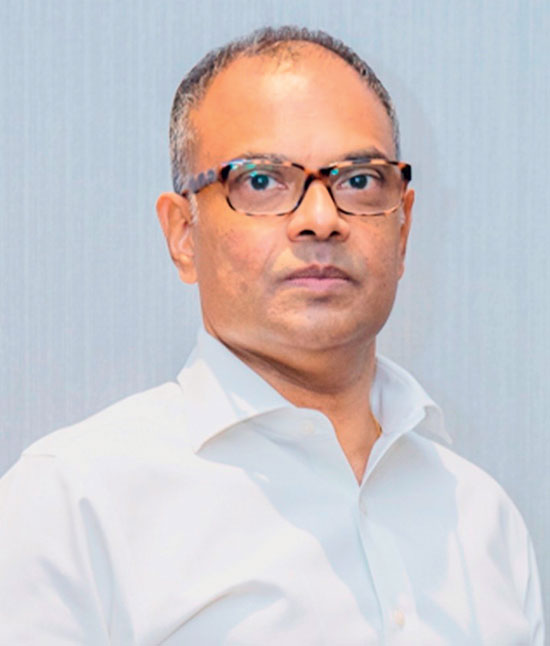
“While achieving sound growth in all key financial indicators by effectively navigating the significant challenges posed by the pandemic, we have also laid the foundation for the Group’s next phase of expansion,” BPPL Holdings PLC Managing Director and Chief Executive Officer, Dr. Anush Amarasinghe said. “With these developments complementing the existing investments in cutting-edge technology and a promising pipeline of orders, BPPL is well-placed for long-term growth.”
BPPL and its subsidiaries also recorded several achievements during the financial year, which boosted the group’s profile, while also further amplifying its sustainability agenda.
BPPL’s subsidiary, Eco Spindles, was awarded the ‘Waste Management – Industry Leader Award’ at the World Conference on Waste Management (WCWM) 2021. Eco Spindles also became South Asia’s only company and one of the 10 organizations in the world to be awarded at the International Recycling Heroes 2021 Awards, organized by the Global Recycling Foundation for Global Recycling Day 2021. Eco Spindles houses Sri Lanka’s largest, state-of-the-art, recycling facility which produces synthetic monofilaments and polyester yarn out of waste PET bottles, which are sourced from its network of collectors and collection bins.
In April 2021, Eco Spindles also launched the ‘Waste 2 Value’ Android and iOS mobile app, which allows Sri Lankans to conveniently locate plastic waste bins around the country, at which the plastic disposed will be collected for recycling. The company intends to have 1,000 locations on the app by the end of the 2021-22 Financial Year. (BPPL)

Business
Business, healthcare and civic leadership unite to drive Sri Lanka’s fight against cervical cancer

In a powerful demonstration of how responsible business, public healthcare and civic leadership can work together for national good, Sri Lanka this week renewed its commitment to eliminating cervical cancer through an expanded screening programme backed by corporate funding, Rotary leadership and the Ministry of Health.
The initiative, supported by Dilmah, the Rotary Club of Colombo, the Family Health Bureau and the Sri Lanka Cancer Society, aims to strengthen nationwide HPV DNA screening, public awareness and prevention efforts at a time when cervical cancer continues to claim hundreds of lives annually despite being one of the most preventable forms of cancer.
Dilmah Chairman/CEO Dilhan C. Fernando said the programme reflects the values of his late father, Merrill J. Fernando, who believed companies exist not merely to generate profit, but to create lasting value for society.
He added:”Businesses do not exist to make profit. Businesses exist to create value. Value begins with people and livelihoods, continues through nature, and only then earns the right to secure economic value.”
Fernando announced a fresh commitment of Rs. 50 million this year, which will fund 20,160 screenings, following an earlier Rs. 75 million pledge made in January 2024 under a Memorandum of Understanding signed with the Ministry of Health and Rotary.
“That value may seem like a big number, but it is insignificant when you consider that it has saved thousands of women from the scourge of cancer,” he said.
He described the continued deaths from a preventable disease as deeply troubling.
“Learning that so many women were losing their lives annually to cervical cancer was something really quite abhorrent to us,” Fernando said.
Representing the Rotary Club of Colombo, K.R. Ravindran said the campaign is proof that strategic partnerships can change national health outcomes.
“This is not a discussion. This is a promise of early detection,” Ravindran said. “Cancer, especially cervical cancer, does not arrive with a bell ringing or a warning. It whispers, and so often by the time it is heard, it is too late.”
He said Rotary’s own experience operating early detection centres for breast, cervical and oral cancer had shown the life-saving value of screening.
“Early detection is not just saving lives. It transforms fear into hope, into possibility,” he said.
Ravindran noted that Sri Lanka’s economic crisis had once threatened to halt testing services because of shortages in funding for diagnostic kits, but private sector intervention prevented disruption.
“Without the money, the whole thing would have gone awry. That is when Dilmah stepped in,” he said.
“They did something far greater than simply giving money. They made scale possible. They made continuation possible. They made impact possible.”
Ravindran expressed confidence that Sri Lanka can become one of the first countries in the world to eliminate cervical cancer as a public health threat by 2030, citing the nation’s literacy, public health network, school vaccination system and midwife service.
“I think this country can become one of the first countries to be rid of this disease,” he said.
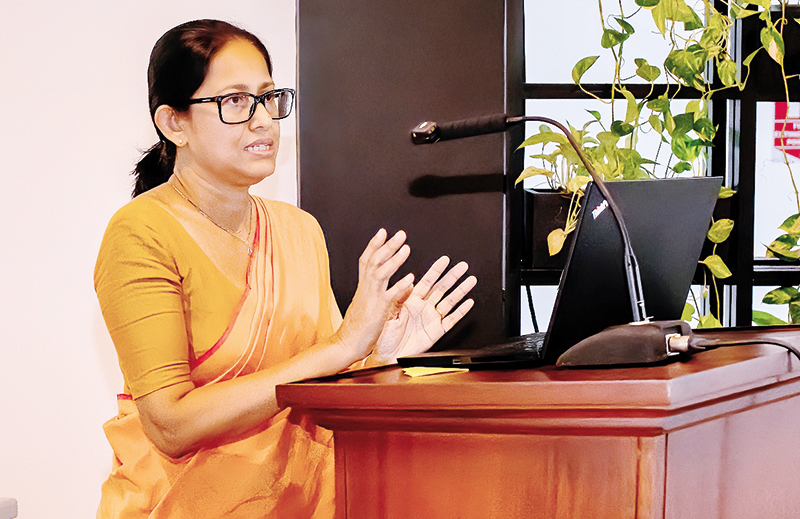
Consultant Community Physician Dr. Nadija Herath of the Family Health Bureau said cervical cancer is caused mainly by persistent infection with the Human Papillomavirus (HPV), but can be prevented through vaccination and early detection.
She said Sri Lanka’s Well Woman Clinic programme, launched in 1996, screens women primarily in the 35 and 45 age groups, and is now expanding the use of HPV DNA testing, which is more accurate than conventional cytology methods.
“The most important thing about this cancer is that it is preventable,” Dr. Herath said. “If pre-cancerous changes are identified early, they can be fully treated and women can live normal lives.”
She said new funding would also support outreach clinics, especially in workplaces and underserved areas.
President of the Sri Lanka Cancer Society Anoja Karunaratne said awareness remains a major challenge, with stigma and fear discouraging many women from seeking screening.
“We need to take this message beyond hospitals and clinics—into schools, workplaces, religious institutions and community groups,” she said.
She stressed that women should view screening as a routine part of healthcare rather than something to fear.
Speakers at the event said the collaboration stands as a model for corporate Sri Lanka, showing how businesses can contribute meaningfully to national wellbeing.
Fernando praised Sri Lanka’s healthcare system for continuing to innovate despite adversity.
“Whatever anyone may say about systems or governance, the fact is Sri Lanka’s healthcare system has an enviable track record,” he said.
By Ifham Nizam

The Bank recorded a Profit Before Income Tax (PBT) of LKR 4,548 Mn in Q1 2026, against LKR 4,199 Mn reflecting a growth of 8.31%.
For the three months ended 31st March 2026, Profit after Tax recorded by Seylan Bank was LKR 2,906 Mn with a growth of 5.25% against LKR 2,761 Mn recorded in the corresponding period of 2025.
Statement of Financial Performance
Net interest income increased from LKR 8,587 Mn to LKR 9,734 Mn, an increase of 13.37% over the previous year for the 3 months ended 31st March 2026 mainly due to the significant growth in bank’s assets base over the last 12 months from LKR 785 Bn as end of Q1 2025 to LKR 943 Bn as at 31st March 2026. The Bank’s Net Interest Margin (NIM) also moderated from 4.50% in 2025 to 4.23% during Q1 2026.
Meanwhile, the Bank’s net fee-based income recorded a growth of 24.04%, increasing from LKR 1,863 Mn to LKR 2,311 Mn, primarily driven by fee income from Cards, Remittances, Trade, and other financial services.
Other income captions comprising of net gains / losses from trading, net gains from derecognition of financial assets and net other operating income, reflected a reduction mainly due to decline in mark to market gains from government securities and equity investments with the prevailing market interest rates and price movements, however exchange income showed an increase, due to higher forex trade volumes.
Business
The power of soft skills: Transforming students into future leaders with SLIIT Soft Skills+ 2026
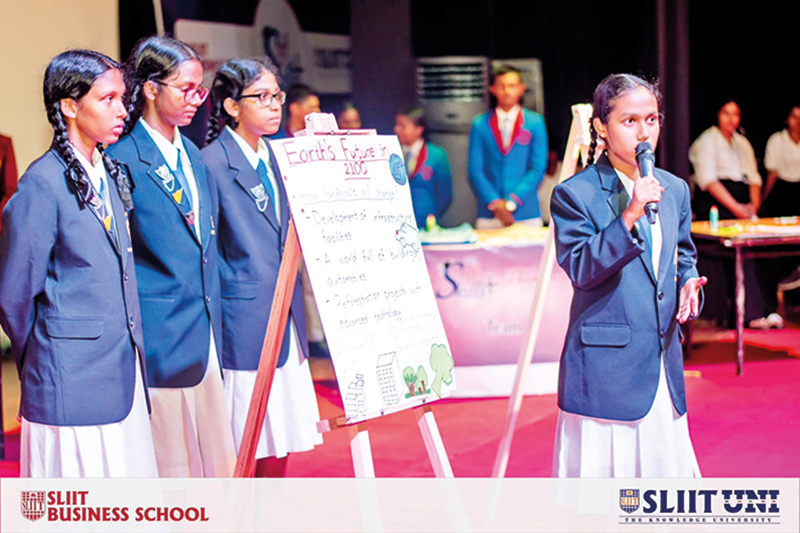
The soft skills development program is a major project carried out under its Corporate Social Responsibility (CSR) agenda, by the SLIIT Business School. This program, intended to go beyond typical classroom instruction, focuses on giving school going students the fundamental life skills they need to thrive in a world that is becoming more competitive and dynamic.
The program, which is intended for students in Grades 11 through 13, is open to participation from schools under the Sri Lankan government, private, and foreign institutions. The inclusive process ensures that students from different educational backgrounds have equal opportunities to improve their personal and professional competencies by enrolling for the program.
The initiative’s main goal is to close the knowledge gap between academia and real-world application. In addition to encouraging creativity, innovation, and an optimistic outlook, it places a strong emphasis on the development of vital soft skills like problem-solving, collaboration, and communication. By using this strategy, the program hopes to develop well-rounded, future-ready people who can overcome obstacles in the real world.
The preliminary stage and the Grand Finale are the two primary phases of the Soft Skills+ 2026 program. The program starts with an online teacher training workshop on April 28, 2026. In order to ensure long-term impact and sustainability, this recently added component focuses on improving instructors’ capacity to mentor and support students in the development of soft skills.
The preliminary rounds will be held virtually on May 9, 2026, across three regions: Malabe, Kandy, and Matara. These sessions include competitions focused on activities, quiz-based evaluations, and interactive workshops on soft skills. All exercises and questions are presented in Sinhala, Tamil, and English to encourage inclusivity, enabling students to participate in their favorite language with ease.
The top 50 teams from the preliminary stages will move on to the Grand Finale, which will take place at the SLIIT Malabe Campus on May 16, 2026. In order to ensure fairness and transparency, this final round will include advanced competition rounds and through evaluations carried out by a team of experienced and knowledgeable jury panel.
Certificates will be given to all participants, including instructors and children, and special gifts will be given to the finalists. In recognition of their exceptional performance and commitment, winning teams will also receive monetary awards.
With 50 teams participating in the grand finale and strong representation from across the island, the 2025 program demonstrated its growing impact. Last year’s winner was from St. Servatius College, Matara while Sivali Central College in Rathnapura was the runner-up.
This program, which has received official Ministry of Education clearance, is a nationally recognized platform that supports educational goals and continues to mold future leaders. For more details contact Mr. Ranitha Weerarathna, Senior Lecturer – SLIIT Business School via Tel – (+ 94) 0776503079 / 0764403664 or Email – ranitha.w@sliit.lk

The cost of 76 years of US wars, from Korea to Iran

Myanmar ex-leader Aung San Suu Kyi moved to house arrest, military says

“Let’s move forward together in unity to build a country where all labour is valued, rights are protected, and equality prevails” -PM

Violence in Australian town after arrest of man over girl’s murder

Holder, Rashid and Arshad give Gujarat Titans NRR-boosting win

Showers or thundershowers will occur in most parts of the island after 1.00 pm.

‘Dates have the highest sugar content to fight Coronavirus’

Sunday Island 27 December – Headlines

#SundayIsland 17th December – Headlines

Sunday Island – 28th March

Sunday Island Headlines – 21 March

Sunday Island – 21st February – Headlines
-

 News3 days ago
Treasury chief’s citizenship details sought from Australia
-

 News5 days ago
BIA drug bust: 25 monks including three masterminds arrested
-

 Business6 days ago
Nestlé Lanka Announces Change in Leadership
-
 News6 days ago
Hackers steal $3.2 Mn from Finance Ministry
-

 News5 days ago
Banks alert customers to phishing attacks
-

 News2 days ago
Rooftop Solar at Crossroads as Sri Lanka Shifts to Distributed Energy Future
-
 News4 days ago
Govt. assures UN of readiness to introduce ‘vetting process’ for troops on overseas missions
-

 Business4 days ago
ADB-backed grid upgrade tender signals next phase of Sri Lanka’s energy transition