
News
Loss suffered by country due to pandemic Rs.1,600 billion so far this year

By Saman Indrajith
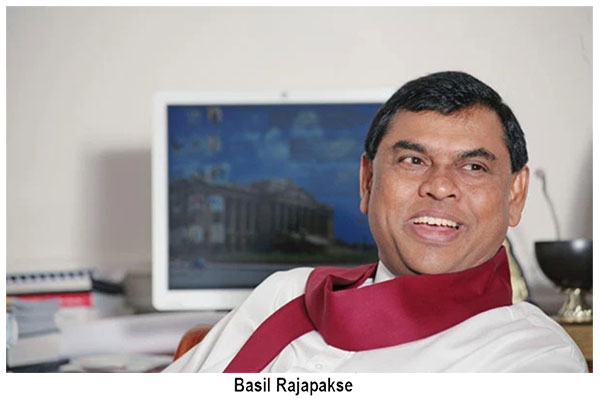
Finance Minister Basil Rajapaksa told Parliament yesterday that the country had suffered a revenue loss of Rs 1,600 billion due to the COVID-19 pandemic so far in the year.
Participating in the debate on regulations imposed under the Financial Bill and Export Import Control Bill, the Minister said that revenue from the Inland Revenue Department, Customs and Excise Department had gone down drastically owing to the lockdown.
He said the government had also lost revenue from the Customs Department due to the suspension of vehicle imports for more than one and half years. The decision to suspend vehicle importation had been made to save foreign exchange.
Minister Rajapaksa said that the VAT revenue that should have been added by the Inland Revenue Department had decreased by around 75 per cent.
The Minister said that there had been a decrease in foreign loans too and added that Sri Lanka had to purchase around 80 percent of COVID-19 vaccines on ready cash.
“Total revenue has dropped drastically compared to expenditure.
This is not totally due to the pandemic as Sri Lanka’s state expenditure has exceeded the revenue for centuries,” he said.
“We have decided to use foreign assistance with utmost diligence and will only work with institutions such as the World Bank and Asian Development Bank and will only go for concessionary loan schemes. Sri Lanka will not agree to political conditions any donor would impose when it comes to external borrowings,” the Minister said.
He said that the amount of foreign reserves too had decreased, and the government had commenced producing some medicine in the country to prevent the drain of foreign reserves and started producing the country’s saline requirement on Sept 1.

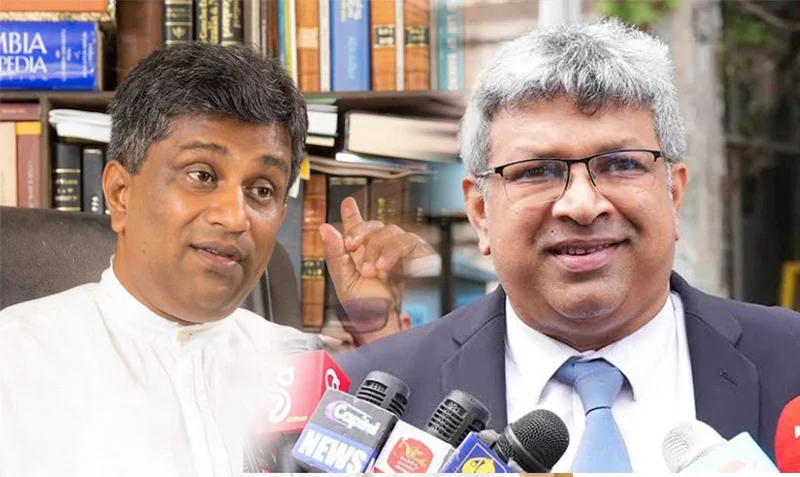
The appointment of a Special Parliamentary Ombudsman (SPO) to inquire into the complaints against the Attorney General, as promised in the NPP manifesto, is on hold, pending the establishment of an Independent Office of the Public Prosecutor and provincial Sub Officers.
Authoritative sources told The Island that the Justice and National Integration Ministry was awaiting the recommendations, regarding the new legislation for the establishment of such an Office, from a Committee of Technical Experts, chaired by Justice Yasantha Kodagoda, PC.
Responding to a query raised in Parliament by SJB lawmaker Ajith P. Perera about the delay in appointment of SPO, Justice and National Integration Minister Harshana Nanayakkara said the government couldn’t take a decision until the Kodagoda Committee made recommendations.
Nanayakkara said that the positioning of the SPO couldn’t be decided before they differentiate the powers of the Attorney General and the an Independent Office of the Public Prosecutor and provincial Sub Officers.
According to the NPP manifesto, provincial Sub Officers were to be established under a senior Additional Solicitor General.
Opposition sources pointed out that the relevant Cabinet decision was taken on 7 May 2025. According to the Cabinet Office, the government decided to establish an Independent Office of the Public Prosecutor and provincial Sub Officers in line with a proposal made by the United Nations High Commissioner for Human Rights, in her final report on Sri Lanka, submitted in September, 2024.
By Shamindra Ferdinando
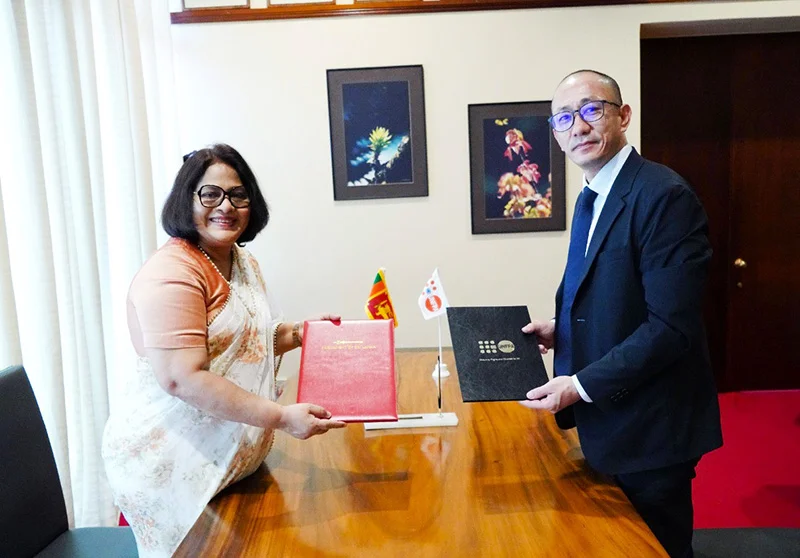
The United Nations Population Fund (UNFPA) will provide technical assistance for evidence-based legislative decision-making on demographic resilience, sexual and reproductive health and rights, gender equality, gender-based violence, and harmful social practices, to Sri Lanka Parliament. UNFPA will also provide analytical information to Parliament based on the latest census data and population research.
Parliament and UNFPA recently entered into a Memorandum of Understanding (MoU) in this regard. The MoU was signed by Ms. Kushani Rohanadeera, the Secretary General of Parliament, on behalf of the Parliament of Sri Lanka, and Phuntsho Wangyel, Acting Representative of UNFPA Sri Lanka, on behalf of the United Nations Population Fund. The event was attended by a delegation, including Dr. Aleksandar Sasha Bodiroza, Director for the Asia and Pacific Region of UNFPA.
Parliament said in a statement that the MoU would strengthen the legislative process, enhance the institutional capacity of Parliament, and elevate cooperation between the two parties in policymaking related to population and social development.
UNFPA has agreed to brief Members of Parliament on international policy frameworks, intergovernmental processes, and Sri Lanka’s international commitments related to population dynamics, sexual and reproductive health and rights, and gender equality.
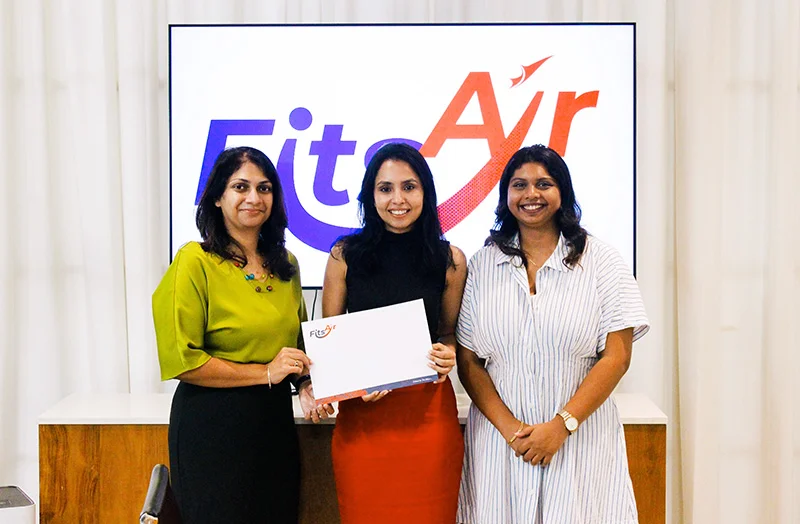
The Sri Lanka Institute of Directors (SLID) has officially entered into a strategic partnership with FitsAir, Sri Lanka’s first privately owned international airline and a leading low-cost carrier, committed to providing affordable, reliable, and hassle-free air travel formalized through the signing of a Memorandum of Understanding (MoU), marking the onboarding as a Gold Partner of SLID.
This collaboration demonstrates SLID’s ongoing commitment to forming high-impact partnerships with leading corporations, increasing its engagement with the business community, and enhancing value delivery to its members by gaining access to larger industry networks and knowledge ecosystems.
The partnership combines FitsAir’s position as a dynamic and fast evolving player in Sri Lanka’s aviation industry with SLID’s mission to advance corporate governance and Director development. Together, the two institutions hope to provide significant platforms for professional development, cross-industry communication, and leadership engagement.
Commenting on the partnership, Anitra Perera, CEO of the Sri Lanka Institute of Directors (SLID) stated: “SLID’s role as a national platform for corporate leadership and governance excellence is strengthened by our partnership with FitsAir. We are expanding our members’ opportunities to engage with industry innovation, broaden their strategic vision, and benefit from more varied corporate perspectives by integrating a forward-thinking aviation brand into our ecosystem. This collaboration is a practical step toward strengthening leadership development and increasing the value we provide to the business community, in addition to being a symbol of cross-sector alignment.”
Ammar Kassim, Executive Director of FitsAir added: “Our partnership with SLID demonstrates a strategic alignment with an institution that is essential to establishing board-level excellence and corporate governance in Sri Lanka. Through this collaboration, FitsAir is able to improve our leadership presence in the business community, engage more deeply with the corporate sector, and contribute to a larger conversation about sustainable growth and organisational development. We view this as an important platform for the sharing of knowledge and the development of long-term relationships between various industries.”
This partnership’s formalization through a structured MoU demonstrates a shared dedication to long-term collaboration, knowledge exchange, and value generation. Additionally, it represents a growing trend of cross-industry partnerships that strengthen Sri Lanka’s corporate ecosystem’s potential for innovation, resilience, and leadership.
A few showers will occur in the Western and Sabaragamuwa provinces and in Galle, Matara, Kandy and Nuwara-Eliya districts

Appointment of SPO to probe AG on hold until establishment of Ind. Public Prosecutor’s Office

UN Population Fund to advise Parliament

SLID welcomes FitsAir as a gold partner to advance strategic corporate collaboration

AI concerned over proposed SL military deployment in Haiti

The CPC’s decisive role in China’s rise to economic superpower

‘Dates have the highest sugar content to fight Coronavirus’

Sunday Island 27 December – Headlines

#SundayIsland 17th December – Headlines

Sunday Island – 28th March

Sunday Island Headlines – 21 March

Sunday Island – 21st February – Headlines
-

 Features6 days ago
Climate action to bring South Asia together
-
 News6 days ago
Chamuditha to seek removal of injunction on Youtube programme
-
 News1 day ago
Singapore-based Buddhist monk marks nearly four decades of humanitarian service
-

 News2 days ago
Freedom 250: US Embassy celebrates America’s 250th Independence Day through magic of American cinema
-

 News3 days ago
CIABOC to question Harak Kata on Rs. 200 mn bribery allegation
-
 News3 days ago
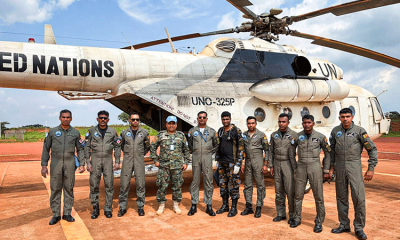
SLAF conducts successful rescue mission under UN command in Central African Republic
-
 Opinion6 days ago
Matara Maha Keralla– Uprising against the Dutch
-
 Midweek Review5 days ago
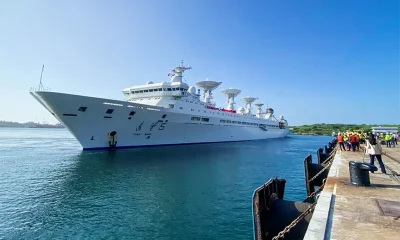
H’tota port’s strategic status remains focal point of geopolitical scrutiny