
Business
Bridging the Gaps: The COVID-19 crisis and Sri Lanka’s healthcare response

By Priyanka Jayawardena
Like many other countries, Sri Lanka faces numerous challenges in the battle against COVID-19. The pandemic has caused deep uncertainty and presented a colossal challenge for the country’s healthcare system. With the rapid increase in cases and the emergence of new variants, Sri Lanka began to face shortages of medical resources, including hospital beds and medical equipment.
 The vaccination programme was beset with a host of problems early on due to the irregular and inconsistent supply of vaccines, disorganised deployment and deviation from the scientifically agreed prioritisation. There was also alleged misreporting of COVID-19 daily statistics in the Gampaha district and Eastern Province. The absence of real-time data acted as a hindrance to obtain a reliable risk assessment in the country. Against this backdrop, this blog examines the gaps in the ongoing pandemic control programme and outlines ways to bridge these gaps so that more lives could be saved from COVID-19.
COVID-19 Vaccination Programme
By mid-August 2021, more than 12 million Sri Lankans (55% of the population) had been vaccinated with at least the first dose. Other than the delayed supply of vaccines, there were issues related to getting approval for vaccine use and the vaccination prioritisation process. Moreover, many people were seen queuing up at vaccination centres aggravating health risks due to the lack of a properly planned system for vaccine deployment and the lack of an online appointment system. More recently, the government has taken several measures to improve the rollout, including expediting the procurement process and improving administration with the support of the defence services.
Gaps in Pandemic Control
Sri Lanka’s rate of COVID-19 screening has remained inadequate to prevent the spread of the virus. Systematic surveillance is crucial for the rapid identification and detection of suspected COVID-19 cases. With newer variants found to be more transmissible and deadlier, there is a need to identify mutants and track the nature of transmission. Currently, the University of Sri Jayewardenepura is the only institution equipped with laboratory facilities to conduct genomic sequencing to identify new variants.
Countries like Singapore, New Zealand and Australia systematically monitor the pandemic through extensive testing and contact tracing. These countries are conducting 10-100 times more tests than other countries with a similar number of new confirmed cases. Sri Lanka’s extent of testing relative to the scale of the outbreak (positive rate was around 10%), is on par with Thailand and Malaysia but lower than India, Vietnam and Cambodia where the positive rate is below 5%.
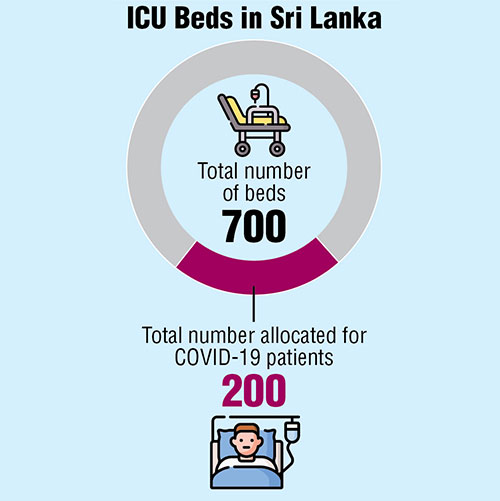
Further, a major challenge to the existing healthcare system is inadequate ICU beds, ventilators, oxygen supplies and other necessities required to care for patients with severe respiratory failure. The availability of ICU capacity plays a crucial role in critical cases, and constant and uninterrupted availability of oxygen supplied beds is needed to avert a disaster. Currently, less than 200 ICU beds are in isolation units for patients with severe COVID-19 symptoms, whereas just around 700 ICU beds are available in the hospital system of the entire country.
Equally, it is vital to have timely access to real-time data so that meaningful insights can be drawn but due to capacity constraints and administrative issues, PCR test results are reported to be delayed. In some districts, the delays are said to be longer than one week. Thus, delays in generating test results are a grave concern and represent a major obstacle in the COVID-19 control process. There is a growing need for immediate and accessible healthcare and digital healthcare resources to effectively respond to the challenges posed by COVID-19. However, Sri Lanka’s health information systems are weak and under-funded and the lack of an adequate central health database and IT infrastructure has hampered digital health services.
Towards a Stronger Healthcare Response
The healthcare system has to be streamlined to ensure a successful vaccination deployment and a smooth inoculation programme with online appointments including over the phone appointment facilities. Parallel to an efficient vaccination programme, an enhanced screening capacity is needed for the rapid identification of COVID-19 cases. Sri Lanka’s overall COVID-19 screening capacity remains low; therefore, expanding testing and increasing the health sector’s capacity to identify new mutants is vital to curb the pandemic. Random PCR testing too must be carried out in densely populated areas which are prone to be contagious, thereby taking additional precautionary measures.
There is a growing concern about the availability of medical supplies in emergency contexts. Sri Lanka has to effectively leverage its limited resources in response to the pandemic. The crisis response has seen local innovation in the manufacturing of ICU beds and lab consumables and there is further scope to encourage local enterprise and innovation for this purpose. For instance, a team of Sri Lankan scientists recently invented a new PCR test kit using NANO technology, which is said to drastically reduce the testing time from two hours to half an hour. There is now an opportunity to encourage local innovation and local production through such efforts, where they contribute to efficiency gains.
Furthermore, a robust laboratory strategy, which includes laboratory networking, communicating real-time information on COVID-19, quality assurance and adequate workforce capacity is important for rapid detection and case management. South Korea, for example, practised the disclosure of real-time information on COVID-19 by the government via dedicated websites, mass media, phone messages and mobile apps. Digitalisation of healthcare and effective use of technology for sharing real-time data, contact tracing and surveillance and coordinating the efficient use of clinical resources are vital for successful pandemic control. It is also necessary to improve systems to manage real-time data and decision-support systems. Improved functional integration and coordination in treatment centres and laboratory services bring in many benefits.
*This blog is based on the comprehensive chapter on “Coping with Pandemics: Sri Lanka’s Healthcare System” in IPS’ forthcoming ‘Sri Lanka: State of the Economy 2021’ report.
Link to original blog: https://www.ips.lk/talkingeconomics/2021/09/02/bridging-the-gaps-the-covid-19-crisis-and-sri-lankas-healthcare-response/
Priyanka Jayawardena is a Research Economist at the Institute of Policy Studies. Her research interests include education and skills development, labour economics, inequality analysis, health economics and child nutrition. She holds a BSc (Hon) in Statistics and an MA in Economics from the University of Colombo, Sri Lanka. (Talk to Priyanka – priyanka@ips.lk)

As businesses navigate an increasingly complex operating environment shaped by workforce transformation, evolving stakeholder expectations, technological disruption and shifting market demands, strengthening performance requires more than new strategies. It requires new ways of thinking, leading, and collaborating.
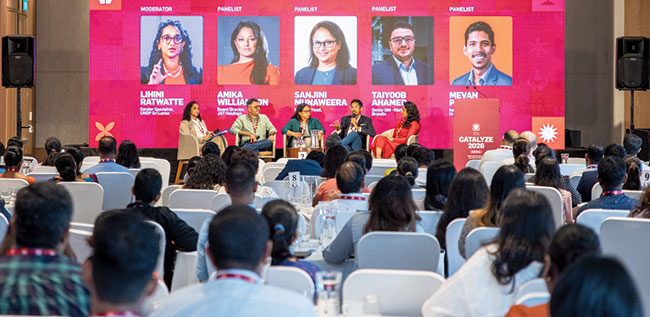
It was against this backdrop that UN Global Compact Network Sri Lanka convened CATALYZE 2026: Social, bringing together business leaders, sustainability practitioners, policymakers, development partners and industry experts to mobilize collective action and equip businesses with the knowledge, partnerships and practical approaches needed to strengthen performance through responsible business.
More than a forum for dialogue, CATALYZE 2026 was designed to help businesses think differently about performance. It reinforced that long-term success is increasingly shaped by how organizations lead, uphold human rights, foster inclusive workplaces, strengthen ethical governance, and build cultures that enable innovation, resilience and trust. Responsible business is no longer separate from business performance — it is fundamental to it.
Aligned with the UN Global Compact’s 2026–2030 Global Strategy, the Forum reflected its three strategic pillars — Equip, Catalyze and Advance — by strengthening business capability, fostering collaboration and mobilizing leadership to accelerate progress on social sustainability.
UN Global Compact Network Sri Lanka’s approach to social sustainability centres on driving this change — recognizing that meaningful progress comes not only through policies and commitments, but through the everyday decisions, leadership behaviours and organizational cultures that shape how businesses operate. CATALYZE 2026: Social encouraged participants to move beyond intention towards implementation, embedding responsible business practices into strategy, governance and organizational culture.
Opening the CATALYZE 2026: Social, Rathika de Silva, Executive Director of UN Global Compact Network Sri Lanka, spoke to the role of responsible business leadership in strengthening Sri Lanka’s global competitiveness:
“Sri Lanka has the workforce, resilience, and opportunity to compete not by being the cheapest producer, but by becoming the most trusted. As global expectations evolve, compliance is no longer simply a cost of doing business — it is the foundation of market access, and the decisions we make today will determine how strongly we compete in the markets of the future.”
The Forum featured keynote addresses, leadership dialogues and technical sessions on the issues shaping the future of business, including business integrity and anti-corruption, human rights, neurodiversity and inclusive workplaces, artificial intelligence and the future of jobs, the Women’s Empowerment Principles (WEPs), responsible sustainability communications, and workforce resilience. Together, these discussions highlighted how responsible leadership, inclusive practices, and strong governance contribute to organizational resilience, innovation, and long-term performance.
Free British Council online conference brings together leading educators from across South Asia to explore how creativity, inclusion and technology can help prepare learners for a rapidly changing world
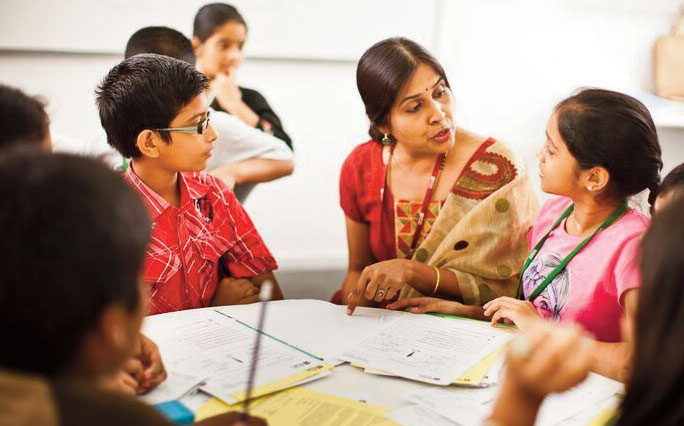
The British Council has announced the South Asia TeachingEnglish Online Conference 2026, a free three-day event that will convene educators, researchers and teacher educators from across the region to examine one of the most pressing questions facing education today: how can schools equip learners with the creativity, adaptability and communication skills needed to thrive in an increasingly complex world?
Taking place from 23–25 July 2026, the online conference comes at a time when education systems across South Asia are grappling with the challenge of balancing curriculum demands, assessment pressures and evolving learner needs. While English remains a critical gateway to academic and professional opportunities, educators are increasingly seeking approaches that move beyond language acquisition alone to foster critical thinking, collaboration, learner agency and participation.
Business
The Ceylon Chamber convenes dialogue on energy security and standards for Sri Lanka’s energy transition


The Ceylon Chamber of Commerce recently hosted a discussion titled “Energy Transition in Sri Lanka: Strategic Insights from Global Markets”, bringing together representatives from the public and private sectors, industry experts, academics, and other stakeholders to examine the opportunities and challenges associated with Sri Lanka’s evolving energy landscape.
Held at a time when countries around the world are accelerating their transition towards cleaner, more resilient, and technology-driven energy systems, the event provided a timely platform to examine renewable energy not only as an environmental priority but as a strategic pillar of national energy security, with implications for economic growth and long-term competitiveness. The discussion also considered the increasing importance of reliable energy infrastructure in meeting the growing demands of digital transformation, including emerging technologies such as artificial intelligence, electric mobility, and data centres.
The programme covered a wide range of topics relevant to Sri Lanka’s energy future, including renewable energy development, energy security, regulatory and policy frameworks, electricity sector reforms, energy storage systems, grid modernization, investment and financing considerations, and international experiences in energy transition. Particular attention was given to the need for creating an enabling environment that supports innovation, attracts investment, including the technical and safety standards required to protect consumers and businesses as storage and solar adoption scales nationally.

India A grow lead after Sai Sudharsan hits 168

Boys among men – Sooryavanshi joins Tendulkar, Aaqib and Hasan Raza

Brutal heat cancels Fourth of July events, from DC to Philadelphia

Arias sends Colombia into World Cup last-16 with 1-0 win over Ghana

Messi scores again but Argentina given World Cup upset fright by Cape Verde

Anguished families left to identify Venezuela quake victims at makeshift morgue

‘Dates have the highest sugar content to fight Coronavirus’

Sunday Island 27 December – Headlines

#SundayIsland 17th December – Headlines

Sunday Island – 28th March

Sunday Island Headlines – 21 March

Sunday Island – 21st February – Headlines
-

 News6 days ago
LAWASIA warns against ad hoc initiative to increase judges’ retirement ages
-
 Features5 days ago
Climate action to bring South Asia together
-
 News5 days ago
Chamuditha to seek removal of injunction on Youtube programme
-

 News21 hours ago
Freedom 250: US Embassy celebrates America’s 250th Independence Day through magic of American cinema
-
 Features7 days ago
People’s Bank expands digital banking network with 125th cheque deposit kiosk
-

 News2 days ago
CIABOC to question Harak Kata on Rs. 200 mn bribery allegation
-
 News2 days ago
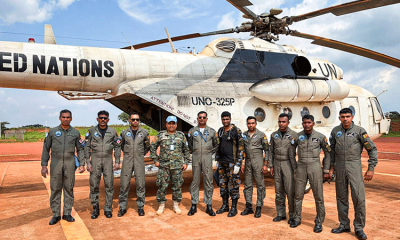
SLAF conducts successful rescue mission under UN command in Central African Republic
-
 News5 days ago
CPRP alleges another death in custody, seeks protection for witness