
News
The Caste System


by Vijaya Chandrasoma
Sri Lanka has been long considered a caste-blind society on the basis that it is a predominantly Buddhist country, and the Buddha himself denounced the caste system which was the accepted social stratification system in India.
However, the Sinhalese caste system certainly prevails today, perhaps not to the same degree it existed 100 years ago.
Though the significance of castes may depend on social and educational standing, it still plays an important role in matrimony. Personals in today’s newspapers abound with matrimonial advertisements, which, rather like the dating sites of the west, remain the best way to contract a marriage in a country where open and casual dating is still, by and large, frowned upon. And, unlike the dating sites of the west, requirements of race, religion, caste and often horoscopes are almost always specified.
Whether it’s a marriage based on caste, social and financial standing, or other criteria of compatibility; or the “love marriage” preferred by the progressives, the institution remains a crapshoot. The odds of divorce in the west currently stand at even money, because divorce is both easy and subject to no stigma. Divorce in Sri Lanka is rarer, as it has a social infrastructure to hold a marriage together, but the odds of a happy marriage, without divorce entering the equation, are also about even money.
Caste has never been an issue in our family. For those of us in the lower, or horrors of horrors, mixed lower castes, we proudly say that we do not care about caste. Rather like the billionaire who says he does not care about money. Or the lady married to an Adonis who says she doesn’t care for looks.
There is an interesting story about one of my aunts, which may throw some light on the caste system prevalent in Sri Lanka (Ceylon) in the mid-20th century. The social injustice this system represents prevails, to a lesser degree, even today.
My aunt was a most attractive lady, who met a gentleman at the university. They had a romantic relationship, and were planning to get married. There was one huge problem, however. My father was from the Karawa (fisher) caste, while the prospective groom was of the ‘high’ Goyigama (farmer) caste. Or was he even from the so-called aristocratic Radala caste? I don’t know, my knowledge of the caste system is just about non-existent, constrained as it is by an explanation given by my father, which I will relate at the end of this anecdote. They were planning nuptials, without first getting the blessing of the groom’s parents.
When the father of the prospective groom heard about the impending social disaster to his family, he immediately took a train to Hikkaduwa and imperiously told a villager to summon my grandfather to meet him at the railway station. The villager came back with the response from my grandfather, that if the honorable gentleman wishes to meet him, he’s welcome to do so at his residence.
So the noble gentleman humiliated himself by proceeding to my ‘low-caste’ grandfather’s house. Shunning traditional formalities, he told the old man that his son and my aunt were planning on getting married, which was unacceptable because of the difference in caste. To which my grandfather replied, I am sorry, sir, but you must get your son to stop this marriage. I am unable to do so, as I already have agreed to the marriage of my oldest son (my father) to a lady of an even ‘lower’ caste. My mother was of the ‘low’ Durawa caste, traditionally toddy-tappers, a caste I suspect didn’t even make the top ten. So the high-caste gentleman went back to his aristocratic mountains, and prevailed on his son to desist. Which was the end of that romance.
Time went by. My aunt, obviously a glutton for punishment, fell in love with another of these ‘high-caste’ types. His father, too, objected to the marriage, and made the same trek to Hikkaduwa, meeting with the same response from my grandfather.
My grandfather used to break into English when he was excited. So when his daughter came home for her vacation from the university, he exclaimed, “Your second father-in law also came”.
That particular high-caste gentleman disregarded his parents’ objections and married my aunt. Actually, he was a nice guy, and he was trading up. They enjoyed a long and very happy marriage.
My father’s attitude to the caste system is best illustrated by his answer to a question I think my younger brother Praki asked him when he was about seven years old. He said that the kids at school were talking about their castes, and wanted to know to which caste we belonged. My father said, Well, son, your mother is Durawa, I am Karawa, so you must be Jarawa (filth or trash in Sinhala).


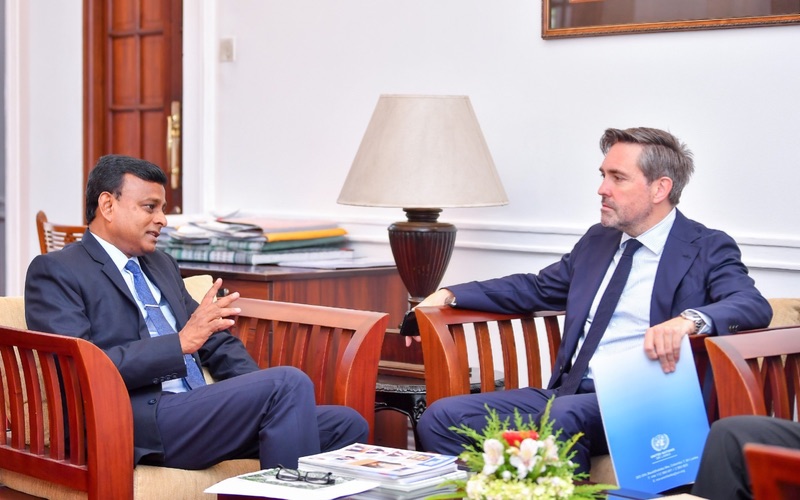
A meeting between UN Resident Coordinator Marc-André Franche and Chief of Staff to the President Prabath Chandrakeerthi was held on Monday (07) morning at the Presidential Secretariat.
Particular attention was given to the Government’s programme to resettle people who lost their homes due to Cyclone Ditwah.
The Government’s programme to address potential disasters that may arise in the future amid El Nino conditions was also discussed. The Chief of Staff to the President briefed the UN Resident Coordinator on the Government’s preparedness and plans to address such challenges.
Mr Franche stated that the United Nations was prepared to provide the necessary assistance to the Government to support the successful implementation of these programmes.
Partnerships and Development Finance Specialist at the United Nations Azam Bakeer Markar and UN Sri Lanka Humanitarian and Resilience Officer Wagisha Perera also participated in the discussion.
[President’s Media Division]
[ Cricbuzz]
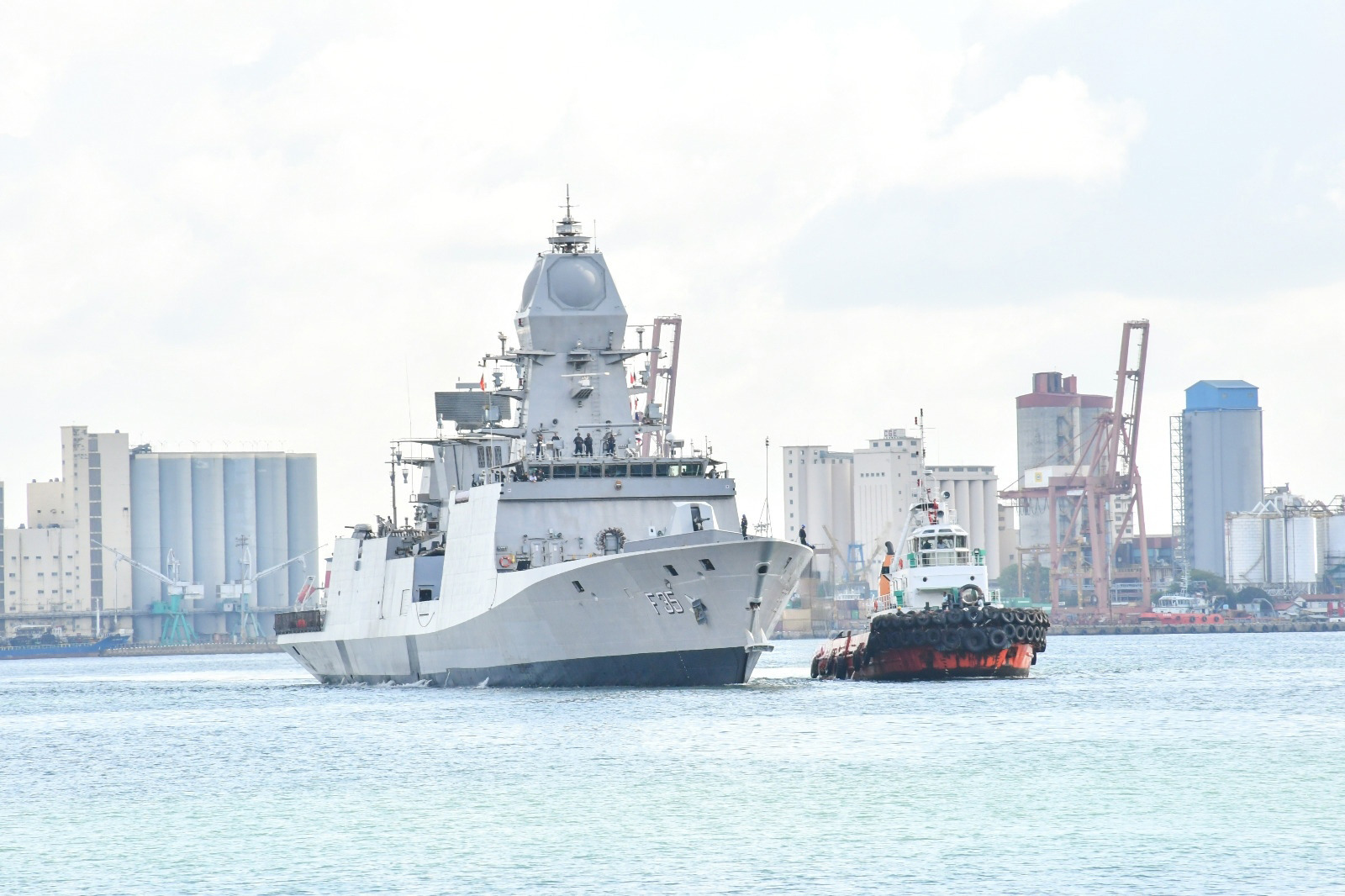
The Indian Naval Ship (INS) Udaygiri arrived at the Port of Colombo on an official visit today, 8 September 2026, where it was received by the Sri Lanka Navy in accordance with time-
honoured naval traditions.
INS Udaygiri is a 149.02m long Frigate, Commanded by Captain Vikas Sood. Meanwhile, the Commanding Officer of the visiting ship is scheduled to call on Commander Western Naval
Area, Rear Admiral Harsha De Silva at the Western Naval Command Headquarters.
Captain Sood served as the Defence Adviser at the Indian High Commission in Sri Lanka from July 2020 to October 2023.
During their stay in the island, the crew of INS Udaygiri will participate in several goodwill events organized by the Sri Lanka Navy to enhance camaraderie between the two forces.
The visiting personnel are also scheduled to visit prominent tourist and cultural locations across the island.
Additionally, Sri Lanka Navy personnel are expected to visit the ship for capability observation and knowledge sharing, and will conduct onboard training during its stay.

UN Delegation Meets Chief of Staff to the President

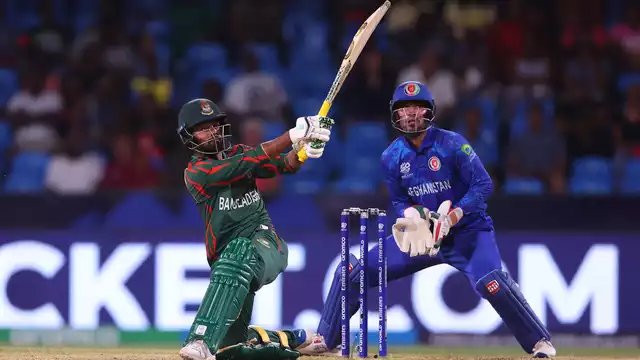
Afghanistan to host Zimbabwe, Bangladesh in ODI tri-series

Sandhu’s 6 for 7 seals Pakistan’s semi-final spot

INS Udaygiri makes port call in Colombo

Showers in the Uva, Central and Eastern provinces and in Polonnaruwa district

22A: Exclusion of 8 petitions questioned, action filed against SC Registrar, others

‘Dates have the highest sugar content to fight Coronavirus’

Sunday Island 27 December – Headlines

#SundayIsland 17th December – Headlines

Sunday Island – 28th March

Sunday Island Headlines – 21 March

Sunday Island – 21st February – Headlines
-
 News6 days ago
Denied of promotion to SC despite vacancies, justice Gurusinghe retires
-
 Latest News6 days ago
Grade 5 scholarship exam results released
-
 News6 days ago
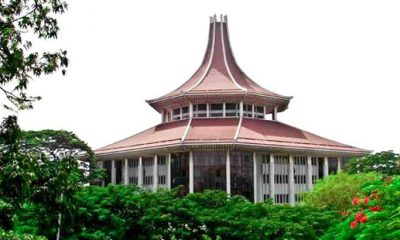
22A: SC urged to suspend hearing, appoint full bench
-

 Midweek Review7 days ago
The local and global dynamics of Sri Lanka’s 22nd Amendment
-
 News4 days ago
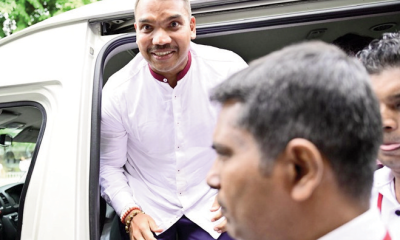
Namal remanded until Sept. 18 over Airbus deal investigation
-

 Latest News3 days ago
Tharanga creates history with Diamond League crown in Brussels
-
 News6 days ago
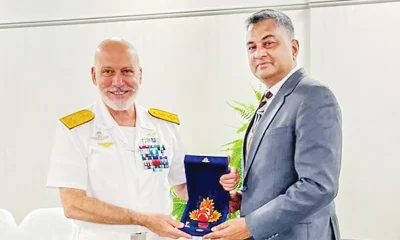
Govt. seeks NATO assistance
-

 News7 days ago
40 professional organisations and TU oppose proposed 22A