
Business
Joint Apparel Associations Forum draws 5-point plan to sustain industry’s long-term growth

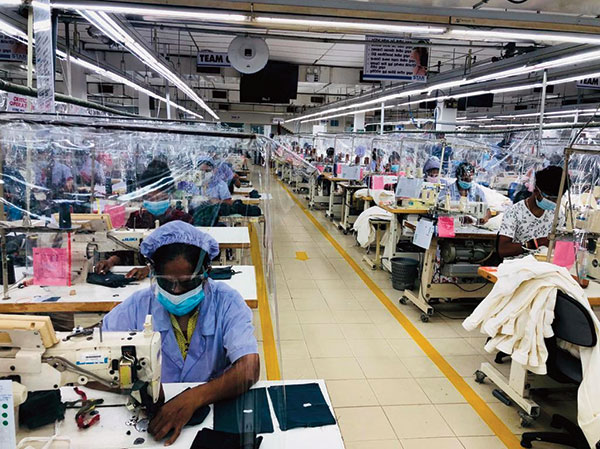
The Joint Apparel Associations Forum (JAAF) has formulated a 5-point framework to coordinate the industry’s response to challenges stemming from COVID-19 and to drive stakeholder collaboration towards ensuring sustained long-term growth of Sri Lanka’s entire apparel sector.
The five points are:
ensure a safe working environment for employees
enhance backward integration
high-level collaboration with the authorities on retaining and improving export market access
position Sri Lanka’s apparel industry globally for the future, and
develop the competitiveness of the Small and Medium Enterprise (SME) players in the sector.
“At this crucial juncture, the entire industry must collaborate if we are to effectively address challenges stemming from the pandemic and create conducive conditions for long-term growth of the sector,” JAAF Secretary General, Tuli Cooray said. “This Five-Point Plan is a framework which all industry stakeholders can use to collaborate in achieving our shared vision for Sri Lanka.”
Action on the plan’s first priority – worker safety – has already been initiated, with an accelerated vaccination programme. As of August, 90 per cent of the workforce has received first doses, and up to 50 per cent of workers have received their second doses.
Swift progress is being made to complete vaccinating the entire workforce by the end of September 2021. Further, JAAF will continue to engage with local health authorities to ensure the industry keeps its high vaccination rate up. Next, families of staff need to be vaccinated to ensure the continued safety and well-being of the communities that employees are part of. Inoculation of unvaccinated adult family members is expected to commence soon. Sri Lanka is currently projected to vaccinate everyone over 30 by the end of September as well.
As per the guidance provided by the Board of Investment (BOI) and the Ministries of Health and Labour, besides vaccination, JAAF members have put in place the required infrastructure and safety protocols to be followed strictly to restore production while minimising the risks of future outbreaks. JAAF members are also working with employee representatives to improve awareness and thereby the safety of employees and their communities.
In enhancing backward integration, the Eravur Fabric Processing Park will be a key development. It will aid in increasing the sector’s local value addition from the current 52 to 65 per cent, a significant increase. However, the success of such initiatives would depend on the country’s ability to attract investments. JAAF expects to collaborate with the authorities to develop a conducive policy framework to attract investments to Sri Lanka for fabric production.
In addition, JAAF and its members will pursue other avenues to promote such investments – for example, by attending relevant international investor forums and leveraging existing partnerships to foster investment in Sri Lanka. Effective backward integration also requires raising the standard of locally-produced fabric (particularly by smaller participants in the industry) to globally accepted levels, for such inputs to be used for exports. This will also be an area of focus for JAAF.
JAAF will partner with the government to ensure the continuation of GSP+ by the EU; this is particularly necessary when the industry faces significant challenges in the post-pandemic world. High-level collaboration by JAAF with trade authorities will focus on both retaining and enhancing export market access for apparel exporters.
JAAF will also work to ensure continued benefits for its members from the United Kingdom’s GSP scheme, for which it will engage with Sri Lanka’s Department of Commerce (DoC) and the UK Trade and Investment (UKTI) authority. JAAF will continue to seek permission for members to use fabric originating in the Association of Southeast Asian Nations (ASEAN) countries for both EU and UK GSP+, which will improve supply chain flexibility.
JAAF will also engage with the Sri Lankan government on improving market access for apparel exports through bilateral trade agreements – including with the UK and via the proposed Free Trade Agreement (FTA) with China. Similarly, the possibility of greater penetration into the Indian market will be explored.
Further, JAAF will work towards positioning Sri Lanka as the hub for global apparel manufacturing operations. JAAF will work with local authorities to create a conducive business environment where Sri Lanka can be the headquarters for global apparel manufacturing. This would facilitate the inflow of highly skilled front-end design and development job opportunities to Sri Lanka from around the world.
In positioning Sri Lanka’s apparel sector globally for the future, especially as a premium apparel exporter, the industry will look to go beyond the success of its ‘Garments without Guilt’ initiative. Emphasis will be placed on excellence in sustainable and ethical manufacturing, aspiring to become the standard by which other countries are measured. Certain industry initiatives have already been launched (circularity in fashion, sustainability, and carbon neutrality). In fact, even today, Sri Lanka plays host to the world’s first net-zero carbon apparel manufacturing facility, the world’s highest-rated LEED platinum building, South Asia’s only Passive House, and the world’s first apparel group to have all its facilities certified as a net-zero carbon emitter.
JAAF will also work towards supporting sustainable growth in Sri Lanka’s apparel sector by adopting a series of coordinated measures to strengthen the SMEs in the industry. These initiatives will include providing assistance to improve the compliance capabilities of these players, advocating for greater government support on their behalf on aspects such as financing and export market access and engaging with the Department of Labour to improve its awareness of issues faced by the SMEs.
“This framework is also designed to measure progress and report back on all these fronts,” Cooray said. “It’s about walking the talk, and seen to be doing so.”

By Ifham Nizam
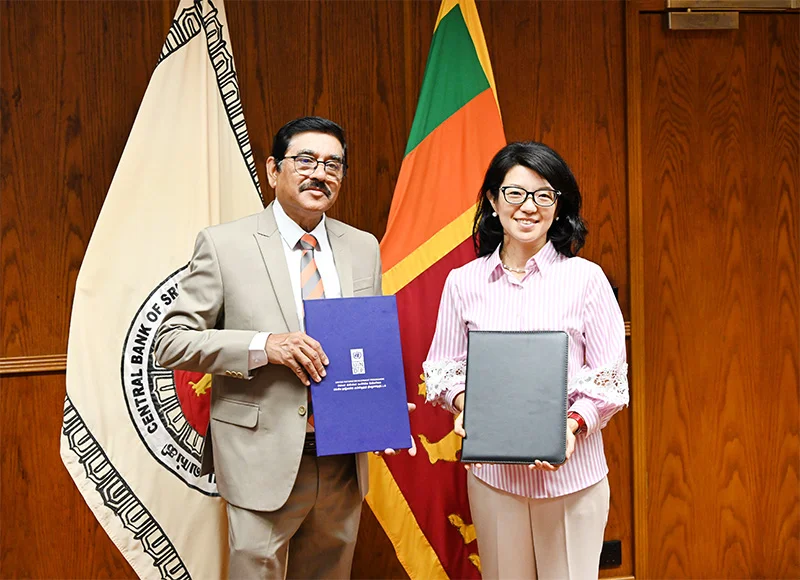
The United Nations Development Programme (UNDP) and the Central Bank of Sri Lanka (CBSL) have strengthened their partnership to advance financial literacy across the country, with a renewed focus on empowering vulnerable communities, strengthening economic resilience and promoting sustainable development.
The two institutions formally launched the second phase of their collaboration recently, reaffirming their commitment to implementing Sri Lanka’s National Financial Literacy Roadmap (2024–2028), a cornerstone of the National Financial Inclusion Strategy (NFIS).
The partnership was marked by a meeting between Central Bank Governor Dr. P. Nandalal Weerasinghe and UNDP Resident Representative in Sri Lanka Ms. Azusa Kubota, together with officials from both organisations.
Building on technical support provided by UNDP during 2024 and 2025, the latest phase seeks to equip individuals, households and businesses with the knowledge required to make sound financial decisions, improve livelihoods and enhance resilience in an increasingly uncertain economic and climatic environment.
The initiative comes at a crucial juncture as Sri Lanka continues its economic recovery while grappling with climate-related challenges that disproportionately affect rural communities and small enterprises.
A key component of the programme will be strengthening the capacity of government outreach officers across all districts to deliver financial literacy training to rural populations and micro, small and medium enterprises (MSMEs).
The training will be based on the Financial Literacy Curriculum developed by the Central Bank, with UNDP supporting the enhancement of modules through the integration of climate-resilient financial management concepts.
The programme aligns closely with Sri Lanka’s Financial Literacy Roadmap and is expected to contribute significantly to improving financial knowledge and access across the country. It is supported by several development and private-sector partners, including the government of Japan, Chrysalis, VISA and Hirdaramani-Lacoste.
Speaking on the importance of the initiative, Central Bank Governor Dr. Weerasinghe said the partnership would help broaden the reach of financial literacy efforts while addressing emerging challenges such as climate-related financial risks.
“We particularly welcome the focus on strengthening financial resilience, climate-related financial preparedness, public awareness campaigns and capacity-building through Training-of-Trainers programmes, he said.
He noted that the initiatives would ensure that different segments of society gain access to practical financial knowledge and develop the skills necessary to foster responsible financial behaviour and improve their overall financial well-being.
UNDP Resident Representative Ms. Kubota underscored the critical role financial literacy plays in creating inclusive and resilient economies.
“Financial literacy is a critical foundation for inclusive and resilient economies. Through our partnership with the Central Bank of Sri Lanka, we have been working to empower individuals, particularly those most vulnerable, with the knowledge and tools needed to make informed financial decisions and build secure livelihoods, she said.

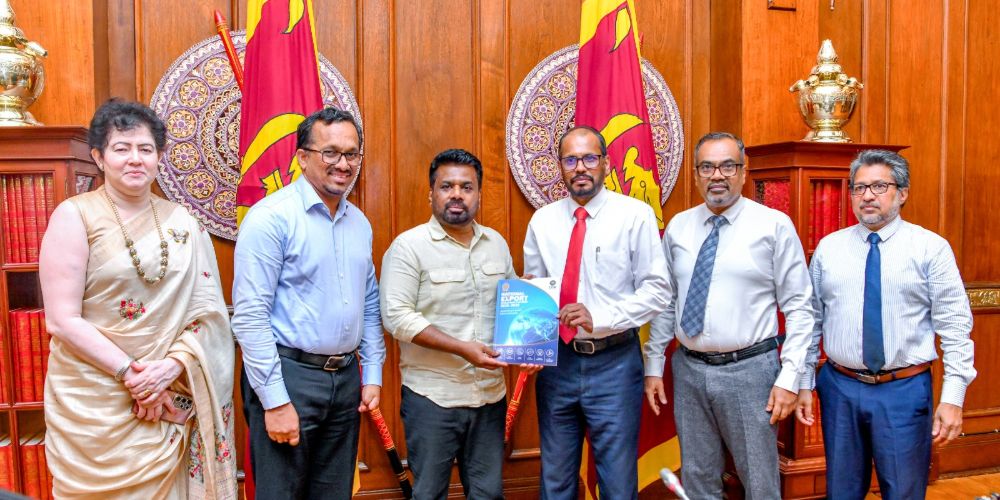
Marking an important milestone in Sri Lanka’s economic development, the National Export Development Plan (NEDP) for the period 2026–2030 was presented to President Anura Kumara Dissanayake on Tuesday morning (16) at the Presidential Secretariat.
The 2026–2030 National Export Development Plan (NEDP) is a key national programme formulated in line with the Government’s policy direction under the 2025 Budget. It aims to strengthen the country’s export sector and achieve export-led sustainable economic growth.
The strategic plan has been developed under the guidance of the Ministry of Industry and Entrepreneurship Development and the leadership of the Sri Lanka Export Development Board (EDB), with technical assistance provided through the Asian Development Bank’s (ADB) Policy-Based Lending (PBL) programme. It is the result of an extensive consultative process carried out in close collaboration with key government institutions, private sector stakeholders, and development partners.
The proposal submitted by the Minister of Industry and Entrepreneurship Development to recognise the “Sri Lanka National Export Development Plan 2026–2030” as the official strategic framework for export development and promotion in Sri Lanka was approved by the Cabinet of Ministers on 4 May 2026. The Plan reflects a broad consensus among government institutions, private sector experts, and international development partners.
In line with the national vision of “A Thriving Nation – A Beautiful Life”, the Plan has been formulated to enhance Sri Lanka’s export competitiveness and achieve an export revenue target of USD 36 billion by 2030.
The core vision of the Plan is to transform Sri Lanka into a competitive logistics and knowledge-based export hub serving regional and global markets. The strategy is based on two key interconnected pillars: “horizontals” and “verticals”, which together provide the foundation for strengthening export competitiveness, diversification, and sustainable growth.
The horizontal enablers, which support the growth and expansion of all priority sectors, include logistics and integrated hub operations, trade facilitation, trade finance and reforms in the business and investment environment, trade promotion and market linkages, quality management, standards, environmental, social and governance (ESG) capacity development, as well as entrepreneurship and innovation.
The Plan also identifies eight priority export sectors to enhance export diversification and value addition, and to position Sri Lanka more competitively in global markets. These include automotive components, mineral-based industries, rubber-based industries, maritime industries (including boat and shipbuilding), spices and concentrates, digital products and services, electrical and electronic equipment, and processed food and beverages.
The preparation of the Plan involved contributions from over 300 stakeholders, including government institutions, the private sector, civil society organisations and international development partners. Broad consensus was achieved through consultations held from October to December 2025 and workshops conducted in January 2026.
The Government expects that, with implementation supported by strong governance and monitoring framework, the Plan will elevate local products to international standards and ensure long-term economic stability and growth. It is further anticipated that the National Export Development Plan will serve as a key driver of Sri Lanka’s economic progress in the years ahead.
Minister of Labour and Deputy Minister of Finance and Planning Dr. Anil Jayantha Fernando, Minister of Industry and Entrepreneurship Development Sunil Handunnetti, Senior Additional Secretary to the President and Secretary to the Ministry of Energy Russell Aponso, Secretary to the Ministry of Industry and Entrepreneurship Development Thilaka Jayasundara, and Chairman of the Sri Lanka Export Development Board Mangala Wijesinghe were also present at the event.
[PMD]
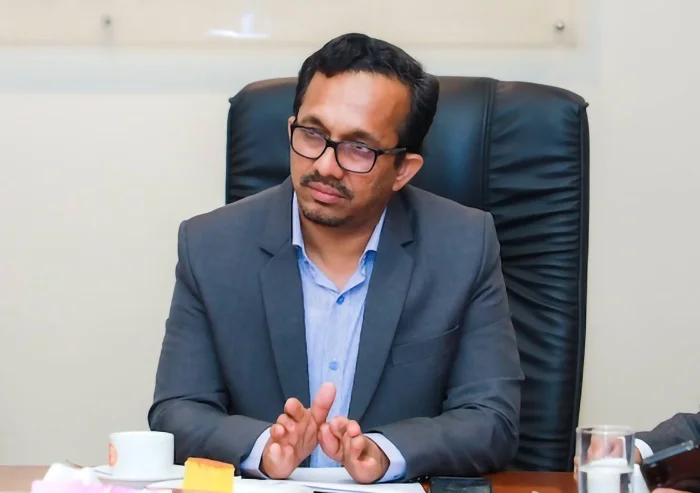
The government’s decision to ban the export of mineral resources in raw form and place all future mineral exploration under state control has triggered fresh debate over how Sri Lanka should develop its untapped mineral wealth and attract foreign investment.
Announcing the new National Mineral Policy, Industry and Entrepreneurship Development Minister Sunil Handunnetti said the country had long failed to capture the full value of its mineral resources by exporting them with minimal processing.
“We will no longer allow mineral resources to leave the country in raw form,” the minister said, arguing that Sri Lanka must move towards value-added industries that generate greater economic returns.
A key feature of the new policy is the transfer of all mineral exploration activities to the state-run Geological Survey and Mines Bureau (GSMB). Under the new system, the GSMB will carry out exploration, publish geological data and subsequently invite investors to participate in commercially viable projects.
Handunnetti defended the move by citing what he described as the failure of the previous licensing regime. According to government figures, 471 exploration licences had been issued since 1993, but only 28 advanced to mining operations, with just 12 remaining active today. The minister alleged that some companies had used exploration licences to boost corporate valuations rather than develop actual mining projects.
He also stressed that mineral deposits located beneath privately owned land belong to the state and should be developed in the national interest.
However, the reforms are likely to attract close scrutiny from foreign investors seeking opportunities in Sri Lanka’s mineral sector.
An independent industry analyst said the policy’s emphasis on value addition is consistent with global trends, as countries increasingly seek to process critical minerals domestically rather than export raw materials.
“The more difficult question is whether a state-controlled exploration model can generate the confidence required by international investors,” the analyst said. “Investors will want access to reliable geological data, transparent licensing procedures and predictable regulations before committing significant capital.”
The analyst noted that the government’s plan to publish exploration data before inviting investment proposals could help improve transparency, but its success would depend on how scientifically the process is implemented.
Sri Lanka possesses commercially valuable deposits of graphite, mineral sands, ilmenite, rutile, garnet, silica and phosphate. As global demand for industrial and strategic minerals continues to grow, the new policy represents a significant test of whether stronger state involvement can translate geological potential into investment, industrial development and export earnings.
“The success of the strategy may ultimately depend on whether the government can balance tighter control over mineral resources with the policy certainty and commercial incentives that international investors typically seek,” the analyst said.
By Sanath Nanayakkare

Hundreds of cats stolen for food in Vietnam rescued by police, welfare group says

Canada-Netherlands ODI abandoned due to dangerous pitch in Toronto

Da Silva and Jangoo earn recalls for West Indies’ Tests against Sri Lanka

Spinners make it two in two for England

Messi hat-trick fires holders Argentina to win over Algeria at World Cup

UNDP, Central Bank deepen financial literacy drive to build economic resilience

‘Dates have the highest sugar content to fight Coronavirus’

Sunday Island 27 December – Headlines

#SundayIsland 17th December – Headlines

Sunday Island – 28th March

Sunday Island Headlines – 21 March

Sunday Island – 21st February – Headlines
-

 News5 days ago
CIABOC summons Yoshitha over his participation in British Navy training programme
-

 Sports2 days ago
Tharanga set for high-profile javelin clash in Ostrava
-

 News5 days ago
Justice Minister responds to social media claims he represented Easter Sunday ringleader
-

 Features3 days ago
Politics of protected species
-

 News2 days ago
Release of 2025 O/L results likely to be delayed
-

 News4 days ago
Commonwealth lawyers urge Lanka to uphold rule of law
-

 News2 days ago
Theft of USD 2.5 mn from Treasury: CoPF accused of complicity in NPP cover-up
-

 News1 day ago
Beijing Capital Airlines to resume flights to Colombo signalling boost to tourism