
Editorial
Return the loot

Tuesday 24th August, 2021
Several Opposition MPs have let out a howl of protest against President Gotabaya Rajapaksa’s recent statement that the public should be prepared to make more sacrifices if the current lockdown gets protracted. Politicians belonging to both the government and the Opposition are responsible for having caused the public coffers run dry by milking public funds over the years. It is they who must be made to make sacrifices before others.
Some ministers have decided to forgo their salaries in response to the national health crisis, we are told; their decision is welcome, and others must emulate them; but let them be told that they are not making any sacrifices, as such; they are only returning a fraction of what they have taken from the public. If they return everything they have stolen from the public purse and/or obtained at the expense of the country through corrupt deals, etc., perhaps there will be enough and more funds to feed and clothe the poor for decades. There are, of course, decent men and women in politics, but they can be counted on the fingers of one hand.
Most politicians, especially ministers, have risen from humble origins to amass immense wealth. They make it a point to speak frankly about their origins during election campaigns to identify themselves with the ordinary public and win popular support, but never do they explain how they have earned so much of money. Nothing is more farcical than the laws that require them to declare their assets and liabilities; they have not helped prevent the theft of public money. This is true of the Opposition politicians as well, although they have taken moral high ground. Their hands are as dirty as those of their ruling party counterparts because they also enriched themselves while in power.
The country would have had enough funds to look after the public during the pandemic but for the colossal losses the state coffers have suffered under successive governments. The Treasury bond scams during the yahapalana administration, and the sugar tax scandal under the present dispensation are some of the mega rackets that have deprived the country of billions, if not trillions, of rupees. The recent duty waiver for milk powder imports is also said to have caused a huge loss to the state. Massive losses the country suffers due to kickbacks politicians receive from development projects are simply incalculable. Those who have benefited from such corrupt deals will not mind donating their salaries, which are peanuts for them.
It will take many more years for Sri Lanka’s economy to recover even if the world succeeds in ridding itself of coronavirus or reducing the severity of Covid-19 to that of a seasonal flu. Therefore, those who have taken turns to plunder the public wealth and are leading the life of Riley will have to do much more than donating their salaries. They will have to return at least one half of their ill-gotten wealth. If the funds stashed away in their offshore accounts are brought back, the country’s forex woes will be a thing of the past, overnight. The yahapalana government undertook to do so, but instead of ‘catching thieves’, its leaders emulated their predecessors.
If the current ruling party MPs, and the yahapalana MPs and ministers in the present Opposition are genuinely desirous of sharing the suffering of the public and making some contribution towards the country’s economic recovery, they ought to stop being a burden on the people and follow their counterparts in countries like Sweden, where only the Prime Minister is given an official car. All ministers and the Speaker have to use public transport or travel in their private vehicles at their own expense. A Swedish MP’s salary is only twice more than that of an elementary school teacher, according to media reports, and the MPs’ official apartments are little boxes where they have to do their cooking and laundry themselves.
Prime Minister of Finland Sanna Marin found herself in the soup a few moons ago, having spent public funds on her family breakfast at her official residence. Finally, she had to reimburse the state for her breakfast expenses. This is how right-conscious, intelligent people treat their political representatives in advanced democracies.
The people who pay through the nose to maintain their representatives gain only when the latter are made to share the former’s woes, and stop wasting public funds. The MPs and ministers will never feel the need to develop public transport unless they travel in overcrowded buses and trains. Never will they care to do anything about the high cost of living unless they are paid less, and prevented from stealing from the public purse.
Thus, it may be seen that the Sri Lankan politicians have to do much more than forgoing their salaries during the pandemic. Let it be repeated that they have to return the loot or at least part of it.


Wednesday 16th September, 2026
Opposition propagandists are in overdrive trying to portray the JVP-NPP government as an inefficient regime or a kakistocracy. But there are certain tasks it carries out very efficiently, and they include increasing taxes, tariff, and fuel prices. Speculation is rife that another fuel price hike is in the pipeline. Filling stations, operated by some foreign companies, have stopped dispensing diesel, claiming losses, according to media reports.
Opposition-aligned trade unionists and consumer rights groups have claimed that the government is trying to jack up diesel prices on the pretext of preventing losses to foreign petroleum companies so that the cost of running oil-fired power plants to meet Norochcholai’s generation shortfall caused by low-grade coal imports could be passed on to the public. The government stands accused of recovering losses due to procurement rackets by increasing electricity tariffs and petroleum prices.
Norochcholai’s coal quality issues translate directly into lost megawatt-hours, which must be replaced by expensive diesel power generation to avert power cuts. Experts have pointed out that even short durations of this replacement can consume hundreds of thousands of litres of diesel, depleting national stocks and costing billions of rupees.
Maintaining adequate fuel reserves and preventing coal supply shortfalls are critical for the country’s energy security. Delays in coal shipments and quality issues have compounded problems besetting the Norochcholai power complex. When coal power generation dropped due to substandard coal imports, the government should have planned for diesel demand surges while fixing the coal procurement process to minimise recurring shortfalls. Its failure to do so has driven the Ceylon Petroleum Corporation (CPC) to buy diesel at very high prices, as revealed by HSBC Group CEO Georges Elhedery, who told the media that Sri Lanka had once paid as much as USD 286 for (refined) diesel per barrel. The CPC subsequently admitted that it had purchased diesel at the extraordinarily high prices mentioned by the HSBC CEO. CPC Chairman D. J. Rajakaruna claimed that his institution had been left with no alternative but to pay the exceptionally high prices for diesel, as refusing to do so would have resulted in a fuel shortage. What was left unsaid however was that the demand for diesel had surged as oil-fired power plants were being pushed into service to make up for the shortfall in Norochcholai’s generation and avert power cuts.
Now that the government has indicated its willingness to consider increasing fuel prices, in two weeks, filling stations are bound to place bigger orders in the coming days and hoard fuel.
The government’s efforts to conceal the fact that the public has had to bear the losses caused by the coal scam have been in vain. There is no way the coal procurement rackets can be covered up. One may recall the UNP-led Yahapalana government’s attempts to obscure the Treasury bond scams in 2015 by means of aggressive denials and obfuscation failed. In a bid to muddy the water, it used a forensic examination of earlier Treasury bond transactions dating back to 2008 in keeping with a presidential commission of inquiry recommendation. The incumbent government is apparently trying to do something similar to confuse the public. When the coal procurement racket under its watch was exposed, it appointed a presidential commission of inquiry to probe all coal transactions dating back to 2009, when the coal procurement process reportedly began. A wag says that if a JVP-NPP politician happens to be caught with a gun and venison, the government may appoint a commission to investigate deer hunting since the time of King Devanampiyatissa, who encountered Arahant Mahinda while out on a deer hunt.
It is imperative that the government ensure transparency in fuel pricing. The public should be shown the complete cost reflective pricing formula together with the exact international benchmark, exchange rate, landed cost, taxes, levies, CPC costs, any loss-recovery component, etc., every time pump prices are revised. Consumers have a right to know how fuel prices are calculated.
Sadly, the Opposition does not seem keen to address issues concerning lack of transparency in fuel pricing, and the allegation that the government resorts to cost padding to justify price hikes. It is all hat and no cattle, critics say.
Tuesday 15th September, 2026
Printing is becoming increasingly challenging in Sri Lanka. This is more so about printing newspapers and books owing to the ever-rising cost of paper, ink and high taxes, which even threaten the very survival of the printing and publishing industries. Printers and publishers are struggling to keep their heads above water. Today’s comment however is not a tale of woe about the predicament of printers and publishers. Instead, it is about the fact that under Sri Lankan law, printing has been historically among the forms of labour assigned to prisoners sentenced to rigorous imprisonment, and allied issues, such as preferential treatment given to politicians serving jail terms.
It has been reported that former Aviation Minister Priyankara Jayaratne, sentenced to seven years of rigorous imprisonment for corruption, has been attached to the prison printing section. The Commission to Investigate Allegations of Bribery or Corruption filed a case against Jayaratne, alleging that he caused a loss to the state by unlawfully making SriLankan Catering release Rs. 320,000 for providing lunch to his supporters participating in the May Day parade of 2014, when he was the Minister of Aviation. Questions have been raised in some quarters about the proportionality of punishment, and they no doubt deserve serious discussion.
The general view among jurists is that proportionality is fundamental to justice: punishment should be commensurate with the gravity of the offence, neither unduly lenient nor excessively severe; when proportionality is disregarded, punishment can cease to be justice and become retribution, undermining public confidence in the law while imposing unnecessary human and financial costs on society. However, it defies comprehension why influential politicians sentenced to rigorous imprisonment for corruption, etc., are attached to prison printing sections. Former ministers Mahindananda Aluthgamage and Nalin Fernando, both serving lengthy terms of rigorous imprisonment, for causing losses to the state through corrupt deals while in power, have also been assigned work in the prison printing section, according to media reports.
Has the prison printing section become a convenient refuge for influential inmates?
We are not arguing that the former ministers in prison should be made to perform backbreaking tasks involving heavy manual labour, such as road-making and maintenance, carrying or moving heavy materials. Although rigorous imprisonment is still legally defined as imprisonment with hard labour, today, the labour imposed on prisoners sentenced to RI can take various forms of prison employment, including skilled and semi-skilled work, such as printing, rather than the arduous manual labour traditionally associated with the term.
Given the categorisation of agricultural and plantation work, coir-making, and printing as hard labour in prison, a wag asks whether the arduous nature of these tasks should not also be taken into consideration in determining the remuneration of ordinary workers toiling in these sectors.
Farmers are arguably in a far worse predicament than prisoners, especially the politicians behind bars; instances are not rare where they suffer heavy losses due to crop failures, soaring production costs and disastrous agricultural experiments by politicians, such as the organic farming initiative during the last government, and many of them worry about the next meal. Prisoners have no such problems to contend with. They at least get free meals although there may be occasions when a dead cat is found in a cauldron of parippu curry, as former Deputy Minister Ranjan Ramanayake has revealed. The plight of plantation workers is even worse. They have been reduced to semi-slavery, with cunning politicians shedding copious tears for them and granting them some relief to garner their votes.
Meanwhile, if “rigorous imprisonment” has become an archaic expression for a sentence that legally entails hard labour, as argued in some quarters, while the work assigned to prisoners today technically ranges from manual labour to skilled prison employment, then serious thought should be given to changing the nomenclature to reflect the true nature of the punishment. Above all, tasks categorised as hard labour should be fairly allocated to prisoners serving terms of RI in the interests of equality of treatment.


Monday 14th September, 2026
Hurly-burly was done over the weekend, with the SLPP and the government holding two rallies in Anuradhapura and Polonnaruwa, respectively, but the propaganda brigades of the JVP/NPP and the Opposition are still clashing over crowd sizes. The SLPP and its allies are over the moon about their rally’s impressive turnout. The JVP-NPP social media activists claim that President Anura Kumara Dissanayake’s meeting had a higher crowd density.
The government declared ahead of its Polonnaruwa event that it would be a gathering of farmers and their representatives, but the SLPP made no bones about the fact that its rally would be a show of strength. The arrest and remand of NPP National Organiser Namal Rajapaksa provided the Opposition with a fresh rallying point, and former President Mahinda Rajapaksa’s participation at its rally helped the SLPP attract large crowds. The SLPP’s success in Anuradhapura will prompt the NPP to hold a bigger rally either there or elsewhere. It will also encourage the Opposition to hold more such rallies.
However, the question is whether crowd sizes are a reliable indicator of the real strength of political parties. One may recall that in 1977, the then Prime Minister Sirimavo Bandaranaike’s election rallies attracted large crowds. But the SLFP suffered a humiliating defeat at the general election that followed. It was reduced to a mere eight seats, and the UNP secured a five-thirds majority. It took the SLFP and its allies 17 years to make a comeback.
Ahead of the 2010 presidential election, common Opposition candidate and former war-winning Army Commander Gen. Sarath Fonseka held a series of huge rallies across the country, so much so that at one of them he threatened to have all members of the Rajapaksa family incarcerated immediately after securing the presidency. He lost the election, and the Rajapaksas had him thrown behind bars. Sixteen years on, the members of the Rajapaksa family and their associates are accusing the incumbent government of having launched a political witch-hunt against them.
After securing a second term in 2010, President Mahinda Rajapaksa also held a series of successful rallies across the country, and his election meetings attracted large crowds. But he lost to Maithripala Sirisena, who was widely considered a dark horse, in the 2015 presidential race.
In this day and age, crowd sizes could be deceptive. Astroturfing or creating an impression of widespread grassroots support for a party or an individual, where little such support exists, is the name of the game in politics. Some manpower agencies can be hired to bus crowds to political rallies, as Dr. Wijeyadasa Rajapaksha, who contested the last presidential election, revealed during a campaign rally, claiming that some of his rivals used paid participants to create the illusion of widespread public enthusiasm and support. The rent-a-crowd industry is said to thrive during elections.
There is no better test of a political party’s strength than an election. Therefore, if the JVP-NPP government is confident that it is more popular than its political opponents, it ought to hold the much-delayed Provincial Council (PC) elections instead of using various ruses to postpone them indefinitely. Last week, it unashamedly extended the term of the Parliamentary Committee tasked with electoral reforms until December 2026, prompting the Opposition to withdraw from it. The PC polls have not been held since 2017, when the UNP-led Yahapalana government postponed them because it was wary of facing any electoral contest. The JVP, the SLFP, the SLMC, the ITAK and the Joint Opposition, which later became the SLPP, helped that administration amend the Provincial Council Elections Act and postpone the PC polls. What is needed to hold the PC elections soon is a simple amendment to the PC Elections Act to enable the Election Commission to conduct them under the Proportional Representation system. Perhaps, a string of defeats the JVP/NPP has suffered at cooperative elections may have prompted the government not to hold the PC polls.
All signs are that the government will continue postponing the PC elections until the next presidential election, with only political dog-and-pony shows in the meantime.

Showers about 75 mm are likely at some places in the Western, Sabaragamuwa, Central and Southern provinces

Brook, Buttler, Baker star as Sri Lanka slump to 119-run rout

Where is Gnanasara Thera?Police pass buck to court

Russian citizens in Lanka to vote in State Duma elections

Euro 110,000 research drive to tackle plastic waste in food sector

New SAU-RCSS pact to boost South Asian dialogue

‘Dates have the highest sugar content to fight Coronavirus’

Sunday Island 27 December – Headlines

#SundayIsland 17th December – Headlines

Sunday Island – 28th March

Sunday Island Headlines – 21 March

Sunday Island – 21st February – Headlines
-

 Sports5 days ago
DDS set to lose Test captaincy
-

 News5 days ago
Sri Lanka faces new grid challenge as rooftop solar surges: former CEB GM
-

 Latest News5 days ago
Shafali, Deepti power India into sixth T20 Asia Cup final
-

 Latest News4 days ago
Sri Lanka thwart Fatima Sana challenge to secure Asia Cup final spot
-

 News3 days ago
Gnanasara Thero absconding after SC ruling
-
 Features6 days ago
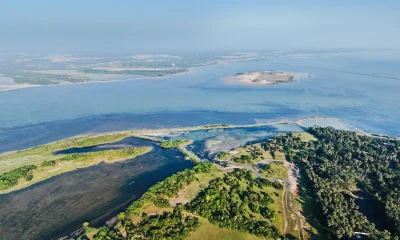
Lost for 90 years: Rare Goby resurfaces in Jaffna
-

 News4 days ago
Ammunition cache found in old Kandy bungalow
-
 Latest News7 days ago
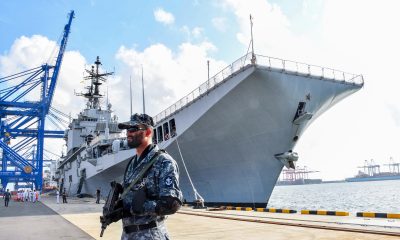
Italian Naval Vessel ‘ITS Giuseppe Garibaldi’ arrives in Colombo