
Business
Dark side of the energy picture in Sri Lanka


The “rural energy crisis” has been receiving increasing attention from development policy makers because it affects the very survival of the vast majority of the world’s population, who live in the rural areas of the developing countries, and is also deeply inter-linked with the whole concept of sustainable development. The linkages between rural energy and sustainable development, however, need to be understood in the overall context of the energy situation in the developing countries. This also falls extremely well with SDG 7 of Agenda 2030 as an essential and a vital strategy of achieving the same.
The key message for policymakers is: Give wood energy a fair chance in the energy mix of your country in order to make the world a more sustainable and more environmentally friendly place.
Deviating from the conventional classification of energy as fuel sources which hides many development issues ,the Sri Lanka energy demand can be identified as consisting broadly of two major groups of energy (1) Centralized Commercial Energy consisting of electricity, fossil fuels and commercial renewable energy sources (2) Decentralized non commercial energy consisting of mainly biomass and other indigenous energy resources.
According to Sustainable Energy Authority (SEA) data, the largest component of energy demand in Sri Lanka in 2018 is for biomass energy amounting to 46.2.followed by 41% petroleum and 12.3% electricity (energy balance 2018). Biomass is also the main source of energy in household and industry comprising of 64..9% and 74..7 % respectively which highlights its importance as the life blood of the rural sector comprising of 81% of the total population and the industrial sector.
It is evident that burden of meeting the energy needs of group 1 has been carried out not by the government but by the rural people themselves led by the women to secure the sustenance and the livelihoods of the rural people for which government has not shown any appreciation or any interest. The mundane fact is that 191.4 PJ of energy amounting to 46.2% of the energy mix has never been the concern of the energy sector planning. What matters should not be the type of the energy source or fuel but the energy service provided which are the heat, light, mechanical and digital energy requirements.
 While the energy sector should be congratulated for achieving 100% electrification in Sri Lanka which is a remarkable achievement, the present portfolios of Ministries in the energy sector focus only on Petroleum, Power and Renewable Energy Solar, Wind and Hydro Power Generation Projects Development . The major source of noncommercial biomass is overlooked . It is also observed that the term energy has been violated by identifying petroleum under the ministry of energy which is a misnomer which can create contradictions in policy matters as the term energy is used to encompass all energy resources.
The energy sector has incurred Rs 699 billion in foreign exchange almost 32% of the export earnings and an enormous expenditure to maintain a strong organizational infrastructure to cater for the commercial energy needs while neglecting the non commercial energy needs of the rural and estate poor.
This trend of depending on biomass has prevailed through out the last four decades and considering the present inequality in income distribution, it is likely to continue since affordability of modern fuels for the poor will not be a reality in the near future. This is evident from the fact that 30% of poorest get nine percent, the middle 40% get 29% and the richest 30% get 62% of the government income(Central Bank 2017 data) . A World Bank study states, at today’s prices that world LPG prices, regular users of LPG would likely need monthly household income in excess of US$350 and require at least 15 USD/month.
The Role of Liquefied Petroleum Gas in Reducing Energy https://openknowledge.worldbank.org › )
Nevertheless, presently there is a lack of focus on biomass energy by the government particularly due to the need for heavy focus on modern fuels for development of the country In contrast the important role played by biomass energy for the subsistence and economic development in the rural sector is not visible due to the decentralized and noncommercial nature of uncoordinated informal activities consisting of large number of stakeholders in the non-energy sector with a multitude of objectives not directly related to energy per se. Biomass energy is really not produced by the energy sector but a by product of activities carried out by the forestry, agriculture and plantation sectors which is not their main objective thus making biomass no one’s baby.
It is observed that this complication of uncoordinated, informal relationships and lack of insensitivity of the government which have contributed towards lack of governance within the energy sector in Sri Lanka have further isolated the low income rural sector to find their own solutions for survival. Non-cognizance on low-cost, improved biomass solutions has led to a scenario where biomass energy is negatively perceived with detrimental effects on sustainable development. It is totally unwelcoming to see that there is no appropriate mechanism devoted to the management of indigenous energy resources which still serves as the energy backbone of Sri Lanka.
The negative image of biomass, tends to be associated with deforestation, climate change under-development, poverty and negative health effects. This image steers policy makers towards the replacement of biomass by other fuels, instead of improving sustainability of the sector with integrated and holistic approaches.
In spite of the focus on alternatives, it is unlikely that biomass use will decrease in absolute terms over the coming decades. There is no evidence to show that firewood use is contributory factor to deforestation. Main four reasons for deforestation in Sri Lanka are encroachments due to agriculture, gem mining and settlements, infrastructure development projects, commercial agriculture ventures and several localized drivers like cattle grazing, cardamom cultivation and forest fires. (Kariyawasam, Ravindra, and Chinthka Rajapakse).
However, despite of the fact that, firewood is underestimated and ridiculed as a primitive fuel, the use of firewood by a majority of the population of Sri Lanka has not deprived but contributed towards the wellbeing of Sri Lanka in achieving many development indicators in moderation compared to many middle income countries. For an example according to world rankings, Sri Lanka’s rankings are Human Development Index 71, health 48, social capital 33, prosperity 84 and education 62. Moreover, a female born in Sri Lanka can expect to live 80.1 years (despite using firewood for cooking ) as oppose to 79 years in America). Infant Deaths/1000 in Sri Lanka is six, where it is six in America and 27 in India .
In the name of good governance and justice it is high time that the Ministry of Power and Renewable Energy (Sustainable Energy Authority) take action to avoid a looming disaster in the near future due to the informal nature of biomass supply and use of biomass is allowed to continue without inputs from the government which not only create social instability also hamper the efforts of achieving sustainable development goals.
The scope for the government is to facilitate the availability of supply, provide low cost technology support for efficient use by improving access to ventilation and efficient use through improved stoves and mitigate negative impacts on health and climate as alleged by the international community. Nearly eight million tons of firewood is required annually for cooking and livelihoods and four million tons of firewood for the industrial sector. Each house would require nearly two tons/year. Meeting this target would require the coordination and integration of the various stakeholder activities already providing informal facilitation in unofficial ways.
Although negative perceptions of biomass energy are widespread, biomass is not necessarily an unsustainable or backward fuel. Sustainability depends on the practices applied in the value chain; for example forest management techniques and the efficiency of conversion and use. These commonly held misconceptions tend to associate biomass fuels with deforestation, indoor air pollution and underdevelopment.(European Union Energy Initiative and GIZ, Germany ). http://www.euei-pdf.org/fr/node/3880.
In the name of governance in the energy sector in Sri Lanka, the objective of this article is to request the Sustainable Energy Authority which has been given the mandate to promote renewable energy (not only commercial energy) to take the leadership and initiative to invite the relevant stakeholders, donors, NGOs for a consultative meeting with a view to identify stakeholders and cross cutting activities, linkages and capacity and make aware the importance of rural sustainable energy interventions which needs the formation of a network of organizations to be established under the local government ministry facilitated by the sustainable energy authority comprising of specially dedicated staff to biomass energy development.
R.M.Amerasekera. Eng
Executive Director, Integrated Development Association (IDEA)
Energy Advisor to Former Minister of Local Government Admiral Sarath Weerasekara
Project Manager, National Fuel Wood Conservation Programme
Electrical Engineer (Alternative Energy Development Unit, CEB)
Retired Director, Sustainable Energy Authority
Short term Consultant to the UNDP(Sudan), World Bank and FAO
Recipient of First Ever Sri Lanka Energy Efficiency Award(2015), Awarded by HE the President
for bringing sustainable energy solutions to people
Recipient of Mohan Munasingha Award (1985) for Energy Conservation Efforts
Nominee for World Clean Energy Award(2007)


By Ifham Nizam
National Transmission Network Service Provider (Pvt) Ltd. (NTNSP), has secured third place in Sri Lanka’s fiercely contested 160 MW/640 MWh Battery Energy Storage System (BESS) tender, beating a number of established private-sector energy players in a major competitive procurement exercise just six months after the restructuring of the Ceylon Electricity Board (CEB).
The result marks a significant early indication that a newly restructured CEB successor company can compete on a commercial footing with established players in the rapidly expanding energy market, Senior Engineer Pubudhu Niroshan told The Island Financial Review.
More significantly, Niroshan said NTNSP’s entry into the tender helped intensify competition and contributed to a roughly 10% reduction in the lowest bid compared with the previous 160 MW/640 MWh BESS procurement, potentially delivering a more favourable outcome for electricity consumers.
“Entering such a highly competitive bidding process within just six months of restructuring and emerging third is by no means an easy task, Niroshan said.
He said the achievement had to be viewed in the context of the calibre and number of competitors involved in the process, adding that NTNSP had demonstrated that a successor company emerging from the CEB restructuring could step into a competitive commercial environment and hold its own against established businesses.
The significance of NTNSP’s participation, however, extended beyond its third-place ranking.
According to Niroshan, the company’s decision to enter the BESS procurement created an additional layer of competition, forcing other bidders to sharpen their commercial offers.
‘The first and second-ranked bidders had NTNSP as another competitor. That itself created additional competitive pressure, he said.
The BESS procurement involved a total capacity of 160 MW/640 MWh, with the programme divided into individual projects.
The procurement was designed to bring private and other eligible project proponents into the development and operation of battery storage facilities, providing an important mechanism for integrating renewable energy and strengthening the electricity system.
The outcome, he said, was particularly important for electricity consumers because greater competition in procurement could ultimately translate into lower costs for the power system.
‘Once you have several serious players competing, offering a fair and competitive price becomes essential. That is ultimately good for the consumer, he said.
Niroshan also referred to concerns previously raised by NTNSP before the Public Utilities Commission of Sri Lanka (PUCSL) regarding prices submitted for BESS projects under the Feed-in Tariff (FiT) mechanism.
He said subsequent market developments had provided support for the view that some of the prices submitted under the FiT mechanism were comparatively high.
For Niroshan, the experience also demonstrated why competition must remain at the heart of the restructuring of the electricity sector.
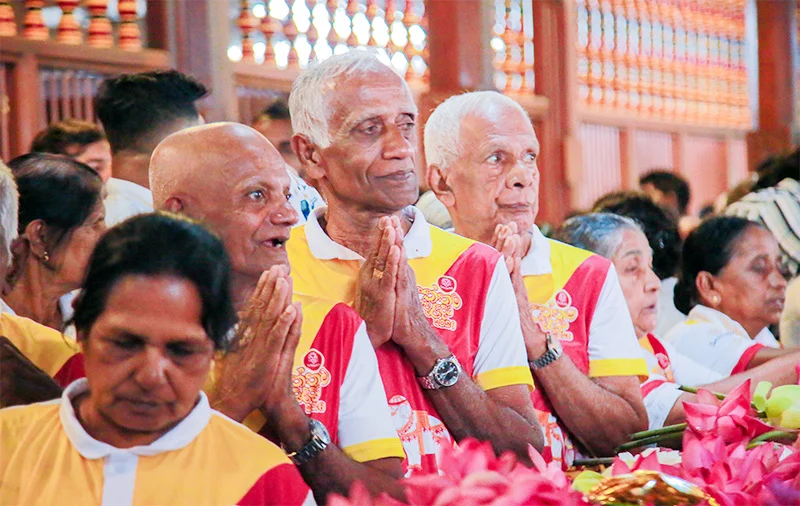
Serendib Flour Mills continued its longstanding commitment to rural communities through the fifth edition of Serendib Uththama Dalada, more than 100 elderly mothers and fathers from remote farming communities to experience the sacred Sri Dalada Perahera in Kandy.
Held on 26 August 2026, the initiative brought together elderly parents from Mahalakotuwa, Elahera and Attanakadawala, many of whom have spent a lifetime engaged in agriculture and contributing towards sustaining communities across the country. For these elders, the initiative offered an opportunity to undertake a deeply meaningful spiritual journey and witness one of Sri Lanka’s most revered religious and cultural traditions.
Conducted under the campaign thought, “Nourishing the hearts of elderly parents with spiritual merits, who once nourished a generation,” Serendib Uththama Dalada recognises the lifelong contribution and sacrifices of farming mothers and fathers while creating an experience that may otherwise remain beyond their reach.
Serendib Flour Mills facilitated the entire journey, providing safe and comfortable return transportation to Kandy aboard three dedicated buses. Special arrangements were also made to enable the participants to worship at the Sri Dalada Maligawa, followed by reserved seating at a specially erected VIP stand, allowing them to comfortably witness the grandeur of the Dalada Perahera.

Siyapatha Finance PLC, the largest fully-owned finance company of the Sampath Bank Group, delivered an exceptional financial performance for the six months ended 30 June 2026, reflecting the Company’s continued strategic growth initiatives, resilient asset quality, and unwavering commitment to sustainable value creation.
The Company recorded a profit after tax (PAT) of Rs. 1,007 million, a robust 43 percent increase from Rs. 706 million in the corresponding period of 2025, while profit before taxes (PBT) grew 38 percent to Rs. 2,334 million from Rs. 1,689 million, demonstrating sustained market and customer confidence in the Company’s core operations.
“Our performance in the first half of 2026 is a clear reflection of Siyapatha Finance’s strategic foresight and our unwavering commitment to sustainable growth,” said Siyapatha Finance Chief Executive Officer Mathisha Hewawitharana. “Surpassing the Rs. 104 billion mark in total assets while significantly improving our asset quality underscores the strength of our core operations and the deep trust our customers place in us. As we navigate the evolving macroeconomic landscape, we remain focused on prudent risk management and delivering enhanced value to our stakeholders.”
The Company’s core business operations continued to yield strong returns, with total interest income growing to Rs. 7,719 million from Rs. 5,272 million a year earlier, driving net interest income up to Rs. 3,487 million from Rs. 2,629 million, signifying the Company’s efficient management of assets and liabilities. Other income strengthened to Rs. 1,054 million from Rs. 826 million, reinforcing the effectiveness of the Company’s revenue diversification strategy. The cost-to-income ratio improved to 49 percent from 54 percent, a testament to the Company’s continued focus on operational efficiency and process optimization.
Asset quality strengthened markedly during the period, underscoring the success of Siyapatha Finance’s prudent credit risk management and proactive recovery initiatives. The gross stage 3 loans ratio improved to 4 percent from 8 percent a year earlier, while the net stage 3 loans ratio declined to 2 percent from 3 percent.

22A: Exclusion of 8 petitions questioned, action filed against SC Registrar, others

Thailand shuts door on undesirables from Sri Lanka

Expertise France and the EU launch media project to strengthen environmental journalism in Sri Lanka

CLA questions non-inclusion of senior judges on five-member SC bench hearing 22A petitions

Whatever on earth happened to meritocracy, pragmatism, and honesty in Sri Lanka?

Why should faith promote justice?

‘Dates have the highest sugar content to fight Coronavirus’

Sunday Island 27 December – Headlines

#SundayIsland 17th December – Headlines

Sunday Island – 28th March

Sunday Island Headlines – 21 March

Sunday Island – 21st February – Headlines
-

 News5 days ago
Denied of promotion to SC despite vacancies, justice Gurusinghe retires
-

 Latest News6 days ago
Grade 5 scholarship exam results released
-

 News5 days ago
22A: SC urged to suspend hearing, appoint full bench
-

 Midweek Review6 days ago
The local and global dynamics of Sri Lanka’s 22nd Amendment
-

 News3 days ago
Namal remanded until Sept. 18 over Airbus deal investigation
-

 Latest News2 days ago
Tharanga creates history with Diamond League crown in Brussels
-

 News5 days ago
Govt. seeks NATO assistance
-

 News6 days ago
40 professional organisations and TU oppose proposed 22A