
Features
Amusement ride brought to life on big screen Jungle Cruise


By Tharishi Hewavithanagamage
Directed by Jaume Collet-Serra from screenplay written by Glenn Ficarra, John Requa, and Michael Green, ‘Jungle Cruise’ is loosely based on Walt Disney’s theme park attraction of the same name. After success of the ‘Pirates of the Caribbean’ franchise, it comes as no surprise that Disney wanted to create another ride-based movie, this time featuring one of its first rides. The riverboat amusement ride was the only attraction to exist in the Adventureland themed section on Disneyland’s opening day in 1955. The live-action riverboat adventure stars Dwayne Johnson, Emily Blunt, Jack Whitehall, Jesse Plemons, and Paul Giamatti.
The film is set in 1916, and follows Dr. Lily Houghton (Emily Blunt) in a fervent search for a mystical tree whose petals known as Tears of the Moon, are said to have healing properties. Her strong belief that she could bring about medical breakthroughs and save numerous lives, prompts her to embark on the adventure of a lifetime, deep into the Amazon rainforest.
With a map in hand, Lily along with her brother McGregor (Jack Whitehall) enlist the help of skipper and swindler Frank Wolff (Dwayne Johnson) to help navigate the vast waters of the rainforest. Coveting the mystical petals for their own goals are Prince Joachim (Jesse Plemons) and a team of 400-year old cursed conquistadors led by Aguirre (Edgar Ramírez). In a race against time, the bad guys and the jungle, Lily must place her trust in Frank if she is to ever reach the tree, but it’s easier said than done.
The latest Disney movie is definitely fun to watch. It’s a classic, and far too predictable, adventure, where a small group of protagonists venture into the unknown. The movie obviously borrows heavily from big screen hits like ‘Indiana Jones’, ‘The Mummy’ franchise, ‘Anacondas: Hunt for the Blood Orchid’ and even the ‘Pirates of the Caribbean’ franchise. This film is a patch-work of tropes.
The two-hour movie also packs a lot, which is precisely why the plot gets murkier as the audiences and protagonists cruise through. The big picture is brimming with smaller side stories which include characters that aren’t essential to the plot and in the end remain forgettable, like Paul Giamatti’s crusty harbormaster Nilo, who unfortunately falls into the margins of the movie. And scenes such as Prince Joachim talking to bees, makes the film utterly nonsensical. However, the strongest points of the movie are seen in the strengthening relationships and character development, which receive just about enough screen time to hold the story together. And while there is no overarching theme for this tale, it handles themes like women empowerment and exoticism.
‘Jungle Cruise’ offers audiences an imaginative look at deeper areas of the Amazon. The titular jungle, Frank’s beloved boat and adorable pet Jaguar Proxima are CGI highlights, whereas most other effects, notably the ragtag supernatural conquistadors, who look like they hung out with Davy Jones for too long, fall flat.
The film also delivers meticulously choreographed action sequences that showcase each individual character’s physical prowess. Everyone gets a chance to throw a punch with good form, not just The Rock. The film also draws in ideas and references from the actual ride. The humor, a courtesy of Frank’s pun-laden jokes is an actual reference to the theme-park attraction. The ride is known for its corny jokes, all delivered by skippers who narrate the adventure to visitors. Everything comes together to make the film a fun-filled experience. It falls short of a strong plot but is driven forward by the performance of the two leads.
An unlikely pair, both Dwayne Johnson and Emily Blunt showcase their stellar acting skills. Blunt brings a strong charisma as an intrepid scholar and adventurer, breaking barriers in ‘a man’s world’ through her role as Dr. Lily Houghton. Blunt expertly navigates the character’s inner nerd and heroine in doing amazing stunts and even takes on Johnson’s muscular self. Johnson pours his heart and soul into his character Frank. At first glance Frank comes across as a rogue character with no depth and mainly supplies humor to the tale, but as the story unfolds Johnson taps into deeper aspects of the character. The Blunt-Johnson pairing oddly makes their banter fun, but the sense of awkwardness can be overwhelmingly uncomfortable in some scenes.
Jack Whitehall’s role as Lily’s not-so-adventurous brother McGregor, is Disney’s latest attempt to introduce a gay character, but fails to leave a deep impression. It also seems like it’s never a good adventure without the nefarious Germans trying to kill everyone, but Jesse Plemons brings more comedic relief than menace to his role as Prince Joachim. The conquistador villain Aguirre played by Edgar Ramírez, remains sidelined and underused.
At the end of the day, ‘Jungle Cruise’ is a fun summer adventure that everyone can enjoy. Although the film doesn’t meet the standards set by their cooler counterpart ‘Pirates of the Caribbean’, ‘Jungle Cruise’ brings its own unique quirkiness that saves it from drowning completely.



 The group ABBA, from Sweden, officially disbanded in 1982, and that made room for several ABBA imitators to come into the scene.
What’s more, ABBA tribute concerts are also turning out to be popular with music lovers who still appreciate, and enjoy, the music of ABBA.
With this in mind, Treffen House Hotel, in Doha, decided to put together a series of ABBA Tribute Concerts which were held, in the hotel itself, on 27th, 28th and 29th November, 2025.
To do the needful, on stage, they selected our very own Ishini Fonseka and her participation certainly did highlight the global appeal of ABBA’s music and the talent of Sri Lankan artistes.
The tribute shows brought the magic of ABBA’s hits to the audience,

On stage belting out the ABBA hits
Backed by a Sri Lankan band, the Vibes, based in Qatar, Ishini was in the spotlight for one hour, each night, belting out the hits of ABBA.
She also obliged the audience, from various nationalities, with a few hit songs in Hindi, Tamil and Sinhala.
Her repertoire included the best of ABBA hits, such as ‘Mamma Mia’, ‘Dancing Queen’, ‘Chiquitita’ and many more.
Being a multi-instrumentalist, she also played the piano, and guitar, as well, while singing some of the beautiful ABBA songs.
The three-day concert was a part of a Sri Lankan food festival, held at the hotel, in which several unique Sri Lankan cuisines were promoted internationally.
The event’s main sponsor was Prime Lands, and the event focused on the importance of investing on Real Estate, especially since the foreign currency sent to Sri Lanka benefits the country’s economy vastly.
Kumudu Fonseka, the General Manager of Treffen House Hotel, the main man behind the spectacular three-day Sri Lankan Food Festival, I’m told, is very keen to highlight the uniqueness of Sri Lanka.
He also has plans to put together a charity concert to raise funds for the people in Sri Lanka, affected by Cyclone Ditwah.
The Chief Guest, on the second day, was the Ambassador of Sri Lanka, who personally appreciated and admired Ishini Fonseka for bringing back her childhood memories of ABBA.
Ishini was involved in three other events, at the hotel, as a guest star, before returning home.
Her next foreign assignment is to the Maldives, on 22nd December, with her band Ishini & The Branch.
She will be doing the Christmas and New Year’s Eve scene in the Maldives and will be back, in Sri Lanka, on 02nd January 2026.

Melantha Perera’s opener in Australia, on his current solo tour, was in Sydney.
He was seen in action at ‘Moratuwa Night -Two’ where he was backed by the group Redemption.
It was a sing-along event which, later in the evening, had the crowd dancing, as well.
And Melantha had this to say:
“A heartfelt thank you to everyone who graced ‘Moratuwa Night –Two’ and what fun we all had!
“Leaving my home, in Sydney, makes me a little sad, but I’m grateful for all the memorable moments we shared.”
“I’m back in Melbourne, looking forward to a bright and beautiful Christmas. Let’s get together at my first Christmas 2025 … in Melbourne.”
Melantha will be featured with Cameron Colombege’s outfit.


Further to my earlier letter titled, “Psychology of Greed and Philosophy for a New World Order” (The Island 26.11.2025) it may not be far-fetched to say that the cause of the devastating cyclones that hit Sri Lanka and Indonesia last week could be traced back to human greed. Cyclones of this magnitude are said to be unusual in the equatorial region but, according to experts, the raised sea surface temperatures created the conditions for their occurrence. This is directly due to global warming which is caused by excessive emission of Greenhouse gases due to burning of fossil fuels and other activities. These activities cannot be brought under control as the rich, greedy Western powers do not want to abide by the terms and conditions agreed upon at the Paris Agreement of 2015, as was seen at the COP30 meeting in Brazil recently. Is there hope for third world countries? This is why the Global South must develop a New World Order. For this purpose, the proposed contentment/sufficiency philosophy based on morals like dhana, seela, bhavana, may provide the necessary foundation.
Further, such a philosophy need not be parochial and isolationist. It may not be necessary to adopt systems that existed in the past that suited the times but develop a system that would be practical and also pragmatic in the context of the modern world.
It must be reiterated that without controlling the force of collective greed the present destructive socioeconomic system cannot be changed. Hence the need for a philosophy that incorporates the means of controlling greed. Dhana, seela, bhavana may suit Sri Lanka and most of the East which, as mentioned in my earlier letter, share a similar philosophical heritage. The rest of the world also may have to adopt a contentment / sufficiency philosophy with strong and effective tenets that suit their culture, to bring under control the evil of greed. If not, there is no hope for the existence of the world. Global warming will destroy it with cyclones, forest fires, droughts, floods, crop failure and famine.
Leading economists had commented on the damaging effect of greed on the economy while philosophers, ancient as well as modern, had spoken about its degenerating influence on the inborn human morals. Ancient philosophers like Plato, Aristotle, and Epicurus all spoke about greed, viewing it as a destructive force that hindered a good life. They believed greed was rooted in personal immorality and prevented individuals from achieving true happiness by focusing on endless material accumulation rather than the limited wealth needed for natural needs.
Jeffry Sachs argues that greed is a destructive force that undermines social and environmental well-being, citing it as a major driver of climate change and economic inequality, referencing the ideas of Adam Smith, John Maynard Keynes, etc. Joseph Stiglitz, a Nobel Laureate economist, has criticised neoliberal ideology in similar terms.
In my earlier letter, I have discussed how contentment / sufficiency philosophy could effectively transform the socioeconomic system to one that prioritises collective well-being and sufficiency over rampant consumerism and greed, potentially leading to more sustainable economic models.
Obviously, these changes cannot be brought about without a change of attitude, morals and commitment of the rulers and the government. This cannot be achieved without a mass movement; people must realise the need for change. Such a movement would need leadership. In this regard a critical responsibility lies with the educated middle class. It is they who must give leadership to the movement that would have the goal of getting rid of the evil of excessive greed. It is they who must educate the entire nation about the need for these changes.
The middle class would be the vanguard of change. It is the middle class that has the capacity to bring about change. It is the middle class that perform as a vibrant component of the society for political stability. It is the group which supplies political philosophy, ideology, movements, guidance and leaders for the rest of the society. The poor, who are the majority, need the political wisdom and leadership of the middle class.
Further, the middle class is the font of culture, creativity, literature, art and music. Thinkers, writers, artistes, musicians are fostered by the middle class. Cultural activity of the middle class could pervade down to the poor groups and have an effect on their cultural development as well. Similarly, education of a country depends on how educated the middle class is. It is the responsibility of the middle class to provide education to the poor people.
Most importantly, the morals of a society are imbued in the middle class and it is they who foster them. As morals are crucial in the battle against greed, the middle class assume greater credentials to spearhead the movement against greed and bring in sustainable development and growth. Contentment sufficiency philosophy, based on morals, would form the strong foundation necessary for achieving the goal of a new world order. Thus, it is seen that the middle class is eminently suitable to be the vehicle that could adopt and disseminate a contentment/ sufficiency philosophy and lead the movement against the evil neo-liberal system that is destroying the world.
The Global South, which comprises the majority of the world’s poor, may have to realise, before it is too late, that it is they who are the most vulnerable to climate change though they may not be the greatest offenders who cause it. Yet, if they are to survive, they must get together and help each other to achieve self-sufficiency in the essential needs, like food, energy and medicine. Trade must not be via exploitative and weaponised currency but by means of a barter system, based on purchase power parity (PPP). The union of these countries could be an expansion of organisations,like BRICS, ASEAN, SCO, AU, etc., which already have the trade and financial arrangements though in a rudimentary state but with great potential, if only they could sort out their bilateral issues and work towards a Global South which is neither rich nor poor but sufficient, contented and safe, a lesson to the Global North. China, India and South Africa must play the lead role in this venture. They would need the support of a strong philosophy that has the capacity to fight the evil of greed, for they cannot achieve these goals if fettered by greed. The proposed contentment / sufficient philosophy would form a strong philosophical foundation for the Global South, to unite, fight greed and develop a new world order which, above all, will make it safe for life.
by Prof. N. A. de S. Amaratunga
PHD, DSc, DLITT

JXG awarded top honour for Parent-Inclusive Workplace practices 2024/2025

ABBA scene in Doha … Ishini in the spotlight

John Keells Foundation marks International Day for the Elimination of Violence Against Women

Fun time for Melantha Down Under

On behalf of Lanka,US lawmakers appeal to Secretary of State

Mark and Comm named Rest of South Asia PR Agency of the Year 2025

‘Dates have the highest sugar content to fight Coronavirus’

Sunday Island 27 December – Headlines

#SundayIsland 17th December – Headlines

Sunday Island – 28th March

Sunday Island Headlines – 21 March

Sunday Island – 21st February – Headlines
-
News6 days ago
Lunuwila tragedy not caused by those videoing Bell 212: SLAF
-

 News24 hours ago
Over 35,000 drug offenders nabbed in 36 days
-

 News5 days ago
Level III landslide early warning continue to be in force in the districts of Kandy, Kegalle, Kurunegala and Matale
-
 Features7 days ago
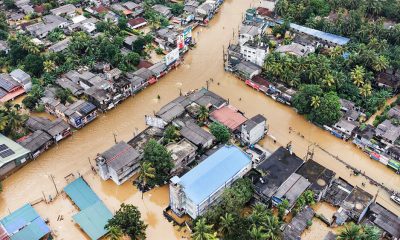
Ditwah: An unusual cyclone
-

 Business3 days ago
LOLC Finance Factoring powers business growth
-

 News3 days ago
CPC delegation meets JVP for talks on disaster response
-

 News3 days ago
A 6th Year Accolade: The Eternal Opulence of My Fair Lady
-

 News24 hours ago
Rising water level in Malwathu Oya triggers alert in Thanthirimale