
News
‘Abolition of range of taxes in Nov 2019 triggered crisis’

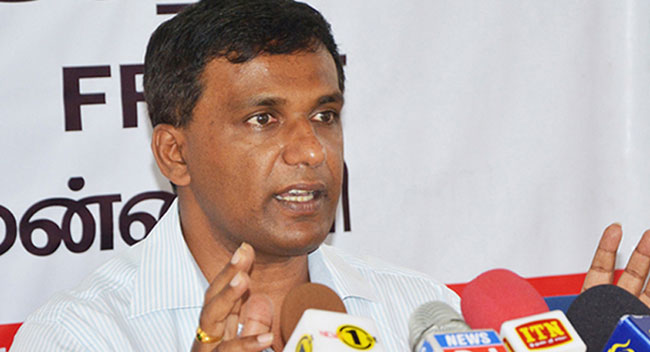
‘Welcome fuel price hike, stresses need to increase gas price’
By Shamindra Ferdinando
Former Governor of Uva, Southern and Central Province Rajith Keerthi Tennakoon says the government is paying a huge price for the continuing failure to streamline the tax collection process, corrupt practices and the utterly unwise decision to change the tax policy immediately after the change of government in Nov 2019.
Civil society activist Tennakoon alleged that the Treasury lost well over Rs. 500 bn due to a controversial decision to do away with a range of taxes, including PAYE (Pay As You Earn), NBT (Nation Building Tax), Withholding tax, Capital Gain tax imposed on the Colombo Stock Exchange, Bank Debit tax and unprecedented reduction of VAT (Value Added Tax).
Tennakoon said that the 15% VAT and the 2% NBT which amounted to 17% imposed on all goods and services were unified and reduced to 8%, effective from the first of December 2019.
Tennakoon said that the decision was taken at the first cabinet meeting of the incumbent government held on Nov 27, 2019.
The civil society activist turned political henchman under President Sirisena, asked whether ordinary people benefited from those tax cuts though the government spokespersons repeatedly said so.
Referring to the Central Bank Report 2020, Tennakoon said that the total revenue for 2018 and 2019 had been Rs 1,950 bn and Rs 1,900 bn, respectively, whereas it dropped to Rs 1,373 in 2020. Tennakoon asked whether the government carried out a proper study before such a drastic revision of tax policy was implemented or simply went ahead with it in view of the parliamentary election scheduled for April of the following year. The election had to be put off for August 2020 due to the first Covid-19 eruption, Tennakoon pointed out, urging the government to undertake a tax review immediately or face the consequences.
The total government revenue as a percentage of the GDP (Gross Domestic Product) dropped to 9.05% in 2020 from 12.6% in the previous year whereas tax revenue dropped to 8.5% from 11.6%, Tennakoon said.
He however welcomed the government decision to increase fuel prices. Declaring the upward price revision announced by Energy Minister Udaya Gammanpila on June 11 was timely, the former Governor said that the country would have been in a far worse situation if the unrealistic old pricing structure was retained.
Tennakoon said that the Opposition hadn’t really understood the crisis the country was in. If they actually examined the situation, it wouldn’t have moved a No Confidence Motion (NCM) against Energy Minister Gammanpila over the increase in fuel prices, Tennakoon said.
Instead, he argued that the NCM should have been moved against the government for jeopardizing the national economy by foolish political decision to abolish a sound tax structure in place, the former Executive Director of polls monitoring body CAFFE (Campaign for Free and Fair Elections) said.
Tennakoon questioned the rationale in demanding that the fuel prices be brought down at a time all political parties represented in parliament should address the overhanging foreign and local debt as a menacing national challenge. Pointing out that the country’s growing oil bill could overwhelm the national economy unless remedial measures were taken, Tennakoon emphasized that there should be a national consensus on the fuel pricing formula regardless of the government in power.
Those who demanded Minister Gammanpila’s resignation over the fuel price increase were conveniently silent now because they were aware of the actual situation, Tennakoon said.
Responding to another query, Tennakoon urged the government to revise the prices of domestic and industrial gas without further delay.
Tennakoon said that the government should take the public into confidence. It shouldn’t hesitate to explain the difficulties experienced due to choking of major revenue sources- remittances from Sri Lankans working abroad, tourism, garments and other exports, he said.
The civil society activist applauded the stand taken by the Energy Minister amidst attacks on him. Nothing that Presidential Secretariat, too, acknowledged the threat faced by the banking system due to CPC and CEB debt to Bank of Ceylon and People’s Bank to the tune of Rs 737 bn and President Gotabaya Rajapaksa acknowledging the daunting challenge in annual debt payment amounting to USD 4 bn, Tennakoon said that the country was experiencing worst post-independence crisis.
Whatever various government spokespersons uttered, the country was in such economic turmoil, the situation couldn’t be reversed only by restructuring the country’s debt with the IMF’s intervention, Tennakoon said.
Referring to the recent report of COPA (Committee on Public Accounts) report handed over to the Parliament on July 20, Tennakoon pointed out the failure on the part of the Inland Revenue, Sri Lanka Customs and Excise Department was quite shocking. The Finance Ministry couldn’t absolve itself of the responsibility for proper overseeing of the tax collection structure, Tennakoon said.
Commenting on shocking revelations made by a 22-member parliamentary watchdog in its latest report, Tennakoon emphasized corruption paved the way for irregularities. Such practices caused automatic losses to the Treasury, he said. Alleging that successive governments turned a Nelsonian eye to such brazen corrupt practices, Tennakoon said that the national economy was now in such a precarious situation, immediate remedial measures were required to thwart a calamity.
Quoting from CBSL reports, Tennakoon said that the country’s overall debt now stood at over 16.2 trillion. The government should realize that the issue at hand couldn’t be addressed by printing money and propaganda, Tennakoon said. The SLPP should never have abolished the entire range of taxes at the onset of the new administration, Tennakoon said, urging the government to examine the need to change the overall tax structure. How could they justify overly indirect taxes whereas the direct tax regime remains absurdly low?
Tennakoon insisted that the national economy couldn’t be saved by giving tax amnesty to defaulters. Such tax amnesties announced by successive governments since the 1960s didn’t produce the desired results, he said.

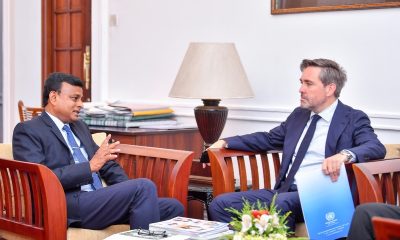



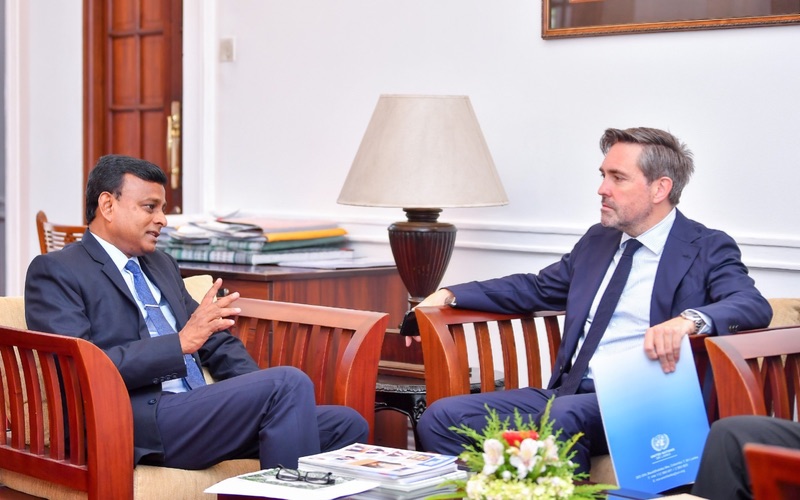
A meeting between UN Resident Coordinator Marc-André Franche and Chief of Staff to the President Prabath Chandrakeerthi was held on Monday (07) morning at the Presidential Secretariat.
Particular attention was given to the Government’s programme to resettle people who lost their homes due to Cyclone Ditwah.
The Government’s programme to address potential disasters that may arise in the future amid El Nino conditions was also discussed. The Chief of Staff to the President briefed the UN Resident Coordinator on the Government’s preparedness and plans to address such challenges.
Mr Franche stated that the United Nations was prepared to provide the necessary assistance to the Government to support the successful implementation of these programmes.
Partnerships and Development Finance Specialist at the United Nations Azam Bakeer Markar and UN Sri Lanka Humanitarian and Resilience Officer Wagisha Perera also participated in the discussion.
[President’s Media Division]
[ Cricbuzz]
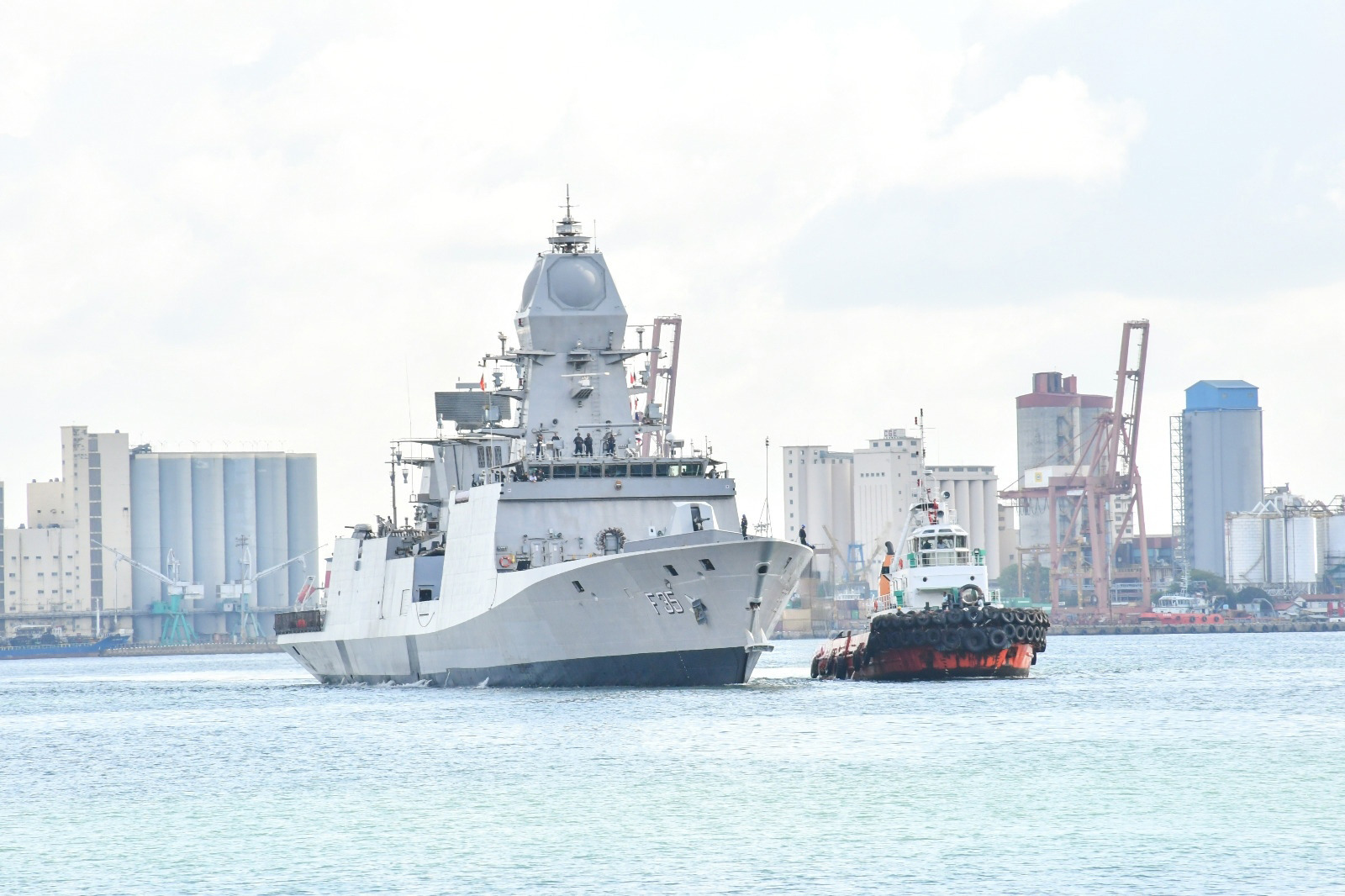
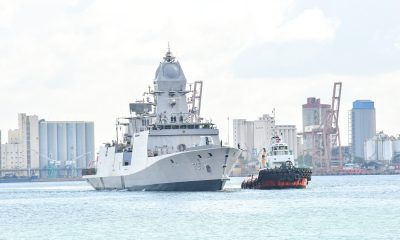
The Indian Naval Ship (INS) Udaygiri arrived at the Port of Colombo on an official visit today, 8 September 2026, where it was received by the Sri Lanka Navy in accordance with time-
honoured naval traditions.
INS Udaygiri is a 149.02m long Frigate, Commanded by Captain Vikas Sood. Meanwhile, the Commanding Officer of the visiting ship is scheduled to call on Commander Western Naval
Area, Rear Admiral Harsha De Silva at the Western Naval Command Headquarters.
Captain Sood served as the Defence Adviser at the Indian High Commission in Sri Lanka from July 2020 to October 2023.
During their stay in the island, the crew of INS Udaygiri will participate in several goodwill events organized by the Sri Lanka Navy to enhance camaraderie between the two forces.
The visiting personnel are also scheduled to visit prominent tourist and cultural locations across the island.
Additionally, Sri Lanka Navy personnel are expected to visit the ship for capability observation and knowledge sharing, and will conduct onboard training during its stay.

UN Delegation Meets Chief of Staff to the President

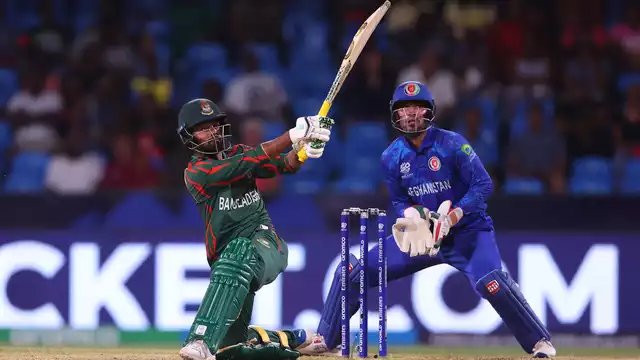
Afghanistan to host Zimbabwe, Bangladesh in ODI tri-series

Sandhu’s 6 for 7 seals Pakistan’s semi-final spot

INS Udaygiri makes port call in Colombo

Showers in the Uva, Central and Eastern provinces and in Polonnaruwa district

22A: Exclusion of 8 petitions questioned, action filed against SC Registrar, others

‘Dates have the highest sugar content to fight Coronavirus’

Sunday Island 27 December – Headlines

#SundayIsland 17th December – Headlines

Sunday Island – 28th March

Sunday Island Headlines – 21 March

Sunday Island – 21st February – Headlines
-

 News6 days ago
Denied of promotion to SC despite vacancies, justice Gurusinghe retires
-

 Latest News6 days ago
Grade 5 scholarship exam results released
-

 News6 days ago
22A: SC urged to suspend hearing, appoint full bench
-

 Midweek Review7 days ago
The local and global dynamics of Sri Lanka’s 22nd Amendment
-
 News4 days ago
Namal remanded until Sept. 18 over Airbus deal investigation
-

 Latest News3 days ago
Tharanga creates history with Diamond League crown in Brussels
-
 News6 days ago
Govt. seeks NATO assistance
-

 News7 days ago
40 professional organisations and TU oppose proposed 22A