
News
Sri Lanka Freedom Party apologises to teachers on strike for 11 days running


The Sri Lanka Freedom Party (SLFP) has apologised to school teachers and principals who are on strike for 11 days and counting over salary anomalies and the controversial Kotelawala National Defence University (KNDU) bill.
Citing teacher unions, SLFP general secretary MP Dayasiri Jayasekara told journalists that talks held on Wednesday with Education Minister Prof. G. L. Peiris following a protest march had proven unsuccessful.
“We ask the government to intervene in this matter and help resolve it. The teachers’ issue is a long running one that goes back several years. Even with such issues, they continued to teach our beloved children over the past two years [amid the pandemic] with no complaints,” Jayasekara said.
“The pronouncements of certain ministers have also hurt their feelings. As the SLFP, we would like to apologise for any insensitivity. I think it’s totally wrong to treat them that way,” he added.
Jayasekara was referring to a comment attributed to Media Minister Keheliya Rambukwella who had reportedly used the derogatory term ‘kalakanni’ to refer to teachers who had stopped online teaching during the pandemic as part of a trade union campaign. Loosely translated, ‘kalakanni’ means people not worth anyone’s time.
The SLFP has historically been associated with the teaching profession, with teachers being part of its highly successful 1956 campaign slogan ‘sanga, veda, guru, govi, kamkaru (Buddhist clergy, ayurvedic doctors, teachers, farmers, and workers) pancha maha balavegaya (five great forces).
“Teachers are one of our pancha maha balavegaya. The SLFP has a right to stand up for their rights,” said Jayasekara.
Jayasekara has been increasingly critical of the ruling coalition of which his party is a partner.



Sri Lanka CERT has warned the public of fraudulent social media advertisements offering admission to foreign universities after receiving complaints from parents and students who have lost hundreds of thousands of rupees to scammers.
The fraudsters reportedly pose as representatives of reputed foreign universities, promising admission, student visas, work permits and even eventual citizenship in return for registration fees and initial tuition payments.
They use convincing videos, photographs and documents circulated via email and WhatsApp to gain the confidence of unsuspecting victims before asking them to transfer money to foreign bank accounts. The scammers then disappear after receiving the payments, Sri Lanka CERT said.
The agency has urged prospective students and their parents to verify the authenticity of university representatives, documents and bank account details before making payments, and to seek overseas education opportunities only through legitimate and recognised channels.
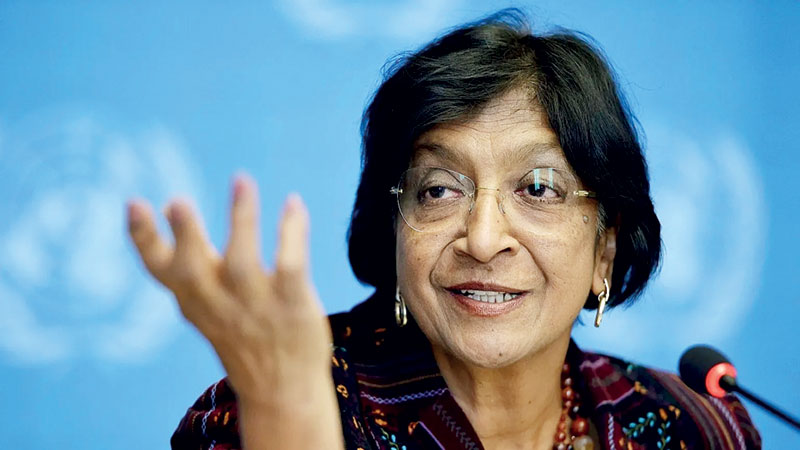
Former UN High Commissioner for Human Rights and International Court of Justice judge Navanethem “Navi” Pillay has won the 2026 Nobel Peace Prize for her contribution to international law and efforts to promote peace, the Norwegian Nobel Committee announced in Oslo on Friday.
Announcing the award, committee chairman Jørgen Watne Frydnes said Pillay had “significantly enlarged the scope and impact of international law” and helped advance “a more comprehensive global legal order” with exceptional courage. He also praised her long career, which began as a lawyer confronting deep-rooted discrimination in South Africa, and described her as a person with a “firm moral compass”.
Pillay, 85, served as the UN High Commissioner for Human Rights from 2008 to 2014. Her tenure brought her into sharp focus in Sri Lanka, particularly over her assessment of the country’s human rights situation in the aftermath of the decades-long civil war.
During an official fact-finding visit to Sri Lanka from August 25 to 31, 2013, Pillay travelled to areas including Jaffna, Kilinochchi and Trincomalee, where she met civil war survivors, families of the disappeared and local communities.
Following the visit, she warned that Sri Lanka was moving towards authoritarianism and highlighted what she described as a persistent climate of fear.
She also reported intimidation and harassment of people who had sought to meet her during the mission.
Pillay urged the UN Human Rights Council to establish an international inquiry mechanism to investigate alleged war crimes and crimes against humanity committed by both government forces and the LTTE during the final stages of the 26-year civil war.
Her observations and recommendations became a significant part of international scrutiny of Sri Lanka’s post-war human rights record.
The Norwegian Nobel Committee received 287 nominations for this year’s Peace Prize, slightly more than a quarter of them being organisations. The committee traditionally considers efforts to promote peace, international fraternity and institutions that contribute to lasting stability.
Last year, Venezuelan opposition leader Maria Corina Machado won the prize for her campaign for a democratic transition in Venezuela. She was praised as a woman who kept the flame of democracy burning amid growing darkness.
The 2026 award marks the 125th anniversary of the Nobel Peace Prize, first presented in 1901. Over its history, the prize has recognised prominent figures and organisations involved in advancing peace, human rights and international cooperation.
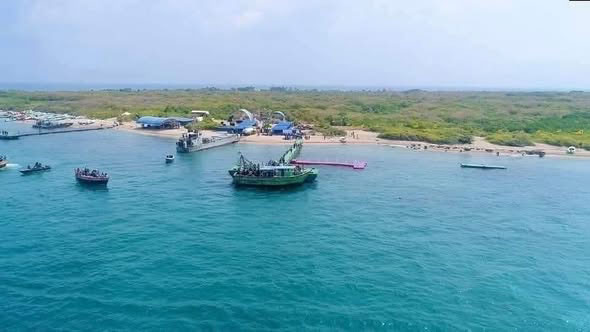
Minister of Fisheries, Aquatic and Ocean Resources, Ramalingam Chandrasekar, has welcomed observations made by the Indian Supreme Court calling for Tamil Nadu fishermen to be educated on the need to avoid entering Sri Lankan waters illegally.
In a statement, the Minister said the court’s observations, made during hearings on petitions seeking the return of Katchatheevu Island to India, highlighted the importance of respecting the internationally recognised maritime boundary between the two countries.
According to the statement, a Supreme Court bench headed by Justice Sanjay Kumar stressed the need to provide clear instructions to Tamil Nadu fishermen to prevent them from crossing the maritime boundary and fishing in Sri Lankan waters, particularly around Katchatheevu Island.
“We welcome the observations made by the Indian Supreme Court regarding the need to educate Tamil Nadu fishermen to refrain from illegally entering Sri Lankan waters for fishing,” Chandrasekar said.
The Minister said protecting Sri Lanka’s marine resources and environment remained a key government responsibility.
He expressed concern over illegal and destructive fishing practices by foreign vessels, particularly methods that damage the seabed and threaten the livelihoods of fishing communities in Sri Lanka’s Northern Province.
Chandrasekar also reiterated Sri Lanka’s position on the bilateral agreements signed with India in 1974 concerning Katchatheevu and in 1976 regarding maritime boundaries and fishing rights.
He said the agreements were based on longstanding diplomatic understandings between the two countries and stressed the importance of respecting maritime boundaries while protecting fishermen’s livelihoods.
The Minister further emphasised the need to pursue sustainable solutions through bilateral discussions and diplomatic mechanisms.
Meanwhile, according to the statement, Justice Sanjay Kumar also referred to his observations during a visit to Sri Lanka, praising the public’s commitment to maintaining clean beaches and public spaces and protecting the environment.
The Indian Supreme Court has not delivered a final ruling on the legal validity of the 1974 and 1976 agreements between India and Sri Lanka. Further hearings in the Katchatheevu case have been postponed until February 2027.
The Minister said the court’s observations were significant for protecting fishing communities, conserving marine resources and strengthening bilateral relations between Sri Lanka and India.

Sri Lanka CERT warns of overseas university admission scams

Navi Pillay’s Lankan affairs in focus as she wins 2026 Nobel Peace Prize

Lanka welcomes Indian SC remarks on Katchatheevu dispute

UN at Crossroads, Trump nearing End of the Road

Opposition moves to oust Speaker

Sri Lanka escalates anti-graft drive with Shiranthi’s jailing

‘Dates have the highest sugar content to fight Coronavirus’

Sunday Island 27 December – Headlines

#SundayIsland 17th December – Headlines

Sunday Island – 28th March

Sunday Island Headlines – 21 March

Sunday Island – 21st February – Headlines
-

 News6 days ago
Geneva takes up Sallay’s case and govt. ignores opportunity to answer accusations
-

 Features5 days ago
Preventing grievances from becoming communal
-

 Sports3 days ago
Nissanka absence opens door for Sri Lanka’s young guns
-

 Features3 days ago
The Sri Lankan who made Scottish history
-

 News4 days ago
Gnansara Thera to be assigned to prison printing section: Officials
-

 Features6 days ago
Sri Lanka Cricket Bill: Governance reform is not yet a cricket strategy
-

 News7 days ago
Lanka enters new phase of prosecutions as hurdles clear
-

 Editorial6 days ago
Dons’ frustration and rulers’ nonchalance