
News
Massive revenue losses blamed on Parliament

Customs, Motor Traffic faulted, Rs 3 bn scam revealed
By Shamindra Ferdinando
The first report of the Committee on Public Accounts (COPA) for the first session of the 9th Parliament has revealed that the Treasury lost billions of rupees annually due to the failure on the part of Parliament to update laws against corruption and irregularities involving state institutions and the private sector.
The COPA has named the Sri Lanka Customs and the Department of Motor Traffic as two key institutions responsible for the pathetic situation.
The Customs and Motor Traffic Departments come under the purview of the Finance and Transport Ministries. Parliament is in charge of overall finances.
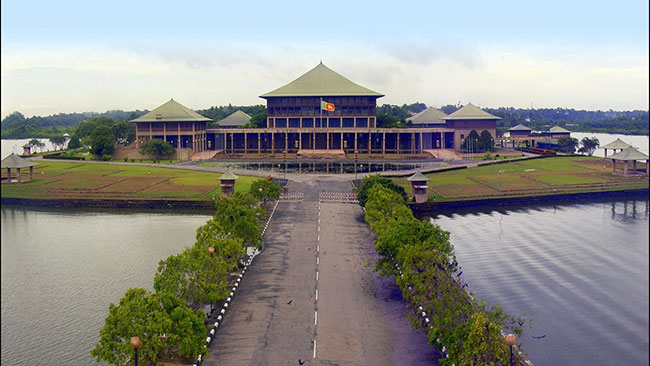
COPA Chairman Prof. Tissa Vitharana, National List member of the ruling Sri Lanka Podujana Peramuna (SLPP) on Tuesday (20) presented the report to the parliament.
COPA consists of Udaya Gammanpila, Duminda Dissanayake, Dayasiri Jayasekara, Lasantha Alagiyawanna, (Dr) (Mrs) Sudarshini Fernandopulle, Shehan Semasinghe, Prasanna Ranaweera, Tissa Attanayake, (Prof) Tissa Vitharana, Harin Fernando, Niroshan Perera, Faizal Cassim, Ashok Abeysinghe, Buddhika Pathirana, K. Kader Masthan, Sivagnanam Shritharan, (Dr.) Upul Galappaththi, B. Y. G. Rathnasekara, Weerasumana Weerasinghe, (Prof.) Ranjith Bandara, Mohomad Muzammil, and Dr. (Mrs.) Harini Amarasuriya.
The COPA has dealt with how successive governments conveniently had turned a blind eye to organized scams that deprived the Treasury much needed revenue especially at a time the cash-strapped government was struggling to cope up with deteriorating economic situation.
The LSSP veteran told parliament that those who could pay taxes took advantage of loopholes in the law and existing systems to deprive the Treasury of huge amounts of money.
The one-time minister pointed out how those enterprises which could pay taxes without difficulty exploited an opportunity to appeal thrice and then move court against the Inland Revenue to delay payment of taxes, further.
Recommending that the number of appeals should be reduced to one, Prof. Vitharana questioned the rationale in allowing various enterprises to evade paying taxes by exploiting the existing procedures.
Interestingly, COPA presented its report ahead of the vote of no-confidence motion against Energy Minister Udaya Gammanpila over the increase in fuel prices– a development the lawmaker blamed on extremely difficult economic situation.
Prof. Vitharana said that COPA made recommendations meant to recover taxes due to the Treasury and streamline the process. The report revealed massive scams over a period of time in the absence of scrutiny at any level. It reiterated that the Customs and the Department of Motor Traffic caused colossal losses and were the worst culprits.
COPA revealed that the Treasury had been denied a staggering Rs 3 bn in taxes in the import of Toyota Hilux Smart Cabs as a result of the Customs fraudulently releasing 3,000 vehicles under a different category. Each vehicle had been taxed Rs 1 mn less than it should have been, COPA pointed out adding that in another instance 44 vehicles imported under the category of special purpose vehicles had been subsequently registered as dual purpose vehicles resulting in a further loss of Rs 1.3 bn. According to the report the import of 44 vehicles had taken place during 2010-2019 period.
Department of Communications, Parliament yesterday (21) briefed the media of the salient points in the COPA report.
COPA also dealt with how the Customs caused a loss of Rs. 6.1 bn to the Treasury during 2013-2016 in imports made by two leading palm oil companies.
Former Minister and one-time Chairman of COPE (Committee on Public Enterprises) Dew Gunasekera told The Island that the government should make a genuine effort to streamline the revenue collection process by taking tangible measures to curb corruption and irregularities in the overall process.
The veteran Communist said that the country’s economy was in such a mess and turmoil the government couldn’t afford to turn a blind eye to waste, corruption, irregularities as well as negligence that caused debilitating losses to the national economy. If those lawmakers realized the gravity of the situation they wouldn’t have caused an uproar when Energy Minister Udaya Gammanpila announced the fuel price hike on June 12, Gunasekera said.
Gammanpila’s statement as well as President Gotabaya Rajapaksa’s address to the nation in which he acknowledged the daunting task in meeting annual loan repayments amounting to USD 4 bn, reflected the ground situation.

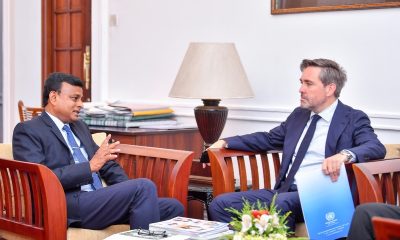



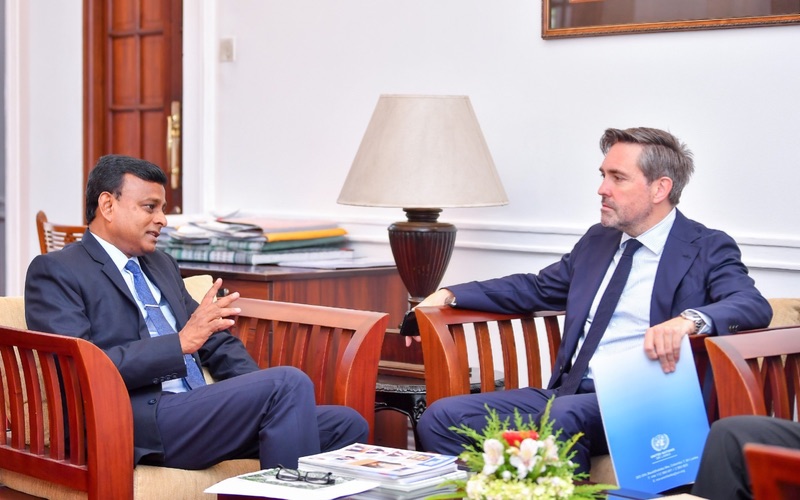
A meeting between UN Resident Coordinator Marc-André Franche and Chief of Staff to the President Prabath Chandrakeerthi was held on Monday (07) morning at the Presidential Secretariat.
Particular attention was given to the Government’s programme to resettle people who lost their homes due to Cyclone Ditwah.
The Government’s programme to address potential disasters that may arise in the future amid El Nino conditions was also discussed. The Chief of Staff to the President briefed the UN Resident Coordinator on the Government’s preparedness and plans to address such challenges.
Mr Franche stated that the United Nations was prepared to provide the necessary assistance to the Government to support the successful implementation of these programmes.
Partnerships and Development Finance Specialist at the United Nations Azam Bakeer Markar and UN Sri Lanka Humanitarian and Resilience Officer Wagisha Perera also participated in the discussion.
[President’s Media Division]
[ Cricbuzz]
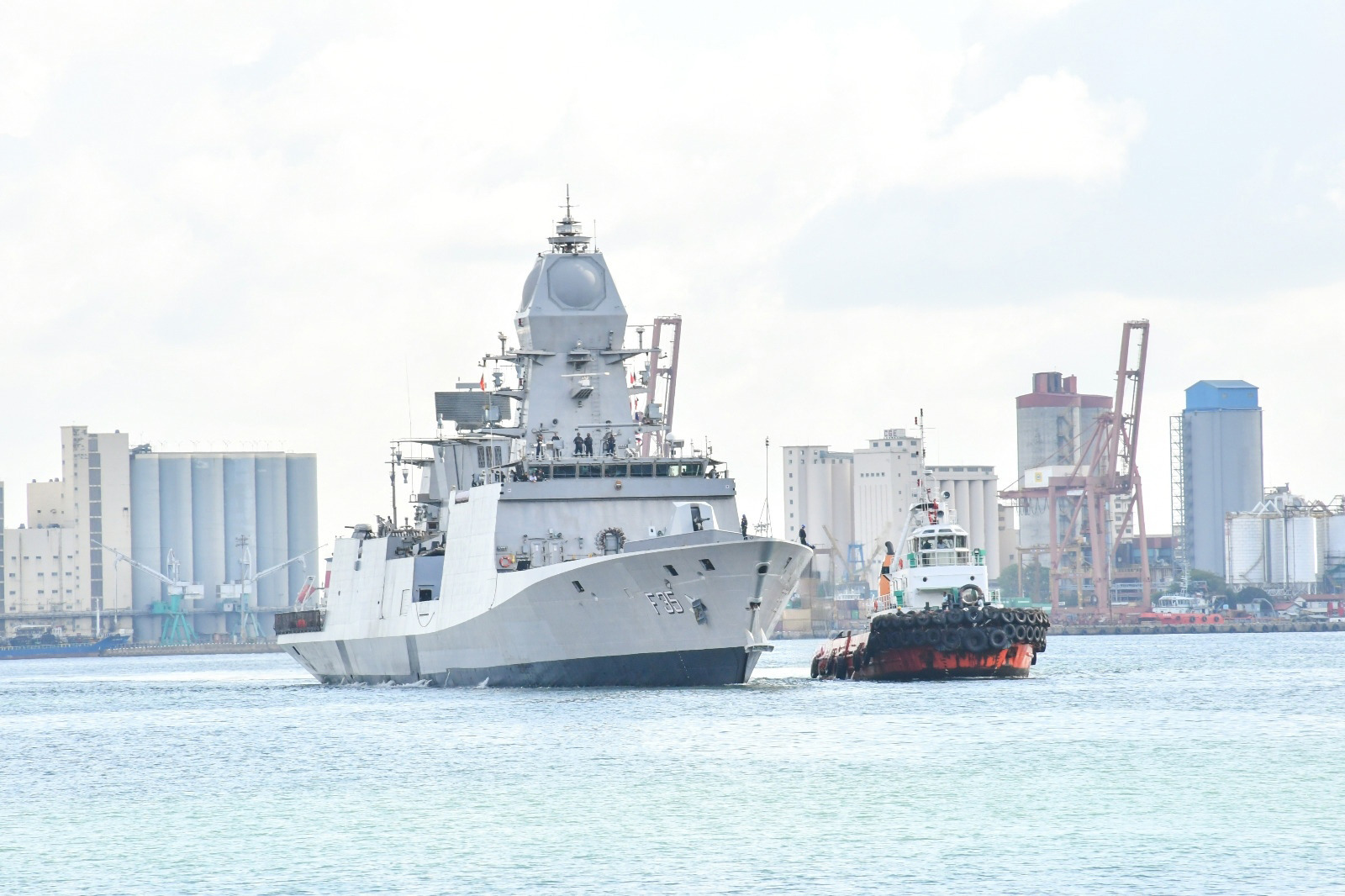
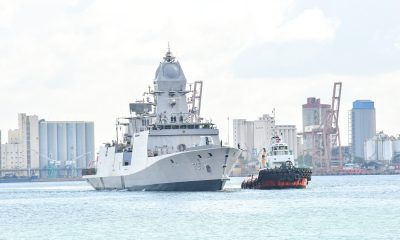
The Indian Naval Ship (INS) Udaygiri arrived at the Port of Colombo on an official visit today, 8 September 2026, where it was received by the Sri Lanka Navy in accordance with time-
honoured naval traditions.
INS Udaygiri is a 149.02m long Frigate, Commanded by Captain Vikas Sood. Meanwhile, the Commanding Officer of the visiting ship is scheduled to call on Commander Western Naval
Area, Rear Admiral Harsha De Silva at the Western Naval Command Headquarters.
Captain Sood served as the Defence Adviser at the Indian High Commission in Sri Lanka from July 2020 to October 2023.
During their stay in the island, the crew of INS Udaygiri will participate in several goodwill events organized by the Sri Lanka Navy to enhance camaraderie between the two forces.
The visiting personnel are also scheduled to visit prominent tourist and cultural locations across the island.
Additionally, Sri Lanka Navy personnel are expected to visit the ship for capability observation and knowledge sharing, and will conduct onboard training during its stay.

UN Delegation Meets Chief of Staff to the President

Afghanistan to host Zimbabwe, Bangladesh in ODI tri-series

Sandhu’s 6 for 7 seals Pakistan’s semi-final spot

INS Udaygiri makes port call in Colombo

Showers in the Uva, Central and Eastern provinces and in Polonnaruwa district

22A: Exclusion of 8 petitions questioned, action filed against SC Registrar, others

‘Dates have the highest sugar content to fight Coronavirus’

Sunday Island 27 December – Headlines

#SundayIsland 17th December – Headlines

Sunday Island – 28th March

Sunday Island Headlines – 21 March

Sunday Island – 21st February – Headlines
-

 News6 days ago
Denied of promotion to SC despite vacancies, justice Gurusinghe retires
-

 Latest News6 days ago
Grade 5 scholarship exam results released
-

 News6 days ago
22A: SC urged to suspend hearing, appoint full bench
-

 Midweek Review7 days ago
The local and global dynamics of Sri Lanka’s 22nd Amendment
-

 News4 days ago
Namal remanded until Sept. 18 over Airbus deal investigation
-

 Latest News3 days ago
Tharanga creates history with Diamond League crown in Brussels
-

 News6 days ago
Govt. seeks NATO assistance
-

 News7 days ago
40 professional organisations and TU oppose proposed 22A