
News
Easter Sunday carnage: Criminal proceedings against Sirisena demanded


*P CoI faulted for not making specific recommendation against Ranil
*Criminal liability of CNI and SIS Chief highlighted
*Respond within month or face the consequences
By Norman Palihawadana and Shamindra Ferdinando
The National Catholic Committee for Justice has urged President Gotabaya Rajapaksa to implement the recommendations of the Presidential Commission of Inquiry
(PCoI) in respect of the then President Maithripala Sirisena, who is also the leader of the SLFP and the then Prime Minister and the leader of the UNP Ranil Wickremesinghe.
Archbishop of Colombo Malcolm Cardinal Ranjith yesterday (13) briefed the media at the Archbishop House, Borella, as regards steps taken by the committee to pressure the government to carry out the PCoI recommendations. The Archbishop faulted the SLPP administration for its failure to implement the PCoI recommendations five months after receiving it.
President Sirisena appointed the PCoI in the run-up to the last presidential election. His successor Gotabaya Rajapaksa retained the same commission.
An 18-page report sent to President Gotabaya Rajapaksa, dealing with specific alleged lapses on the part of the incumbent government, was released by the Cardinal to the media yesterday.
Referring to the PCoI report (PCoI Final Report Vol. 1, p 265), the Cardinal asked why the government had refrained from initiating criminal proceedings against Sirisena under suitable provision in the Penal Code. SLFP leader Sirisena now represents the ruling SLPP in Parliament. The SLFP with 14-member parliamentary group is the second largest constituent of the incumbent government.
Cardinal Ranjith also found fault with the PCoI for failing to make specific recommendation in respect of UNP leader Ranil Wickremesinghe, though it recognised his role in facilitating Islamic extremism. Referring to PCoI assessment of PM Wickremesinghe’s soft approach towards Islamic extremism that paved the way for the Easter Sunday carnage (P CoI Final Report Vol 1, p 276-277), the Cardinal said that they couldn’t comprehend why specific recommendation was not made. Wickremesinghe recently re-entered parliament on the UNP’s National List slot.
The PCoI comprised Supreme Court Judge Janak de Silva, Court of Appeal Judge Nishshanka Bandula Karunaratne, retired Supreme Court Judges Nihal Sunil Rajapaksha and A.L. Bandula Kumara Atapattu and former Secretary to the Ministry of Justice W.M.M.R. Adhikari. H.M.P. Buwaneka Herath functioned as the Secretary to the P CoI.
Cardinal said that Wickremesinghe’s lax approach and irresponsible attitude should have been thoroughly investigated.
The Cardinal on behalf of the National Catholic Committee for Justice declared that unless the government responded positively within a month, they would be compelled to resort to other means obtain justice.
The signatries to report sent to President Gotabaya Rajapaksa are Archbishop Malcolm Cardinal Ranjith, Bishop Harold Anthony Perera, Bishop Devsritha Valence Mendis, Bishop Raymond Wickramasinghe, Bishop Maxwell Granville Silva, Bishop J.D. Anthony Jayakody, Bishop P. Anton Ranjith, Very Rev Fr Francis Nicholas Senanayake, Very Rev Fr. Daya A. Shelton Welikadarachchi, Very Rev Fr. S. Bertam Ranjith, Very Rev. Fr. Jayantha Sylvester Ranasinghe, Very Rev Fr. Ciswan De Croos, Very Rev Fr. Nihan Ivan Perera, Very Rev Fr. Shantha Sagara Hettiarachchi, Very Rev Fr. Manokumaran Nagaratnam, Very. Rev Fr. Jude Freely Muthukudarachchi, Rev. Fr Cyril Gamini Fernando, Rev Fr. C.A. Cecil Joy Evangelist Perera, Rev. Fr Camillus Fernando, Rev. Fr. Lawrence Ramanayake, Rev. Fr. Dilan Fernando SSS, Rev. Fr. Mahendra D.P. Goonetilleke, Rev Fr. Lal Pushpadeva OMI, Rev. Fr. Deninton N. S. Subasinghe, Very Rev Fr. Jude Samantha Kumara Fernando, Rev. Fr Gihan T. Perera, Rev Fr. Claude Nishantha Nonis, Rev Fr L.P. Lalith Perera, Rev. Fr. Anton Jude Raj Fernando, Rev. Fr. H. Lakshman Srilal Fonseka, Rev. Fr. Manjula Niroshan Fernando, Rev. Fr. Anton Gihan Nalin Gunetilleke, Rev Fr. W.D. Jude Chrysantha Fernando, and Rev. Fr. P.A.D. Joseph Indika.
Noting that legal action has been initiated against the then Defence Secretary Hemasiri Fernndo over his failure to thwart the Easter Sunday bombings, the Catholic Church asked why action hadn’t been taken in respect of the then Chief of National Intelligence retired DIG Sisira Mendis and Director of State Intelligence Service Senior DIG Nilantha Jayawardena. The Church pointed out that the PCoI had recommended that the Attorney General should consider criminal proceedings against Mendis and Jayawardena under any suitable provision in the Penal Code.
The Church stressed that the P CoI made the recommendation on the basis that the available evidence indicated that there was criminal liability on the part of both Mendis and Jayewardena.
It pointed out that P CoI recommendation in respect of the then Senior DIG Western Province Nandana Munasinghe (criminal liability), DIG Colombo North Deshabandu Tennakoon (disciplinary inquiry), SP Colombo North Sanjeewa Bandara (criminal liability), SP Chandana Atukorale (criminal liability), Director Western Province Intelligence Division B.E.I. Prasanna (criminal liability), ASP S. Kumara (disciplinary inquiry), Acting OIC, Fort Chief Inspector R.M. Sarath Kumarasinghe, OIC Fort Chief Inspector Sagara Wilegoda Liyanage (criminal liability) and OIC Katana Chaminda Nawaratne (disciplinary inquiry).
The Church said that out of the implicated law enforcement officers action had been taken only against the then IGP Pujith Jayasundera.





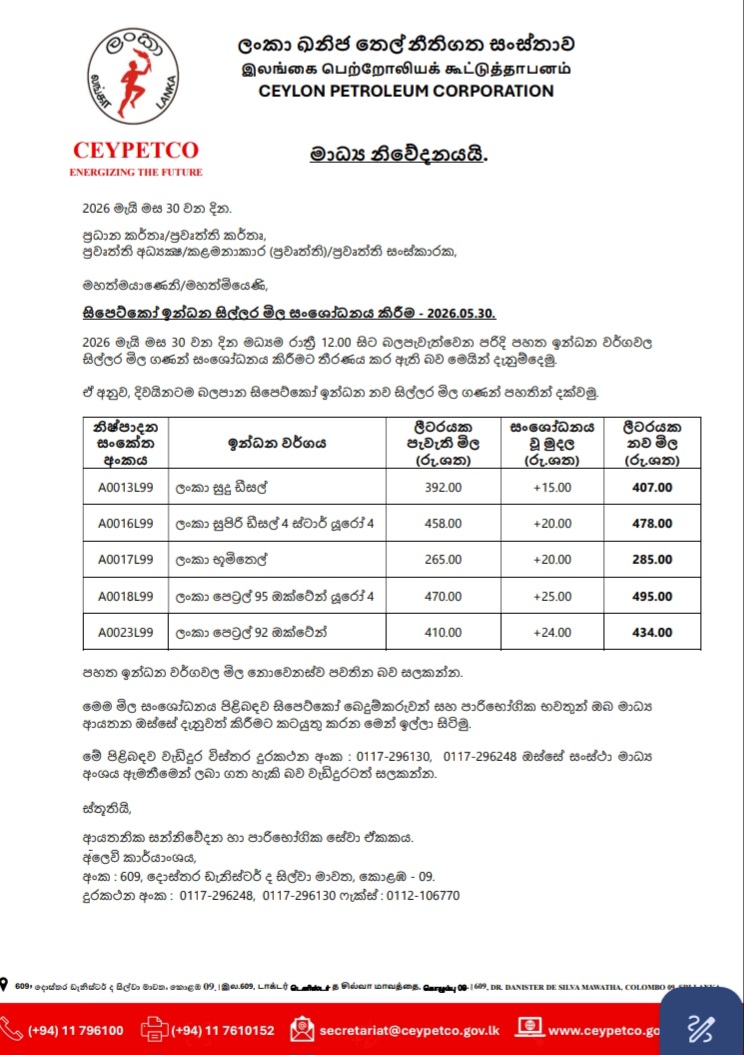
The Ceylon Petroleum Corporation (CEYPETCO) has announced a revision of fuel prices, effective from midnight on Saturday (May 30).
Accordingly,
the price of Auto Diesel has been increased by Rs. 15 to Rs.407 per liter,
the price of Super Diesel has been increased by Rs. 20 to Rs. 478 per liter.
the price of Petrol 92 Octane has been increased by Rs. 24 to Rs. 434 per liter
the price of Petrol 95 Octane up by Rs. 25 to Rs. 495 per liter
the price of kerosene by Rs. 20 to Rs. 285 per liter.

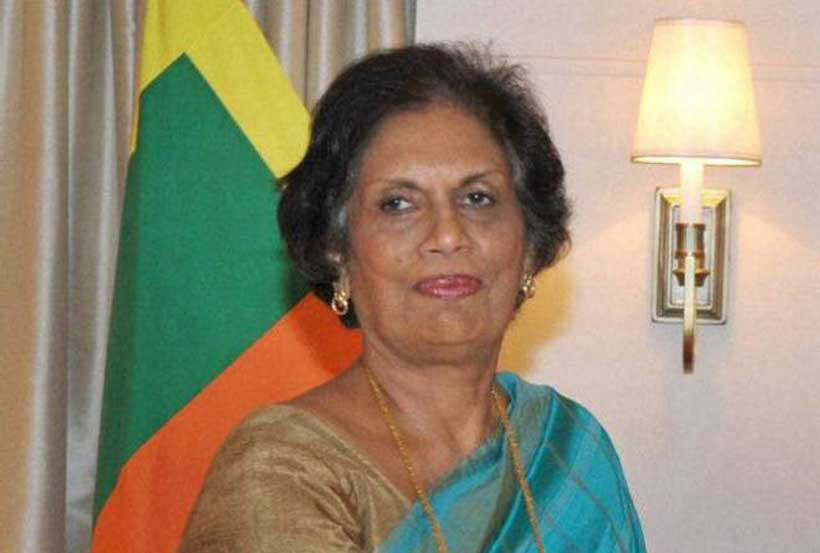
Former President Chandrika Bandaranaike Kumaratunga has called for a comprehensive reform programme within Sri Lanka’s Buddhist clergy, warning that repeated efforts to strengthen the Sasana have in the past been derailed by opposition from within sections of the Sangha itself.
In a statement addressed to the Mahanayake Theras of the three Buddhist chapters, Kumaratunga stressed that the long-term preservation of Buddhism depends on safeguarding both the Dhamma and Vinaya, or disciplinary code, and urged urgent internal reform to address what she described as deep-rooted structural weaknesses.
She noted that Buddhist history has consistently demonstrated that periods of institutional crisis were addressed through reform processes, citing precedents from the First Buddhist Council to reforms during the Kandyan era under Welivita Sri Saranankara Thera.
Referring to post-independence efforts, Kumaratunga said initiatives taken during the 1956 Bandaranaike administration to strengthen Buddhism were left incomplete following the assassination of former Prime Minister S.W.R.D. Bandaranaike.
She further stated that during her own presidency, plans to convene a Buddhist Council under the guidance of the late Madihe Pannasiha Mahanayake Thera had received government backing but were ultimately abandoned due to resistance from certain sections within the clergy.
The former President alleged that, on both occasions, vested interests benefiting from existing weaknesses within the Buddhist establishment had worked to obstruct meaningful reform efforts.
Warning that Buddhism in Sri Lanka is currently facing serious challenges, she called for a broad internal dialogue within the Sangha to identify root causes and implement both short- and long-term corrective measures.
Kumaratunga urged the Mahanayake Theras to take the lead in convening a Dharma Sanghayana, or Buddhist Council, and said she was prepared to work with senior lay Buddhist leaders to support such an initiative.
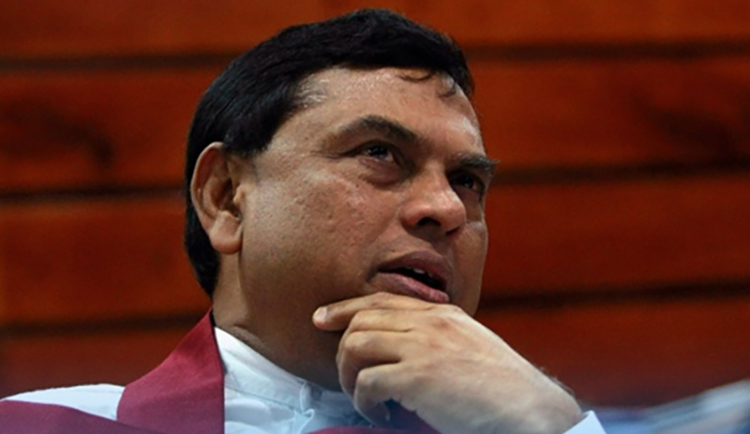
The Colombo Fort Magistrate’s Court on Friday ordered the arrest of former Minister Basil Rajapaksa, Tourism Promotion Bureau Chairman Bhashwara Gunaratne, Managing Director Rumi Jauffer and several others over the alleged misuse of Rs. 7.8 million belonging to the Tourism Promotion Authority during the 2014 Uva Provincial Council election campaign.
Magistrate Pasan Amarasena directed the Criminal Investigation Department (CID) to arrest and produce the suspects before court, after it was informed that they would be named under the Public Property Act on the advice of the Attorney General.
The CID told court that attempts to take the suspects into custody from their residences had been unsuccessful as they were not present.
The Magistrate also imposed an overseas travel ban on the suspects and ordered that the Controller of Immigration and Emigration be notified.
Investigations have reportedly revealed that the funds were used to print 12,000 T-shirts bearing an image of former President Mahinda Rajapaksa on one side and the name of a political party on the other.
According to the CID, the T-shirts were later distributed at a political event held in the Monaragala District.

‘Disappointing’ – Sangakkara on Sam Curran turning out for Surrey with IPL still on

Truck carrying Afghan returnees from Pakistan flips on highway, killing 18

PSG beat Arsenal to win back-to-back Champions League titles after shootout

What Hegseth’s comments at Shangri-La Dialogue say about US foreign policy

Home comfort vs championship pedigree as Gujarat Titans and Royal Challengers Bengaluru collide in IPL 2026 final

Minhas’ record-breaking debut sets up handsome Pakistan victory

‘Dates have the highest sugar content to fight Coronavirus’

Sunday Island 27 December – Headlines

#SundayIsland 17th December – Headlines

Sunday Island – 28th March

Sunday Island Headlines – 21 March

Sunday Island – 21st February – Headlines
-
 News6 days ago
Police probe underway to ascertain links between criminals deported from UAE and local politicians
-
 News5 days ago
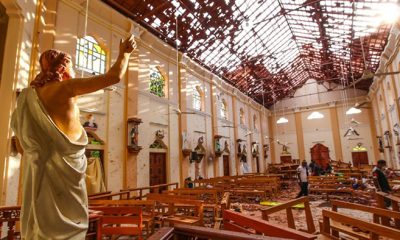
Easter Sunday carnage: Court told Maulana’s statement cannot be accepted without cross-examination
-
 News1 day ago
IMF urges Lanka not to meddle with exchange rate
-
 Opinion5 days ago
Undermining the democratic political framework
-
 News5 days ago
UK passport holder hiding here wants to have deportation order rescinded to leave without blemish
-
 Features2 days ago
The Division Bell Mystery
-
 News6 days ago
Dickoya double murder suspect arrested
-
 Midweek Review4 days ago
Israeli-US aggression won’t go unanswered -Iranian Ambassador