
Features
Scott Dirckze – Boss, Mentor and Friend

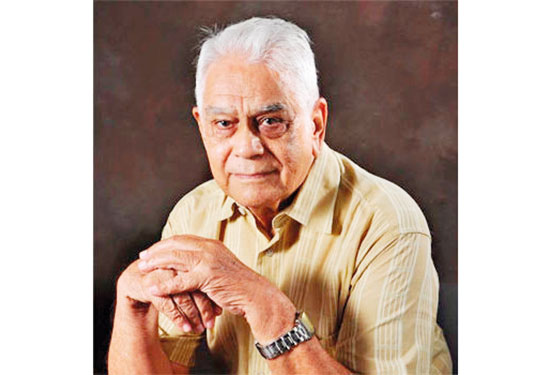
by Anura Gunasekera
Sujit Canagaretna, in a moving and masterful appreciation of Scott Dirckze, written soon after the latter’s demise in November 2019, has, in the opening paragraph itself, perfectly summed up the multi-faceted man whom he had known from childhood.
Quote. “Humanitarian. Corporate Leader. Entrepreneur. Agriculturist. Raconteur. Citroen Aficionado. Historian. Classical Musicophile. Art Collector. Consummate Host. Explorer. Gentleman. Friend“. Unquote; Elsewhere in the same writing, Sujith refers to Scott as a “Polymath” and “A Renaissance Man”.
I cannot better that description, concise yet all-inclusive. However, on the eve of what would be his 92nd birthday, I would like to share my personal impressions of Scott, as a belated tribute to a man who featured prominently in my life for over half a century, especially as a sounding board in times of uncertainty and, often, shaping my personal direction.For over 50 years, the 4th of July was an important day in my calendar; nothing to do with the Independence Day of the United States of America but because it is Scott Dirckze’s birthday, which he always celebrated in great style. I first attended the celebration in 1968. Since then, if I did miss it, there would have been a very important reason, as it was, literally, a standing but command invitation. Many years ago, the day before the event, I rang him and asked whether I and Malini – my wife – could arrive a bit late as I had another important matter to attend to. He chuckled and said, “Anura, please come early; you can watch the Wimbledon final on my bedroom TV”; a perfect example of Scott’s droll humour! He was all too well aware of my passion for tennis. At that time, he was Chairman of George Steuart & Co, and I was a senior manager of the company.When Malini and I got married in 1971, I had no second choice as my attesting witness. In fact, the two of us were driven away from the function in his beloved, blue and grey Citroen ID 19, chauffeured by his then driver, Dhanapala. At our daughter, Mihirini’s wedding twenty-five years later, Scott again did the honours as her witness. He was deeply touched that we made the request, but it was simply a measure of both our respect and affection for the man.
I first met Scott in 1967, a little over a year after I left school, for me a time of uncertainty and rootlessness. My friend, the late Trevor Roosmale-Cocq, then an estate executive at George Steuarts and later its Managing Director, decided that I needed sane and mature counseling. So, he took me to the man he respected most.
That first image of Scott, wearing a Thai batik shirt and cream slacks, seated on a divan below the large painting of Weligama Bay, in the simply but tastefully appointed sitting room of his modest Park Road residence, is still very vivid and framed him in my mind for the rest of our relationship. To mask my nervousness at meeting a man of obvious importance, a director of the most prestigious estate agency house in the country, I ostentatiously lit a cigarette and helped myself generously to his whiskey. But I shall never forget Scott’s unaffected friendliness and how quickly he put me at ease.
Scott was both practical and kind in his advice. Citing himself as an example, he explained what he considered to be the total uselessness of his classical education – an Honour’s degree from Cambridge –and its irrelevance to the needs of a country, struggling to free itself from the limitations imposed by centuries of foreign dominance. That, he said, was what motivated him to become an accountant, thereafter. When, some months later, I joined the Police Department as a Sub-Inspector, he did not suggest that I was being imprudent. He only said, “Anura, it can be a good career. Just make certain that you have the IGP’s baton in your pocket all the time. You may need it one day”.
Six months later I left the Police and joined George Steuarts as a planter trainee. Twelve years later, when I discussed with him my intention of leaving planting to join the newly established local subsidiary of a foreign production company, he expressed serious misgivings about my choice. I did not heed his advice but a few months on events confirmed his worst apprehensions. However, he was kind enough to facilitate my entry to a highly respected local conglomerate, when, for a number of reasons, my position with my then employer had become untenable. A couple of years later, when I re-joined George Steuarts and eventually became its head of administration and human resources, Scott, as the then Managing Director, became my immediate reporting connection. Despite the deference I always extended to him on all official occasions, he insisted on maintaining an easy friendship. The onus was on me to remember that my friend was also my employer and immediate superior.
Scott was a wonderful traveling companion to places of interest in the country, on account of his encyclopedic knowledge of its history, places, people and, especially, its agriculture, in which he was passionately interested. For him the high points of such trips were the dining stops at humble roadside eateries, where he would wade in to locally made sweets – “Gnana Katha”, a supremely unhealthy combination of sugar and flour, was a favourite, along with oily Chinese rolls of uncertain origin and dubious hygiene – washed down, invariably, with Elephant House Cream Soda, whilst engaging in long conversations with servers and fellow diners in his grammatically precise Sinhala; another contradictory aspect of this multifaceted Cantabrigian. I believe the vernacular was more effective for being delivered in a clipped, British accent!
He was a classicist who became an accountant but who may have been happier as an automobile engineer, or a paddy cultivator in the North Central Province, or a tea grower in the Morawak Korale. In fact, for many years Scott was thus engaged, first with his fifty-acre paddy farm close to Mihintale and, later, with little tea estates in Neluwa and Ingiriya, consecutively. Kannattiya Kele Watte, the paddy farm was, for decades, one of our favourite holiday destinations. In between, there was also a dalliance with a rubber plantation in Kuruwita.
As for Scott’s knowledge of automobile engineering, I have heard him explain precisely, over the phone from his hospital bed to a mechanic perplexed by the intricate electricals of his latest model Citroen, how to carry out a complex repair. A favorite, post-retirement pastime was the buying and restoration of derelict vehicles – invariably Peugeots or Citroens – under his supervision, in the little workshop that he had set up at his home in Pelawatte.
Scott came from a highly conventional, upper middle class Burgher family. He lost his mother when very young and was brought up, largely, by his father Dr. Herbert Dirckze, who retired as Chief Medical Superintendent of Colombo. On his return from Cambridge, he taught briefly at Royal College, Colombo – his old school – before joining Mackwoods, eventually becoming its Head of Finance. In 1964, he joined GS&Co at the invitation of its Board, replacing the retiring Finance Director, John Ferguson. Scott became Managing Director in 1973, when Tony Peries, then Chairman, abruptly left the country, paving the way for Trevor Moy to become the Chairman. Scott became Chairman in 1986, on Moy’s retirement and himself retired in 2001. One of Scott’s greatest disappointments in professional life was that unlike the other Agency Houses, GS&Co was unable to branch out into new businesses early, in preparation for the impending nationalization of large private plantations and the consequent loss of the lucrative estate agency business. Scott attributed this failure, not so much to a lack of foresight, but more to a combination of restrictive historical circumstances and the aversion to both change and risk, on the part of a Board which, till 1964, was entirely British.
Amongst his friends Scott will be remembered best for his unobtrusive generosity to those in need, the deep caring for friends and the meticulously organized, lavish parties at his home, which always represented a bewildering, but enchanting, diversity of cultures, personalities, professions and socio-economic levels. Often, his invitation to a gathering at his home would be qualified by the comment, “the food may be mediocre, but I guarantee that the company will be interesting”.
Scott’s sparkling wit has produced numerous gems over the years. Often, he was the object of his own satire. Some years ago, after he was fitted with a stent on account of a minor cardiac deficiency, I asked whether he was in any physical distress as a result. His immediate reply was, “my dear boy, I felt absolutely no pain till I saw the bill”.
A couple of years before the nationalization of plantations and the threatened state acquisition of other private businesses, a well-known British head of a large commodity broking company made what was then considered, under prevailing circumstances, a rather daring investment. When this was discussed at a gathering at which Scott was present, he had offered the pithy observation, “well gentlemen, I fear he will soon be taken over, “Boss-Stock and Barrel”, sending all present in to paroxysms of laughter; Scott was brilliant at the pun.
He was a totally honest man who despised pretension and hypocrisy. He did not hesitate to expose such in others, irrespective of station, with well-placed, often biting observations. He was always witty, sometimes sardonic but never malicious; acerbic though, if the circumstances warranted, when his razor-sharp tongue would be fully unsheathed.
Notwithstanding Scott’s semi-Victorian upbringing, education and Westernized background, he was passionately Sri Lankan, and a fierce advocate of local products, local innovation, and of the imperative of achieving sustainability through national enterprise.
Till the very end, despite multiple medical complications in the latter years, Scott retained that irrepressible sense of humour, intellectual interest in a disparate array of subjects, the incredibly retentive memory and his concern for fellow men; and, irrespective of the circumstances, he never lost his refined and charming old-world courtesy, another distinctive feature of his personality. In many ways Scott was unique and the last of an ilk, for that ilk died with him.
Some years ago, at the funeral of Abey Ekanayake, a dear mutual friend, as the smoke rose from the funeral pyre Scott turned to me and said, with tears in his eyes, “there goes a very good man; I will miss him very much”. At Scott’s funeral, as the earth tumbled on to the casket, another mutual friend, Nihal Ratnaike, said to me with great sadness, “he was a good and dear friend; I shall miss him very much”. Those are my sentiments as well. I can pay Scott, that fine human being, no greater tribute.

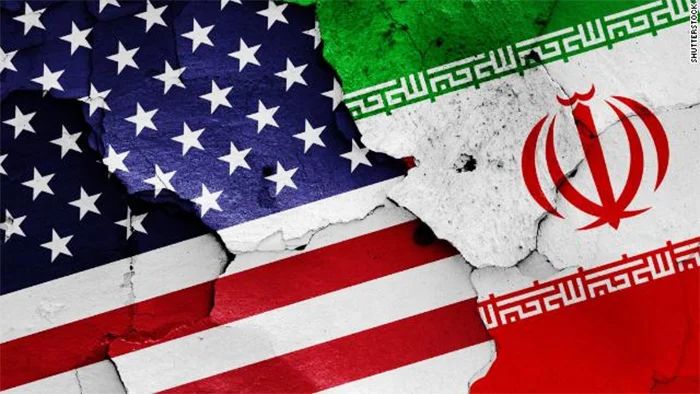
When the strait shuts:
 In the early hours of February 28, 2026, the world changed. Joint United States and Israeli airstrikes on Iran, meticulously planned, devastatingly executed, killed Supreme Leader Ali Khamenei, destroyed large swathes of Iran’s nuclear infrastructure, and triggered the most consequential military confrontation in the Middle East since the Iraq War. What followed was not merely a regional conflict. It was an economic earthquake felt from the trading floors of New York to the fuel queues of Colombo.
We are going to examine how a war fought in the Persian Gulf rewrote exchange rates across the global economy, and why a small island in the Indian Ocean, still recovering from its own financial near-death experience four years ago, found itself once again staring into an economic abyss.
From Maximum Pressure to Maximum Destruction
On February 28, the strikes began. The operation was vast and transformative. Iran’s air defences were systematically destroyed. Its missile production facilities were crippled. And its political leadership was decapitated. In response, Tehran did something it had always threatened but never done: it closed the Strait of Hormuz.
That decision, to block the 21-mile-wide waterway through which approximately 20% of global oil supplies flow, set off a chain of economic consequences that no government, central bank, or multilateral institution had fully stress-tested for.
The Oil Shock and What It Did to Currency Markets
The numbers tell the story with stark clarity. Brent crude, which had been trading at $71.32 per barrel on February 27, jumped 8% to $77.24 in the first two trading days of the conflict. Within a week, following the declaration that the Strait was “closed,” WTI crude surged more than 35%, the biggest weekly gain since the futures contract began in 1983, ending the week at $90.90. Brent climbed 28% to $92.69 in the same period. By early March, Brent had surged past $120 per barrel. The International Energy Agency characterised it as the “largest supply disruption in the history of the global oil market.”
This was not merely an oil price story. Oil is the world’s most foundational commodity, priced in US dollars, embedded in the cost of virtually every manufactured good, agricultural product, and service. When oil prices surge by 45%, as they did between February and April 2026, the consequences ripple through exchange rates with a logic that is both mechanical and unforgiving.
For oil-importing emerging market currencies, the mathematics were brutal. When oil prices rise in dollars and a country pays for oil in dollars, there are two simultaneous pressures on the exchange rate. First, the country must acquire more dollars to pay for the same volume of imports, increasing demand for the greenback and putting downward pressure on the domestic currency. Second, higher oil prices widen the current account deficit, removing the trade-balance support that usually anchors currencies. This double blow struck Asian, African, and Latin American currencies with particular force. Gasoline prices rose in 106 countries in the three weeks following the start of the conflict. The European Central Bank postponed planned interest rate cuts, raised its inflation forecast, and cut its growth projections.
Oil exporters told a different story. The Gulf states, Saudi Arabia, the UAE, Kuwait, saw windfall revenues at the very moment their physical infrastructure was under threat. Iran’s strikes on Saudi Arabian oil refineries and energy facilities injected volatility into the already fractured GCC calculus: higher oil revenues on one hand, higher security costs and diplomatic complexity on the other.
The Ceasefire and Its Limits
After five weeks of fighting, Pakistan and China delivered a joint peace initiative on March 31, 2026. On April 7–8, the United States and Iran agreed to a two-week ceasefire, with Iran committing to reopen the Strait of Hormuz. Markets reacted with violent relief. The S&P 500 and Nasdaq surged 3–4% in futures markets overnight. Oil prices fell nearly 25% from their peak. Equities that had slid 8–12% from pre-conflict highs began recovering.
But the ceasefire was “relief, not resolution.” The Strait of Hormuz remained at just 5% of pre-conflict shipping traffic five weeks after the ceasefire announcement. Supply chains do not unsnarl overnight. On May 7, the United States conducted further airstrikes on military sites in southern Iran and Tehran following Iranian targeting of US warships. A memorandum of understanding, intended to bring the conflict to a formal end within 60 days, was announced by mediators on June 14, with signing set for June 19. As of this writing, the conflict has not been formally resolved and nuclear negotiations are expected to begin under the framework.
Goldman Sachs projected that under an adverse scenario, 10 weeks of disruption and infrastructure damage, Brent could peak at $160 per barrel before settling at $115 in the fourth quarter of 2026. Even the base case of $105–115 per barrel through mid-year represents a sustained energy shock with no parallel in the post-2008 global economy.
Sri Lanka: The Compound Vulnerability
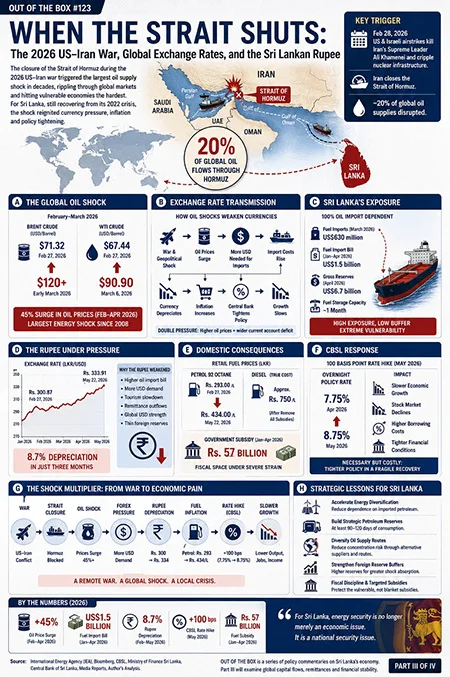 Sri Lanka has a particular relationship with oil price shocks that is unlike almost any other country of its size. It imports 100% of its oil. Its domestic energy infrastructure is built almost entirely around petroleum products. Its foreign exchange reserves, rebuilt painstakingly from near-zero during the 2022 crisis to $6.46 billion by the time the NPP government assumed office, have since grown sluggishly reaching only $6.87 billion by early 2026, a modest gain that offered little buffer against a shock of this magnitude, remain thin relative to the country’s import requirements. And it routes the overwhelming majority of its oil imports through the Strait of Hormuz.
When that strait closed in March, 2026, Sri Lanka’s exposure was immediate, structural, and arithmetically severe. The fuel import bill jumped 74.7% year-on-year to US$630 million in March, 2026, alone. Reserves fell 3.8% to approximately $6.7 billion after the country spent $1.5 billion on fuel imports in the first four months of the year. Sri Lanka’s monthly storage capacity covers only one month of consumption, making it acutely vulnerable to supply disruptions that persist beyond a few weeks.
The exchange rate impact was direct and rapid. The Sri Lankan rupee, which had traded at approximately Rs. 300 to the US dollar at the start of 2026, fell sharply from early March. The currency tumbled 8.7% from its pre-conflict level within weeks. By late May 2026, commercial bank selling rates stood at approximately Rs. 334 per dollar, a 5.4% year-to-date depreciation against the greenback.
Every rupee of depreciation compounds the damage: a dollar-priced barrel of oil that cost Rs. 21,300 at Rs. 300/$ costs Rs. 23,700 at Rs. 334/$, before accounting for the price rise in the barrel itself.
The compounding of the exchange rate depreciation on top of the oil price surge created a fuel price crisis that has no precedent in the post-2022 recovery period. Petrol 92 at CEYPETCO stations, which stood at Rs. 293 per litre 12 weeks before, had risen to Rs. 434 per litre by late May, a 48% increase in the space of three months. The true import and distribution cost of diesel was approximately Rs. 750 per litre, requiring a government subsidy of Rs. 57 billion over a three-month period to keep pump prices at Rs. 407.
The Central Bank’s Painful Choice
The Central Bank of Sri Lanka faced the classic emerging market dilemma that oil shocks create: a currency under pressure from capital outflows and import costs, combined with inflation driven by energy prices, in a context where raising interest rates to defend the currency would choke off the economic recovery that the country had barely begun.
On May 26, 2026, the CBSL made its call. It raised the overnight policy rate by 100 basis points to 8.75%, its first monetary tightening in three years, and the largest single hike since the depths of the financial crisis in March 2023. Seven out of twelve economists polled by Reuters had predicted only a 25-basis-point move. The shock was deliberate: the CBSL was signalling that price stability had been elevated over growth promotion.
The consequences were immediate. The Colombo Stock Exchange fell 0.8% on the day of the announcement. Growth forecasts were cut, from 4.2% to 3.0% by at least one major equity research firm. The Central Bank Governor acknowledged that the 4–5% growth projection for 2026 was now achievable only “at the lower band.” Capital Economics observed that the rate hike “highlights the country’s vulnerability to the crisis in the Middle East, and is unlikely to be the last unless the crisis subsides soon.
More encouragingly, BMI (a Fitch Solutions unit) projected that the rupee could recover to Rs. 320 per dollar by year-end, on the assumption that the Iran war concludes by June and oil prices ease. An IMF board meeting was scheduled to approve a $700 million tranche to Sri Lanka under the ongoing $2.9 billion programme, a lifeline that, if disbursed, would provide critical reserve support.
The Broader Lesson
What the 2026 Iran war has demonstrated, with a clarity that no academic model can replicate, is that geopolitical shocks are not symmetric in their exchange rate effects. The same event that provides a windfall for oil exporters imposes a compound penalty on oil importers, and the penalty is largest for countries whose currencies are weakest, whose reserves are thinnest, whose import dependence is highest, and whose recovery from previous crises is most recent.
Sri Lanka is, in 2026, the canonical case study. It has done almost everything right since 2022: restructured its debt, rebuilt reserves, maintained an IMF programme, restored exchange rate stability, and begun recovering economically. None of that inoculated it against an exogenous shock of this magnitude. The rupee’s 8.7% fall from pre-conflict levels, the $1.5 billion fuel import bill in four months, the 100-basis-point emergency rate hike, these are the costs a small, import-dependent, oil-importing island economy pays when the world’s energy arteries are severed by war.
There is a policy lesson embedded in these numbers. Sri Lanka’s energy vulnerability, its total dependence on imported fossil fuels routed through a single geopolitical chokepoint, is not merely an economic problem. It is a national security problem. The Strait of Hormuz is not a permanent fixture of reliable global trade. The 2026 war has proven, at enormous cost, that it can be closed. Any serious national energy strategy must treat that closure not as a tail risk but as a planning scenario.
The hard work of diversifying energy sources, accelerating renewable capacity, building strategic petroleum reserves, and reducing the share of petroleum in the import bill is not merely desirable. Since February 28, 2026, it has become existential.
(The writer, a senior Chartered Accountant and professional banker, is Professor at SLIIT, Malabe.
Views expressed in this article are personal.)
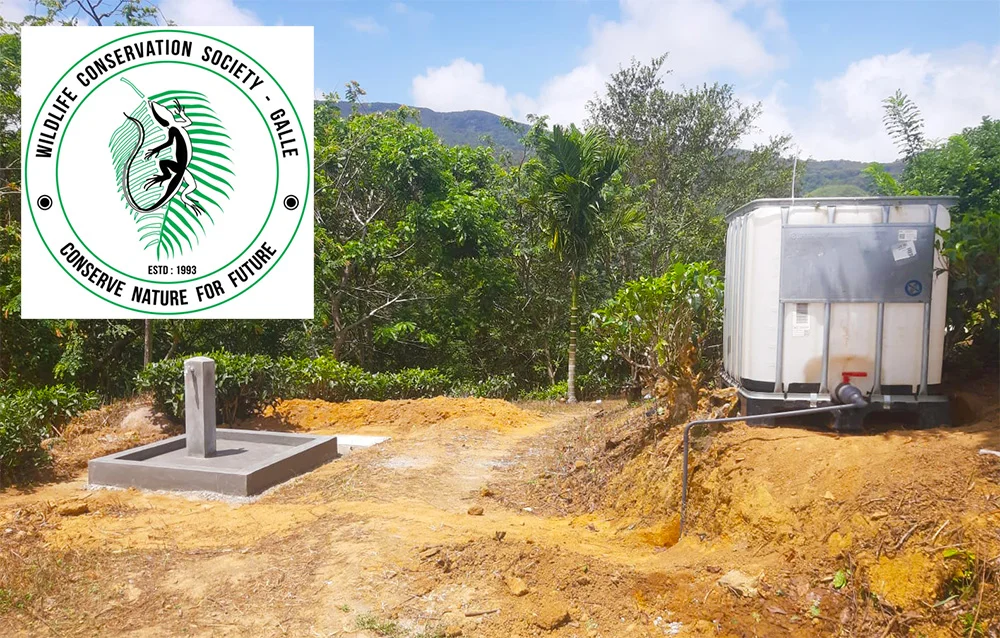
When discussions turn to Sri Lanka’s freshwater fish diversity and the urgent need to conserve it, attention is often focused on rivers, streams, reservoirs and water quality.
Yet scientists are increasingly finding that what happens on the land surrounding these waterways can be just as important as what happens in the water itself.
A recent study led by researcher Janamina Bandara of the Wildlife Conservation Society, Galle, together with researchers Sudath Nanayakkara and Sahan Randeniya, highlights how changes in forest cover caused by human activities can significantly influence freshwater fish populations in the hill streams surrounding the Sinharaja rainforest.
Their research sheds light on a relatively understudied aspect of tropical freshwater ecosystems—how alterations to vegetation cover, particularly through commercial cultivation such as tea and cardamom plantations, affect fish communities inhabiting headwater streams.
Hidden Riches of Tropical Streams
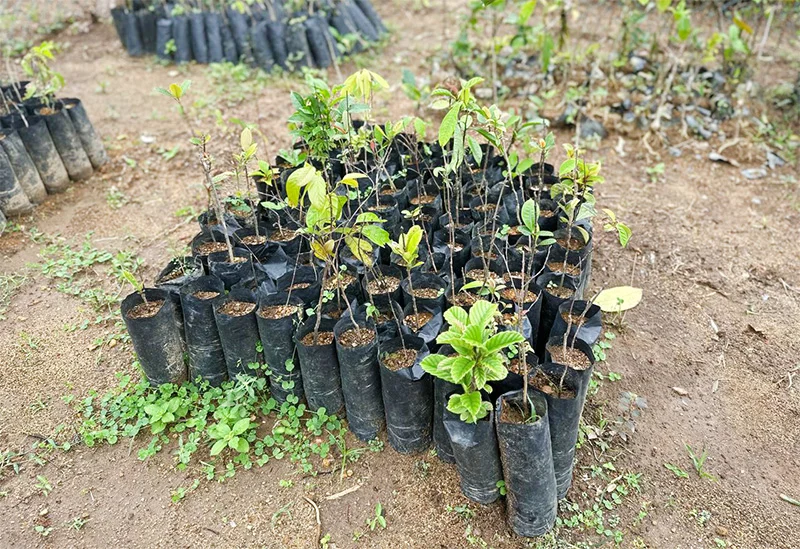
Forest plant saplings
Sri Lanka’s freshwater ecosystems are globally recognised for their remarkable biodiversity and high levels of endemism. However, despite their ecological significance, many ecological processes operating within these habitats remain poorly understood.
“Freshwater ecosystems in the tropics harbour extraordinary biodiversity, but many of the ecological relationships within these systems are still not fully documented,” researcher Janamina Bandara told The Island.
The study focused on sub-montane streams in the Sinharaja landscape, examining how varying levels of forest cover influence freshwater fish assemblages.
Researchers investigated whether fish communities differed between streams flowing through relatively undisturbed forests and those surrounded by modified vegetation resulting from agricultural activities.
Spotlight on a Critically Endangered Species
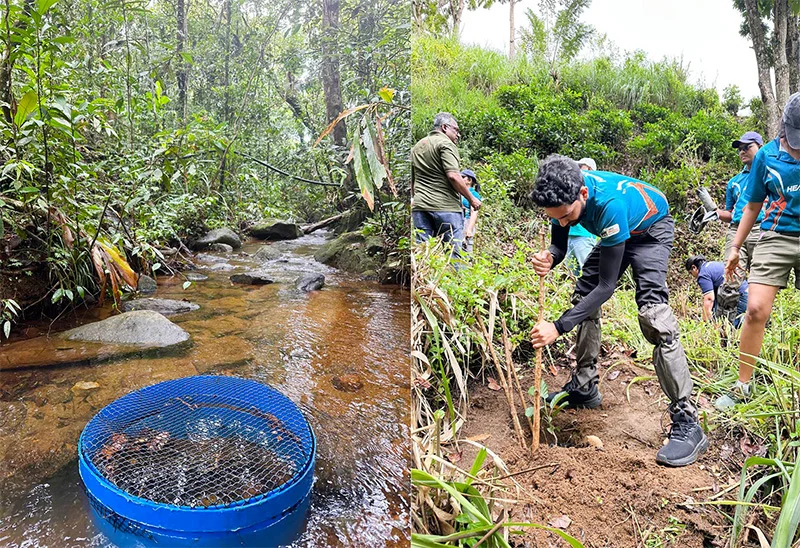
Leaf litter bay / Restoration activities
Particular attention was given to the critically endangered Rakwana loach (Schistura madhavai), a highly restricted endemic fish species first described from the Suriyakanda-Rakwana region.
Commonly referred to as a hill-stream loach, the species inhabits clear, fast-flowing streams and is considered highly sensitive to environmental disturbances.
According to Bandara, while broad community-level analyses did not reveal dramatic differences across all fish populations, species-specific responses painted a very different picture.
“Our findings show that Schistura madhavai exhibits a clear preference for streams flowing through intact forest habitats,” he explained. “The species becomes less common in areas where surrounding vegetation has been altered by human activities.”
Why Forests Matter to Fish
Forests bordering streams play multiple ecological roles. They regulate water temperature by providing shade, contribute organic matter that supports aquatic food webs, stabilise stream banks and help maintain water quality.
When these forests are removed or replaced with plantation crops, the resulting environmental changes can cascade through freshwater ecosystems.
Bandara noted that altered forest cover can influence water chemistry, microclimatic conditions, stream-bed composition and the availability of food resources.
“As riparian vegetation changes, a series of environmental conditions within the stream also change. Sensitive species such as Schistura madhavai appear particularly vulnerable to these shifts and may gradually disappear from modified habitats,” he said.
The research suggests that even subtle changes in habitat structure can have disproportionate impacts on species with narrow ecological requirements.
The Importance of Looking Beyond Numbers

Schistura madhavai
One of the most intriguing findings of the study is that ecosystem degradation may not always be apparent when scientists assess entire fish communities collectively.
In some instances, environmental variables appeared to have little effect on overall fish abundance or diversity. However, when individual species were examined separately, clear patterns emerged.
For example, variations in the amount of detritus—organic matter that accumulates on stream beds and serves as a vital food resource—did not significantly affect the overall fish assemblage. Yet for certain species, including habitat specialists, such changes proved critically important.
“This highlights a key conservation challenge,” Bandara said. “If we only look at total fish numbers or community-wide patterns, we may overlook serious declines occurring among environmentally sensitive species.”
Indicator Species as Ecological Sentinels
The findings underscore the importance of using so-called “indicator species” in environmental monitoring programmes.
Indicator species are organisms whose presence, absence or abundance reflects the health of an ecosystem. Because they respond rapidly to environmental change, they can provide early warnings of ecological degradation.
The Rakwana loach appears to fit this role exceptionally well.
“Species with narrow habitat requirements often act as ecological sentinels,” Bandara observed. “Monitoring them can provide a much clearer picture of ecosystem health than relying solely on broad biodiversity assessments.”
For conservation practitioners, this means that protecting sensitive endemic species may also help safeguard entire freshwater ecosystems.
Restoring Streamside Forests
Perhaps the study’s most important conservation message concerns the restoration of degraded riparian forests—the vegetation growing alongside streams and rivers.
Researchers argue that restoring these streamside habitats should be a priority in freshwater biodiversity conservation efforts.
Healthy riparian vegetation provides shade, reduces erosion, filters pollutants, enhances habitat complexity and supports the intricate ecological interactions upon which aquatic life depends.
“The restoration of degraded riparian forests is likely to be one of the most effective conservation measures for protecting freshwater biodiversity,” Bandara emphasised.
Such efforts could prove particularly valuable in landscapes where agricultural expansion has fragmented natural habitats.
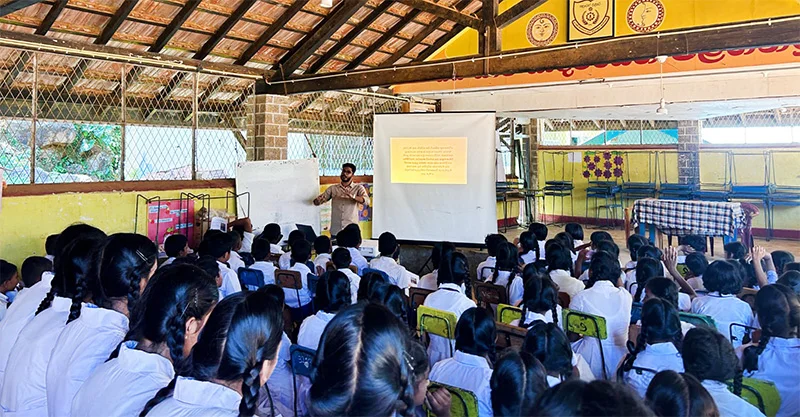
Awareness sessions
A Broader Lesson for Conservation
The study offers a timely reminder that freshwater conservation cannot be achieved by focusing exclusively on water bodies themselves. The surrounding landscape matters immensely.
From the mist-laden streams flowing down the Sinharaja foothills to the countless rivulets nourishing Sri Lanka’s river systems, the fate of freshwater biodiversity is intimately linked to the health of adjacent forests.
As conservationists grapple with accelerating habitat loss and climate-related pressures, the research demonstrates that protecting and restoring forest cover may be just as important as safeguarding the streams themselves.
In the case of the elusive Rakwana loach, the message is clear: save the forest, and you may save the fish.
For Sri Lanka’s unique freshwater biodiversity, that lesson could not be more important.
By Ifham Nizam
Sri Lankans have reason to take satisfaction in their country’s latest international achievement. Sri Lanka has climbed 14 places in the 2026 Global Peace Index to rank 67 in the world out of 163 countries that were assessed. At a time when global peacefulness is reported to be at its lowest level since the inception of the Index, and when more countries are experiencing deterioration than improvement, Sri Lanka’s progress stands out. The ranking reflects the country’s recovery from nearly three decades of war, its efforts to strengthen political stability and public security, and its resilience in overcoming the economic and political crises of recent years. The Global Peace Index assesses the strength of institutions, societal safety and security, and the capacity of societies to manage conflict peacefully.
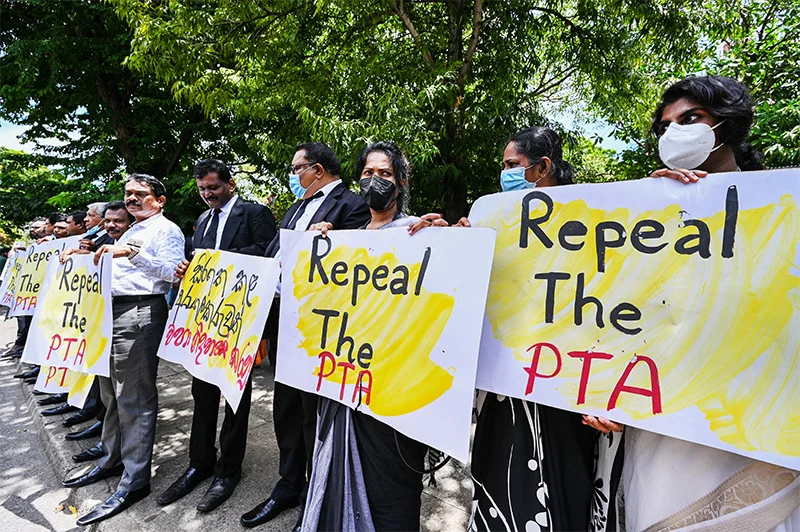
The challenge is to consolidate the gains that have been made and address those unresolved issues that continue to cast a shadow over the country’s future. It is in this context that two recent announcements by the government assume particular significance. Foreign Minister Vijitha Herath has announced that the Prevention of Terrorism Act (PTA), one of the most controversial laws in the country, will be repealed and replaced within two months. A report prepared by a committee appointed to make recommendations has already been handed over to him. According to the minister, the new legislation, to be known as the State Prevention of Terrorism Act, incorporates recommendations from civil society and is intended to comply with international standards on counter terrorism.
At the same time, Justice and National Integration Minister Harshana Nanayakkara has reaffirmed the government’s commitment to uncovering the truth about missing persons. During a visit to the Chemmani mass grave excavation site in Jaffna, he stated that the excavations should be completed expeditiously so that justice can be done and assured that the necessary resources have been allocated for the task. The excavations are taking place under judicial supervision with the participation of forensic experts, archaeologists, lawyers and representatives of the Office on Missing Persons. These commitments made by the government address two of the most contentious issues that have troubled Sri Lanka for decades. They also suggest that the government believes the country is now in a position to deal with difficult questions from its past rather than postpone them indefinitely.
After Breakthroughs
The timing of the pledge to repeal the PTA is particularly noteworthy. For many years successive governments promised to replace the law but failed to do so. Sri Lanka undertook to repeal it in 2017 as part of its commitments linked to retaining GSP Plus trade concessions by the European Union. Yet despite repeated assurances the law remained in force. The question therefore arises as to why the government now appears determined to act. One possible explanation is that the Easter Sunday investigations have reached a decisive stage. The investigation into the bombings that killed more than 260 people in 2019 appears to have made significant breakthroughs. If these investigations continue along their present course, it is possible that accountability will extend beyond those who directly carried out the attacks to those who may have facilitated, enabled or been part of a wider criminal conspiracy.
There is broad agreement within society that those who masterminded the dastardly Easter bombing must be held accountable and that the victims deserve the truth and justice. However, it is important that the process by which responsibility is determined is seen by the public to be fair, lawful and impartial. If those accused are convicted following a transparent judicial process that respects due process and the rule of law, the outcome is far more likely to gain acceptance across society. This is where the repeal of the PTA becomes important. A transition from a law associated with prolonged detention and exceptional powers to one that is more consistent with human rights standards would strengthen rather than weaken the legitimacy of the investigations. Accountability obtained through a process that is visibly fair will be more durable and less vulnerable to allegations of political motivation or selective justice.
The Chemmani excavations may also provide an example of how such credibility can be built. The process is taking place under judicial supervision and in full public view with the participation of independent experts. Whatever conclusions emerge, and follow up action is decided on, the process itself should command respect because it is transparent and accountable. The same principles can be applied to the Easter Sunday investigations. Public confidence is strengthened when investigations are conducted openly, when legal safeguards are respected and when the rights of both victims and accused persons are protected. The significance of these investigations may extend beyond the tragedy itself. There is likely to be an overlap between those who are eventually found responsible for the Easter Sunday conspiracy and elements of the state apparatus that exercised power during the final stages of the war.
Setting Precedent
For many years Sri Lanka has struggled to address allegations of wartime abuses. The issue has remained politically sensitive because it touches upon the conduct of those who were regarded by many as wartime heroes. Yet if the Easter Sunday investigations establish that senior officials can be investigated and held accountable when evidence warrants it, an important precedent will have been set. Once the deck is cleared through the Easter Sunday investigations and the judicial process that follows, it may become less difficult to address allegations relating to wartime abuses, including those connected to sites such as Chemmani where evidence is now being painstakingly uncovered. This would also strengthen Sri Lanka’s position internationally.
Since the end of the war in 2009, the country has remained under varying degrees of scrutiny by the United Nations Human Rights Council. In October 2025, the Council renewed the mandate of the Office of the High Commissioner for Human Rights to continue collecting and preserving evidence relating to past violations. The next review of Sri Lanka is due in September this year. The government now has an opportunity to demonstrate that Sri Lanka is capable of addressing difficult issues through its own institutions and according to its own democratic values. The commitments to repeal the PTA and to pursue investigations into missing persons can be seen in that light. Those who were victimized query as to what happened to their loved ones and to the information they know full well they entrusted to the government authorities and to the commissions of inquiry that were appointed. These are opportunities to show that accountability and national ownership can go hand in hand.
Reconciliation requires the difficult task of remembering truthfully. Too often Sri Lanka has sought stability by postponing difficult questions. Yet unresolved grievances do not disappear. They persist across generations and continue to shape political attitudes and communal relationships. Sri Lanka’s rise in the Global Peace Index is an achievement worth celebrating. But the true measure of peace is not only the absence of conflict. It is the presence of justice, trust and confidence in public institutions. The government’s commitments on PTA repeal, the Easter Sunday investigations and the search for truth regarding the disappeared suggest an awareness that old approaches have run their course. The government has an opportunity to break with the patterns of the past. The test now lies in implementation.
by Jehan Perera

Munoz sends Colombia into World Cup knockouts with 1-0 win over DR Congo

Animal Welfare Draft Bill to be Gazetted
Legal provisions on marking voters using indelible ink during elections removed

Showers will occur in the Western, Sabaragamuwa and North-western provinces and in Galle, Matara, Kandy and Nuwara-Eliya districts

Court vacancy row throws Parliament into turmoil; sittings disrupted

Climate, pollution, forest loss now hitting economy: BASL chief

‘Dates have the highest sugar content to fight Coronavirus’

Sunday Island 27 December – Headlines

#SundayIsland 17th December – Headlines

Sunday Island – 28th March

Sunday Island Headlines – 21 March

Sunday Island – 21st February – Headlines
-

 News6 days ago
Creditor receives USD 2.5 mn as Lankan public bears loss from theft of Treasury funds
-

 News5 days ago
Creditor not yet paid
-

 News5 days ago
Consumers bearing 22% tax burden despite 18% VAT claim: Dr. Harsha de Silva
-

 Opinion7 days ago
Beyond diagnosis: A strategic design for 7% growth by 2029 (Part I)
-

 Features4 days ago
Nanda Pethiyagoda Wanasundara as three generations of family saw her
-

 Opinion6 days ago
SriLankan Airbus struck by lightning
-

 Features3 days ago
Sri Lanka developing independent hydrographic capabilities
-

 Latest News3 days ago
Sooryavanshi thumps fastest List A fifty as India A win tri-series