
Editorial
The funny side of the fuel price hike

The post-announcement drama that followed the fuel price increase announcement would have been funny but for its ripple effect on the poor and not-so-poor. The rich and the well-to-do are one cup of tea; and the rest of the population another. The three-wheeler operator, whether he hires his own vehicle or that belonging to a mudalali, can and will increase his rate, but at the price of the number of hires he gets per day. A bus fare increase must follow, although how high that would be has not yet been worked out or announced. The haulage cost of essentials must rise and this will have a pervasive effect across the gamut of goods and services; and they will all come home to roost on the consumer. No wonder then that what many economists call a long delayed but essential measure has kicked up as much dust as it has and the government is already bleeding.
That’s one side of the coin. The other was the stunning statement of SLPP General Secretary Sagara Kariyawasam, harshly condemning the price increase and demanding the resignation of Energy Minister Udaya Gammanpila. Journalists cutting their teeth in the trade (they prefer it to be called a profession) are taught that in writing a news story, unlike in sex, the climax comes first. Kariyawasam’s statement was near enough to Gammanpila’s announcement for the script to conform to the pyramidal structure of a news story. There the least important or interesting material or information comes at the tail with the juicy stuff at the top. That makes it easier for the sub-editor to trim the ‘copy’ to fit into the available space; or for that matter for the reader not to wade through a long article. Kariyawasam, who is often presented in the media as an attorney-at-law, cannot be so naive as to believe that Gammanpila announced his own decision a few days ago. Obviously something this important has to have the concurrence of the president, prime minister and the hierarchy of the government. In this instance it was approved by the Cabinet Sub-Committee on the Cost of Living, headed by the president and including the prime minister.
But Kariyawasam ignored all that and demanded Gammanpila’s resignation. The latter who seized the opportunity to earn himself some brownie points said he volunteered to be the bearer of the bad news to spare the president and prime minister of the resulting flak. He also had the temerity to ask “Who is Sagara Kariyawasam?” JVP leader, Anura Kumara Dissanayake, gave him the answer. “He is the person who signed your nomination papers,” he replied. All that apart, Kariyawasam like Gammanpila, would not have fired the missile (or missive), ironically bearing the PM’s photograph on the letterhead, on his own volition. He was obviously instructed to do what he did by somebody powerful – very powerful. It has been widely suggested that this was dual citizen Basil Rajapaksa now sojourning in the USA, his first (or second?) home. He’s been away now for several weeks and no date of return has yet been mentioned although as head of a very powerful Task Force, his presence in the country is important.
There have been some feeble responses to this allegation. One of these was the assertion that if Basil, a powerful member of the Royal Family, wished to make his point, he could easily have spoken to either of his brothers, the president or the prime minister or even nephew, Namal. Instead why did he choose Kariyawasam to fire off a controversial statement if he indeed did so? The latter, of course, has a National List seat in Parliament together with a lifetime pension (for himself and his widow), courtesy of the taxpayer. For this he has to thank a powerful patron. This, some have it, is Basil Rajapaksa. But that, of course, remains an unproven and probably never to be proven allegation. It was Basil after all, who created the Sri Lanka Podu Jana Peramuna (SLPP), aka Pohottuwa, which leads the ruling coalition. Thus, apart from his position as an immediate family member of the leaders of the ‘Double Paksa’ government, as our regular columnist, Kumar David, delights in calling the ruling Establishment, he is much more. He created the party that won the last election and is its National Organizer. His influence then on cabinet making and National List choices would have been pervasive.
It is also pertinent to ask why the Samagi Jana Balavegaya (SJB) chose to bring a vote of no confidence against Gammanpila rather than against the government. The Sajith Premadasa party, obviously knows as well as everyone else that the fuel price increase was a government decision rather than one unilaterally made by the energy minister. Why then is it training its guns at the loquacious Gammanpila rather than the government itself? We are told that it’s all a matter of strategy debated in the inner councils of the major opposition party. The thinking is that if a no confidence motion was moved against the government, all its components will unitedly fight it. But if it is aimed at Gammanpila, there will be those deeply embarrassed about the price increases and its effect on their constituents who may be tempted to break ranks. Sagara Kariyawasam, for instance, will find it difficult to express confidence in Gammanpila. But he has an easy way out. He can be absent at voting time like so many have done before. Hopefully, Ranil Wickremesinghe would have taken his National List seat before the forthcoming debate. It will be interesting to hear what he has to say.



Hardly a day passes in this country without major drug detections and underworld killings. Inspector General of Police Priyantha Weerasooriya, speaking at this year’s Police Day ceremony in Colombo on Thursday (03), said police had seized large amounts of narcotics, including 1,416 kg of Crystal Methamphetamine, 946 kg of heroin, and 1,282 kg of cannabis and taken into custody 1,612 illegal firearms, including T-56 assault rifles and pistols, so far this year.
Sri Lanka is awash with illegal firearms, which have found their way into the underworld during the past several decades. Protracted armed conflicts led to an exponential increase in the number of lethal weapons in the wrong hands.
Immediately after the 2024 regime change, the MPs who had obtained repeater guns from the Defence Ministry were asked to return those weapons, and they readily complied for obvious reasons. But those guns account for only a fraction of the weapons issued to politicians and others over the decades. In January 2019, the then Defence Secretary Hemasiri Fernando disclosed that about 4,700 pistols and revolvers had been licensed but there was no information about those who had obtained them. Some individuals possessed as many as 15 small firearms each, he said.
One may recall that in 2023, the then State Minister Pramitha Tennakoon informed Parliament that the defence authorities had issued about 700 firearms to 154 politicians in the late 1980s, when the JVP went on a killing spree, but none of them had been returned. That figure cannot be accurate. According to anecdotal evidence, thousands of firearms were issued to politicians under threat during that period, and almost all of them have gone missing.
In the late 1980s, the JVP did not spare anyone who refused to obey its illegal orders. Its death-dealing sparrow units physically eliminated anyone who had the courage to voice dissent. Some political activists threatened by the JVP banded together to protect themselves, and the armed groups they formed, such as the PRRA (People’s Revolutionary Red Army) became as ruthless as the JVP killing squads; they eventually helped beat the JVP at its own game. Some of them switched their allegiance to the UNP, and worked as its shock troops.
The leftist parties and the SLFP, too, had to protect themselves against the JVP hit squads. The UNP set in motion a Caravan of Death, which scoured the country, killing JVP activists and suspects. What happened to the firearms used by pro-UNP vigilantes to carry out those extrajudicial killings?
Chris Smith, an expert on the proliferation of firearms, especially in South Asia has in his report, In the Shadow of a Cease-fire: The Impacts of Small Arms Availability and Misuse in Sri Lanka, has revealed that the weapons given to politicians in the late 1908s numbered more than 11,000. Many of them were not returned. The National Commission against the Proliferation of Illicit Small Arms (NCAPISA), established by President Chandrika Bandaranaike Kumaratunga in 2004, once quoted a senior police officer attached to the Police Central Armoury at the time as having said that 80% of those weapons had been returned. Even if so, going by Smith’s figure, more than 2,200 weapons have gone unaccounted for.
The proliferation of illicit firearms in Sri Lanka can be attributed to several key factors, according to researchers; they include gunrunning, illegal operations carried out by rogue elements in the police and the armed forces, local arms manufacturing, and criminals gaining access to arms caches of the LTTE. It may be recalled that the Colombo Crime Division produced 12 suspects before the Colombo Chief Magistrate on March 22, 2019, for having supplied weapons retrieved from buried LTTE arms caches in Kilinochchi to criminal gangs elsewhere. It was revealed in January 2025 that as many as 73 T-56 assault rifles had gone missing from an unnamed army camp. Soon after the decimation of the JVP’s military wing in 1989, a police sergeant sold a large stock of firearms, seized from the JVP and stored in the Kuliyapitiya police station, to underworld gangs at Rs. 15,000 each. The police could recover only some of those weapons.
The police must go all out to find the illegal firearms used by the JVP during its second uprising (1987-89). Most of the JVP’s arms caches have not been traced. SJB MP Dayasiri Jayasekara told Parliament on 27 Feb. 2025 that more than 2,000 illegal firearms looted by the JVP between 1987 and 1989 had gone missing. The JVP attacked several police stations and military camps and grabbed weapons. In April 1987, it seized the entire arsenal at the Pallekele army camp. Now that the JVP-led NPP has formed a government and launched a campaign to eliminate gun violence, the Defence Ministry may be able to ascertain information about those missing firearms, as we argued in a previous editorial comment.
The NCAPISA dealt extensively with the issue of illegal weapons in circulation in Sri Lanka. Its survey report contains valuable information, which, however, needs to be updated. Defence authorities should study this document thoroughly and commission a fresh survey on illicit firearms while carrying out operations to neutralise criminal gangs and seize lethal weapons in their possession.
The need for the police and the defence bigwigs to adopt a broader and more strategic approach to ridding the country of the scourge of illegal firearms, which snuff out lives almost daily, cannot be overstated.

Saturday 5th September, 2026
The Commission to Investigate Allegations of Bribery or Corruption (CIABOC) yesterday arrested National Organiser of the SLPP and MP Namal Rajapaksa in connection with a probe into an alleged Rs.100 million bribe linked to an airbus deal. It also took into custody former Minister Johnston Fernando over an investigation into an allegation that he arbitrarily cancelled a properly awarded contract and procured chairs from a company of his choice for the Polgolla Mahinda Rajapaksa Auditorium thereby causing a loss of Rs. 7.4 million to the state. Rajapaksa was remanded until 18 September.
The Opposition claims that its prominent members who are critical of the JVP-NPP government have become victims of a political witch-hunt, and legal action against them is aimed at silencing them. This claim is not entirely false, but those who are trying to portray themselves as victims failed to be above suspicion while in power.
There is no gainsaying that all those who have caused losses to the state coffers through corrupt deals, etc., must be brought to justice. Several former ministers have been imprisoned for misusing state funds. Opinion may be divided on the severity of the sentences awarded to them; the principle of proportionality in criminal law requires that punishment be commensurate with the seriousness of the offence and the offender’s degree of culpability, and penalties should not be excessively harsh or unduly lenient. However, the general consensus is that politicians and public officials who enrich themselves and/or further the interests of their parties by misusing state funds must be made to face the full force of the law. So, punishment meted out to corrupt politicians and their lackeys gladden the hearts of ordinary people.
Most politicians market their humble beginnings, as it were, during election campaigns to endear themselves to the public while living the life of Riley. Curiously, the SLPP politicians who asked for compensation for their properties torched by violent protesters during Aragalaya, were not required to explain how they had acquired those assets. The SLPP government generously paid colossal amounts of state funds as compensation.
Public sympathy is not with the politicians who are protesting against legal action against them over bribery, corruption and other such transgressions, and what they are facing now is generally considered their comeuppance. However, the government, which claims that everyone is equal before the law at present, will have to explain why the ruling party politicians who have committed the same offences as their Opposition counterparts are treated differently.
One may recall that Kumara Jayakody while serving as a Cabinet Minister in the current government, faced a very serious allegation that in 2016 as the Manager of the Procurement and Import Division of the Ceylon Fertiliser Company, he had caused a loss of over Rs. 8. 8 million to the state by influencing a procurement process related to the refurbishment of a warehouse complex for the benefit of a private company. The offences he and former Minister Fernando are alleged to have committed are similar in many respects. But Jayakody was not arrested. He was allowed to appear before the Colombo High Court, where he was indicted and given bail.
How can the government claim that everyone is equal before the law? Aren’t the ruling party politicians and their associates ‘more equal than others’ like the Pigs in Orwell’s Animal Farm?
Friday 4th September, 2026
Doomed are the nations that look on while rulers seek to perpetuate their grip on power through undemocratic means. John Stuart Mill famously observed in 1867: “Bad men need nothing more to compass their ends, than that good men should look on and do nothing.”
Adolf Hitler established an authoritarian rule in Germany by throttling democracy, which enabled him to capture power, and the entire world suffered as a result. His rise to power followed the Nazi Party’s victory at the July 1932 election, albeit without an absolute majority. After becoming the Chancellor, Hitler did not overthrow the Constitution. Instead, he systematically destroyed it from within by exploiting its emergency provisions, suspending its safeguards, manipulating the legislature and the judiciary and obtaining legal authority through legal amendments, etc., to introduce laws in defiance of it.
Today’s comment however is not about the Third Reich or what Hitler did to the Weimar Constitution. Instead, it is about Zimbabwe, a multi-party democracy that descended into dictatorship, and how that country’s Constitution was manipulated to undermine judicial independence.
In 2021, President Emmerson Mnangagwa’s government hurriedly secured the passage of a constitutional amendment Bill to raise the retirement age of judges, provoking a debate over whether it was proper to amend the Constitution to increase judicial tenure just in time to keep an incumbent Chief Justice in office. That amendment was obviously not part of a wider judicial reform initiative; it immediately opened the way for the then Chief Justice Luke Malaba to remain in office for another five years.
President Mnangagwa and his government craftily camouflaged their real intention, which was to retain Malaba, who was loyal to them; they undertook to raise the mandatory retirement age of the Chief Justice, Deputy Chief Justice and Judges of the Constitutional Court and the Supreme Court from 70 to 75. Malaba’s 70th birthday was only eight days away when the controversial constitutional amendment was passed. The government claimed that Parliament had lawfully changed the retirement age of judges, thereby authorising the continuation of the incumbent senior judges. But that regime could not dupe its critics and the international community, who pointed out that the Constitution did not allow any amendment to be introduced to the term-limit provision, benefiting the serving judges. They also argued that the amendment had been crafted and timed specifically to benefit Chief Justice Malaba.
Legal challenges and arguments were mainly focused on whether constitutional safeguards intended to prevent politicians from manipulating judicial tenure could be circumvented by a mere constitutional amendment without a referendum. Two applications challenging the position of the Mnangagwa government were filed before the High Court, and on the day Malaba turned 70, a three-judge High Court bench ruled that he had ceased to be the Chief Justice as well as a judge because increasing the retirement age effectively extended judicial tenure and therefore could not be applied to the serving judges without approval at a national referendum. The High Court ruled that it would amount to a violation of constitutional protections to allow an incumbent judge to benefit from the retirement age revision. The Mnangagwa regime tore into the High Court, condemning the bold judgement and appealed against it.
The appeal was lodged with Zimbabwe’s Constitutional Court, whose judges themselves had been cited in the original litigation as they were among the beneficiaries of the constitutional amendment at issue. They had no qualms about acting in contravention of the much-cherished legal maxim, nemo judex in causa sua, which holds that no person should adjudicate a matter in which he or she has a personal interest. The Constitutional Court overturned the High Court judgement, and Malaba remained in office.
Interestingly, when the revision of the judges’ retirement age was first mooted, Malaba was in the centre of a controversy over his handling of the Opposition’s legal challenge to the 2018 presidential election results. In the same year, the Constitutional Court, with Malaba presiding, dismissed the Opposition’s challenge to Mnangagwa’s election and confirmed Mnangagwa as President. Ironically, three years later, Malaba’s tenure was extended by a constitutional amendment moved under Mnangagwa’s presidency. A quid pro quo?
Malaba’s continuation in office was widely seen as an indication of the judiciary having become an appendage of the Executive. After his controversial extension of tenure, Malaba acted in a manner that was widely seen as partial to the Executive, and the constitutional amendment that enabled him to remain in office came to be dubbed the “Malaba Clause”. He retired a few months ago.
The Malaba affair may not have caused Zimbabwe to face a new round of sanctions, but it resulted in much international opprobrium, with the UN expressing serious concerns about the controversial constitutional amendment that undermined judicial independence.
One can only hope that no other country will suffer the same fate as Zimbabwe, where the separation of powers has been eroded and constitutional and judicial processes are manipulated for political ends.

Shree Charani, Prema Rawat spin Pakistan out for 55 in one-sided contest

Sun directly overhead Bentota, Thiniyawala, Iththakanda, Udawalawe, and Kataragama about 12.08 noon t9day (06)

Showers above 75 mm are likely at some places in the Uva and Eastern provinces.

Tharanga creates history with Diamond League crown in Brussels

UN welcomes Lanka’s anti-graft drive, seeks end to impunity

Dispute which triggered listed company director being detained at BIA resolved

‘Dates have the highest sugar content to fight Coronavirus’

Sunday Island 27 December – Headlines

#SundayIsland 17th December – Headlines

Sunday Island – 28th March

Sunday Island Headlines – 21 March

Sunday Island – 21st February – Headlines
-
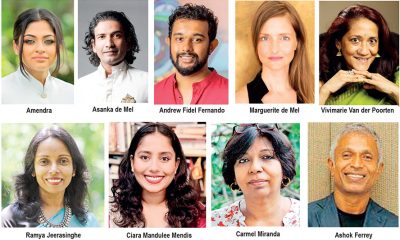
 Features6 days ago
When Sri Lankan stories find their own voice
-
 News6 days ago
BASL takes exception to Justice Ganepola being denied a place in SC
-

 News3 days ago
Denied of promotion to SC despite vacancies, justice Gurusinghe retires
-
 Latest News4 days ago
Grade 5 scholarship exam results released
-

 News3 days ago
22A: SC urged to suspend hearing, appoint full bench
-

 Midweek Review4 days ago
The local and global dynamics of Sri Lanka’s 22nd Amendment
-

 News4 days ago
Ai-CHA expands Lankan footprint with new Negombo outlet
-

 Business6 days ago
ADB-funded Thalaiyadi plant serves as blueprint for vulnerable dry zones in Sri Lanka