
News
Ranil urges govt. not to politicise and throw away GSP+

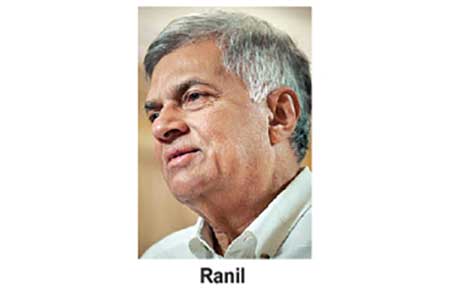
Former Prime Minister and Leader of the United National Party (UNP), Ranil Wickremesinghe yesterday urged the Sri Lankan government not to politicise and throw away the GSP-Plus trade concession granted by the European Union, cautioning that the economy would collapse in such an eventuality.
Issuing a statement in response to the recent resolution adopted by the European Parliament, which called for the temporary withdrawal of the Generalized Scheme of Preferences (GSP+) granted to the country, the former Premier recalled that his government had taken action to regain the trade concession to assist in developing the country’s economy in 2017.
“Our government took action to regain the GSP+ from the European Union to assist in developing the country’s economy in 2017. This facility provides Sri Lanka with permission to export goods to Europe without taxation, which led to a boom in the garment and fishing industries,” he said.
The former Premier said an issue has arisen in the European Parliament this week regarding the GSP+ tax concession. “We have been warned that this concession will be revoked,” he added.
Wickremesinghe pointed out that Sri Lanka’s tourism industry was at risk at this time due to the COVID-19 pandemic. “With the sinking of the X-Press Pearl, issues have arisen for our fishing industry as well. The number of people going abroad for employment has decreased. Therefore, our foreign exchange has fallen,” he said.
He noted that Sri Lanka had borrowed $200 million from Bangladesh due to the economic crisis caused by the decline in the foreign exchange. At present, only the tea and garment industries are able to earn foreign exchange for the country.
“In such a case, we are reliant on the GSP+. If this tax relief is lost, the rupee will depreciate further and we will have to pay around 300 rupees per dollar. It will also lead to the loss of thousands of jobs,” the UNP leader cautioned.
He said in the face of the danger that has arisen, the GSP+ must not be politicized and the government should take immediate action to protect the concession.
“It’s the government’s duty to retain the GSP plus, not to throw it away. If you do that there will be a collapse of our economy. The rupee will depreciate to about 300 rupees per dollar,” the former Premier said, urging the government to think of the people.
“Do not add any more weight to the heavy economic burden that the people are carrying. I urge the government not to destroy the country,” Wickremesinghe said.
The European Parliament last week adopted a resolution on the human rights situation in Sri Lanka, calling for the repeal of the Prevention of Terrorism Act (PTA). The resolution also called for the temporary withdrawal of the Generalized Scheme of Preferences (GSP+) granted to the country as the law is deemed incompatible with the conventions that the country has to implement under the GSP+ facility.


The US Supreme Court has rejected President Donald Trump’s bid to allow the US Postal Service to enforce a rule targeting mail-in ballots.
On Monday, the conservative-majority court refused to lift an order by US District Judge Indira Talwani that blocked the measure, dealing a blow to Trump’s efforts to restrict voting by mail before the November midterm elections.
The postal agency adopted the rule after Trump signed an executive order in March seeking to tighten rules around mail-in voting. Under this measure, states were required to send the Postal Service a list of recipients and use ballot mail envelopes previously approved by the agency.
The Postal Service was allowed to deny ballots if they failed to comply with the new standards or were not associated with registered voters on the lists.
Talwani imposed an injunction blocking the rule, saying that it likely violated the US Constitution and would be impossible to apply given the nearing midterms.
Shortly after, the Trump administration issued an emergency request to the Supreme Court urging it to allow an “important federal policy to protect the mails from being used to commit voter fraud”.
In late August, the Supreme Court had temporarily allowed Trump to move ahead with his executive order on procedural grounds, but did not rule on the legality of the plan.
In the latest decision, the court said in an unsigned order that the administration was “unlikely to succeed on the merits” of its challenge. Justice Samuel Alito and Justice Clarence Thomas dissented, with Alito writing that some plaintiffs lacked standing while the rest were pursuing a claim the court had recently called a “Hail Mary pass”.
[Aljaeera]
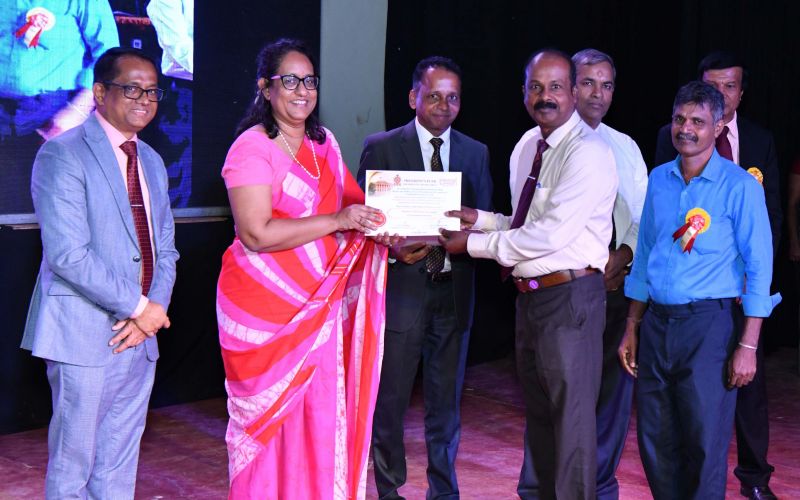
The “Mehewara Pasasum” programme to recognise Divisional Secretariats in the Eastern Province that demonstrated the highest level of performance in 2025 was held recently at the Swami Vipulananda Institute of Aesthetic Studies of the Eastern University, under the patronage of Prime Minister Dr Harini Amarasuriya. The programme was held as part of the initiative to decentralise President’s Fund services to the Divisional Secretariat level, with the aim of providing the public with a more efficient and prompt service.
Of the Divisional Secretariats in the three districts of Ampara, Batticaloa and Trincomalee, nine Divisional Secretariats, three from each district, were selected for recognition based on their efficiency in receiving President’s Fund applications and responding to them promptly.
Accordingly, the Sammanthurai Divisional Secretariat secured first place in the Ampara District, while the Addalachchenai Divisional Secretariat secured second place and the Kalmunai Divisional Secretariat third place.
In the Batticaloa District, first place was secured by the Kattankudy Divisional Secretariat, second place by the Manmunai North Divisional Secretariat and third place by the Koralaipattu Central Divisional Secretariat.
In the Trincomalee District, first place was secured by the Trincomalee Town and Gravets Divisional Secretariat, second place by the Kinniya Divisional Secretariat and third place by the Muttur Divisional Secretariat.
The first “Mehewara Pasasum” programme was held in Colombo, the second in Batticaloa, and this was the third programme.
Speaker Dr Jagath Wickramaratne, Minister of Industry and Entrepreneurship Development Sunil Handunnetti, Senior Additional Secretary to the President and Secretary to the President’s Fund Roshan Gamage, and a number of government officials and others were present at the occasion.
(PMD)
News
Students of Rahmaniya Maha Vidyalaya Eravur visit Presidential Secretariat and President’s House

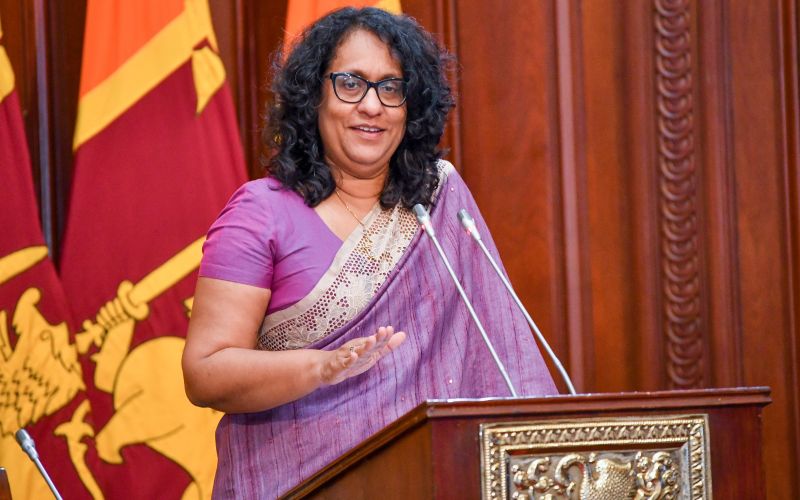
A group of students from Rahmaniya Maha Vidyalaya, Eravur, Batticaloa visited the Presidential Secretariat and President’s House on Monday (14) afternoon .
The students were given this opportunity as part of the “Vision” programme series, jointly implemented by the Presidential Secretariat, the Ministry of Education and the Communication Division of the Parliament of Sri Lanka for schoolchildren.
Prime Minister Dr Harini Amarasuriya stated that nurturing a future generation capable of providing leadership to society and committed to bringing about positive change in the world was an urgent need of the present day. She further stated that the Government’s objective in introducing the new education reforms was to prepare children to acquire knowledge from around the world while nurturing a confident and empowered generation capable of making a meaningful contribution to the country.
Following a visit to the former Parliament building at the Presidential Secretariat, the students were briefed on the history of Parliament.
Senior Additional Secretary to the President Roshan Gamage briefed the students on the role of the President’s Fund and the benefits available to schoolchildren through the Fund.
As part of the programme, valuable plants were also presented to the school as a symbolic gesture highlighting the importance of environmental conservation.
The Director and Assistant Director of the Tri-Forces Security Coordination Unit, the Principal and teachers of Rahmaniya Maha Vidyalaya Eravur and several others were present on the occasion.
(PMD)

Nairobi and Munich to host 2029 and 2031 World Athletics Championships

Pakistan fined, docked 11 points in Edgbaston Test for slow over rate

England look to continue domineering T20 form

US Supreme Court rejects Trump mail ballot restrictions ahead of midterms

Eastern Province Divisional Secretariats recognized for outstanding performance

Students of Rahmaniya Maha Vidyalaya Eravur visit Presidential Secretariat and President’s House

‘Dates have the highest sugar content to fight Coronavirus’

Sunday Island 27 December – Headlines

#SundayIsland 17th December – Headlines

Sunday Island – 28th March

Sunday Island Headlines – 21 March

Sunday Island – 21st February – Headlines
-

 Sports5 days ago
DDS set to lose Test captaincy
-

 News5 days ago
Sri Lanka faces new grid challenge as rooftop solar surges: former CEB GM
-

 Latest News4 days ago
Shafali, Deepti power India into sixth T20 Asia Cup final
-

 Opinion7 days ago
Navigating Sri Lanka’s Israeli Dilemma
-

 Latest News4 days ago
Sri Lanka thwart Fatima Sana challenge to secure Asia Cup final spot
-

 Features6 days ago
Lost for 90 years: Rare Goby resurfaces in Jaffna
-

 News3 days ago
Gnanasara Thero absconding after SC ruling
-

 News4 days ago
Ammunition cache found in old Kandy bungalow