
News
Excise Department grapples with billions of rupees in lost tax revenue


Due to ban on liquor sales during travel restrictions
by Suresh Perera
The continued prohibition on liquor sales due to existing travel restrictions in the country has dealt a crippling blow to the Excise Department with the loss of tax revenue exceeding a whopping Rs. 10 billion (Rs. 10,000 million) so far.
“We have been deprived of around Rs. 600 million per day in excise duties”, says M. J. Gunasiri, Commissioner-General of Excise.
Since the sale of alcohol was banned with the indefinite closure of all licensed liquor sales outlets (commonly called ‘wine stores), taverns, clubs and hotels on May 21, 2021, the loss in terms of tax income to the Excise Department for the past 18 days (up to June 8) has shot up to more than Rs. 10 billion, he said.
Excise tax on alcoholic beverages is a key source of government income, accounting for around 7% of tax revenue. The Treasury reported tax revenues of 944.4 billion for the seven months in 2019 up from Rs. 670.4 billion in the corresponding period the previous year, according to latest figures available.
Asked about the loss of tax revenue from tobacco sales, Gunasiri said the income earned by the Excise Department from this segment is marginal as the Finance Ministry absorbs the bulk of it.
“We have garnered only Rs. 35 million from tobacco sales so far this year”, he said.
With legal alcoholic beverages shut out, the illicit hooch business is thriving, the Excise Department chief remarked. “Some people have even resorted to distilling spirits at home”.
This is a dangerous trend as the illegal brew can even poison tipplers due to lack of standardization, he cautioned. “People should not jeopardize their lives by drinking such unsafe concoctions”.
Asked whether legal booze cannot be allowed to be ordered online for home delivery on a restricted basis to overcome the problem of risky ‘home-made alcohol’ to some extent, Gunasiri opined that sales cannot be done selectively.
“Such a move will also come under heavy flak though it’s fact that the illicit moonshine trade is cashing in on the situation in a big way”, he pointed out.
With legally produced products no longer available, ‘kasippu’ (illicit hooch) distillers are having a field day, trade sources asserted. “With the police tied down to implementing Covid-19 related measures and enforcing travel restrictions, there’s hardly the time and space for raids to round them up”.
Local liquor was also available in the blackmarket at exorbitant prices – a 750ml bottle of Extra Special Arrack (commonly called ‘gal’), usually sold at Rs. 1,600, had spiked to Rs. 5,000 over the past few days. The pricing started at around Rs. 2,500 per bottle, but shot up as legal products remained out of bounds with the extension of the travel restrictions, the sources said.
The Excise Department subsequently sealed all liquor outlets in a bid to prevent the ‘leak’ of available stocks.
“It’s true that many people have turned to rotgut as there is no option”, Gunasiri said.
On Tuesday, the Excise Department granted permission to facilitate the sale of liquor in “Safe and Secure Level 1 Hotels” during the travel restrictions.
Asked what “Level 1 Hotels” meant, the Excise Department boss explained that they represented Tourist Board approved star class properties which accommodate foreign visitors.
There are foreigners arriving in Sri Lanka under air transport bubbles and they can be served liquor if they are in-house guests of a star class hotel, he elaborated.
“This does not mean that anybody can walk into the bar of a hotel coming under the specified category and consume liquor”, he clarified.
This facility was granted to give foreigners access to liquor during their stay in Sri Lanka, Gunasiri further said.
Asked for a clarification on the legally specified quantum of alcohol an individual can have in his possession in terms of the amended regulations, he outlined that its 7.5 litres of any brand of local liquor (ten 750ml bottles) and 80 litres of foreign liquor, irrespective of whether its whisky, gin, brandy, rum, vodka, beer etc. as long as they are imported products.
The specified quantities are strictly for personal use and cannot be sold to a third party, he stressed.
Gunasiri served as the Deputy Commissioner General of the Inland Revenue Department prior to his appointment to head the Excise Department.



Former first lady Shiranthi Rajapaksa, wife of former President Mahinda Rajapaksa was produced before the Hulftsdorp court, after being arrested by officers of the Commission to Investigate Allegations of Bribery or Corruption (CIABOC) and produce
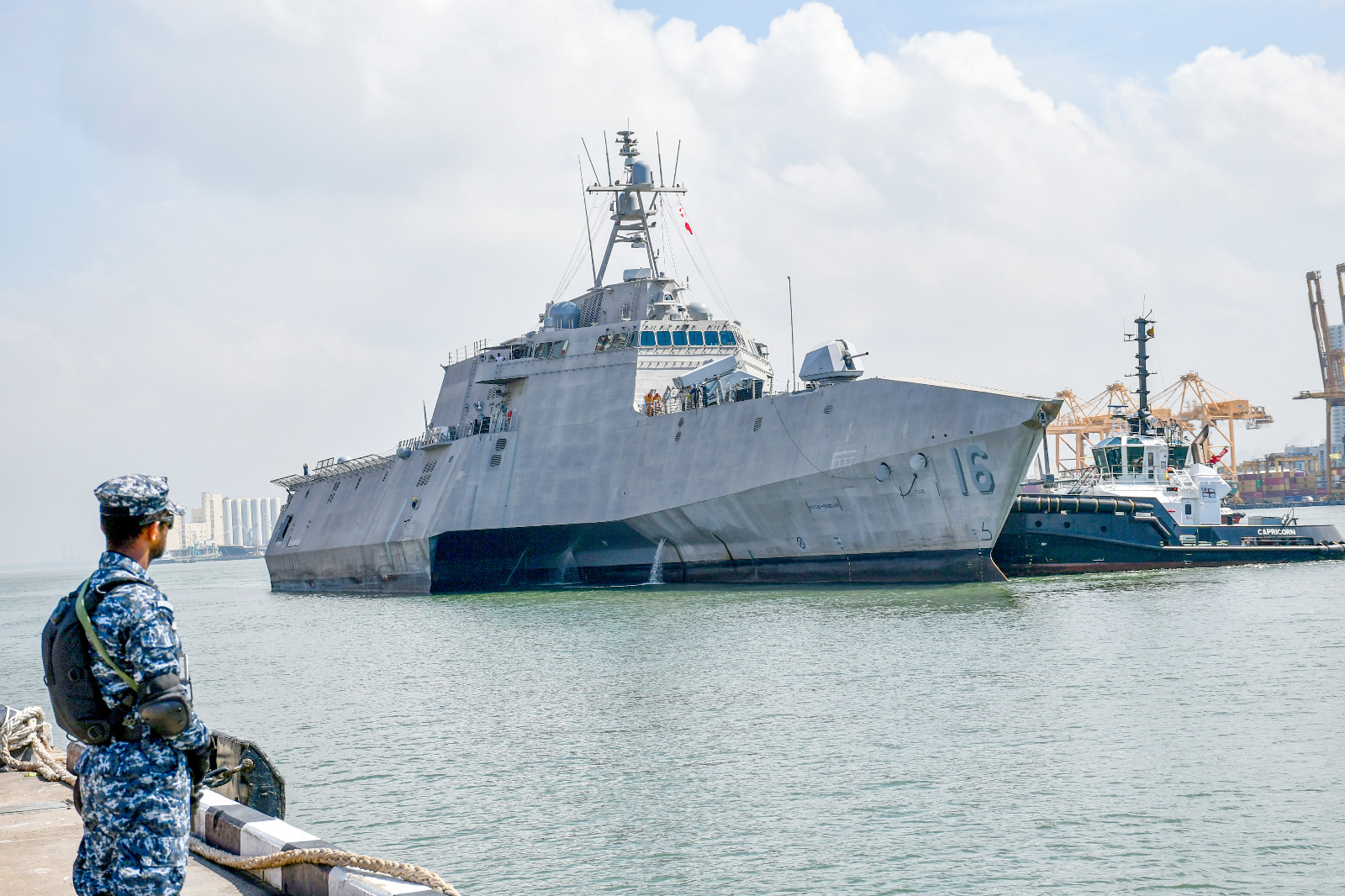
The U.S. Navy ship USS Tulsa (LCS 16) arrived at the Port of Colombo this morning, 7 October 2026 for replenishment purposes.
The visiting ship was welcomed by the Sri Lanka Navy in accordance with naval traditions.
The 127.7-metre-long platform is a Littoral Combat Ship commanded by Commander BM Wanier. Commissioned on 16 February 2019, USS Tulsa has since been in service with the US Navy.
The ship previously made a port call in Sri Lanka on 27 August 2025.
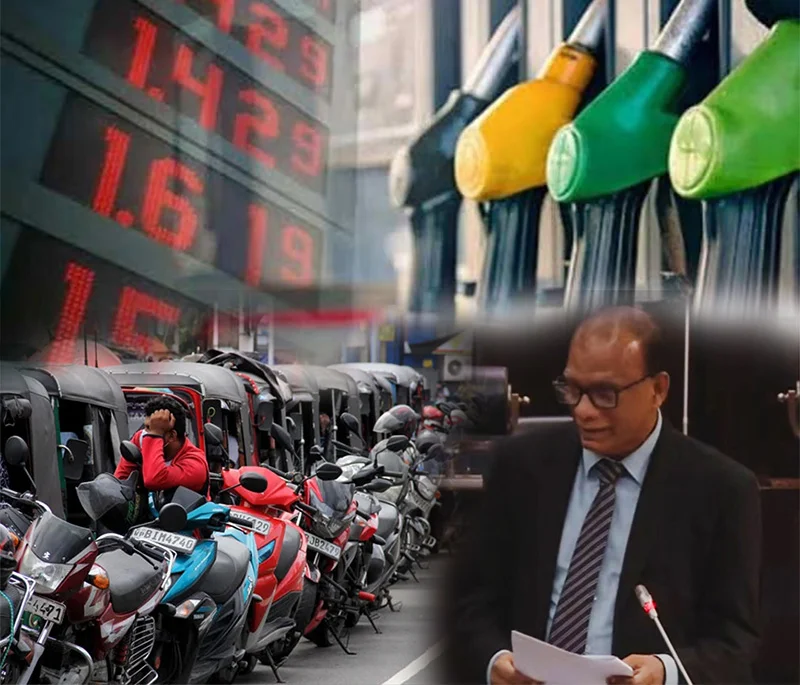
Govt. tells fuel distributors to maintain stocks to ensure uninterrupted supplies
by Saman Indrajith and Norman Palihawadane
The government had instructed private fuel distributors to maintain minimum stocks and ensure uninterrupted supplies to the market, Energy Minister Anura Karunathilaka told Parliament yesterday (06).
Karunathilaka said the Ministry of Energy Secretary had notified the relevant companies of the requirement, following a reduction in supplies by some private distributors, amid higher international fuel prices.
The Minister said private companies had informed the government that they were facing losses because international prices had risen while fuel was being sold, locally, at prevailing prices. As a result, some companies had reduced the volumes released to the market.
The reduced supplies had increased the burden on the Ceylon Petroleum Corporation (CPC), whose share of the diesel market had risen from about 54% to 82%, the Minister said.
“The CPC currently holds an 82% share of the market,” he said, adding that it had increased its supplies, compared with February, to compensate for the reduction by private distributors.
Karunathilaka said the government could not, under the existing agreements with private companies, specify the quantities they should supply to individual filling stations. However, it could require them to maintain minimum stocks in the country.
The Minister said the Energy Ministry had already instructed companies that had failed to maintain the required stocks to take steps to prevent supply disruptions.
The Minister attributed the queues reported at some filling stations to reduced supplies from private distributors, as well as normal variations in fuel distribution. He also said demand for CPC fuel had increased because private companies generally did not provide fuel to dealers on credit, while the CPC offered a three-day credit facility.
“We expect that, as the Ceylon Petroleum Corporation takes on this additional burden, the problem will ease to some extent by Wednesday or Thursday,” Karunathilaka said.
He said instructions had also been issued to increase supplies to CPC filling stations. A special discussion on the issue is scheduled for today (07), with officials of the Energy Ministry and CPC expected to participate,
along with President Anura Kumara Dissanayake.
Meanwhile, Petroleum Dealers’ Association officials have called for an early solution to the supply issue. Association Chairman D.V. Shantha Silva said queues had been reported at many filling stations, mainly those operated by private distributors.
He said the situation was not due to an overall shortage of fuel, but was linked to reduced orders by Lanka IOC, Sinopec and R.M. Parks amid concerns over losses incurred on fuel sales.
The Ceylon Petroleum Private Tanker Owners Association has urged motorists to refrain from panic buying, saying there was no nationwide disruption to fuel supplies.
The government earlier increased fuel prices and introduced a per-litre diesel subsidy following concerns raised by distributors over rising international prices.

Former first lady Shiranthi Rajapaksa arrested by CIABOC

U.S. Navy ship USS Tulsa arrives in Colombo for replenishment visit

Smriti Mandhana appointed India captain across formats

Ronaldo apologizes for Portugal walkout; says Jesus broke promise

Showers in the Western, Sabaragamuwa, Central, Uva, North-western and Southern provinces and in Anuradhapura and Mannar districts

Fuel crunch looms

‘Dates have the highest sugar content to fight Coronavirus’

Sunday Island 27 December – Headlines

#SundayIsland 17th December – Headlines

Sunday Island – 28th March

Sunday Island Headlines – 21 March

Sunday Island – 21st February – Headlines
-

 News7 days ago
US-assisted ‘Ice’ detection: NPC to examine IGP’s move to transfer drug-busting team
-

 Editorial6 days ago
Colombo Port drug bust: The plot thickens
-

 Editorial7 days ago
Drug busting, transfers and trust deficit
-

 Features4 days ago
The first woman in the foreign service or Ceylon Overseas Service it was then called
-
 News7 days ago
Sri Lankan facing death penalty in Saudi Arabia: Mano G appeals to Crown Prince
-

 Editorial5 days ago
Fuelling discontent and protest
-

 News3 days ago
Geneva takes up Sallay’s case and govt. ignores opportunity to answer accusations
-

 Latest News5 days ago
Tharindu Rathnayake, bowlers secure Asian Games Bronze for Sri Lanka