
News
SAEA warns of big economic losses due to import restrictions on chemical fertilizers and pesticides


In the absence of proper substitutes
The Sri Lanka Agricultural Economics Association (SAEA) has expressed some concerns on the appropriateness of the newly introduced regulation to restrict forthwith the import of chemical fertilizers and pesticides by the Gazette Extraordinary No 2226/48 of May 6, 2021, to achieve the broader development goal.
In a letter to President Gotabaya Rajapaksa, the SAEA, the professional body representing the Agricultural Economists of Sri Lanka, has predicted massive economic losses due to potential yield losses in the absence of proper substitutes for chemical fertilizers and pesticides with the implementation on the import ban on fertilizers and pesticides.
“The immediate adverse impacts on food security, farm incomes, foreign exchange earnings and rural poverty can be detrimental to achieving the cherished long-term goals”, it warned.
“Our membership endorses the government’s decision to adopt a Green Socio-Economic Model for development as we firmly believe that such a strategy would be critical to conserving the environment and improving human health. We agree that green approaches in crop cultivation contribute significantly towards achieving Sustainable Development Goals (SDGs)”, the professional organization noted in its letter to the President.
Moreover, SAEA is of the view that most of the current farming systems in Sri Lanka are unsustainable. Hence, the conversion of them into organic farming systems in the long run, would help promote health of the people and nurture integrity of the nation’s environment. It is well known that many countries currently take systematic and pragmatic approaches to achieve this long-term objective by first setting targets, standards, and subsequently, investing and promoting farmers to adopt best practices, it further said.
“Therefore, we would like to extend our appreciation to the government for taking such a valuable decision to adopt the green socio-economic model in Sri Lanka”.
Outlining its primary concerns and the less costly policy alternatives proposed by its members in place of the newly introduced import ban for the President’s consideration, the SAEA was of the view that the policy instrument identified by the government to promote organic farming is less appropriate due to potential economic losses and its incompatibility with other policy goals of the government.
Continuing, the professional body of Agricultural Economists, further opined: “When converting from conventional agriculture into organic farming, the government should weigh the technological, environmental and economic costs and benefits. The preliminary findings of the studies conducted by the SAEA on potential economic losses of the import ban and respective estimations are as follows:
(a) Agronomic studies reveal that the average yields from paddy can drop by 25% if chemical fertilizers are fully replaced by organic fertilizers. This loss in productivity could reduce the profitability of paddy farming by 33% and rice consumption by 27% if paddy is cultivated just with organic fertilizers with a complete ban on rice imports. In contrast, applying organic fertilizer with the recommended dosages of chemical fertilizers would improve the profitability of farming by 16%.
(b) Absence of chemical fertilizer would drastically reduce the productivity of the Vegetatively Propagated Tea (VPT). With a 35% productivity drop, the export volume of tea would go down from 279 to 181 million kg, causing an income loss of LKR 84 billion. The estate sector will likely incur significant losses compared to those of tea smallholders. These losses could further be aggravated due to increased cost of labour to apply bulky organic fertilizers.
(c) The coconut yields would go down by 30% if chemical fertilizers and pesticides are not applied. This situation will adversely impact fresh coconuts availability for the production of coconut oil, desiccated coconut and other coconut products. The loss in foreign exchange earnings can be as high as Rs. 18 billion, based on the assumption that only 26% of the total coconut extent is fertilized. When the additional cost for the importation of edible oils is considered, the loss of foreign exchange earnings will be even higher.
(d) The above results were derived considering the immediate effects on three agricultural sub-sectors. An analysis performed accommodating adjustments in the economy over the medium to long run reveals that a reduction in average agricultural productivity by 20% could cause a decrease in Gross Domestic Product (GDP) by 3.05% suggesting an overall contraction of the economy with the implementation of the import ban.
The proposed policy instrument is not compatible with the policy objectives stated in ‘Vistas for Prosperity and Splendor’. Given below are a few policy incompatibilities highlighted by the members of SAEA (Relevant statement from Vistas for Prosperity and Splendor shown in parenthesis).
(a) Modernization of agriculture
(International export business through various value-added products backed up by new technologies): The SAEA would like to propose that the government considers Sustainable Intensification of farming systems to feed the growing population with rising incomes, seeking safe and nutritious food, which are produced in environmentally sustainable farming systems, rather than converting all systems to fully organic agriculture, as its policy objective.
(b) Food self-sufficiency drive (Make the country self-sufficient in the relevant products): Estimates reported in section A (a) indicate that a food deficit would be created in the country owing to yield losses. However, the current government policy on food self-sufficiency would not allow the policymakers to fill this deficit through imports. Such a situation could give rise to food price inflation, unrest, and starvation.
(c) Freedom (People-Centric Economic Development): The chosen policy instrument does not provide flexibility to farmers to determine their least-cost food production methods without harming the environment. This situation would violate the ‘people’s freedom’ policy of the government.
(d) Rural-urban migration (Linking the village development together with the regional development): Contraction of the rural economy due to reduced farm profitability will lead to increased migration from rural to urban areas. With limited capacity of the manufacturing sector to absorb migrants, this will result in urban congestion.
(e) Commitments with the WTO and other international relations (Friendly, Non-aligned, Foreign Policy): The policy instrument chosen is not compatible with commitments to the WTO.
Alternative policy instruments for making food systems more environmentally sustainable
In light of the above observations, members of SAEA suggest the government use more cost-effective instruments to achieve the stated health and environmental outcomes in place of the newly introduced import regulation.
Globally, the approach to environmental protection has been evolving from a regulation-driven approach to a more proactive approach involving voluntary and market-led initiatives. Accordingly, we wish to propose the following three-point policy package.
1. Incentivize organic cultivation using safe and environmentally friendly organic fertilizers and pesticides: Open up pathways towards encouraging organic fertilizer production, storage, distribution, etc. and promote Public-Private Partnership (PPP) models to achieve those.
2. Develop national standards for organic fertilizers and pesticides to ensure non-importation of substandard products to the country and domestic production meeting specified quality standards.
3. Improve awareness of various organic farming technologies among farmers through a strengthened extension system.
Institutionalize and make Good Agricultural Practices (GAP) a mandatory national standard.
Dis-incentivize use of chemical fertilizers and pesticides in an environmentally harmful manner: Revisit national standards for chemical fertilizers and pesticides to ensure non-importation of sub-standard products to the country.
Impose environmental taxes on selected inorganic fertilizers and pesticides.
Reduce and eventually eliminate the subsidy on chemical fertilizers. In phasing out the fertilizer subsidy, we wish to recommend the following steps:
* Prioritize subsidies according to characteristics such as fertilizer type, agro-ecological region, season and crop.
* For the targeted farmers, establish a voucher system that restricts farmers’ access to a lifeline amount [such as two bags] and require them to purchase the balance at market prices for a limited period.
* When the subsidy is lowered, introduce an output price support program to support the farm producers partially.
* Provide and support farmers to adopt site-specific fertilizer recommendations and integrated pesticide recommendations.
* Reduce and eventually eliminate protection provided to crops that are highly fertilizer intensive and erosive.
* Strengthen existing measures to improve awareness of the safe use of chemical fertilizers and pesticides.
Cross-cutting proposals to safeguard the poor and vulnerable and improve the policy process: Maintain a safety net for the poor recognizing the possible increase in food prices.
* Identify a harmonized financing mechanism. For example, finances of saved fertilizer subsidy and environmental taxes can be used to subsidize organic fertilizer production and application.
* In formulating the strategic roadmap, adopt a consultative process involving all stakeholders (policymakers, politicians, agriculturalists, environmentalists, and the private sector) and also considering economy-wide impacts (macro, meso and micro) and externalities.
Considering the economic loss, policy inconsistency, and counter-productive effects created by the regulation in the manner introduced and the availability of relatively superior alternative measures, the SAEA seeks to substitute the import ban on chemical fertilizers and pesticides with the set of alternative measures proposed above. The SAEA extends its professional support to establish a green-economic model for the agriculture sector of Sri Lanka.
The letter signed by Dr. Sampath Dharmadasa, President/SAEA and Dr. Shashika Rathnayaka, Secretary, has been copied to the Prime Minister, Ministers of Agriculture and Plantations, among others.



Former India Under-19 player Manjot Kalra has been remanded by the Magistrate’s Court in Colombo until July 31, Sri Lanka police has confirmed, after he was arrested on July 16 on charges of corruption relating to the 2026 Lanka Premier League season.
Kalra, who is one of the co-owners of the Jaffna Kings franchise along with entrepreneur Mayank Goel, was produced before the court on July 17.
According to local media, the court heard that Kalra had allegedly approached players participating in LPL 2026 – Bhanuka Rajapaksa and Sri Lanka national players Dunith Wellalage and Avishka Fernando – all of whom play for the Jaffna Kings franchise. Investigators revealed in court that Kalra had allegedly offered the players over USD 30,000 to influence the outcome of games, and that they had in their possession recorded phone conversations and video evidence to support their case.
Following the initial approach, the players are said to have contacted the Special Investigations Unit (SIU) for the Prevention of Offences Relating to Sports, after which they had, on instructions of the SIU, negotiated a payment of LKR 11.5 million with LKR 9.5 million as an advance. Kalra and an unnamed second person were arrested when the second person had brought a bag containing the advance payment to a pre-agreed location, according to media reports of the court proceedings.
The defence counsel rejected all allegations, asserting there was no evidence of Kalra offering or paying a bribe. Bail was sought but denied, with the Chief Magistrate stating that doing so could prejudice the investigation.
In a statement released on his behalf, Kalra denied the allegations and said he was “fully cooperating with the ongoing investigation” and “is confident that the facts will establish his innocence and clear his name”.
“Having had the privilege of representing India with honour, Mr. Kalra fully understands the responsibility and integrity expected of those associated with Indian sport. Throughout his career, he has remained committed to upholding those values,” the statement said. “Mr. Kalra became a co-owner in the league as a minority shareholder, entering the venture in good faith and with complete integrity. Prior to his association, the league conducted all requisite background and due diligence checks, which connfirmed his clean reputation.
“As the matter is currently under investigation, Mr. Kalra will continue to cooperate fully with the authorities and will refrain from making any further comments at this stage. He remains confident that the truth will prevail.
“Senior Counsel K Wasantha S Fernando, Attorney at Law and his able team of Junior Attorneys at Law are currently taking care of his interest and have expressed the confidence in disproving and negating the allegations leveled against Kalra and will ensure all possible steps are taken within the provisions of law to bring all perpetrators involved in fixing Kalra into this undesired situation to light while assisting law enforcement officers and Honorable Court to arrive at Justice in the right manner.”
The news of Kalra’s arrest broke on Friday, hours before the LPL season opener between Kalra’s team Jaffna Kings and Galle Gallants , a fixture that Kings lost by 36 runs.
[Cricinfo]

The 10th Navy Open Shooting Championship, organised by the Sri Lanka Navy, concluded successfully following events held from 1 to 12 July 2026 at the Small Bore Firing Complex,
Welisara.
The awards ceremony took place on 18 July at the Commander Parakrama Samaraweera Memorial Indoor Sports Complex at SLNS Gemunu, under the patronage of the Commander of
the Navy.
More than 900 shooters representing the Sri Lanka Army, Navy, Air Force, Police and a number of shooting clubs from across the island competed in this year’s championship. Notably, over 800 of the participants were school athletes, highlighting the growing interest and participation of young athletes in the sport.
The championship provided a valuable platform for members of the Tri-Forces, Police, shooting clubs and school competitors to compete alongside one another, exchange experience and further develop their technical skills in shooting. It also reaffirmed the championship’s role in nurturing young talent and supporting the development of future national and international-level shooters.
Competing in a highly competitive field, marksmen representing the Sri Lanka Navy delivered an impressive performance, securing a number of medals and bringing distinction to the Navy through their achievements.
The event also made a significant contribution to the promotion of shooting sport in Sri Lanka by identifying emerging talent and strengthening cooperation, sportsmanship and healthy
competition among participants representing a wide range of institutions and organisations.


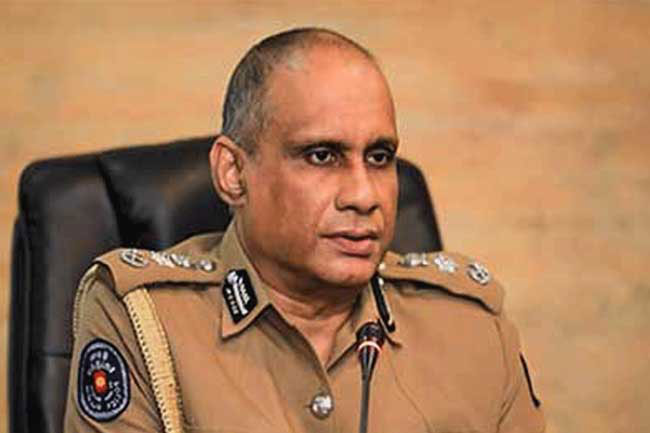
He was examining security officer’s new weapon while waiting for his wife to join him on a morning walk
Friday’s shock death of former IGP Chandana Wickramaratne due to gunshot injuries on his chest was possibly due to an accidental discharge of his personal security officer’s (PSO’s) pistol. Wickramaratne, who was kitted for his walk and waiting on the verandah for his wife to join him, was examining the PSO’s new weapon, knowledgeable sources said.
These sources said the wife who was putting on her shoes inside the house heard a bang and found Wickramaratne fallen on the verandah.
The retired IGP had noticed the security officer carrying a new weapon and had asked to examine it. Saying he carried a similar weapon years ago, he found no magazine and said, “are you planning to accompany me on my walk with a pistol without a magazine?”
The PSO had then handed the loaded magazine and gone into the house to fetch a requested bottle of water when the weapon had gone off.
The sources said that Wickramaratne was in no way depressed and had attended an Ananda College old boy’s event a few days ago, had dinner with friends and chatted with them. He had an appointment to meet a friend on Saturday.
Friends and family saw no reason for Wickramaratne to take his own life and there was no evidence whatever of an external agent shooting him. The former IGP was pronounced dead at the Colombo East Teaching Hospital to which he was rushed.
Police said investigations were proceeding and an autopsy report was awaited.
Wickramaratne was appointed the 35th Inspector General on November 25, 2020 and retired three years later in 2023. He had also set a record as the longest serving acting IGP since his naming to that position in May 2019 after his predecessor Pujith Jayasundara was sent on compulsory leave.
He joined as a trainee Assistant Superintendent in June 1986 after graduating from the Colombo University. He was absorbed to the National Intelligence Bureau where he worked till 1995. Thereafter he reverted to the uniform service and had been posted across the country, including the northern and eastern areas at the height of the war.

Binura, Liyanage, Neesham take Colombo Kapps to victory

Russia launches major ballistic missile attack on Ukrainian cities

Messi on the brink of history – will it be his last World Cup game?

Manjot Kalra denies fixing allegations in LPL 2026

Lizaad, Traveen and Bhanuka steer Jaffna Kings to five wicket win

10th Navy Open Shooting Championship concludes

‘Dates have the highest sugar content to fight Coronavirus’

Sunday Island 27 December – Headlines

#SundayIsland 17th December – Headlines

Sunday Island – 28th March

Sunday Island Headlines – 21 March

Sunday Island – 21st February – Headlines
-

 Business21 hours ago
‘Giving up was never an option’: The fisherman who fought back after losing millions in SL
-

 Latest News2 days ago
Davis cup Asia/Oceania Group IV 2026 to be held in Colombo from 20th to 25th July
-

 Features21 hours ago
Two memorable excerpts from a former SLAF commander’s memoir
-
 Features21 hours ago
Erdoğan’s New Republic
-

 Life style21 hours ago
Taste of the Swiss Alps comes to Colombo
-
 Features5 days ago
Dirty Money
-
 News2 days ago
Dengue outbreak gallops ahead: Infections surpasses 73,455, leaving 50 dead
-
 News2 days ago
Evidence recorded in money laundering case against Yoshitha Rajapaksa