
News
Medical Specialists: Only 28 hospitals have liquid oxygen tanks


Noting that the best way to deliver oxygen to a patient’s bedside is to have piped oxygen distributed from a central liquid oxygen tank, rather than using cylinders, the Association of Medical Specialists (AMS) has said that Sri Lanka only has 28 such liquid oxygen tanks installed in hospitals.
Dr A J A L Fernando, President, AMS, yesterday said, in a media statement, that the sizes of those tanks ranged from 3,000 to 20,000 litres, but only two had 20,000 litre tanks. One was the National Hospital and the other the Peradeniya Teaching Hospital, the AMS has said.
“The others are relatively smaller. With the current coronavirus being highly transmissible, taking patients to hospitals with larger tanks may not be an option as many of these hospitals mainly cater to non-Covid patients. Spreading the disease within a hospital could also result in disaster. With this, the system will still have to largely depend on jumbo cylinders where each can carry 47 liquid litres that produce 7,050 gas litres of oxygen.”
Dr. Fernando added that although the jumbo cylinders were heavy enough to need more than a couple of people to move them, each of them might not last for more than a few hours as regards a highly oxygen dependant patient. Managing oxygen between hospitals and delivering it to the individual patient would certainly need intelligent planning and extreme coordination of production, storage and efficient delivery, he said.
Dr Fernando added that his association did not see any pragmatic strategy on the part of the government in place to face eventualities that could arise given the spike in COVID-19 cases. “The number of Covid-19 patients is on the rise in Sri Lanka. It has exceeded 1,000 a day and is still rising. We know that our existing capacity to treat patients (intensive care and high dependency beds) has reached its threshold. Experts have clearly mentioned the higher infectivity and virulence of the current strain warranting and increased need for oxygen dependency and intensive care.”
Excerpts of the AMS statement: “Since there is no firmly established cure for this disease, symptomatic treatment is the mainstay till the recovery is reached. However, oxygen and ICU care play a crucial role in critical cases and we should ensure that there will be a constant and uninterrupted availability of oxygen supplied beds if we are to avert disaster. Apparently, being a financially stronger regional giant, India is facing immense hardships due to shortage of oxygen right now.
“As oxygen is considered the most important medical need and likely to be in short supply, all necessary steps must be taken to avoid a crisis.
“To the best of our knowledge there are two companies that supply oxygen to healthcare facilities and these manufacturers can easily increase their production almost three-fold. Together they now produce around 75 tons of oxygen per day of which a portion is supplied for industrial use. They can divert all their oxygen production to health if the need arises and Sri Lanka has sufficient source of supply. However, the more important issue is the delivery of this oxygen to patient’s bedside. The best way to do this is to have piped oxygen distributed from a central liquid oxygen tank rather than using cylinders. Unfortunately, the whole country only has 28 such liquid oxygen tanks installed in hospitals. The sizes range from 3000 to 20000 litres, but there are only two 20,000 size tanks one each at National Hospital and Peradeniya and others are relatively smaller. With the current Covid being highly transmissible, taking patients to hospitals with larger tanks may not be an option as many of these hospitals mainly cater to non-covid patients. Spreading the disease within a hospital could also result in disaster. With this the system will still have to largely depend on jumbo cylinders where each can carry 47 liquid litres that produce 7050 gas litres of oxygen. Though heavy enough to need more than a couple of people to move them, each jumbo cylinder may not last for more than few hours in a highly oxygen dependant patient. Managing oxygen between hospitals and delivering to the individual patient will certainly need intelligent planning and extreme coordination of production, storage and efficient delivery.
“For this, we need to utilize the services of relevant experts in these fields to design and implement the best national plan and it should be kept strictly apolitical. If such action is not taken in this crucial juncture, we will be another nation who has “planned to fail” as we have “failed to plan”.
“It is also important that we take a serious note of the high rate of disease spread in spite of the present prevention strategies. A degree of complacency and overconfidence can take Sri Lanka to a critical point faster as it has happened in some countries. Out of all, Prevention is THE best strategy and we need to do everything possible to prevent and slow down the spread. Even if a lockdown is needed, it is best to foresee and think ahead and be prepared to do it if it is essential.
“Only the authorities who have the real information and data, can make that decision. It should not be a political decision, but a decision to save the country and its people based on scientific principles both for today and tomorrow. It is very evident now that the countries can go up or down in the success of Covid control based on the wisdom they demonstrate during decision making. Moreover, while appreciating all the positive moves the government has taken towards Covid control, we believe it is the duty of the health authorities to submit the correct information and data to the political authorities without any delay. We urge the authorities to consider all above facts and make prompt decisions based on scientific facts and rational thinking to face the present Covid 19 situation. The AMS is ready to provide the government and health authorities its maximum support at this hour of need.”







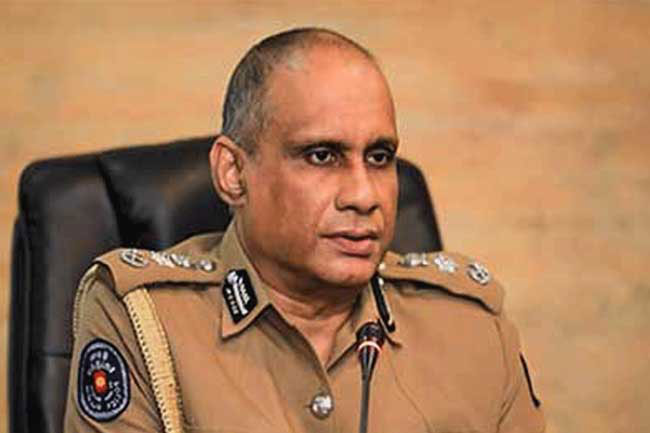
He was examining security officer’s new weapon while waiting for his wife to join him on a morning walk
Friday’s shock death of former IGP Chandana Wickramaratne due to gunshot injuries on his chest was possibly due to an accidental discharge of his personal security officer’s (PSO’s) pistol. Wickramaratne, who was kitted for his walk and waiting on the verandah for his wife to join him, was examining the PSO’s new weapon, knowledgeable sources said.
These sources said the wife who was putting on her shoes inside the house heard a bang and found Wickramaratne fallen on the verandah.
The retired IGP had noticed the security officer carrying a new weapon and had asked to examine it. Saying he carried a similar weapon years ago, he found no magazine and said, “are you planning to accompany me on my walk with a pistol without a magazine?”
The PSO had then handed the loaded magazine and gone into the house to fetch a requested bottle of water when the weapon had gone off.
The sources said that Wickramaratne was in no way depressed and had attended an Ananda College old boy’s event a few days ago, had dinner with friends and chatted with them. He had an appointment to meet a friend on Saturday.
Friends and family saw no reason for Wickramaratne to take his own life and there was no evidence whatever of an external agent shooting him. The former IGP was pronounced dead at the Colombo East Teaching Hospital to which he was rushed.
Police said investigations were proceeding and an autopsy report was awaited.
Wickramaratne was appointed the 35th Inspector General on November 25, 2020 and retired three years later in 2023. He had also set a record as the longest serving acting IGP since his naming to that position in May 2019 after his predecessor Pujith Jayasundara was sent on compulsory leave.
He joined as a trainee Assistant Superintendent in June 1986 after graduating from the Colombo University. He was absorbed to the National Intelligence Bureau where he worked till 1995. Thereafter he reverted to the uniform service and had been posted across the country, including the northern and eastern areas at the height of the war.
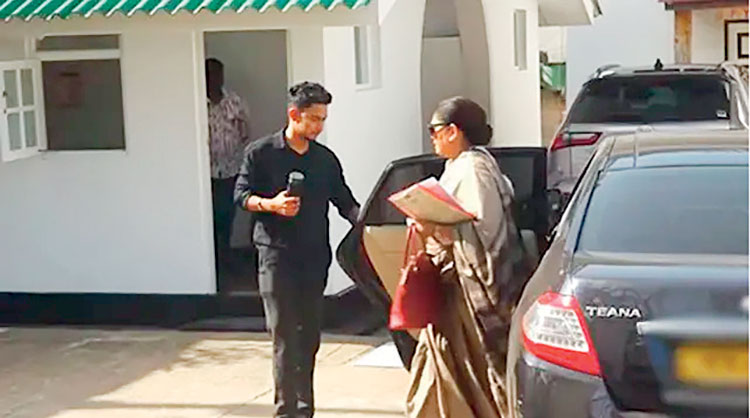
Former Colombo Mayor Rosy Senanayake appeared before the Presidential Commission of Inquiry appointed to investigate allegations of corruption and fraud at the Colombo Municipal Council (CMC) on Friday (17).
Speaking to the media after appearing before the commission, Senanayake said she had been summoned to provide information regarding a food voucher programme implemented during her tenure as Mayor amid the COVID-19 pandemic and the economic crisis.
She said the programme, carried out through state-owned Lanka Sathosa, was introduced to provide assistance to low-income and vulnerable families affected by the economic hardships during the period.
“We gave food vouchers from Sathosa to the poor during the pandemic and economic crisis.
They wanted answers to some questions they had regarding the programme,” Senanayake said.The Presidential Commission is currently investigating allegations relating to financial irregularities, corruption and other misconduct within the Colombo Municipal Council.
A police constable has been suspended from service following an inquiry into allegations that he sat on the lap of a female police constable while under the influence of alcohol at the Makalugaswewa Police Station.
Police said the constable had reported for duty at a musical concert held at the Dambulla Gam Udawa Stadium on July 15 and later returned to the police station to resume duties.
According to initial reports, the constable allegedly sat on the female officer’s lap after seeing her seated on a chair at the station.
The female police constable subsequently lodged a complaint with the Assistant Superintendent of Police (ASP) in charge of the area through the Officer-in-Charge (OIC) of the police station.
A preliminary investigation into the incident found that the constable had allegedly been under the influence of alcohol at the time of the incident.
Following the inquiry into the alleged harassment of the female officer and the constable’s conduct while on duty, police authorities took steps to suspend his service pending further action.
by Norman Palihawadane ✍️

Akif Javeed and Sam Harper star in Galle Gallants five wicket win

Dambull Sixers down Kandy Royals by 18 runs

World Cup final tickets near $2.3m mark on FIFA’s resale platform

Saka hat-trick helps England down France to win World Cup 2026 Bronze Final

US military says two service members killed in Iranian strike in Jordan

Showers will occur in the Western, Sabaragamuwa and North-western provinces and in Kandy, Nuwara-Eliya, Galle and Matara districts

‘Dates have the highest sugar content to fight Coronavirus’

Sunday Island 27 December – Headlines

#SundayIsland 17th December – Headlines

Sunday Island – 28th March

Sunday Island Headlines – 21 March

Sunday Island – 21st February – Headlines
-
 Latest News1 day ago
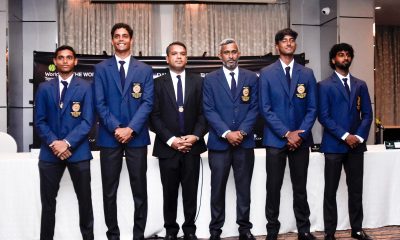
Davis cup Asia/Oceania Group IV 2026 to be held in Colombo from 20th to 25th July
-
 Features4 days ago
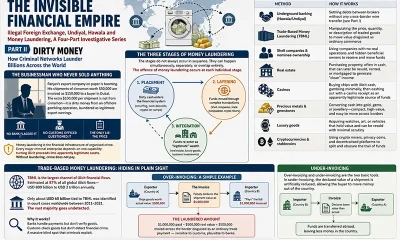
Dirty Money
-
 News1 day ago
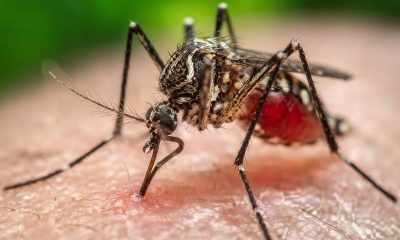
Dengue outbreak gallops ahead: Infections surpasses 73,455, leaving 50 dead
-
 News1 day ago
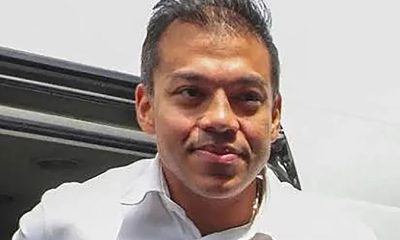
Evidence recorded in money laundering case against Yoshitha Rajapaksa
-

 News2 days ago
Money laundering case against Yoshitha, fixed for pre-trial conference
-
 Midweek Review4 days ago
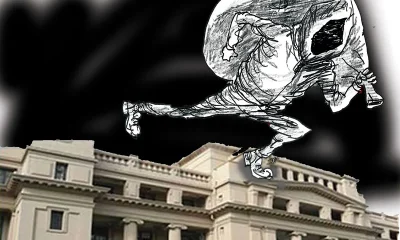
The sordid tale of theft and tragedy at Finance Ministry
-
 Latest News5 days ago
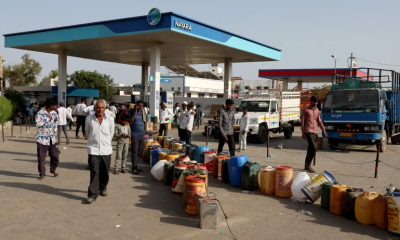
Oil prices hit 1-month high as US-Iran attacks dim Strait of Hormuz outlook
-

 Editorial2 days ago
Overwhelming fire power and stubborn resilience