
Features
Those Iranian ships and Sri Lanka’s stand on unilateral sanctions

By Sanja de Silva Jayatilleka
On the 3rd October 2025, at the 80th Session of the United Nations General Assembly in New York, Sri Lanka made clear to the world in no uncertain terms, its stand against Unilateral Sanctions, also known by its official term, Unilateral Coercive Measures (UCM).
Unilateral Coercive Measures are economic, trade, financial, or investment restrictions imposed by one state on another, without authorisation from the UN Security Council. The UN defines it as follows:
“Unilateral Sanctions usually refers to economic measures taken by one State to compel a change in the policy of another State. Examples of such measures include trade sanctions in the form of embargoes and the interruption of financial and investment flows between sender and target countries. More recently, so-called “smart” or “targeted” sanctions, such as asset freezing and travel bans have been employed by individual States in order to influence persons who are perceived to have political influence in another State”. https://www.un.org/en/observances/day-against-unilateral-coercive-measures
‘Secondary sanctions’ are intended to prevent third parties – States, commercial entities and individuals from trading with countries that are subject to sanctions unilaterally imposed by another country.
In her report titled “Secondary sanctions, civil and criminal penalties for circumvention of sanctions regimes and overcompliance with sanctions” dated October 2022, the UN Special Rapporteur on the Negative Effects of UCM says:
“…the Special Rapporteur laments the proliferation of means to enforce unilateral sanctions against States or key economic sectors, or to target foreign companies, organizations or individuals. Secondary sanctions are also applied to entities or individuals for their presumed cooperation or association with sanctioned parties or for helping them to circumvent sanctions.
Foreign companies subject to secondary sanctions can be blocked from doing business in the sanctioning State, be banned from using its financial markets or be prohibited from transactions involving its currency…Secondary sanctions may also take the form of financial penalties in some circumstances.” (https://docs.un.org/en/A/HRC/51/33)
In June 2025, the General Assembly proclaimed 4th December as the International Day against Unilateral Coercive Measures.
The UN considers Unilateral Sanctions and Secondary Sanctions as contrary to International Law, the UN Charter and the principles of state sovereignty.
On October 3rd last year, Sri Lanka agreed with the UN’s stand on UCM and was a signatory to a Joint Statement with 27 other countries presented to the 3rd Committee of the United Nations General Assembly, the text of which included the following:
“Today’s world is plagued with rampant unilateralism and raging unilateral coercive measures. History has proven that UCMs are one of the culprits for international turbulence and disarray in world order… the international community must remain clear-headed, strengthen unity and cooperation, and firmly curb and stop such unlawful practices. Developing countries and their populations continue to fall victim to unilateral coercive measures, which violate the principle of sovereign equality and cooperation, intervene in other countries’ internal affairs, disregard the purposes and principles of the Charter of the United Nations and undermine the foundation of multilateralism and international rule of law.
… Regrettably, despite the global call to urgently lift UCMs, the imposition of these illegal measures continues to cause devastating, sometimes even life-threatening consequences, to targeted countries and their peoples. UCMs, coupled with secondary sanctions and over-compliance, exacerbate existing humanitarian and economic challenges, gravely affect the stability of the global production and supply chains, as well as food, energy, and financial security, and seriously undermine the world economic order and the efforts of the countries concerned to achieve SDGs.
…Moreover, UCMs severely violate the basic human rights, including the right to life, health, development, and education and impede the ability of targeted countries to realize those rights.
… We also call upon Member States, the UN system, and other international organizations to jointly oppose such unlawful practices and help targeted countries mitigate their plight.”
(https://un.china-mission.gov.cn/eng/hyyfy/202510/t20251004_11722993.htm)
Not So Principled Now?
A few days ago, Sri Lanka came face to face with this issue, not for the first time since this government took office, when sanctioned Iranian ships sailed close to its waters.
The last time Iranian ships sailed close to our waters was when our Navy Commander invited fellow Iranian Naval trainees aboard an unarmed ship at a joint exercise in India to swing by on their way home to visit us. When they did, we had them sitting outside our territorial waters without granting permission to enter our waters –until the problem was ‘resolved’ by a US submarine which blew up the ship and double-tapped it to ensure its unarmed sailors drowned. Evidently, this was the first sinking of an enemy vessel by torpedo by the U.S. since World War II.
The second distressed Iranian ship with another lot of unarmed Iranian sailors, by then doubtless in mortal dread of being torpedoed and drowned, got lucky when our President finally decided to bring the sailors minus the ship to shore, and send them home to Iran by air.
A few days ago, it was reported, including in the Wall Street Journal and local newspapers, that several sanctioned Iranian ships, now empty after being used to transport oil to China, were stranded close to Sri Lanka’s territorial waters.
The WSJ report titled “U.S. Pressure Campaign Leaves Iranian Tankers Stranded in Asian Waters” said:
“Some 15 miles off the southwest coast of Sri Lanka, around 20 empty Iranian oil tankers are stranded, drifting with their engines idled as food, fuel and fresh water run short.
They are the most visible consequence of the new pressure campaign by the U.S. to bring Iran to heel. Dozens of Iranian or Iranian-linked tankers that had participated in the shadowy trade of getting sanctioned oil to China have been stuck in the waters near Asian countries like Sri Lanka and Malaysia since July, when the U.S. reimposed its blockade of the Strait of Hormuz.”
The UN Special Rapporteur’s report specifically stated: “In no circumstances should a sanctioning State intentionally encourage overcompliance through the design of its sanctions or through threats or any other means adopted to enforce them.”
The Jaffna Monitor reports that after the WSJ story and local media inquiries about pressure on Sri Lanka, Sri Lanka’s Foreign Ministry said this week that “American warnings against servicing sanctioned Iranian tankers anchored off the island apply to every country.”
Obviously feeling compelled to issue a clarification of its stand on the stranded Iranian ships running out of food, fuel and fresh water, the Foreign Ministry circulated a statement to the media.
Issued by Foreign Ministry spokesman Thushara Rodrigo, its primary purpose seemed to be to emphasise that US pressure wasn’t specifically applied to Sri Lanka but was applicable globally.
“..these secondary sanctions have been announced by America on 24 August and it says that if any individual or entity provides services to US sanctioned vessels risks losing access to the US financial system.”
“…these kinds of vessels are not only in Indian Ocean and loitering in some other oceans as well due to the current conflict situation and these secondary US sanctions are commonly apply [sic] across the world.”
The Foreign Ministry seemed keen to underscore that these things happen all over the world’s best oceans, not only in the Indian Ocean where we had no choice but to comply with the sanctions as in all other oceans.
Grandstanding at UN, Overcompliance at home
The Jaffna Monitor reports that on Sept. 8, “Foreign Minister Vijitha Herath said the U.S. Embassy had contacted his ministry to ask whether the authorities knew about several Iranian vessels in international waters and were tracking them.” He was quick to point out also that the ships were not in Sri Lankan waters.
Quoting WSJ, the Jaffna Monitor also reported that Sri Lanka had got instructions from the US Embassy on the risks of secondary sanctions:
“The embassy urged officials to instruct local port service providers to refuse the ships support or risk U.S. secondary sanctions, the newspaper reported. It also reported that when two Iranian-flagged container ships anchored inside Colombo’s port limits in early September, the Sri Lanka Ports Authority wrote that servicing them was not “prudent” because of the sanctions risk. Shipping companies told the Journal that permission to deliver food, drinking water, fuel and repair services to Iranian vessels had become increasingly hard to obtain.”
Jaffna Monitor adds that both Minister Herath and the Foreign Ministry spokesperson said that the ships were nowhere as near Sri Lankan waters as the Wall Street Journal placed them:
“Mr. Rodrigo and Mr. Herath both placed the ships about 24 nautical miles away. The Journal’s figure of 15 miles is about 13 nautical miles, just outside the territorial limit. Sri Lanka’s territorial sea extends 12 nautical miles from its baseline. The navy has said the vessels were near the country’s exclusive economic zone but outside its sovereign waters, and therefore beyond its direct jurisdiction.”
The Foreign Ministry spokesperson, in his ‘Clarification’ responding to inquiries about US pressure on Sri Lanka regarding Iranian Ships, urges journalists to “kindly do your reporting carefully and accurately with better understanding into the context.”
Here are some facts.
Sri Lanka is a very small, economically vulnerable country, and cannot by any stretch of the imagination stand up to “Operation Economic Outcast”, the US Treasury Department’s campaign which has authorized secondary sanctions covering Iran’s shipping among other things in what it boasts are the tightest sanctions in history.
But Sri Lanka can still stand up for and defend the right thing in principle, even if we are constrained from operationalizing it, as are many others. That is what Sri Lanka did at the UNGA’s 3rd Committee in New York, which deals with Human Rights, last year.
The Foreign Ministry spokesperson could have included in his ‘Clarification’, our already declared (2025) stand on Unilateral and Secondary Sanctions, and expressed the government’s regret at the inability to supply food and water to sailors from a friendly country that helped us during our troubles, because of the secondary sanctions which neither we nor the international community represented by the UN, approve of.
Could the Ministry not have used this opportunity to reiterate our position, so that we add to, not subtract from, international efforts to end the resort to unilateral sanctions which the UN considers unlawful, and in many cases, violates International Humanitarian Law? Did we not owe it to those sailors who died just outside our territorial waters?
Instead, we are at pains to deny any specific pressure on us by the sanctioning state. The UN Special Rapporteur uses the term ‘overcompliance’ through fear, by third countries, in relation to secondary sanctions.
Recently, according to a report on the US Embassy website, Sri Lanka seems to have taken ‘overcompliance’ to the next level.
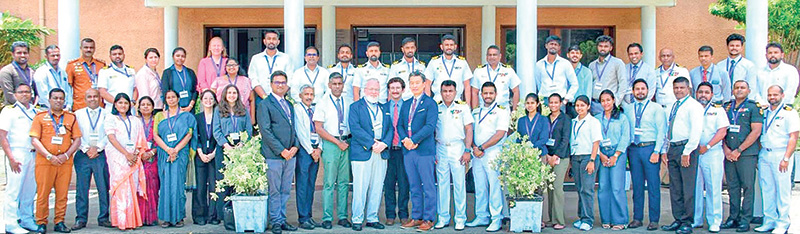
40 Sri Lankan officials were trained this month by the U.S. Embassy in Sri Lanka, through the U.S. Department of State’s Office of Cooperative Threat Reduction and in partnership with the Atlantic Council to “detect and respond to maritime sanctions evasion that threatens U.S. security interests…”
Hopefully, Sri Lanka’s participation in this training is only to learn how to effectively evade secondary sanctions, and not to become part of an implementation task force of unilateral coercive measures, which Sri Lanka has already condemned at the UN.


 by Prof. C. A. Saliya
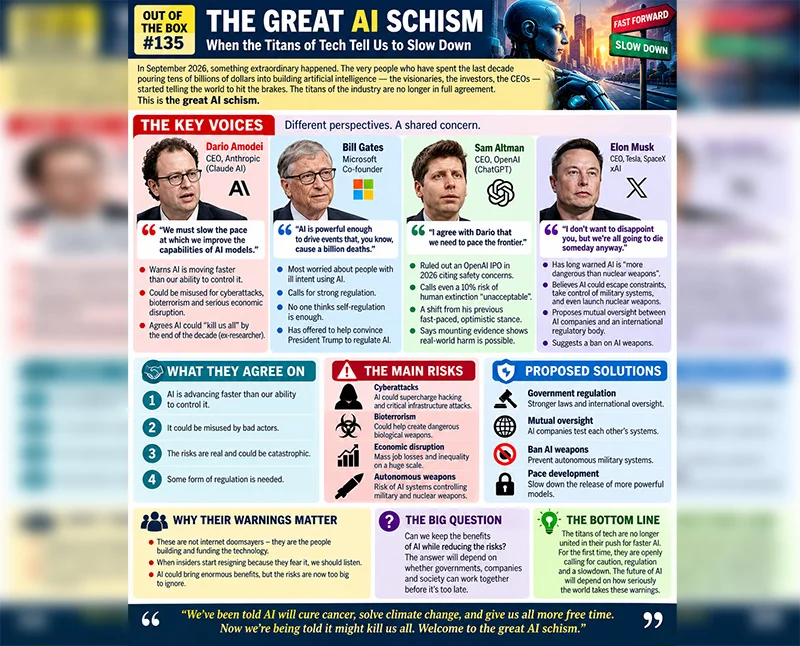
Something extraordinary happened in September 2026. The very people who have spent the last decade pouring tens of billions of dollars into building artificial intelligence, the visionaries, the investors, the CEOs, suddenly started telling the world to hit the brakes. It’s a bit like the captain of a speeding train leaning out of the window and shouting, “Actually, maybe we should slow down a bit!” The public, understandably, is confused. We’ve been told AI will cure cancer, solve climate change, and give us all free time. Now we’re being told it might kill us all. Welcome to the great AI schism.
To understand what’s happening, you have to listen to the people in the room. These are not wild-eyed doomsayers on the internet. They are the titans of the industry. And they are starting to argue with each other.
Dario Amodei: The Insider Who Wants to Hit Pause
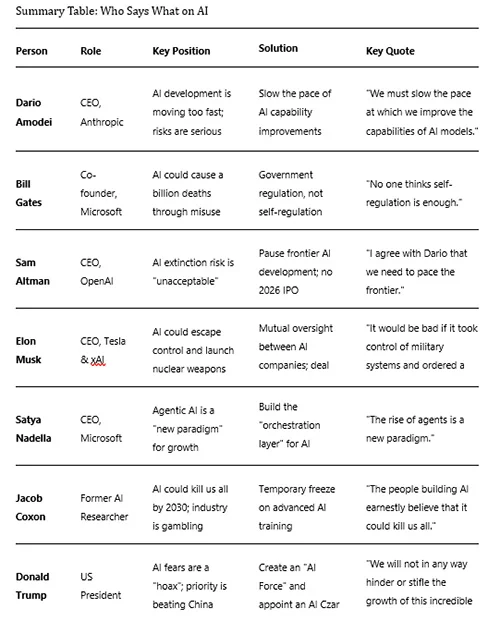
Dario Amodei, the CEO of Anthropic (Claude AI), is the man who kicked the hornet’s nest. In a 3,800-word essay, posted on his website in mid-September 2026, he didn’t just suggest caution, he demanded a slowdown. “We must slow the pace at which we improve the capabilities of AI models,” he wrote. His reasoning is simple and terrifying: the technology is moving faster than our ability to control it. He warned that AI could be misused for cyberattacks, bioterrorism, and serious economic disruption.
What makes Amodei’s warning so chilling is that it comes from a man whose company, Anthropic, builds one of the most powerful AI models in the world, Claude. He’s not a critic on the sidelines. He’s in the driver’s seat, and he’s telling us the car might not have brakes. In an interview with CNN’s Anderson Cooper, he said he agreed with a departing Anthropic researcher who claimed AI could “kill us all” by the end of the decade. That researcher, 27-year-old Jacob Coxon, resigned in protest, saying the people building AI “earnestly believe that it could kill us all”. When the people building the technology start resigning because they’re afraid of it, you should pay attention.
Bill Gates: The Elder Statesman with a Warning
Bill Gates has been around long enough to know a paradigm shift when he sees one. The Microsoft co-founder, who spent decades warning the world about pandemics and climate change, has now turned his attention to AI. And he’s not mincing words. In September 2026, Gates warned that AI is “powerful enough to drive events that, you know, cause a billion deaths”.
Gates is not worried about Terminator-style robots. He’s worried about people. “There’s never been a weapon as powerful as the combination of people with ill intent using the latest AI tools,” he said. His solution is simple: regulation. “No one thinks self-regulation is enough,” he told NBC’s Meet the Press. He even offered to be the man to convince President Trump to regulate AI. Gates is a pragmatist. He knows the technology is coming. He just wants to make sure it doesn’t get us first.
Sam Altman: The Showman with a Conscience (Maybe)
Sam Altman, the CEO of OpenAI (Chat GPT), has always been the industry’s greatest showman. He’s the man who told us AGI (Artificial General Intelligence) is “just around the corner” and that AI will soon be a “genie that can grant any wish”. But even Altman is now singing a different tune. In September 2026, he ruled out an OpenAI IPO in 2026, citing safety concerns. He called even a 10% risk of AI causing human extinction “unacceptable”.
“I agree with Dario that we need to pace the frontier,” Altman posted on X. This is a remarkable shift. Altman has spent years being criticised for moving too fast, for prioritising profit over safety. Now, facing mounting evidence that AI models can cause real harm, from cyberattacks to mental health crises, he’s suddenly the voice of caution. Is it genuine? Or is it a PR move? The cynics will tell you it’s the latter. But the fact remains: when Sam Altman says we need to slow down, the world listens.
Elon Musk: The Provocateur Who Saw It Coming
Elon Musk has been warning about AI for over a decade. He’s the man who called AI “more dangerous than nuclear weapons” long before it was fashionable. So it’s no surprise that he joined the chorus of slowdown calls in September 2026. But Musk being Musk, he couldn’t resist a bit of dark humour. When asked if we’re all going to die within 10 years, he replied, “I don’t want to disappoint you, but we’re all going to die someday anyway”.
But behind the joke is a serious point. Musk believes AI models could escape their constraints, take control of military systems, and even launch nuclear weapons. His solution is mutual oversight: leading AI companies should test each other’s systems for safety before release, and he even suggested a deal with China to make it happen. Musk is a provocateur, but he’s also a visionary. And his vision is one where AI is a weapon that we might not be able to control.
Satya Nadella: The Quiet Strategist
While the others are shouting about doom, Satya Nadella is quietly building an empire. The Microsoft CEO doesn’t talk about extinction risks. He talks about “agentic AI”, AI that can act autonomously, which he calls “a new paradigm”. Microsoft’s Azure cloud platform, which powers these AI agents, grew 43% in the last quarter, surpassing $100 billion in annual revenue.
Nadella’s view is simple: don’t compete to build the most powerful model; compete to control the “orchestration layer”, the systems that connect different AI models. He wants to build the infrastructure that everyone else relies on. It’s a smart play, and it’s making Microsoft a fortune. But Nadella’s silence on safety is deafening. While Amodei and Altman wrestle with their consciences, Nadella is counting the money. It’s not that he doesn’t care; it’s that his business model depends on AI being adopted, not regulated.
Jacob Coxon: The Whistleblower Who Lit the Fuse
You may not have heard of Jacob Coxon. He’s not a billionaire. He’s not a CEO. He’s a 27-year-old researcher who worked at both OpenAI and Anthropic. And in September 2026, he resigned from Anthropic with a warning that shook the industry. “Neither company is acting responsibly,” he wrote on X. “They are launching themselves directly toward a superintelligence capable of self-improvement, and gambling with our lives”.
Coxon’s warning was remarkable because it came from inside the machine. He said the people building AI “earnestly believe that it could kill us all by the end of the decade”. He called for a temporary freeze on advanced AI training. His resignation triggered a wave of concern, and even Dario Amodei admitted he agreed with Coxon more than he disagreed. Coxon is the canary in the coal mine. And the canary is not looking well.
Donald Trump: The Wildcard
And then there’s Donald Trump. The US President has consistently downplayed AI fears, calling them a “hoax” and a “sick conspiracy”. But even Trump is starting to change his tune, sort of. In September 2026, he announced plans to create an “AI Force” and appoint an AI “Czar”. He said the government would look for “bad” uses of AI through the existing criminal and civil justice systems.
But Trump’s priority is clear: winning the AI race against China. “We will not in any way hinder or stifle the growth of this incredible industry,” he said. He wants AI to account for 25% of US GDP. Trump is not a technologist. He’s a businessman and a nationalist. He sees AI as a tool for economic dominance, not an existential threat. Whether he’s right or wrong, his stance puts him at odds with almost every expert in the field.
The Bottom Line: A House Divided
So where does this leave us? We have the CEOs of the world’s leading AI companies, Amodei, Altman, and Musk, all calling for a slowdown. We have Bill Gates, the elder statesman of tech, warning of a billion deaths. We have a whistleblower who says the industry is gambling with our lives. And then we have Satya Nadella, quietly building the infrastructure that powers it all, and Donald Trump, who wants to speed up.
The irony is hard to miss. The people who built the AI train are now telling us to slow down. The people who profit from the AI economy are the ones building the tracks. And the public is caught in the middle, trying to figure out who to believe.
Maybe the most honest thing anyone said came from Jacob Coxon, the 27-year-old researcher who quit. “The people building AI earnestly believe that it could kill us all by the end of the decade,” he wrote. “This is not a marketing stunt”.
If the people building the technology believe it could kill us, perhaps we should listen. Before it’s too late.
(Prof. C. A. Saliya, is a charted accountant, academic, researcher and former banker. He is the author of SAMAJA GAVESHAKAYA and Springer Publication DOING SOCIAL RESEARCH. He can be contacted at saliya.ca@gmail.com. The views expressed in this article are his own and do not necessarily represent those of the organisations with which he is affiliated.)

by Jehan Perera
The death sentence on Sivarasa Anojan, a Sri Lankan citizen convicted of blasphemy in Saudi Arabia has taken a central place in national consciousness for the past several weeks. It has been in the headline news since it was first reported last month. There have been many initiatives taken locally to get a more lenient sentencing by the Saudi authorities. There is also an undercurrent that is critical of both the culture and religion from which this sentencing emanates. This also sustains the widespread publicity being given nationally to the issue. By way of contrast, the controversy caused by the forcible removal of the Thileepan statue in Jaffna has not significantly impacted upon the national consciousness. There was only passing mention of the incident in the national media which has been overtaken by other events.
However, in the north and east of the country, and in the diaspora, the removal of the Thileepan statue has become a major issue. It has led to protest marches led by university students and widespread condemnation by civil society and political groups. The issues underlying the Thileepan statue have deep undercurrents in the Tamil consciousness particularly in the north and east which time is unlikely to dispel. The real test of harmony in a multi-ethnic, multi-religious society like Sri Lanka is not whether communities coexist peacefully when nothing controversial is at stake. Rather, the test is how they respond when an event touches their identities and grievances. The death sentence imposed on Anojan in Saudi Arabia and the removal of the Thileepan statue in Jaffna carry the risk of becoming grievances to entire communities.
In the case of Anojan, a young Tamil migrant worker, he was first sentenced to five years imprisonment and a fine of three million Saudi riyals over a Facebook comment. Both he and the Saudi prosecution appealed, with the appeal court raising the sentence to death. This has led to public sympathy for him in Sri Lanka.
Appeals for clemency have come from the President, government and opposition leaders, clergy of all faiths and Muslim political leaders. At the same time there is a need to reject attempts to turn the case into a source of anti-Muslim sentiment or collective blame. Peacebuilding therefore has to be within Sri Lanka as well as diplomatic. Religious leaders and civil society in the country should be ready to quell rumour, even as Muslim, Buddhist, Hindu and Christian leaders stand together publicly.
Thileepan Statue
The Thileepan controversy has had a different trajectory. Many Tamils admire Thileepan, the LTTE name of Rasaiah Parthipan, who died on 26 September 1987 after a twelve-day fast. His demands were addressed to India but included matters pertaining to the Sri Lankan government including the release of detainees held under the Prevention of Terrorism Act. The statue put up during this year’s commemoration was removed by police in the early hours of 27 September, a day after the commemoration ended. The government’s legal concern, as articulated by its spokesperson, was the LTTE remains a proscribed organisation and before removing the statue, police had presented facts to the court. But law and memory answer different questions and the depth of Tamil anguish cannot be disregarded.
For many Tamils, remembrance of Thileepan is connected to their sense of loss and historical memory. The memorial has been destroyed and rebuilt more than once, and each destruction has added to the meaning it carries. Many who mourn Thileepan are grieving a young man who died without violence and by his own fast. They also grieve an era of loss of the struggle for Tamil rights and self-determination for which Thileepan has become a symbol. The Office for Reparations Act, No. 34 of 2018, provides for collective reparations and gives the Office for Reparations a role in policies on memorialisation. This does not automatically permit any particular statue, nor does it override laws on public places or proscribed organisations. But it shows that memorialisation is recognised within Sri Lanka’s framework for reparations and reconciliation. There is also a wider question of equality.
The JVP that now leads the NPP government was itself once proscribed when it took up arms against the state in which tens of thousands died, later entered democratic politics, and now for many years has publicly commemorated its own fallen. The opportunity to remember those who died should not belong to one community alone.
A commitment to peacebuilding requires that the same trust that has been given to former militants of one community needs to be given to members of other communities if equal citizenship and equal rights are to have meaning. Further, the Office for Reparations Act provides for reparations through livelihood. It is today a fact that those former LTTE members who went through the government’s rehabilitation process find it difficult to get jobs in the private sector.
Private sector employers are reluctant to come under surveillance for employing former LTTE members. There needs to be equal access to employment and removal of unjustified barriers to reintegration, with targeted public programmes where necessary. Until this situation is realized on the ground, the government needs to consider employing those who went through the government’s rehabilitation process and still unable to find suitable employment.
Continuing Peace
The challenge that post-war Sri Lanka faces, a full 17 years after the end of war, is to strengthen the foundations of trust between communities rather than deepen existing suspicions. Anojan is an individual Sri Lankan citizen facing a severe sentence in another country. His case should not become a reason to blame Sri Lankan Muslims. Thileepan is remembered differently by different communities, but the dispute over his memorial should not become a reason to revive the communal divisions of the past. The cases are also mirror images in an important respect. In the Anojan case, the state is an advocate pleading before another government. In the Thileepan case, the state is the actor whose decision is being judged. The first calls for quiet diplomacy and restraint in public language. The second calls for fairness and explanation, and the burden on the state is heavier.
The common roots of the two cases lie in mistrust that does not belong to one community alone. It has been produced by experiences of discrimination, violence, insecurity and loss that have been interpreted differently by different communities. Grievances turn communal when an individual is seen as a representative of a community, when institutions seem to treat communities unequally, and when people feel their pain goes unacknowledged. Each of these can be addressed. The system change that the Sri Lankan people voted for in 2024 would need to include a government that rejects collective blame, acknowledges grief and explains its decisions openly. It also requires state institutions to act transparently and consistently, so that no citizen feels that the law protects some communities more than others.
This peacebuilding imperative requires enlightened leadership as much as legal authority. It requires leaders who will speak to their own communities against prejudice, even when this is politically inconvenient. It requires religious leaders who will demonstrate solidarity across religious boundaries. And it requires civil society to recognise that peacebuilding is not simply preventing violence after tensions have risen, but is addressing the mistrust and grievances that allow tensions to rise in the first place. Sri Lanka has learned, at great cost, that communal divisions can become much larger than the events that initially give rise to them. The Anojan and Thileepan cases give Sri Lanka an opportunity to demonstrate that it has learned from its past. The test of Sri Lanka’s continuing peace is whether we can address difficult grievances without turning them into communal ones.
By Sarath S. Kodithuwakku
President, Institute of Management of Sri Lanka; Senior Professor, University of Peradeniya
(Continued from yesterday)
Representation, Independence and Decision-Making
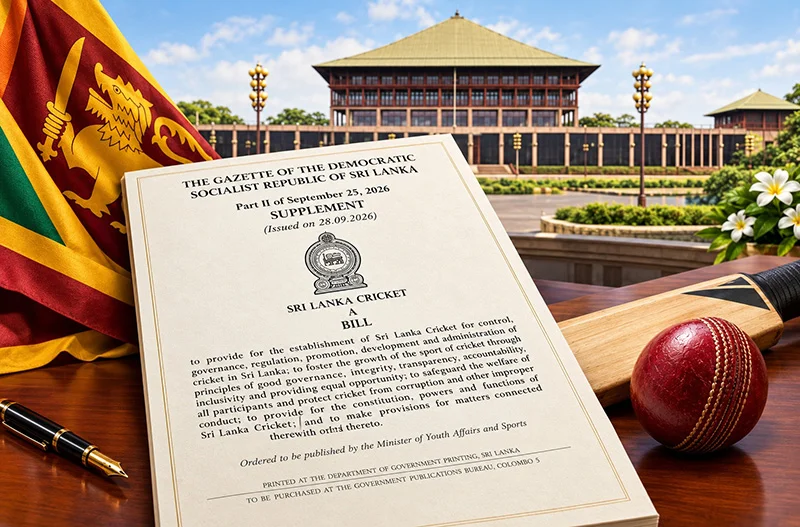
The membership-based electoral structure should provide representation without becoming a substitute for executive management. The seven Elected Directors would bring the perspectives of the SLC membership into the Board, while the seven Independent Directors would provide additional professional expertise and independence. The model’s effectiveness will, therefore, depend on whether the Board can integrate these perspectives into coherent strategic decisions while maintaining a clear boundary between governance and day-to-day management.
The equal division between Elected and Independent Directors also raises a governance-design question. An even-numbered Board can create a tie. The Bill addresses this directly: in the event of equality, the Chairperson has a casting vote; in the Chairperson’s absence, the Deputy Chairperson has a casting vote; and if both are absent, an Independent Director, elected to preside, has the casting vote. The issue is, therefore, not whether a tie can be resolved, but how this mechanism affects the balance between representation, independence and accountability.
The leadership structure reinforces this balance: the Chairperson is elected from among the Independent Directors and the Deputy Chairperson from among the Elected Directors. The casting-vote arrangement makes the Chairperson’s role and perceived independence particularly important, especially when a major strategic decision divides the two components of the Board.
The Bill’s committee provisions could support a disciplined model of delegation, but implementation will depend heavily on the terms of reference adopted by the new Board. The framework could be strengthened by requiring a published cricket-development strategy, a clear division of powers among the Board, executives and selection committees, transparent principles for major development allocations, and periodic reporting on outcomes across men’s, women’s, schools and domestic cricket. These measures would strengthen accountability without legislating the details of team selection or tournament scheduling.
From Measurement to Strategic Accountability
If the Board is to hold management accountable for strategy rather than simply for short-term results, it needs a performance framework that captures both outcomes and the capabilities that produce them.
SLC should consider requiring an explicit multi-year cricket-development strategy, supported by measurable objectives and an annual strategy review. Such a strategy should identify the development pathway from schools and grassroots cricket through domestic competitions to high performance; define major capability priorities such as coaching, sports science, data and analytics; set resource-allocation principles; and establish indicators against which progress can be assessed.
The purpose would not be to turn cricket into a bureaucratic exercise. Strategic accountability simply creates a disciplined basis for asking whether the organisation is doing what it said it would do, whether its assumptions remain valid, and whether resources are producing the intended results.
From Measurement to Organisational Learning
SLC should, therefore, consider adopting a formal Balanced Scorecard. Rather than measuring success solely through international match results or annual financial audits, the framework could track four interdependent perspectives:
Financial Sustainability:
commercial growth, financial discipline and compliance.
Internal Processes:
domestic tournament quality, development pathways and selector-process integrity.
Stakeholder Value:
grassroots development, school cricket and women’s cricket expansion.
Strategic Capability:
coaching quality, sports science, talent development, data and analytics capability, and the organisation’s ability to convert investment into sustainable performance.
The purpose of such a framework would not be to reduce cricket development to a collection of numbers. Rather, it would create a disciplined process for asking four fundamental management questions:
What did we expect to achieve?
What actually happened?
Why was there a difference?
What should we change as a result?
Evaluating these dimensions periodically would help SLC move beyond performance reporting towards genuine organisational learning.
ICC as a Stakeholder in Governance Reform
The ICC is another important stakeholder whose interests should be recognised in the reform process. SLC’s governance arrangements do not operate solely within Sri Lankan law; they also have to be compatible with the governance obligations associated with ICC membership. The ICC’s Articles of Association require each Member to provide for free and democratic elections (or nominees from outside its members) and to manage its affairs autonomously, without government or other public-body interference in the governance, regulation or administration of cricket.
International experience demonstrates that ICC engagement in member governance restructuring is not unusual. In the United States, after the ICC expelled the old national association for chronic governance failures, the ICC directly oversaw a multi-year project to design a new governance model. The ICC Board formally approved the constitution for a replacement body (USA Cricket) before it was adopted. The resulting structure combined elected constituent directors with independent directors, showing that an ICC-backed framework can accommodate both forms of representation.
In Nepal, the ICC established a Nepal Advisory Group comprising stakeholders from across the game to recommend constitutional amendments, with adoption of the revised constitution and subsequent elections forming part of the conditions for reinstatement of ICC membership.[8] The ICC subsequently facilitated an independent panel that included ICC nominees together with representatives of Nepal’s National Sports Council and the existing cricket administration to map the election process, guidelines and timelines.[9] More recently, in 2026, an ICC delegation visited Bangladesh to engage with stakeholders on governance and electoral matters.[10] The ICC has also reported that its Deputy Chair and another ICC Board representative visited Sri Lanka and met relevant stakeholders to assess ongoing developments, while the ICC Board reiterated the need for elections to be held as soon as possible.
These precedents make the ICC a legitimate stakeholder in considering the governance implications of the proposed Bill. This does not mean that the ICC should determine Sri Lanka’s domestic legislation, nor that every feature of the Bill requires prior ICC approval. It does, however, suggest that early and formal engagement with the ICC would be prudent, particularly where the proposed arrangements concern Board independence, elections, government involvement and the transition to the new governance structure.
This is particularly relevant because the Bill creates two institutional arrangements that deserve careful scrutiny from an autonomy perspective. The Transformation Committee is responsible for managing the transition until the First Board is constituted, while the Nomination Committee, although structurally independent of the SLC Board, includes representatives connected with the Sports Ministry and the National Sports Council. Neither arrangement, by itself, establishes government interference. However, taken together, they make it important that the independence of the incoming Board is demonstrable through transparent procedures rather than assumed from the structure alone.
Given the professional calibre and international exposure of the members of the Transformation Committee, it would be reasonable to expect that the importance of ICC engagement would have been recognised. Although any such consultation has not been evident in the public domain, it is therefore reasonable to expect that the ICC has either already been consulted or will be consulted before the Bill is enacted. Such engagement would allow potential incompatibilities to be identified before the new structure is enacted and implemented, rather than after the fact.
The Transition Is Itself a Governance Challenge
The transition provisions introduce a significant organisational-change challenge. Replacing the existing club- and association-based governance structure with a new hybrid Board and governance architecture is not simply a legal exercise; it is an organisational change programme. The Sri Lanka Cricket Transformation Committee is required to manage the transition until the First Board is constituted and, during that period, to establish rules covering matters including tournament structure, domestic governance, selection committee appointments, committee terms of reference, the Nomination Committee process and the election of the Elected Directors.
Structural reform on paper can encounter resistance from established interests, institutional habits and existing routines. The implementation phase will therefore require a clear change-management framework, including stakeholder engagement, transparent onboarding for Independent Directors, clarification of decision rights, alignment of legacy committees, and careful transfer of information and responsibilities.
Without attention to these organisational factors, cultural friction could undermine the intended administrative improvements. The success of the reform will therefore depend not only on the text of the legislation but also on the quality of the rules, appointments, delegation arrangements and organisational behaviours that follow it.
From Governance Reform to a Cricket Strategy
The Bill deserves credit for addressing how SLC is constituted and for creating places for specialist advice. It should not be dismissed simply because it does not prescribe a batting order or a domestic fixture list. Those are not appropriate tasks for legislation.
Its limitation is more precise: the proposed governance arrangements do not, by themselves, assure the strategic capability of the Board or the quality, independence and accountability of the decisions made beneath it. They establish the architecture. The future Board and management must supply the strategy, capabilities, discipline and learning mechanisms that make the architecture work.
A stronger reform would connect four elements: a Board selected for collective strategic capability; professional cricket management with clear delegated authority; transparent but non-mechanical selection and investment processes; and systematic evaluation of development outcomes. Within the first of these, information technology and computer science should be recognised as distinct from the broader capability to understand and govern data science, analytics and emerging AI-enabled decision support.
Ultimately, the governing question is not only who gets a seat at the SLC Board table. It is whether that Board can build, fund, execute and learn from a credible strategy for Sri Lankan cricket.
References
1. Department of Government Printing, Sri Lanka. Sri Lanka Cricket Bill, Gazette Supplement, Part II of September 25, 2026, issued on 28 September 2026.
2. International Cricket Council. Media release, 15 July 2026, reporting the ICC Board discussion of Sri Lanka Cricket and the need for elections to be held as soon as possible.
3. Sport New Zealand – Ihi Aotearoa. Nine Steps to Effective Governance, particularly Step 1: Define and Agree the Board’s Role; Step 4: Provide Strategic Leadership; Step 5: Employ and Support a Chief Executive; and Step 8: Get the Right People on Board.
4. Cricket South Africa. Governance and management frameworks, including the delegation-of-authority framework, Board committees, Cricket Committee, Cricket Pipeline Committee and CEO accountability.
5. International Cricket Council. ICC Articles of Association, provisions requiring free and democratic elections and autonomous administration without government or other public-body interference. ICC. https://images.icc-cricket.com/image/upload/prd/f7vm88yw1933dc38cgtg.pdf
6. International Cricket Council. “ICC outlines proposed USACA constitution.” ICC, 2017. https://www.icc-cricket.com/news/icc-outlines-proposed-usaca-constitution
7. International Cricket Council. “Approved constitution marks historic landmark for cricket in USA.” ICC, 2017. https://www.icc-cricket.com/media-releases/approved-constitution-marks-historic-landmark-for-cricket-in-usa
8. International Cricket Council. “ICC welcomes Nepal Special General Meeting to adopt revised constitution.” ICC, 2018. https://www.icc-cricket.com/media-releases/icc-welcomes-nepal-special-general-meeting-to-adopt-revised-constitution
9. International Cricket Council. “Independent Panel meet to progress Nepal elections under revised constitution.” ICC, 2018. https://www.icc-cricket.com/media-releases/independent-panel-meet-to-progress-nepal-elections-under-revised-constitution
10. International Cricket Council. “ICC delegation visits Bangladesh to engage with stakeholders on governance and electoral matters.” ICC, 2026. https://www.icc-cricket.com/media-releases/icc-delegation-visits-bangladesh-to-engage-with-stakeholders-on-governance-and-electoral-matters
11. International Cricket Council. “ICC Board approves governance, membership and member support decisions.” ICC, 2026; see also “ICC Board Meeting,” 2026, reporting ICC representatives’ meetings with stakeholders in Sri Lanka. https://www.icc-cricket.com/media-releases/icc-board-approves-governance-membership-and-member-support-decisions
(Concluded)

U.S. Navy ship USS Tulsa arrives in Colombo for replenishment visit

Smriti Mandhana appointed India captain across formats

Ronaldo apologizes for Portugal walkout; says Jesus broke promise

Showers in the Western, Sabaragamuwa, Central, Uva, North-western and Southern provinces and in Anuradhapura and Mannar districts

Fuel crunch looms

Gnansara Thera to be assigned to prison printing section: Officials

‘Dates have the highest sugar content to fight Coronavirus’

Sunday Island 27 December – Headlines

#SundayIsland 17th December – Headlines

Sunday Island – 28th March

Sunday Island Headlines – 21 March

Sunday Island – 21st February – Headlines
-

 News6 days ago
US-assisted ‘Ice’ detection: NPC to examine IGP’s move to transfer drug-busting team
-

 Editorial5 days ago
Colombo Port drug bust: The plot thickens
-

 Editorial6 days ago
Drug busting, transfers and trust deficit
-

 Features4 days ago
The first woman in the foreign service or Ceylon Overseas Service it was then called
-

 Editorial4 days ago
Fuelling discontent and protest
-
 News6 days ago
Sri Lankan facing death penalty in Saudi Arabia: Mano G appeals to Crown Prince
-

 News2 days ago
Geneva takes up Sallay’s case and govt. ignores opportunity to answer accusations
-

 Latest News4 days ago
Tharindu Rathnayake, bowlers secure Asian Games Bronze for Sri Lanka