
Business
Sri Lanka must rethink plastics before waste crisis deepens, says OUSL Vice Chancellor

By Ifham Nizam
Sri Lanka’s plastic problem can no longer be treated simply as a waste-disposal issue, with the country facing mounting pressure on its coastal environment, fisheries, communities and public health, Vice Chancellor of The Open University of Sri Lanka Senior Professor P. M. C. Thilakerathne said.
The country must move beyond collecting and disposing of plastic waste and fundamentally rethink how plastics are designed, produced, consumed and recovered, Prof. Thilakerathne said, calling for a national shift towards a circular economy.
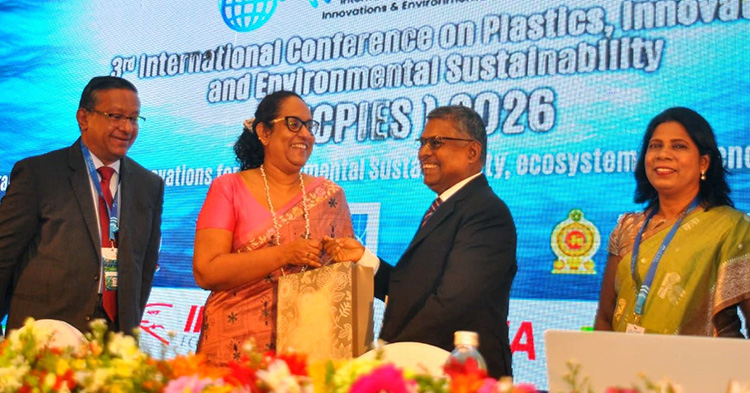
Addressing the 3rd International Conference on Plastics, Innovations and Environmental Sustainability, he said Sri Lanka’s experience, particularly the environmental fallout from the 2021 X-Press Pearl disaster, demonstrated why plastic pollution required urgent national attention.
The X-Press Pearl disaster resulted in large quantities of plastic pellets being released into Sri Lanka’s coastal waters, with impacts extending to marine biodiversity, fisheries and coastal livelihoods.
For an island nation whose economy and communities are closely connected to the sea, he said, plastic pollution could not be viewed as an environmental issue separate from national development.
” For Sri Lanka, these figures are not abstract,” Prof. Thilakerathne said, pointing to the global growth in plastic production and waste.
The world produces hundreds of millions of tonnes of plastics annually, while only a small proportion of plastic waste is recycled. A substantial amount ends up in landfills or is leaked, dumped or otherwise mismanaged.
The scale of the global problem has direct relevance to Sri Lanka, he said, because waste that is inadequately collected or managed can ultimately find its way into waterways and the ocean.
The Vice Chancellor said Sri Lanka therefore needed to strengthen not only waste collection and recycling but also the systems that determine what products enter the waste stream in the first place.
“Much of the waste problem is decided at the drawing board,” he said.
Products should be designed for reuse, recycling and disassembly, while businesses should be encouraged to adopt models based on refill, repair and reuse rather than continued dependence on single-use plastics.
He said Sri Lanka also had an opportunity to develop locally appropriate alternatives using renewable resources and agricultural residues.
The country’s coconut industry and other agricultural resources could support research into alternative materials, he said, but scientists must ensure that such substitutes were genuinely environmentally sustainable and did not simply shift the environmental burden elsewhere.
For Sri Lanka, the challenge is particularly important because plastic pollution intersects with several economic sectors.
Fishing communities depend directly on healthy marine ecosystems, while tourism depends heavily on the country’s beaches, coastal areas and natural environment.
Plastic pollution can therefore translate into economic and livelihood pressures in addition to its ecological consequences, Prof. Thilakerathne said.
He also warned that the problem extended beyond visible plastic waste.
Microplastics and nanoplastics have been detected in drinking water, food and air, while research into their potential effects on human health is continuing.
The longer-term public-health implications represented an important area for scientific research, he said.
Prof. Thilakerathne called for stronger cooperation between universities, government institutions, industry and local communities to develop solutions suited to Sri Lanka rather than relying solely on technologies or approaches developed elsewhere.
Universities, he said, had a responsibility to generate the evidence needed for national policy and to ensure that research reached the communities and industries expected to implement it.
This is where OUSL could make a particular contribution, given its nationwide network and large population of students, including working adults, teachers, professionals and learners from rural communities.
The university plans to strengthen environmental sustainability and circular-economy principles across its curriculum, expand professional education on waste management and sustainable materials, develop international research partnerships and improve sustainable practices within its own campuses and centres, he said.
Prof. Thilakerathne also called attention to the thousands of people who earn a living through informal waste collection and recycling.
Any national strategy, he said, must recognise the contribution of these workers and ensure that the transition towards a circular economy does not leave them economically vulnerable.
Sri Lanka has already introduced restrictions on a number of single-use plastic products, but the Vice Chancellor said regulations must be accompanied by enforcement, investment in recovery infrastructure, industry participation and changes in consumer behaviour.
At the international level, he said, Sri Lanka also needed to contribute actively to efforts to address plastic pollution, backed by credible national scientific research.
The global nature of the plastics trade and pollution meant that action by individual countries alone would not be sufficient.
The conference therefore provided an opportunity for Sri Lankan researchers to connect local environmental challenges with international research and technological developments, he said.
Addressing young researchers and students, Prof. Thilakerathne urged them to measure the value of their work not only by academic publications but also by its ability to produce practical change.
He encouraged researchers to work across disciplines, engage with policymakers and industry, and remain connected to communities affected by the problems they study.
“The most meaningful research is that which changes practice,” he said.
He said Sri Lanka’s plastic crisis ultimately required a change in the country’s approach to materials, consumption and waste.
“Our task is not to abandon the material that shaped the modern world but to make it compatible with the sustainable one,” Prof. Thilakerathne said.

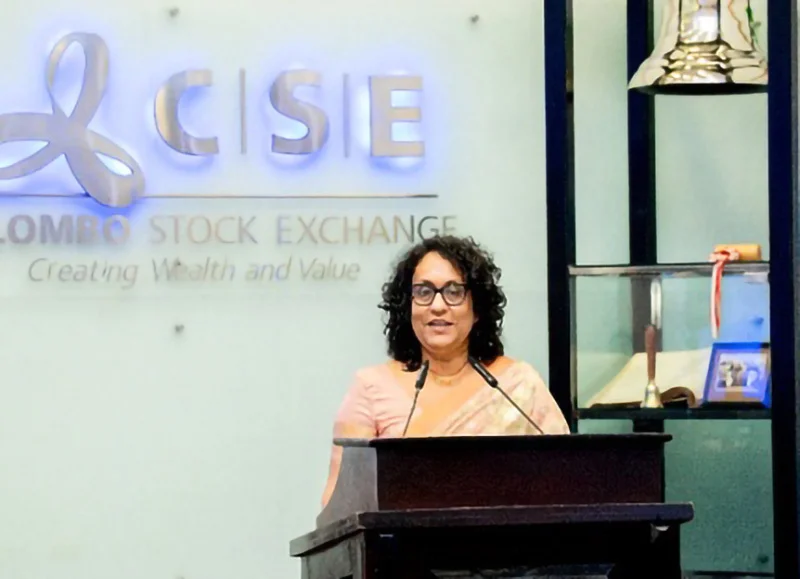
As part of World Investor Week (WIW) 2026, the Securities and Exchange Commission of Sri Lanka (SEC) and the Colombo Stock Exchange (CSE) joined stock exchanges around the world in ringing the market opening bell for financial literacy on 5 October 2026, under the patronage of Dr. Harini Amarasuriya, Prime Minister of the Democratic Socialist Republic of Sri Lanka.
World Investor Week is an annual global campaign led by the International Organization of Securities Commissions (IOSCO) to raise awareness of the importance of investor education and investor protection. The “Ring the Bell for Financial Literacy” initiative, pioneered by the World Federation of Exchanges (WFE), brings together stock exchanges and other stakeholders worldwide to promote greater financial literacy and encourage individuals to make informed financial decisions.
The ceremony also marked the 40th anniversary of the CSE and the joint launch by the SEC and the CSE of the Stock Market Game, an online stock market simulation based on the ATrad trading system.
The Stock Market Game enables participants to gain practical experience of how the stock market works, make investment decisions and construct portfolios of listed shares without using real money. The platform is accessible through the websites of the SEC and CSE and is expected to serve as an important practical tool for promoting financial education. It is envisaged that the Stock Market Game will also be used to conduct simulation competitions among universities and the 100 Capital Market Clubs established in schools across the country.
The ceremony also featured the commemorative issuance of a stamp and First Day Cover to mark the 40th anniversary of the CSE. Issued in collaboration with the Department of Posts and the Philatelic Bureau of Sri Lanka, the commemorative stamp and First Day Cover were presented to Prime Minister Dr. Harini Amarasuriya, by the SEC Chairman Snr. Prof. D.B.P.H. Dissabandara and Ray Abeywardena, Director CSE and Chairman of Central Depository Systems (CDS).
Welcoming the gathering, Rajeeva Bandaranaike, Chief Executive Officer of the CSE, highlighted the importance of obtaining reliable information when making investment decisions.
“We operate in a digital world where a vast amount of information and data is disseminated through social media. While some of this information is factual, some may be inaccurate or misleading. When investing in the stock market, it is essential to make informed and prudent investment decisions. Therefore, investors should obtain information and data from reliable and responsible sources and persons before making investment decisions.”
Addressing the gathering, SEC Chairman Snr. Prof. D.B.P.H. Dissabandara emphasised that the SEC’s role extends beyond regulation to facilitating the further development of the capital market.
“The SEC needs to determine how best to introduce the stock market to Generation Alpha, Generation Beta and generations beyond. When it comes to investors, we need to build confidence in the market, because people will invest only when they have confidence in the market.’’
Business
Rs. 5 million worth of prizes to be given at 8th edition of CSE Masterminds Quiz Competition


The Colombo Stock Exchange (CSE) has announced that the eighth edition of the CSE Masterminds Quiz will be held on 9th October 2026, from 3.00 p.m. onwards, at the Main Ballroom, Shangri-La Colombo.
Recognised as Sri Lanka’s premier capital market quiz competition, CSE Masterminds brings together teams from the public and private sectors. Participants will be tested across international business, global markets, current affairs, the Sri Lankan economy and business, the Sri Lankan stock market, and sports and entertainment, before a concluding rapid-fire round.
This year the winning team can win up to Rs. 2,000,000, the runners-up up to Rs. 1,000,000, and the second runners-up Rs. 750,000. Sector awards will also be presented to the highest-performing team from each participating sector. Guest participants will also be able to compete in rounds of Audience questions, and will have the opportunity to participate a raffle draw for three free return tickets provided by Fits Aviation (Pvt) Ltd.
The evening will also include an exclusive after-party with live music provided by the band ‘Doctor’ featuring guest performer Umara Sinhawansa, fine food and beverages, providing an opportunity for networking and celebration. Every participant will receive a premium goodie bag made possible by the support of the event’s sponsorship partners. Collectively, the event will feature over Rs. 5 million worth of prizes, rewards, and giveaways, encompassing championship prizes, sector awards, audience engagement prizes, raffle draw offerings, and goodie bags.
Sponsorship partners include:
Platinum Sponsors: Hatton National Bank PLC and Bartleet Religare Stockbrokers (Pvt) Ltd.
Gold Sponsors: Ex-Pack Corrugated Cartons PLC, Asha Securities Ltd., and Lanka Securities (Pvt) Ltd.
Silver Sponsors: Barista Coffee Lanka (Pvt) Ltd., Capital Trust Holdings (Pvt) Ltd., LOLC Holdings PLC, Arpico Ataraxia Asset Management (Pvt) Ltd., IronOne Technologies (Pvt) Ltd., and LankaPay (Pvt) Ltd.
Co-Sponsors: Access Engineering PLC, Bank of Ceylon, Commercial Bank of Ceylon PLC, CryptoGen (Pvt) Ltd., Deloitte Lanka (Private) Limited, Dialog Finance PLC, Efutures (Pvt) Ltd., People’s Leasing & Finance PLC, Senfin Asset Management (Pvt) Ltd., and Softlogic Stockbrokers (Pvt) Ltd.
Business
NCCSL to conduct practical workshop on food labelling and advertising regulations in Sri Lanka

The National Chamber of Commerce of Sri Lanka (NCCSL) is organizing a one-day practical workshop on “Food Labelling & Advertising Regulations in Sri Lanka” on Thursday, 8th October 2026 from 9.00 a.m. to 4.30 p.m. at the National Chamber of Commerce, Colombo 10. The workshop has been organised to provide a practical understanding of the latest regulatory requirements governing the food products labelling and advertising of food products in Sri Lanka, with particular attention to regulatory developments applicable in 2026, compliance requirements, and the potential legal and financial implications of non-compliance.
As food products increasingly compete not only with quality and price but also on packaging, labelling and promotional claims, businesses must ensure the information they communicate to consumers is accurate, transparent and consistent with applicable regulatory requirements. Understanding these requirements is therefore essential for businesses seeking to protect their brands, maintain consumer confidence, and minimize regulatory and legal risks.
The practical workshop will go beyond an overview of regulations and focus on how businesses can apply regulatory requirements in their day-to-day operations. Participants will be guided through key areas of food regulatory compliance, including the national food regulatory framework, recent food labelling regulations and key changes, mandatory approvals and prohibitions relating to food labelling, and the litigation process associated with regulatory violations. The programme will also cover several areas of growing importance to the food industry, including the EU EMPCO Directive, food colour coding regulations, regulations relating to food trans-fatty acids and the importance of compliance in the use of food additives. Practical exercises will further enable participants to apply their knowledge to real-world compliance situations and strengthen their ability to identify potential regulatory concerns.
For further information and registration, please contact the National Chamber of Commerce of Sri Lanka on 011 4741788 – Nethmi or Udula – 071 403 4775.

U.S. Navy ship USS Tulsa arrives in Colombo for replenishment visit

Smriti Mandhana appointed India captain across formats

Ronaldo apologizes for Portugal walkout; says Jesus broke promise

Showers in the Western, Sabaragamuwa, Central, Uva, North-western and Southern provinces and in Anuradhapura and Mannar districts

Fuel crunch looms

Gnansara Thera to be assigned to prison printing section: Officials

‘Dates have the highest sugar content to fight Coronavirus’

Sunday Island 27 December – Headlines

#SundayIsland 17th December – Headlines

Sunday Island – 28th March

Sunday Island Headlines – 21 March

Sunday Island – 21st February – Headlines
-

 News6 days ago
US-assisted ‘Ice’ detection: NPC to examine IGP’s move to transfer drug-busting team
-

 Editorial5 days ago
Colombo Port drug bust: The plot thickens
-

 Editorial6 days ago
Drug busting, transfers and trust deficit
-

 Features4 days ago
The first woman in the foreign service or Ceylon Overseas Service it was then called
-

 Editorial4 days ago
Fuelling discontent and protest
-

 News6 days ago
Sri Lankan facing death penalty in Saudi Arabia: Mano G appeals to Crown Prince
-

 News2 days ago
Geneva takes up Sallay’s case and govt. ignores opportunity to answer accusations
-

 Latest News4 days ago
Tharindu Rathnayake, bowlers secure Asian Games Bronze for Sri Lanka