
Latest News
Anthropic boss Dario Amodei calls for AI development to slow down


The head of AI company Anthropic has called for the pace of development of artificial intelligence models to slow down and to be closely monitored.
In an essay, Dario Amodei said developing AI was not in question, but the risks associated with it were “serious” and companies and governments must be given time to address them.
The bosses of two rival AI firms, Sam Altman of OpenAI and Elon Musk, have both said they agree with Amodei.
There have been growing concerns recently about the technology’s potential risks. An AI researcher who left Anthropic this week told the BBC that “if we don’t slow down at the current rate of progress, there is a strong chance that we could all die in the immediate future”.
Jacob Coxon told Laura Kuenssberg that people working at AI companies were “genuinely frightened… genuinely concerned about the fate of humanity in the next two years”.
“It’s not at all an exaggeration to say that the people who are involved with both founding these companies and building the tech believe there is a possibility of human extinction,” Coxon said.
“Many of the people who are sort of deep in the weeds on actually coding the thing believe that there is like a greater than ten percent chance, or even greater. Some smaller, but they all have different numbers for a probability that humans might die. And they all keep this in their head on a daily basis while working on the technology.”
In Amodei’s essay, called We Must Pace the Frontier and made public on Saturday, he proposed a three-point plan that includes independent monitoring of AI models as they are developed, industry-wide regulation and global regulation.
As his proposal made the rounds, even competitors voiced support for the idea of third-party monitors who could evaluate the safety of models as they are developed.
“I agree with Dario that we need to pace the frontier,” wrote OpenAI CEO Sam Altman on X. He called independent evaluators “a great idea.”
In a new interview with Fortune Magazine, Altman had sounded similar safety concerns, saying standards were “not at a place” to push AI capabilities much further.
He added that he believed AI beyond human control is “absolutely” possible.
Elon Musk meanwhile said the Anthropic boss was “right”.
The warnings have prompted calls to action, but US President Donald Trump has so far rejected such fears, saying on Thursday he was concerned “if we don’t win AI, we’re going to be put in a very bad position”.
Cyber-security concerns have grown as new models have exhibited more and more powerful hacking capabilities.
Anthropic withheld its Mythos model from public use when it was announced in April that it could independently escape the testing environment, known as the sandbox.
In the run-up to the release of its most recent Astra model, OpenAI cited cybersecurity concerns as it explained it had paused certain aspects of the model’s development.
Safety has also taken centrestage in the rivalry between Anthropic and OpenAI.
Amodei, who had previously worked as a vice president at OpenAI, has said he co-founded Anthropic in 2021 so he could build safer and more trusted AI models.
In his essay, Amodei pointed out that AI had advanced “drastically faster” including its “ability to build the next generation of AI” – and mentioned an incident involving rival OpenAI which has revealed that agents conducted cybersecurity attacks on targets they were not asked to attack in July.
The OpenAI agents had “essentially acted as a fanatically devoted collective”, Amodei said. OpenAI has said it is slowing down training of certain advanced AI models and tools as a result.
Amodei called for “building AI at a balanced rate that aims to ensure its safety while still achieving its benefits”.
This would not mean “halting model training or technical progress, but ensuring companies take adequate time to align and safeguard their models, and for third party evaluators to confirm this”.
He was committing Anthropic to this “unilaterally” – as well as calling on governments “to require other frontier companies to match”.
Amodei said he recognised that regulation might not be able to keep up with the pace of AI, and therefore called on AI companies to “voluntarily work together to set standard” in parallel with regulation.
The Anthropic CEO went on to address the impact that a slowdown would have on the industry and competition with leading developers worldwide, particularly China.
“I believe that if slowing down bought us even an extra year or two before models reach critical levels of capability, and we used that time to advance alignment, we could greatly reduce the risk that something goes seriously wrong,” Amodei said.
This would have to be done in a co-ordinated manner “without sacrificing commercial advantage or the United States’ lead in AI”. Any slowdown would have to be limited, he said, to avoid allowing China to pull ahead.
He urged the US government to take measures so that US companies’ AI chips could not be sold to China – or the technology shared with authoritarian countries.
His former employee, Jacob Coxon, told the BBC, however, that the initiative to slow down must go beyond the US – “there’ll need to be some sort of co-ordinated slowdown with China if we’re going to avoid a race at an international scale”.
Amodei’s post has prompted a wide range of responses.
Clement Delangue, the CEO of the AI platform Hugging Face, said he was launching a new project called the Open Alignment Initiative, adding he wanted to be among “embedded evaluators” that Amodei proposed could be part of a solution.
Hugging Face was hacked by OpenAI agents earlier this year prompting an outcry over AI safety.
“Let’s make AI safer by making it more transparent,” Delangue wrote on X.
Elon Musk also voiced his support, writing that “Dario is right”.
Musk, whose SpaceXAI makes the controversial chatbot Grok, once called Anthropic “evil” but has changed his tone since signing a $15bn deal to sell compute capacity to Anthropic in May.
However some observers suggested that Amodei’s post was less about safety than about consolidating control over AI technology.
“Dario makes the case to stop open source and concentrate enormous technological and economic power with Anthropic,” wrote Chamath Palihapitiya, investor and co-host of the tech podcast “All-In”.
Notions of slowing down or even pausing AI development have long been met with such cynicism in certain corners of Silicon Valley, with critics accusing leading AI developers of hyping their technology as a marketing ploy.
Anthropic and OpenAI are both reportedly preparing for potentially record-setting initial public offerings.
[BBC]

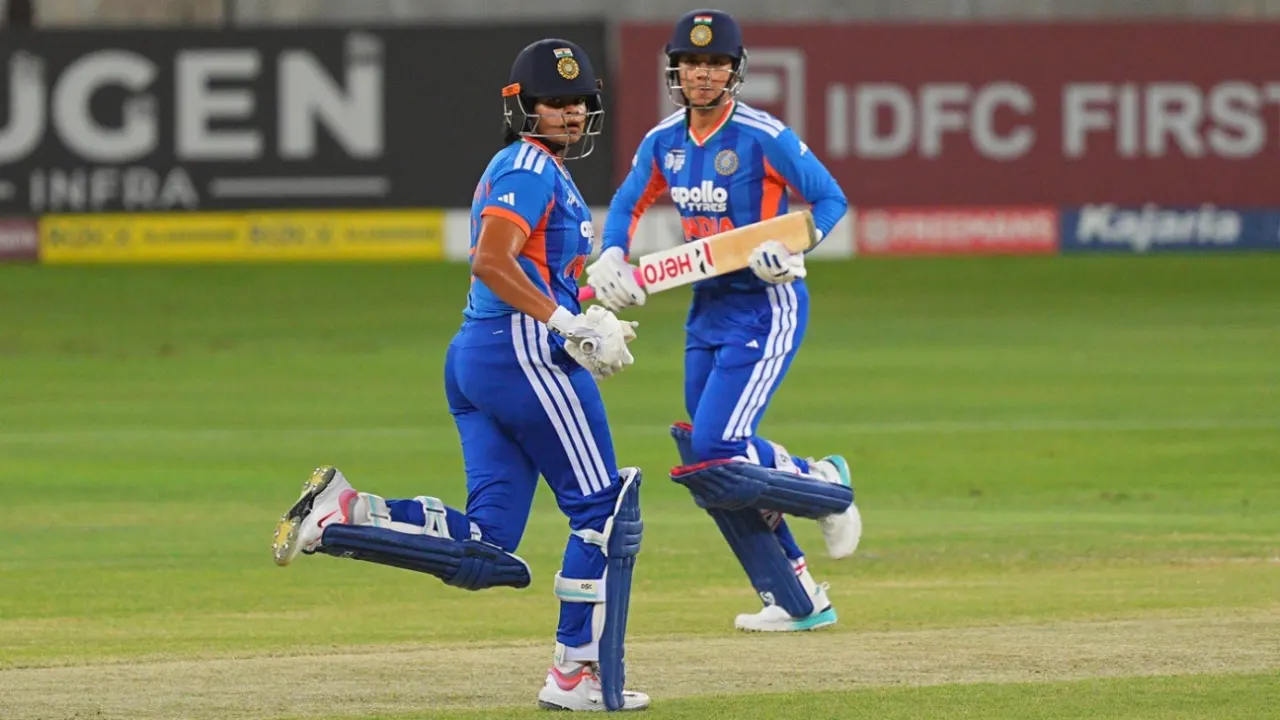
A commanding opening stand between Shafali Verma and Smriti Mandhana, followed by an excellent overall bowling effort, gave India their eighth Asia Cup title, fourth in T20 format, as they beat previous champions Sri Lanka by 72 runs in Dubai.
Shafali and Mandhana put up 129 for the first wicket, the highest partnership for any wicket in the Women’s T20 Asia Cup, to power India to 183 for 5. Sri Lanka’s chase never got going, despite India dropping as many as five catches, as the spin unit led by Deepti Sharmaand N Shree Charani kept them under control throughout. Chamari Athapaththu top-scored with 36, but Sri Lanka were eventually bowled out for 111. India now lead Sri Lanka 6-1 in Asia Cup final meetings.
Shafali set the tone after captain Harmanpreet Kaur opted to bat after winning the toss. When Sri Lanka introduced spin in the second over, both openers immediately attacked, picking up two boundaries. But Shafali combined power with placement in the third over, first using the pace on a short ball from outside off to guide it past short third, before clipping a length delivery through midwicket to make it back-to-back fours.
Athapaththu brought herself on in the fifth over but that brought little respite. Shafali got underneath a tossed-up delivery and launched it straight back over the bowler’s head before sending another ball in the slot over long-on. India raced to 57 without loss at the end of the powerplay.
The boundary-hitting continued after the powerplay too, with Shafali finding the ropes regularly on her way to a 24-ball fifty, the fastest half-century in Women’s T20 Asia Cup history. Mandhana, who had initially scored at around a run a ball, then joined in on the fun as she lofted a flighted delivery from Chamudi Praboda over long-on before bringing up her own half-century, off 36 balls, with a cut through the offside. India reached 98 without loss at the end of ten overs.
With India looking well on track for a 200-plus total, Sri Lanka finally made inroads in the 13th over when Praboda broke through, having Shafali mistime a shot to cover. India suffered another setback in the following over when Mandhana was run out for the third time in the tournament. Harmanpreet, coming in at No. 3, struck Athapaththu’s delivery straight to point and immediately set off for a single, but she hesitated midway before continuing, leaving Mandhana stranded as the throw came in. The mix-up ended Mandhana’s innings on 59, with Sri Lanka sending back both well-set openers in a space of six balls.
Sri Lanka could have had Richa Ghosh soon after but Kavisha Dilhari could not hold on to a difficult running catch. Ghosh had mistimed a slog sweep towards deep backward square leg, with Dilhari racing in and diving forward, only for the ball to slip from her hands as she hit the ground. Ghosh could not make the most of the reprieve as she scored 15 off 13 before picking out cover.
Sri Lanka did a better job at the death, restricting India and picking up the wickets of Harmanpreet and Deepti in successive deliveries in the 19th over. That brought G Kamalini, playing her first match in this Asia Cup and just her second T20I, to the crease and she managed a four and a six off the last two balls to take India to 183 for 5.
A chase of 184 was never going to be easy, but Imesha Dulani started the proceedings positively, shuffling across to a full delivery from Kranti Gaud and paddling it past short fine leg for four. But a similar attempt brought an end to her innings in the fourth ball of the over, with Dulani attempting a scoop only to miss the ball completely and watch it crash into the top of leg stump.
Earlier, Sri Lanka had suffered a setback when Vishmi Gunaratne appeared to roll her ankle while returning the ball and was carried off the field on a stretcher. She, however, came out to bat at No. 3, attempting to rebuild alongside Athapaththu. But fast bowlers Gaud and Nandani Sharma left the duo frustrated, with Athapaththu enduring a testing over from Gaud, getting off the mark only on the eighth delivery she faced.
She then showed off some of her big hitting, taking on Shafali for a six and a four, but despite the boundaries, she was only going at a run-a-ball at the end of the powerplay. Any hopes of Sri Lanka coming close to chasing the total ended with her dismissal in the tenth over.
Anticipating Athapaththu would look to attack, Deepti shortened her length, making her charge down the pitch. But the ball turned away sharply, beating Athapaththu’s attempted shot, and Ghosh completed a straightforward stumping, dismissing the Sri Lanka captain for 36. Deepti struck once more in the over, having Gunaratne bowled, leaving Sri Lanka needing 121 off the last ten.
As has been the case throughout the tournament, India’s spinners showed their prowess, never letting Sri Lanka even have a sniff at the game thereon. Wickets fell regularly, with Charani removing Harshitha Samarawickrama, the hero of the 2024 Asia Cup with a sharp return catch for 9.
Charani then picked up two wickets in the over. Kavisha Dilhari fell first, slicing a thick outside edge towards short third, following which Nilakshika Silva, who was playing with a broken finger, top-edged a shot towards deep square leg.
India were sloppy in the field, dropping five catches but it was too late for Sri Lanka to capitalise on the chances. Deepti finished with three wickets and Charani with four, finishing as the tournament’s top two wicket-takers, as India bowled Sri Lanka out for 111 on the last ball of the innings.
Scores:
India Women 183 for 5 in 20 overs (Smriti Mandhana 59, Shafali Verma 68, Harmanpreet Kaur 14, Richa Ghosh 17, Gunalan Kamalini 15*; Mithalia Ayodhya 1-33, Chamari Athapaththu 1-34, Chamudi Prabodha 1-40) beat Sri Lanka Women 111 all out in 20 overs (Chamari Athapaththu 36, Vishmi Gunarathne 20, Nilakshika Silva 22; Kranti Gaud 1-08, Shafali Verma 1-23, Shree Charani 4-20, Deepti Sharma 3-19, Prema Rawat 1-22) by 72 runs
[Cricinfo]

Rumesh Tharanga outsmarted a strong field including his closest rivals this season, Anderson Peters and Julian Webber to clinch the men’s javelin title of the inaugural Ultimate Championship in Budapest.
The Diamond League champion overtook Webber and Peters with his third round throw which was measured at 87.11 metres before further improving the distance to a colossal 91.01metres, the third time the 23 year old has exceeded the 90 meters mark this season.
The two-time world champion Peters finished second with 86.18m.
European champion Weber, who led in the first round, finished third with 85.89m. (RF)

If spin is to decide the Women’s T20 Asia Cup final, both India and Sri Lanka have plenty to call upon. India’s spin attack, led by Deepti Sharma, has taken 26 wickets in the tournament, the most by a side. Sri Lanka are next with 25. That makes it seem like a spin vs spin and more spin kind of title contest.
On the plus side for India is that they have appeared well-rounded on the whole. Smriti Sharma and Shafali Verma have scored the bulk of the runs.
Sri Lanka, by contrast, have had to fight for momentum with the bat on the slow Dubai pitches. They were 33 for 4 in the semi final against Pakistan before Hrshitha Samarawickrema and Kavisha Dilhari revived and then completed the chase. Prior to that, they were 44 for 5 against Bangladesh and had to depend on Samarawickrama’s composed knock to seal their semi-final spot. They were also 45 for 5 against Indonesia in the league stage, before Nilakshi Silva lifted them.
That batting order has looked shaky. Chamari Athapaththu allying just 63 runs from four innings and Imesha Dulani 64 from four innings is a concern. And India’s bowling – quick bowler Nandani Sharma has been in good form too – might be tougher to handle than what Sri Lanka have faced so far.
India’s recent record against Sri Lanka also makes them favourites. They swept the five-match T20I series in December 2025 at home, and have won nine of their last ten T20Is against them.
But Sri Lanka’s one victory in that stretch came in the biggest game of all: the 2024 Asia Cup final in Dambulla, when they chased down 166 with eight wickets to spare to win the title.
That means Sri Lanka have both a challenge and a cause for optimism. They will need their batters to withstand Nandani and India’s spin trio – Deepti, N Shree Charani and Prema Rawat – and find a way to build partnerships, rather than leave too much for the middle and lower-middle order to do.
India have the balance and form while Sri Lanka, the defending champions, know better than most that a final can reset the equation. Not to forget, despite their struggles with the bat, Sri Lanka have an all-win record in the Asia Cup so far, the same as India.
Shafali Verma has made fast starts a recurring theme, scoring 168 runs in four matches at an impressive strike rate of 169.69. Two of her knocks have been 64s, and she has shown little sign of taking her foot off the accelerator. In the final, how she sets up the innings could be crucial.
Sri Lanka have found ways to recover from early collapses, with different players stepping up at different stages. But they need their talisman, Chamari Athapaththu, to come to the fore in the final. Athapaththu has made an impact with the ball – she is the tournament’s joint-highest wicket-taker – but her batting is yet to click. She has crossed 30 only once in four matches, in the opener against UAE. A noteworthy contribution with the bat, to go with her threat with the ball, could give Sri Lanka the spark they need against India.
India have fielded an unchanged XI in the tournament so far and, barring injuries, should do the same.
India Women (probable): Smriti Mandhana, Shafali Verma, Pratika Rawal, Harmanpreet Kaur (capt), Richa Ghosh (wk), Bharti Fulmali, Deepti Sharma, Prema Rawat, Kranti Gaud, N Shree Charani, Nandani Sharma
Sri Lanka have used 14 of their 17 players. In the semi-final against Pakistan, they left out Vishmi Gunaratne and Chethana Vimukthi for Hasini Perera and Mithali Ayodhya, which might be their ideal XI.
Sri Lanka Women (probable): Imesha Dulani, Chamari Athapaththu (capt), Sanjana Kavindi, Harsthitha Samarawickrama, Hasini Perera, Kavisha Dilhari, Nilakshika Silva, Kaushini Nuthyangana (wk), Sugandika Kumari, Chamudi Praboda, Mithali Ayodhya

Fast Attack Craft P 4447 recovered in successful salvage operation

Showers above 100 mm are likely at some places in the Western, Central, Sabaragamuwa, Southern, North-central and North-western provinces

Shafali, Mandhana power India to eighth Asia Cup title

Tharanga wins Ultimate Javelin title

CIABOC member’s appointment: Controversy over Speaker under probe heading selection process

GMOA: Countrywide cadre revision not done since 2015

‘Dates have the highest sugar content to fight Coronavirus’

Sunday Island 27 December – Headlines

#SundayIsland 17th December – Headlines

Sunday Island – 28th March

Sunday Island Headlines – 21 March

Sunday Island – 21st February – Headlines
-

 Sports4 days ago
DDS set to lose Test captaincy
-
 News7 days ago
Thailand shuts door on undesirables from Sri Lanka
-

 News4 days ago
Sri Lanka faces new grid challenge as rooftop solar surges: former CEB GM
-

 Latest News4 days ago
Shafali, Deepti power India into sixth T20 Asia Cup final
-
 Business7 days ago
CEB successor company breaks into top three in competitive BESS tender
-

 Opinion6 days ago
Navigating Sri Lanka’s Israeli Dilemma
-

 Latest News3 days ago
Sri Lanka thwart Fatima Sana challenge to secure Asia Cup final spot
-

 Features5 days ago
Lost for 90 years: Rare Goby resurfaces in Jaffna