
Features
Vignettes of the Public Service –The Foreign Beat

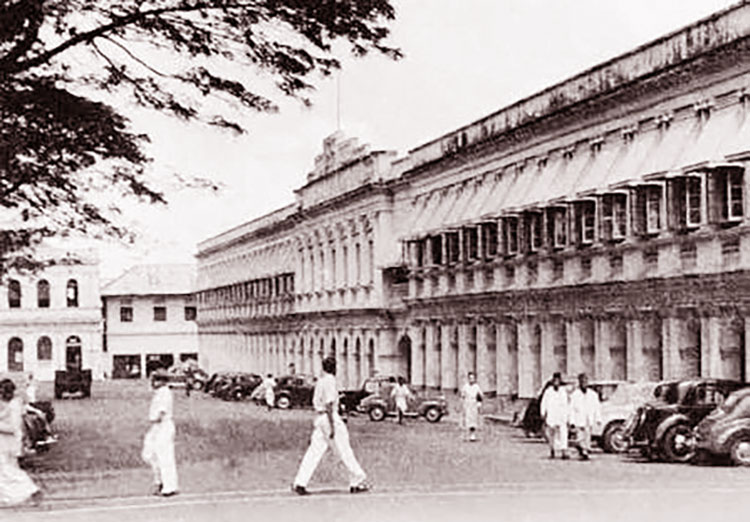
by Gamini Seneviratne
My acquaintance with officers in the foreign service was part casual, that is to say to say, not related to our work, and, despite a hiccup or two, cordial as well.
I knew of my namesake while I was busy through each school interval seeking, as we all were, championship honours at French Cricket. Actually there were four of us Gamini Seneviratnes at the time in school, including one who took to medicine and Aetaya who opened batting, the senior-most who is wrapped around or within these lines was better known as Gadaya, a nickname he had inherited from his brother who retired as the IGP, G A D E A Seneviratne, (better known as Ana). I do not know whether the same nom de guerre had been conferred on brother Nalin, who retired as the Army Commander.
I was in one of the lower Forms when Gadaya or Gudson was inducted into our cricket team for, of all matches, the Royal-Thomian. He opened the bowling and, as was to become apparent in his later life, put everything he had into it. He swung his arm over with commitment and passion and before he had gone through half his spell, i.e., in the first over, we saw his shirt flying loose behind him. As far as I can recall it was a match that St. Thomas’s won by an innings, but there could be no besmirching Gadaya’s name in that connection: he batted at the bottom of the order as he had bowled at the top, and was the only batsman who remained ‘not out’ in both innings.
It did not matter that he made no score; after all, our Captain got a pair of ducks, OUT each time.
Gadaya served in senior positions including those of Ambassador and I have, when asked by chance acquaintances, whether I had just returned from Bangkok or wherever he had last been required to lie for our country, out of my respect for matters of ‘fact’, disclaimed any part in such goings on. He too had been embarrassed by the receipt of congratulations (not by academics in our Departments of English!) on some poem of mine.
In the business of ‘overseas administration’, conscientious as he was, he seemed to be on the same wave-length as the old Treasury-wallahs who knew what the AR and FR could do, though the rules may have been mis-formulated in terms of what they were meant to do. For the old hands at the Treasury, the wave-length wavered; for the unsuspecting Gadaya it did not.
Also, at school, we had Charlie Mahendran, who competed with Sappie Pieris, (later, the Director of Census & Statistics and the first head of department to be incarcerated – by J R – for carrying out his duties as mandated), in the matter of putting us to sleep in class. Between them it was a close call and Ceylon History sank into an ageless slumber. He suffered a hiccup in Africa that he may not have got over yet and a major – well, ‘faux pas’ might not be the right term, – in New York in the line of duty or out of it. He went on and down into politics.
Rodney Vandergert was the self-effacing ‘big’ brother of my classmate, Beverly. Actually they were both small-made by the standards that then prevailed, especially among the Burgher boys in school. Ludekens, for example, was tall, Vandendriesen both tall and broad, Bartholemeusz had a paunch as well and Muller possessed biceps that he could flaunt and did – regularly at the Royal-Thomian (and, on a memorable occasion, under the tamarind tree where he took on Viswa Weerasooria in a battle for a ‘lady love’ in a lower class).
Many of our lot dispersed all across the globe and when some years ago a hulk, armed with a moustache and a seven o’clock shadow or whatever, had appeared at one of our ‘get-togethers’ and been presented as ‘Beverly’, there had been an eruption of disbelief, more or less polite. I wasn’t among those present but, as I said when I heard about it, they should have asked ‘Beverly’ to give them Gene Autry’s ‘Lonely River’: it was the song he sang at scout camps, perhaps the only song he knew.
My classmate, Jungle Dissanayake, came in from outside the Service as Ambassador to Indonesia where, good, committed, conservative though he is, he revealed a revolutionary streak towards the business of running a Mission. He moved on to Brussels, a key to our relations with Europe; what has given him greater satisfaction, though, is his avocation as a recorder of and commentator on politics in this country and the personalities who were/are engaged in such shameful games.
Another schoolmate, Mahen Vaithianathan, too joined the Overseas Service via a novel route (mentioned below).
From campus days I knew or knew of John Gooneratne (who made the typically ‘Thomian’ gadol joke (“Banda shot today – in the morning!”), Karunakaran Breckenridge, Chandra Monarawela, Jayantha Dhanapala, Nihal Rodrigo, Wilhelm Woutersz, K Wijesiri and Janaka Nakkavita.
John, I believe, was our Ambassador in Iraq when what the US oil companies refer to as ‘the Gulf War’ was conducted for them by Bush Senior; our Mission had a rough time evacuating Lankans from those parts, especially from the Iraqi province of Kuwait. He graduated into Strategic Studies and headed the Institute since named after Lakshman Kadiragamar, the only Leader this country has had since Sir Baron Jayatilake. By all reports, that Institute is now being trashed: what a unique tribute, and to such a man!
Breck was a man apart (when I discovered that his younger brother, Ranji, Professor of Zoology in Peradeniya and, in his retirement, Principal of their old school, Trinity, was also known as ‘Breck’, I was annoyed). Despite his rugby and his theatre, Breck was not a typical product of that school (he’d have learnt a great deal more at, say, Royal or at St. John’s Jaffna). He built up his knowledge by other means, mostly through his sensitivity to the lives of other people. He ‘knew’ the people he met.
But he was no know-all. A large gap in his knowledge of how this world runs had to do with wheels. I know that he could ride a bicycle, and I believe that he and Nimal fell in love while commuting by car between New York and Washington. Breck’s handling of a vehicle with four wheels, however, was infected by his insouciance. On his way to work he had driven his brand new car into the signal post at Bambalapitiya junction, and been forced to borrow a colleague’s brand new car to get home – and managed to rip its side on the axle of a bullock cart.
No, he said, he was thinking of lunch, not of a Guinness record. I borrowed his brand new car, not the same one, this was a Volkswagen, for a rush trip to Kurunegala and ripping past Pasyala, discovered a whisker away from a major, a murderous, accident that it had no horn. My knees shook the rest of the way. Looking it over before the return journey I found, yes, that it had no spare wheel.
Breck was not given to ‘constructing a career’, and it is everybody’s good fortune that Shirley Amerasinghe spotted his gifts and brought him in to assist at the consultations that led to the adoption of the Law of the Sea; it would seem to be the only major piece of legislation that remains enforceable across the world.
It was the practice for recruitment to the Overseas Service to be made through the Civil Service examination. Those who topped the list could opt to join the COS; salaries etc being such, few did. (The Overseas Service was renamed the Foreign Service under a new Minute about 10 years ago). In the late 1950s, however, that practice was overlooked, just the once, because it was time to bring in ‘more mature’ people into the service.
As it happened, it was just about the right time for S W R D’s Permanent Secretary’s son and for the daughter of his ‘class’ mate, Dr. Naganathan, as well as a few others who had matured beyond the age limit prescribed for the exam to come help the country.
Mahen Vaithianathan, life-long a ‘maverick’, as such terms are applied to those one does not know at all or not well enough, was not interested in taking a job courtesy of his father. Despite a year in London at the School of Asian Studies immersed down to his shoulders in the Chinese language, he did not stay long in the COS. A few others, like Nimalasiri Silva, went for more abundant pastures that suited his tastes. Tissa Jayakody remained on duty till the end of his service-life and beyond.
Tissa, like Breck, was ‘different’. With a First in Economics and all, he had initially joined the Central Bank which sent him to the London School of Economics for his Masters (on capital accumulation in Ceylon in the 19th century). His was a very generous but unforgiving nature and he didn’t seem conscious of the difference. Like Breck and some others I knew, ‘not too many’, he was a professional diplomat. He did his homework, much of it, in the traditional manner, on the cocktail circuit, and entertained well with decorum and spirit. I recall his getting down a load of orchids from here for a farewell party for the Dean of the Diplomatic Corps in Geneva; the food was Lankan, delivered from Austria. Being single he had to obtain the assistance of the widow of a diplomat to function as hostess.
Being single had its ‘compensations’ too. The evening before I visited him in New Delhi for an extended break there had been a ‘Singles Party’ at his residence. I cannot vouch for the statistics; I repeat the figures I was given by the Editor of the Times of India who chortled through his story. There had been food to feed an army, he said, two cases of whiskey, a case of brandy, four cases of beer and eight cases of f…ing in the garden.
While I was there, the late Naina Marikkar (Deputy Finance Minister) came by; he had a programme with the Indian Planning Commission, and my holiday ended. It included a visit to Tamilnadu to view the State apparatus. S Gautamadasa was our Deputy High Commissioner in Madras/Chennai (Tissa had another spell there at a crucial time) and took us to meet the Chief Minister, M G Ramachandran.
I had not quite forgotten my Tamil then and sat up when MGR said, “They should divide the country straight across through Kandy.” I looked across at Gauths but his thoughts were far away and Naina Marikkar asked, ‘How do you manage in this little room?’ Naina was not thinking of Tolstoy and his ‘How Much Land Does a Man Require?’ – (I related that story to him on our way back); he was bewildered by the CM’s Office being a cubicle with a desk, chair, telephone and a couple of benches for visitors. MGR had been born in Kandy district and estate workers had portraits of him and Sivaji Ganesan alongside those of Gandhi and Nehru on the ‘line-room’ walls.
Tissa was inducted into the management of the Provincial Council system, and several key figures from Jaffna, including Uma Maheswaran and Vartharaja Perumal kept in close touch with him. Uma was gunned down in Wellawatte; Police inquiries, no doubt assiduous, came up with ‘no suspects’. I met Perumal, a cagey figure not too sure of himself, shortly before he came up with his UDI.
Jayanath Rajepakse was the most super-conscientious member of that service I have encountered. I had to sit an Efficiency Bar examination at our embassy in Rome (a provision initially made for British public servants who were on ‘Home Leave’). It turned out that Jayanath was sitting the same exam in ‘Accounts’. I found a Harbajan Singh look-alike prowling around: Jayanath had brought in an officer from the Indian Embassy to invigilate – as he and I sat at either end of the room accounting, in my case, for my lack of preparation and the bit of, um, dicey, palm-reading I had done in Paris to support a few friends who’d ‘given their all’ in the Pigalle on day one of our holiday.
Stanley Jayaweera and Joseph displayed conscientiousness of a belligerent kind at a seminar on Public Service Ethics. Ethical conduct, in chorus they declared, begins with keeping to time (they weren’t thinking of symphonies, concertos and things of that sort). Public servants should do their clock-watching at home and get to work well in time. I was chairing the morning session the following day but they weren’t there. When they came in half an hour late it was occasion for a “Good Afternoon!” They went missing after the tea break.
Jayantha Dhanapala and Maureen were with us in campus and have remained in touch, though not enough. Courtesy comes naturally to Jayantha, and coupled with Maureen’s charm and down-to-earth good sense, it was a great comfort to us that when they were in Washington and in New York, they were within easy reach of our daughter who has settled down in that part of the world.
I have not followed the mechanics of the discussions that Jayantha presided over, and which led to the adoption of the Nuclear Non-Proliferation Treaty with its major skew, but I gathered that countries like India that had ‘nuclear ambitions’ had chosen to go along with it on the back of a long-term horse deal.
When I got to Canberra for an FAO conference, Nihal Rodrigo was holding the fort in Canberra as Neville Jansz had been ‘retired’ as High Commissioner. We had between us A$36 and Pounds 25 for ‘entertainment’. That wouldn’t have paid for a round of orange juice for the delegates but entertaining was done of key delegates, Chitra providing ‘a good string-hopper feed’ with Maname to enliven and mati-laampu to enlighten the scene. Years later we spent some contented hours walking around Broadway, talking of many things.
When I came into the Ministry of Industries, I found H M G S Palihakkara to be the brightest of the Staff Officers there. Some of his colleagues, ‘dealing with’ big businessmen in the course of work, have undergone a sea-change and are in ‘business’ themselves. Am glad for him that the UN itself has asked for his services.
Encounters with people in our Foreign Service, including Sarala Fernando, Wilhelm, Nesaratnam and others as with non-career diplomats like Sarachchandra would take some telling some other time.


 At a time when Sri Lanka’s foreign policy is coming under intense scrutiny by some local sections it is only right that impartial and independent commentators shed some clarity on what fundamental foreign policy directions Sri Lanka ought to take. The extremely fluid and complex nature of current international politics renders such an understanding crucially important.
Given its vulnerabilities in a number of spheres Sri Lanka has no choice but to persist in broadly following the path of Non-alignment. That is, it should be ‘a friend of all and an enemy of none’, to the extent possible. However, it does not follow that in the process it could compromise what is seen as its national interest.
The latter point needs stressing against the backdrop of the criticisms the Sri Lankan government has been attracting from some quarters over what is made out to be some opaqueness in security and defence cooperation agreements it has entered into with India. It remains advisable for the Sri Lankan government to enter into pacts of this nature with India, but the government is obliged to disclose the contents of these agreements to the Sri Lankan people without undue delay in consideration of the uncompromisable sovereign rights of a people in a democracy.
However, there is no denying that the government should make it a central foreign policy premise to always work in cooperation with India. A consideration of what it cost Sri Lanka in the past to be in a disharmonious relationship with India and how such policy missteps worked against Sri Lanka’s best interests ought to dictate to Sri Lanka the advisability of maintaining uninterrupted cordial ties with India. Moreover, common sense ought to drive home to a country the costs of being at loggerheads with one’s closest neighbour who has also proved a ‘ready friend in deed.’
That said, it is the bounden duty of Sri Lanka’s diplomatic community or establishment to ensure that such cooperation does not degenerate into a policy of subservience towards India. That is, finesse and farsightedness in local diplomacy become prime requirements.
While India’s geographical location and physical size, besides her other strengths, contribute towards her centrality in regional and world affairs, her neighbours would be thinking and acting far-sightedly if they not only focus on India and her legitimate interests but also ensure continuous friction-free intra-South Asian relations. That is, for them collective South Asian well being should be of fundamental importance.
Much more than for India perhaps, such harmonious ties are of inestimable importance to India’s neigbours who are up against multiple vulnerabilities which are to a great extent regionally rooted. The latter could never, that is, afford to take their minds off the region’s collective development prospects.
The above are some of the reasons why it could prove highly counter-productive and self-defeating for the ‘South Asian Eight’ to render dormant and ineffective the historic SAARC organization. Rather than ‘dead’ SAARC has been allowed to drift into the ‘Limbo of Forgotten Things.’
The growing inter-dependence of the ‘SAARC Eight’ ought to impress on the collectivity the need to step-up regional cooperation in multiple areas which impinge on its members’ legitimate interests. For instance, the youth-led ‘Cockroach’ revolts, first in India and subsequently outside, should convince South Asia that it is continuing to be plagued in a major way by poverty and equity-linked issues. That is, West-inspired, largely market economics-dictated ways to see an end to poverty are simply not working completely.
Likewise climate-related questions are ravaging South Asia in unimaginable ways; Nepal being just one case in point. The rationale for regional cooperation remains valid and undefeated. It is time for revived and stepped-up SAARC cooperation. That is, the solutions to the region’s development dilemmas need to be found in mainly the region.
This amounts to making a case for a continued sense of ‘Southasianness’ among the SAARC countries. That is the conviction should be firm that they know their developmental challenges best and that answers to these issues must be primarily evolved by the grouping itself in cooperation with concerned sections.
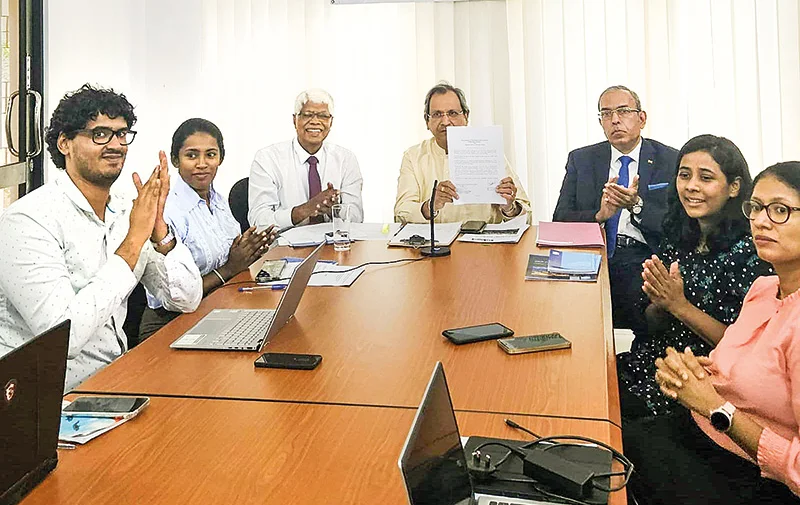
From the above viewpoints the Regional Centre for Strategic Studies (RCSS), Colombo did very well to tie-up with the South Asian University (SAU), India, to increase public awareness on the developmental problems affecting South Asia and for initiating a number collaborative measures that aim at ameliorating them. The relevant agreement was formalized in early September at the RCSS. The sealing of the pact took place under the aegis of SAU President Prof. K.K. Aggarwal and RCSS Executive Director Ambassador Ravinatha Aryasinha.
A press release issued by the organizations said the collaboration aims ‘to foster research networks, partnerships and collaborations for transformative change across South Asia.’ It also mentioned that the partnership marked the first agreement to be signed by SAU with an independent think tank in Sri Lanka.
Among other things, pacts such as the above are bold moves in the direction of fostering a spirit of intellectual independence in those areas of the South facing some of the stiffest developmental challenges. Rather than ‘import’ solutions to these challenges from outside the region, the SAU-RCSS initiative aims at fostering fresh approaches to evolving solutions to problems that are uniquely South Asian.
It is hoped that the SAU and RCSS initiative while leading a to a greater degree of Southern intellectual independence in the area of development thinking would also help in kick-starting the SAARC process all over again in a major way.
What ought to lend fresh urgency to the latter undertakings are fast-breaking current developments in international politics. It ought to be perceived by the most underdeveloped regions of the South that going forward their well being would matter least or not at all to the major powers of both East and West.
For example at the time of writing the foremost among US and Chinese political leaders are meeting in the US in what is made out to be a historic coming together of sorts to address issues of common concern. It is highly unlikely that the parties would be addressing the economic preoccupations of the least developed countries. The same goes for other states that matter from the East and West.
Essentially, the US and China would be looking at ways of strengthening business ties that matter majorly for them. The South and its issues would prove to be of peripheral interest, if at all they happen to matter to the protagonists. Such developments ought to be fresh reminders to the South and their collaborative organizations that there is no escaping self-help and joint solidarity.

by Prof. M.W. Amarasiri de Silva
Adult literacy has for a long time been one of Sri Lanka’s greatest sources of pride, serving as a social indicator that has set the country apart from several of its neighbours in the region. For many years Sri Lanka has been recognised for keeping its literacy rates at a level like those of middle-income countries and even some high-income ones, even though it has faced economic difficulties and political instability. However, since new global research has now shown an unexpected and concerning decline in adult literacy in several high-income countries, it is important to consider what this means for Sri Lanka.
The phenomenon described by Jishnu Das, Yash Dhuldhoya and Ethan Sager, the unexplained fall in functional literacy among adults in wealthy nations. calls for a more thorough examination of the nature of literacy, the pressures exerted by the modern information environment, and the vulnerabilities that Sri Lanka might encounter as it moves towards a more digital, ageing and complex society. Even though Sri Lanka’s basic literacy rates remain high and steady, the global trend acts as a warning that literacy is not a fixed accomplishment but a dynamic capability which must be continually fostered, safeguarded and adapted to changing circumstances.
Decline in functional literacy
The drop in literacy rate in high-income countries is not due to people losing the ability to read or write in the ordinary way. On the contrary, it reflects a decline in functional literacy, which is the capacity to deal with, understand, and apply information in real-life situations. This kind of literacy involves following instructions, comprehending official documents, using digital interfaces, interpreting medical information, and making sense of complicated texts that demand continuous attention.
Researchers stress that the decline cannot be attributed merely to disruptions caused by COVID-19 or the increasing use of smartphones; instead, there is going on something more fundamental: a weakening of the cognitive and informational bases that adults need to function properly in modern society. In countries such as the United States, the percentage of adults regarded as functionally illiterate has increased significantly, indicating that even highly educated societies are having difficulty in keeping up the skills required to handle ever more complex streams of information.
Sri Lanka immune?
At first sight, Sri Lanka seems to be immune from this trend. The country’s adult literacy rate is still above 92 per cent and youth literacy is even higher. According to the 2024 Census, literacy rates exceed 97 per cent among people aged ten and over, with nearly equal levels between the sexes. These figures show the continued strength of Sri Lanka’s system of free education, a system which in the past has guaranteed widespread access to school and has produced generation after generation of citizens who could read and write at a basic level.
There has also been a steady improvement in educational attainment, with an increasing number of adults finishing secondary education and a larger proportion going on to tertiary institutions. Unlike the mysterious drops observed in rich countries, Sri Lanka’s literacy figures demonstrate stability and even a slight improvement.
However, although the surface appearance is reassuring, an even more complicated reality exists. The literacy figures for Sri Lanka only record basic literacy, that is, the ability to read and write simple sentences, and they do not include measures of functional literacy. It is impossible to tell from these statistics whether adults can interpret a bank statement, understand a medical prescription, use an online government portal, or critically assess information that is spreading on social media. As is shown by the global trend, having a high level of basic literacy does not ensure a strong degree of functional literacy. On the contrary, functional literacy can fall even if basic literacy stays the same. This difference is important for Sri Lanka, particularly since the country is currently experiencing rapid digitalization, demographic ageing, and social change.
Major risk factor
A major risk factor is the move towards digital information environments. In high-income countries, researchers believe that the prevalence of smartphones and short-form digital content may be diminishing people’s ability to engage in deep reading. Nowadays, individuals take in information in short, rapid segments by scrolling through social media feeds, quickly reading headlines, and viewing short videos. Such behaviour decreases the opportunity for sustained reading, which is necessary for keeping comprehension, critical thinking, and the capacity to deal with complex information intact.
Sri Lanka is going through a comparable change. There has been a sharp increase in the number of people using smartphones, and social media sites have become the main sources of news, leisure, and communication. Although there are many advantages to having digital access, it also results in a situation where superficial reading becomes the standard approach and could therefore lead to a decline in functional literacy over time.
Demographic ageing as challenge
A further challenge that is coming up is demographic ageing. Sri Lanka is rapidly moving towards becoming an ageing society, with an increasing number of older people who might experience cognitive decline, have less exposure to new information, and enjoy few opportunities for further learning. In high-income countries, ageing populations have led to a fall in functional literacy since older individuals have had difficulty adapting to digital systems and complicated bureaucratic procedures.
The older generation in Sri Lanka, many whom were educated many decades ago under different curriculum standards, could end up becoming increasingly vulnerable in a world in which essential services, such as banking and healthcare, are being moved online. If appropriate support is not provided, the country may witness a growing gap between basic literacy and functional literacy among older adults.
In Sri Lanka, the way in which administration and the workplace are organised has in the past placed greater trust in personal communication and on basic forms of documentation. What in high-income countries would require complex reading is instead carried out through face-to-face contact in Sri Lanka. Nevertheless, this situation is now changing. Government services are becoming available online, banks are introducing digital systems, and in workplaces there is an increasing need for employees to use electronic systems. Since these changes are happening at a faster rate, the demand for functional literacy will increase. Should adults not be able to meet these new demands, Sri Lanka might start to see the kind of decline in literacy that has been seen in other places.
Misinformation and disinformation
Another worry is the spread of misinformation and disinformation. In Sri Lanka, there has already been the quick dissemination of false information via social media, with this having an impact on public health, politics, and social cohesion. Since functional literacy is essential for allowing people to assess sources, doubt the claims made, and tell the difference between reliable information and falsehoods, a lack of functional literacy causes societies to be more open to manipulation, polarisation, and confusion.
The fact that there has been a global drop in functional literacy at the same time as misinformation has increased points to a dangerous feedback cycle: when literacy is low people become more prone to misinformation, and the misinformation in turn damages their ability to think critically about information. Given that the country has a high level of social media use and a lack of digital literacy training, Sri Lanka should take this risk seriously.
Even though there are these risks, Sri Lanka has several advantages which can assist in avoiding a drop in functional literacy. The country’s system of basic education is still strong, showing high enrolment figures and good results in basic literacy.
Families in Sri Lanka still place a great deal of importance on education and reading is still a respected cultural activity. Furthermore, because of its relatively small size and the fact that it has a centralized form of government, it is more efficient than in bigger countries to carry out nationwide literacy campaigns. These strengths offer a firm basis for developing new strategies for protecting and improving functional literacy.
Literacy a process
It should be realised by Sri Lanka that attaining literacy is not a single accomplishment achieved in childhood. In the modern world, literacy must be a skill that is constantly put into practice, kept up to date and adapted to changing circumstances. The fact that adult literacy is declining worldwide shows that even in wealthy countries with well-developed education systems deterioration can occur if adults are not supported in keeping their cognitive and informational abilities. Sri Lanka cannot afford to be careless.
It is necessary for the country to invest in adult education, in programmes concerning digital literacy and in the development of cognitive skills for all age groups. It also needs to establish ways of measuring functional literacy rather than just basic literacy so that policymakers can detect emerging weaknesses and act in advance.
A vital measure is to increase the opportunities for adult learning. Although Sri Lanka has effective literacy programmes based in schools, the country’s infrastructure for adult education is limited. Community centres, libraries, universities, and vocational institutes should take on a more significant role by providing courses, workshops, and reading programmes which are tailored for adults. The programmes should place an emphasis not just on reading and writing but also on digital navigation, critical thinking, and information processing. Adults should be given the chance to practise the skills that are necessary for them to function effectively in a rapidly changing world.
Importance of digital literacy programmes
It is just as important to have digital literacy programmes. Since an increasing number of services are being offered online, adults need to learn how to use digital tools with confidence and in a safe manner. This involves knowing how to fill out online forms, moving around on government websites, using banking apps, and being able to spot misinformation. The digital literacy courses available should be accessible, affordable, and adapted to different age groups, especially older adults who might feel put off by technology. Schools can also contribute by incorporating digital literacy into their curriculum so that future generations acquire good functional literacy skills from an early age.
Sri Lanka should also investigate introducing policies which promote cognitive health among older people. Since cognitive decline can lead to a deterioration of functional literacy, it becomes more difficult for older individuals to deal with information. It is possible to help keep cognitive function by setting up programmes that promote reading, social interaction, physical activity, and continued learning. During regular medical visits, healthcare professionals should include cognitive assessments so that any problems affecting literacy-related skills can be picked up early.
Sri Lanka needs to create tools for measuring functional literacy, since the figures available on basic literacy give an incomplete account of the country’s capabilities. By using assessments of functional literacy like those employed in high-income countries, Sri Lanka would be able to monitor how well its adults can apply their literacy skills in real-life situations.
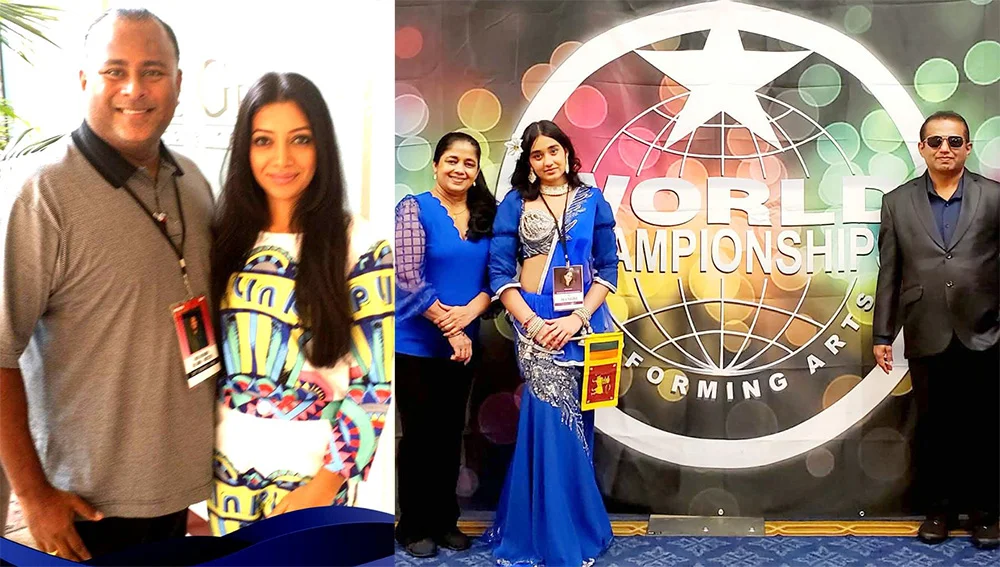
 The World Championships of Performing Arts (WCOPA) is known globally as the Olympics of performing arts, but Sri Lankans came to know of it more closely when Natharie Wickramasinghe, representing Team Sri Lanka at WCOPA 2026, in Las Vegas, earned a Bronze Medal in the Ethnic/Folklore Dance category.
Behind Sri Lanka’s WCOPA journey is Sri Lanka-born Chris Rajendra, who migrated to the United States in 2007, and deserves special congratulations.
Passionate about discovering and promoting talent, Chris has been actively involved in the pageant and performing arts, industry since 2002.
A major milestone came in 2015, when he introduced WCOPA, to Sri Lanka, for the first time, creating an international platform for Sri Lankan performers.
Sachini Ayendra became the very first candidate to represent Sri Lanka at WCOPA, in 2015, marking the beginning of Team Sri Lanka’s journey.
Chris served as National Director for Team Sri Lanka from 2015 to 2018, and has returned to the role for the 2026–2027 term, continuing his commitment to identifying, developing and promoting Sri Lankan talent internationally.
His involvement in pageantry and performing arts includes:
Recruiter, Miss Nevada United States – 2014

Chris Rajendra: National Director – WCOPA Team Sri Lanka
Manager, Miss Colombia Las Vegas – 2013 to 2017
Director for the West Coast and International Divisions of Ms. Latina International and Ms. International World – 2017
National Director for Team Sri Lanka – WCOPA, 2015–2018 and 2026–2027
Co-National Director for Team USA – WCOPA 2026
In the USA, Chris began his career in retail before transitioning into insurance and financial services, where he built extensive experience in sales, marketing, leadership and business development.
He owned and operated a brokerage, affiliated with multiple insurance companies, and later served as Marketing Director with Transamerica and World Financial Group.
As his business expanded across Las Vegas and California, he continued to hone his expertise in sales, marketing and client relations. He now works as a Sales Executive at Hilton Grand Vacations.
Looking ahead, Chris will shortly launch the application process for Team Sri Lanka 2027, giving talented Sri Lankan performers another opportunity to represent the country on the world stage.
The 2027 World Championships of Performing Arts will take place in Las Vegas, USA, in July or August 2027.
Through his work in both the corporate and performing arts worlds, Chris Rajendra continues to combine leadership, networking and talent development — creating opportunities for Sri Lankan performers to showcase their abilities on a global platform.

Muhammad Shahzad smashes fastest first-class hundred by a Pakistani batter

Gul, Kharote spin Afghanistan to victory over Japan in Asian Games opener

Showerss above 100 mm are likely at some places in the Western, Sabaragamuwa, Central and North-western provinces and in Galle and Matara Districts

Mirabai Chanu wins Asian Games silver as Ri breaks weightlifting record

Trump greets China’s Xi Jinping on arrival for three-day US

BASL calls for conscience vote on 22nd Amendment

‘Dates have the highest sugar content to fight Coronavirus’

Sunday Island 27 December – Headlines

#SundayIsland 17th December – Headlines

Sunday Island – 28th March

Sunday Island Headlines – 21 March

Sunday Island – 21st February – Headlines
-

 News6 days ago
Shanakiyan urges urgent action over reported death sentence for Lankan in Saudi Arabia
-

 News7 days ago
Bid for Basil’s extradition nears final stage: Police
-

 News5 days ago
Namal Rajapaksa Buddhist gambit fails, bail denied
-

 Features5 days ago
Why the spelling Sri Lankan names in English vary
-

 Features5 days ago
Three bands, a new identity: Sri Lankan wolf snake recognised as distinct species
-
 Business5 days ago
SLIIT holds largest-ever convocation
-

 News5 days ago
Govt monitors reported Saudi death sentence – Foreign Ministry
-
 News5 days ago
Vehicle prices drop by up to Rs. 1 mn, says importers’ body