
News
Sri Lanka must sustain its health gains: malaria a case in point

by Prof. Kamini Mendis
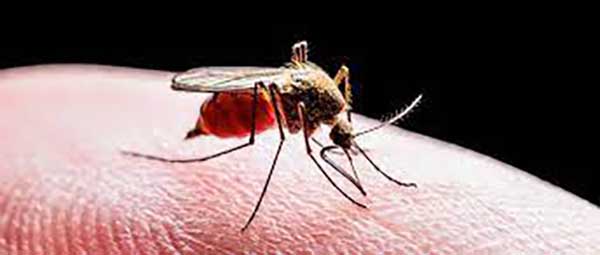
Today, April 25, is World Malaria Day, and as many countries in the tropical world are laboring to control malaria and others racing towards the finish line to eliminate the disease, we in Sri Lanka are enjoying the prestige of being malaria-free. More importantly our people, possibly unknown to many of them, are benefiting from being free of a scourge, which destroyed lives and livelihoods, which took away most of our health budgets for insecticides, which stifled the cognitive development of our children and which greatly hindered Sri Lanka’s economic development for centuries past.
Today, we may be beleaguered by many health problems, not least, by the SARS-CoV-2 epidemic, but malaria is no more. The year 2012 saw the last case of malaria transmitted by a mosquitoe in Sri Lanka – a colossal achievement by any standards. And despite anxieties and worries whether the disease will return, the country has been kept free of malaria transmission for nearly nine years now, thanks to an exceptionally robust programme within the Ministry of Health, the Anti Malaria Campaign.
What we should be talking about today, though, is not the globally acclaimed achievement of malaria elimination from Sri Lanka, but whether and how the country can sustain its malaria-free status. A famed example etched in global public health chronicles is the historic achievement of Sri Lanka in 1963 of nearly eliminating malaria, and of the disease returning with a vengeance, to devastate the country for the next 50 years. This is a poignant reminder that malaria could still return.
Why so? The mosquito that transmits malaria is prevalent in parts of the country that were previously malarious. Even a new and highly efficient vector mosquito, which transmits malaria in India has been recently and inadvertently introduced into the country. Its implication is that if malaria returns to Sri Lanka it will affect cities as well as rural areas to which it was confined in the past. The threat of malaria becoming endemic again comes from imported malaria patients – those who acquire the infection abroad and return to Sri Lanka with the disease.
Most imported malaria infections are acquired in neighbouring India and African countries, and brought to Sri Lanka by such persons as business travelers, pilgrims, imported labour, and members of the armed forces and the Police Department who return from United Nations Peace Keeping Missions in malarious countries. Unless such infected persons are detected and treated without delay they could infect mosquitoes, and malaria could become endemic again – a possibility, that many health experts agree, must be averted at any cost.
What then must Sri Lanka do to remain free of malaria? It is to sustain a state-of- the art surveillance system to detect malaria patients returning from overseas and treat them without delay so that they will not infect mosquitoes and thereby transmit the disease to other people. Malaria can be easily diagnosed by testing a sample of blood using a rapid antigen test or by examining a blood smear under a microscope. Such diagnostic facilities are widely available throughout the country, and highly effective medicines are available to treat the disease.
Yet, simple as it might sound, the task of maintaining a rigorous programme of malaria case surveillance and treatment is fraught with challenges. This is because malaria is a rare and forgotten disease in the country today. Medical doctors fail, only too often, to test for malaria when a patient presents with fever. No blame to the physicians here, because there are so many other far more common causes of fever in the country – dengue, and a spate of other viral and bacterial infections to be explored as a cause of fever rather than malaria. But the clue to suspecting malaria is taking a history from the patient of recent travel overseas, which if present should place malaria high on the list of diseases to be tested for.
So, a combination of fever and having recently returned from overseas should be the signal to test for malaria. This is a message that the Anti Malaria Campaign is vigorously transmitting to its medical colleagues throughout the country – “when a patient presents with fever, ask for a travel history and test for malaria”. The Anti Malaria Campaign does far more than reminding doctors. It screens high-risk traveler groups for malaria throughout the country year round, and when a patient is detected it sets in motion a series of activities to ensure that the patient is cured, and that the infection has not spread to others in the country. it keeps track of the mosquito vector in all parts of the country and even controls it where necessary. It provides prophylactic medicines for travelers free-of-charge, and is the sole custodian of antimalarial medicines in the country, its staff being on call 24 hours a day seven days a week to keep the country malaria-free.
In truth, and the inspiration for me to write this article is that Sri Lanka has not had the most impressive record of sustaining its health gains, which have been made with enormous effort and major financial investments. We eliminated leprosy in 1995 but the disease has now returned to concerning levels in most parts of the country. We eliminated lymphatic filariasis a few years ago, but there is evidence that the disease may be lurking in parts of the country, with a risk of its transmission being resumed. Intestinal worm infestations, which sapped the nutrition of children for generations, have greatly declined in incidence, as have many other sanitation-related infectious diseases such as hepatitis. But, can we follow these achievements through to the point of extinction, and even more importantly, can we sustain the gains made?
“Out of sight, out of mind” is, unfortunately, a slogan, which most poor developing countries seem to live by when it comes to controlling diseases. They function on flimsy and short-sighted grounds that when a disease is not a health burden any more, the limited budgets for health are better assigned to other more prevalent health problems and diseases. Such thinking is clearly flawed on many counts: As careful studies and estimates have shown the price of preventing the return of malaria is only a mere fraction of the cost that Sri Lanka will have to bear if malaria returns to the country. It is estimated that the return on an investment of one rupee to prevent malaria will be 13 rupees in terms of the savings gained by preventing the return of malaria.
Developing countries must also desist a poorly informed but fashionable idea promoted in health circles even globally, of promoting the integration of dedicated disease control programmes into the general health services no sooner than the disease has been eliminated. Disbanding of these excellent programmes, the very ones which once eliminated the disease has been to the peril of countries as in the case of leprosy in Sri Lanka. Assigning the work of the leprosy campaign to the general health services too soon may not have been the most judicious of actions, and it may have contributed to the rapid return of the disease.
It is obvious that the workforce that was needed when a disease is highly prevalent would not be required to the same magnitude or degree of functionality when the disease is no longer a major burden. A carefully planned transition over time to shift work programmes from intervention delivery to surveillance, and share work time of staff with other related diseases has to be made, if it must, whilst maintaining a core of dedicated expertise on the disease at a central programme level.
The challenges of sustaining a malaria-free Sri Lanka and of keeping at bay other infectious diseases that we have successfully eliminated are many, but none that cannot be overcome by continued investment in, and maintaining the focus on, these diseases. It is an issue that falls broadly under the umbrella of “health security’, a term that has risen in importance with the SARS-CoV-2 pandemic, in the highly connected world that we live in. Today public health has come to the fore of our consciousness with the SARS-CoV-2 pandemic. Let our policy makers not forget that eliminating diseases is not the end-game, and that keeping those diseases at bay is as important as fighting other prevailing health problems.
About the author
Kamini Mendis is an Emeritus Professor and an international expert on malaria. She was instrumental in launching a Global Initiative to eliminate malaria in 1998 while working for the World Health Organisation Geneva. She has provided expert guidance to Sri Lanka and many countries on combatting malaria, and is gratified by the success achieved in the past few decades in many parts of the world. She continues to be engaged in advising the global and regional health communities and the Ministry of Health of Sri Lanka on the subject.



The Sri Lanka Navy successfully recovered its Fast Attack Craft P 4447 following a successful salvage operation, bringing a multi-stage emergency response to a close.
The craft, which ran into distress during a routine patrol on 15th August 2026 off Angulana, was brought to the surface on 11th September, from a depth of approximately 80 feet. It was
subsequently towed to the Colombo Dockyard premises.
The initial phase of the operation immediately following the incident focused on search and rescue. A joint effort involving the Navy, Air Force, Police, and local fishermen from Angulana
resulted in the rescue of 11 crew members. The search and rescue phase drew to a close with the recovery of the remains of the Second in Command of the craft, on 4th September.
Following the search and rescue phase, specialized Navy diving and salvage teams launched a dedicated recovery phase against rough sea conditions and underwater challenges, adhering to
strict safety protocols. The Navy’s marine, hull, electrical, and electronic engineering teams utilized specialized technical know-how and equipment to raise the vessel in stages.
Thus, the salvage operation marked an outstanding achievement attained through the professionalism, technical expertise of Navy divers, and coordinated contribution of all
engineering and technical branches of the Sri Lanka Navy. Technical support and specialized expertise were also extended by the Sri Lanka Ports Authority and Colombo Dockyard PLC.


By Shamindra Ferdinando
The Opposition should intensity its focus on the forthcoming selection of a member of the Commission to Investigate Allegations of Bribery or Corruption (CIABOC) and remain vigilant as Speaker Dr. Jagath Wickremaratne, MP, the head of the Constitutional Council (CC) tasked with making the relevant recommendation, is under investigation by the CIABOC, sources familiar with the ongoing inquiry told The Island.
Chethiya Goonasekara, PC, is expected to complete his three-year term on Dec 31, 2026. Sources pointed out that CIABOC Commissioners are appointed by the President on the recommendation made by the 10-member Constitutional Council.
The CIABOC initiated the investigation following a complaint lodged by suspended Chief of Staff and Deputy Secretary General of Parliament Chaminda Kularatne in early February this year. Sources said that as Goonasekera is scheduled to complete his term toward the end of 2026, the CC would have to call applications soon to choose the successor.
Goonasekara received his appointment from President Ranil Wickremesinghe in January 2024. A Justice W. M. N. P. Iddawala was appointed Chairman of the CIABOC. The other commissioner is K. Bernard Rajapakse.
Asked whether Iddawala and Rajapakse, too, would complete their terms soon, sources said that in terms of the Anti-Corruption Act No 09 of 2023, the Chairman of CIABOC would hold office for a period of five years, second commissioner (K. Bernard Rajapakse) for four years and the third commissioner (Chethiya Goonasekara) for a period of three years.
Sources said that the Opposition as well as civil society representatives in the CC should take up the issue of Speaker facing an investigation by the CIABOC taking part in the forthcoming selection process. Responding to queries, sources emphasized that the issue was whether in terms of Section 107 of the Anti-Corruption Act the participation of the Speaker in the selection process amounted to a violation of the Act itself.
The current members of the CC are Dr Jagath Wickramaratne, Speaker and Chairman of the Constitutional Council, Dr. Harini Amarasuriya, Prime Minister, Sajith Premadasa, Leader of the Opposition, Bimal Rathnayake, MP, Aboobucker Athambawa, MP, Ajith P. Perera, MP, Sivagnanam Shritharan, MP, Austin Fernando, Civil society representative, Prof. Wasantha Seneviratne, Civil society representative and Ranjith Ariyaratne, Civil society representative.
Sources pointed out that in spite of the sensitivity of the case, the CIABOC recorded Kularatne’s statement in the second week of August, six months after he lodged the complaint.
The CIABOC on 3, 8 and 10 Sept recorded the statements from the Transport Officer, Deputy Director, Administration and Assistant Director, Finance regarding the use of facilities by the Speaker, those assigned to his staff and other relevant matters.
The NPP named Dr. Wickramaratne as the Speaker after Asoka Ranwala resigned over controversy regarding his higher education qualifications.
SJB lawmaker Dayasiri Jayaskera has repeatedly raised the issues concerning the Speaker with the focus also on the Speaker using two government-managed residences, relevant staff in addition to expenditure on food, transport and fuel provided to the Speaker’s private secretary.
Political sources said that trouble erupted after the Parliamentary Staff Advisory Council in late January sacked Kularatne accusing him of providing false information to secure his appointment. Before being appointed as the Deputy Secretary-General of Parliament in 2023, Kularatne held several high-ranking positions, including Secretary to the Chief Government Whip, Additional Secretary to the President, Additional Secretary to the Prime Minister, and Additional Secretary to the Leader of the Opposition.
The SJB declared in Parliament that Ranwala should be brought back as the Speaker as they have no faith in Wickramaratne. MP Mujibur Rahuman jokingly told parliament that the Opposition wouldn’t raise Ranwala’s educational qualifications.

The Government Medical Officers’ Association (GMOA) has stressed the need to conduct a comprehensive countrywide cadre revision urgently.
GMOA spokesman Dr. Lasitha Dhammika told The Island that the failure on the part of successive governments to conduct cadre revision caused the deterioration of the public sector health services. Due to the absence of required statistics, they hadn’t been able to fully comprehend the situation on the ground and to ascertain the requirements of the public.
Dr. Dhammika pointed out the expansion of the services without supporting statistics and the need to initiate an immediate cadre revision. According to him, the GMOA had raised this issue with successive governments without success. The GMOA spokesman said that they also sought relevant information from the Health Ministry in terms of the Right to Information (RTI) Act two weeks ago but was yet to receive response.
(SF)

Fast Attack Craft P 4447 recovered in successful salvage operation

Showers above 100 mm are likely at some places in the Western, Central, Sabaragamuwa, Southern, North-central and North-western provinces

Shafali, Mandhana power India to eighth Asia Cup title

Tharanga wins Ultimate Javelin title

CIABOC member’s appointment: Controversy over Speaker under probe heading selection process

GMOA: Countrywide cadre revision not done since 2015

‘Dates have the highest sugar content to fight Coronavirus’

Sunday Island 27 December – Headlines

#SundayIsland 17th December – Headlines

Sunday Island – 28th March

Sunday Island Headlines – 21 March

Sunday Island – 21st February – Headlines
-

 Sports4 days ago
DDS set to lose Test captaincy
-

 News7 days ago
Thailand shuts door on undesirables from Sri Lanka
-

 News4 days ago
Sri Lanka faces new grid challenge as rooftop solar surges: former CEB GM
-

 Latest News4 days ago
Shafali, Deepti power India into sixth T20 Asia Cup final
-
 Business7 days ago
CEB successor company breaks into top three in competitive BESS tender
-

 Latest News3 days ago
Sri Lanka thwart Fatima Sana challenge to secure Asia Cup final spot
-

 Opinion6 days ago
Navigating Sri Lanka’s Israeli Dilemma
-
 Features5 days ago
Lost for 90 years: Rare Goby resurfaces in Jaffna