
Editorial
From Madush to Basik


Politics is more about pure theatre than actual delivery anywhere in the world. This is arguably more so about Sri Lankan politicians, their parties, and successive governments. It is therefore only natural that the incumbent government ensures that maximum possible pollical mileage accrues to it from the repatriation of Sri Lankan criminals arrested overseas. Among the underworld characters brought back here during the past two years or so are several drug kingpins, Shiran Basik being the latest.
Perhaps, it would not have been possible to bring back Basik if he had not filmed some Iranian missile attacks on targets in the United Arab Emirates (UAE) and stored the videos thereof in his mobile phone, drawing the attention of the UAE law enforcement authorities, who arrested him. Nevertheless, Sri Lanka has gained tremendously from his arrest and extradition, for he ran his narcotics operation from Dubai, which has become a haven for Sri Lankan criminals on the run.
Police are investigating alleged links between Basik and a number of prominent politicians, and eight of them are expected to be arrested and questioned as investigators widen their probe into his financial dealings and network of associates, according to media reports. All those who have been in league with criminals must be brought to justice.
Among those who are to be interrogated on their alleged links to Basik include a sitting MP, four former ministers, and at least one of them is said to be a woman. Police are also investigating allegations that Basik provided large sums of money to some politicians during election campaigns. Drug dealers are known to lavish funds on politicians and political parties during elections through various fronts. This may explain why Kudu Lal, who was the main supplier of heroin in Colombo, was allowed to flee the country during the SLFP-led UPFA government in 2010.
The nexus between drug dealers and politicians is only too well known. It has now been revealed that drug barons have invested their black money in films and teledramas. The police have found that Basik had contacts with several artistes and even financed some films and soap operas. This shows how the drug Mafia has spread its tentacles over various fields.
Basik’s beneficiaries are said to include some popular filmmakers-turned-lawmakers, allegedly representing both the ruling party and the Opposition. Responding to allegations levelled against them on social media, two of them have claimed that they were unaware of the actual sources of finance for their films or teledramas. Curiously, they tear into their political opponents, claiming that they have information about the latter’s ill-gotten wealth stashed away in other countries. So, how can these artistes-turned politicians who have allegedly benefited from Basik’s largesse claim that they did not know their benefactors’ identities and backgrounds, just like Pip, the orphan, in Dickens’ Great Expectations. Even if the drug dealers concerned had used fronts to finance or sponsor movies and soap operas, an investigation is called for because the artistes who have benefitted from drug money must be held answerable. Some of these politicians are ardent campaigners for good governance and have embarked on a mission to institutionalise accountability. Let them be urged to set an example to others by surrendering to the police instead of trotting out lame excuses. What they have alleged to have done amounts to money laundering.
Following the assassination of Sarath Ambepitiya, an upright High Court judge, we revealed that Kudu Nauffer, who masterminded the murder, had used a front to sponsor food and beverages served at a judicial officers’ function. A drug dealer, named Shiyam, and his wife, posed as wealthy garment factory owners, before being arrested with a huge stock of heroin in their Ward Place residence, where they had entertained political and business leaders among others. Kudu Lal had himself elected to the Colombo Municipal Council. In 2002, the then IGP T. E. Anandaraja attended a drug dealer’s party in a Colombo hotel. In 2013, a drug dealer obtained a letter from the then Prime Minister D. M. Jayaratne’s office, requesting the Customs to clear some freight containers on a priority basis; the Customs detected 131 kilos of heroin, concealed in one of them. Such is the socio-political clout of drug barons.
One may recall that while Makandure Madush, known as Sri Lanka’s Napoleon of Crime, was operating from overseas, his father died in a road accident. Among the mourners at the funeral of the underworld kingpin’s father were many politicians from both the government and the Opposition. Madush was dominating the underworld at the time, generously helping politicians and artistes, some of whom were arrested with him in Dubai in 2019. He was killed while in police custody. The police claimed an underworld gang had been shot dead in a crossfire. Politicians who had benefited from him must have heaved a sigh of relief.
It is hoped that the police will ensure the safety of Basik and ascertain more information from him about politicians, artistes and others who have benefited from his drug money either directly or indirectly.


Saturday 29th August, 2026
The JVP-NPP government has responded to UN Special Rapporteur on the independence of judges and lawyers, Margaret Satterthwaite’s statement on its move to increase the retirement ages of judges, according to media reports. It has reportedly sought to justify its controversial move by repeating the same old arguments in defence of the 22nd Amendment to the Constitution (22A). Satterthwaite in her statement has warned Sri Lanka that its proposed constitutional amendment to extend superior court retirement ages could undermine judicial independence. One could not agree with her more.
Government politicians and their apologists claim that the Bar Association of Sri Lanka (BASL) and the Opposition have misled the UN, the International Association of Judges, the Commonwealth Lawyers Association, LAWASIA, etc., over 22A. What they should realise is that before issuing statements, these organisations conduct in-depth studies of issues and draw their own conclusions. The fact that they have endorsed the position of the BASL does not mean that they have been misled.
Going by media reports, the government in its response to the UN has muddied the water. It has said the retirement ages of all judges will be extended as part of a broad strategy to expedite the disposal of cases and clear a massive case backlog. But it is obvious that it first sought to increase the retirement age of the SC judges, and when it drew heavy criticism, it sought to mask its real intention by undertaking to extend the retirement age of the CA of judges as well. When its move ran into still more resistance, it proposed to increase the retirement ages of all judges.
What has drawn heavy criticism is not the move to raise the retirement ages of judges as such but the fact that the government has sought to extend the retirement ages of the serving judges of the SC and the CA. Hence so many petitions against 22A. The Judicature (Amendment) Bill, aiming to increase the retirement ages of the High Court judges, District Court judges and Magistrates, has not run into resistance, for they are not specified in the Constitution, much less listed under ‘the Independence of the Judiciary’ unlike those of the SC and CA judges.
The SC has twice articulated or reaffirmed the principle that a constitutional amendment altering the retirement age or period of office of incumbent Supreme Court or Court of Appeal judges would affect judicial independence and engage Article 3, thereby requiring a referendum. The principle was expressly stated in the 2022 Inland Revenue (Amendment) Bill determination and reaffirmed in a subsequent SC judgement. This has been the position of independent legal professionals as well. They have warned that 22A will lead to a conflict of interest on the part of the incumbent judges who are to hear the petitions challenging it. They have rightly argued that 22A has to be placed before the people at a referendum.
The government is doing everything in its power to shift the battle over 22A to the political front, but the issue has now been internationalised, and the hearing of the petitions against 22A will be under intense international scrutiny.
The government may be able to fool some people in this country with its absurd arguments and rhetoric, but there is no way it can dupe the discerning public and the international community into believing its claim that 22A is not tailored to benefit some serving judges and it is aimed at expediting the administration of justice.
Friday 28th August, 2026
Sri Lanka boasts a hydraulic heritage dating back more than two millennia and has a long history of harnessing water for agriculture and human settlement, but its urban water bodies are struggling with pollution. It has tamed rivers and built huge reservoirs since Independence, but lakes and canals in its urban centres have become watery versions of the Augean Stables, demanding a Herculean effort to restore them. No government has proved equal to the task. Among these polluted water bodies are two lakes; one is located close to the western seafront, and the other nestles in the hills.
Lake Gregory, a watery jewel adorning green-clad Nuwara Eliya, is as much a paradox as pleasure turning to poison in Keats’ Ode on Melancholy, which speaks of “beauty that must die” and “joy … bidding adieu”. Beneath its placid surface lurks a danger invisible to visitors drawn to its scenic beauty.
The Central Environmental Authority (CEA) has said Gregory Lake is highly polluted, and its water could pose serious health risks, according to Nuwara Eliya District Coordination Committee Chairman Manjula Suraweera Arachchi, MP. He has told the media that the CEA presented its findings about lake pollution at a recent committee meeting. That Lake Gregory is facing a serious deterioration in water quality, with agricultural and urban pollution contributing to its degradation, is public knowledge, but nobody seems to care.
The pollution of Lake Gregory is mainly due to fertilisers, pesticides and other agrochemicals washed from agricultural land and urban wastewater and runoff. Studies conducted by universities have identified sewage, domestic waste and organic matter as significant sources of pollution. But no action has been taken to block these sources of pollution.
Lake Gregory is a vital wetland ecosystem as well as a major tourist attraction. Tourists, both local and foreign, do not consider a trip to Nuwara Eliya complete without a boat ride in this scenic lake. They risk exposure to splashes of polluted water. It has been reported that the Ministry of Environment, the Urban Development Authority and the Irrigation Department are working on measures to address the problem. This is good news, but when they will clean up the lake is anybody’s guess. It is hoped that they will not go on talking indefinitely as pollution worsens. Thousands of people will continue to enjoy water sports and recreational activities, ranging from relaxed paddle boats to high-speed jet skis in the lake, unaware of health risks. Shouldn’t at least an official warning of severe water pollution be issued?
There are many countries from which Sri Lanka can learn how to keep its urban lakes clean. Malaren in Sweden and Lake Geneva, Switzerland, serve as the best examples. Singapore’s Marina Reservoir also provides a striking example of managing an urban water body in a densely built-up city. Some developing countries, too, have successfully restored polluted urban lakes, but only a few can match Stockholm’s example of maintaining a major urban lake as a high-quality source of drinking water. What Sri Lanka needs most to maintain its urban water bodies properly is a political will to do so.
Beira Lake is perhaps worse than Lake Gregory. Its pollution is mostly due to untreated or partially treated sewage, illegal sewer connections, urban runoff, solid waste and industrial discharges. Recent research has revealed excessive levels of organic pollutants, nutrients and, in some areas, heavy metals in the lake, which also promotes algal growth responsible for its green appearance.
The success of projects to clean up Beira and Lake Gregory hinges on the elimination of the sources of pollution. Experts have stressed the need to identify and block illegal sewage and wastewater connections entering the lakes and their storm-water network besides intercepting polluted stormwater and diverting it for appropriate treatment.
One can only hope that urgent action will be taken to put an end to the toxic legacy of the two vital lakes.


Thursday 27th August, 2026
The world is bracing itself for a historic El Niño event, which is very likely to be the strongest ever measured, “breaking records by a considerable and dangerous margin”, experts have warned. The World Health Organization, World Meteorological Organization (WMO) and World Food Programme are urging nations to be prepared for extreme weather conditions and their impact on health, food and energy systems.
Sri Lanka apparently believes in disaster response rather than disaster preparedness. It usually does not heed warnings or expert opinion. Unlike in the past, today, the world is lucky that El Niño is no longer unpredictable. About three months ago, WMO issued the first warning of the unfolding El Niño event. Sri Lanka should have sprung into action immediately afterwards.
The Ministry of Trade, Commerce, Food Security and Cooperative Development has reportedly launched a programme to ensure an uninterrupted supply of essential food items and stable prices amidst the possible global impact of the current El Niño phenomenon. It held a meeting, chaired by Minister Wasantha Samarasinghe, on Tuesday, to discuss ways and means of handling issues affecting food availability. According to media reports, the officials present at the meeting were of the view that the impact of El Niño on Sri Lanka could be minimal, but action had to be taken to face the food issues that might arise from possible disruptions to agricultural production in other countries and the resultant price escalations.
It has been reported that Tuesday’s meeting was attended by Ministry Secretary K. A. Wimalenthirarajah, Consumer Affairs Authority Chairman Hemantha Samarakoon, Cooperative Wholesale Establishment Chairman Kosala Wilbhava and Lanka Sathosa Chairman Ravindra Fernando, along with other officials and representatives of food importers. The government should involve all stakeholders in discussions on working out a strategy to accomplish the difficult task of ensuring food security, especially during disasters. A multi-sectoral approach is required, with the participation of officials and experts drawn from various fields such as trade, agricultural and irrigation and meteorology, and farmers’ organisations.
No room must be left for optimism in planning for disaster mitigation, and the country must always be ready for the worst-case scenario. In fact, the dry zone is already facing a severe water crisis, and the prevailing drought has caused widespread crop losses there. Reservoirs are drying up fast in those parts of the country while precipitation is high in some areas, especially in the central hills. El Niño is known to drive such extreme and erratic weather conditions.
The success of any strategy to mitigate the impact of El Niño or any other adverse weather or climate event hinges on timely anticipatory action, which alone can prepare a country for the impact of droughts, floods or heat waves on its public health and agriculture.
Experts have pointed out the steps Sri Lanka needs to take urgently in view of El Niño events. They include strengthening early-warning systems, adjusting planting dates and crop choice, promoting drought- and heat-tolerant crop varieties, improving irrigation efficiency, harvesting and storing more water, diversification of agriculture and rural incomes, and strengthening food storage and distribution systems. Why rainwater harvesting is not promoted in all parts of the country as a national priority is the question. It can help mitigate water issues to a considerable extent.
Meanwhile, a national strategy needs to be formulated to address the key factors that affect Sri Lanka’s agriculture sector and food security. They have been identified as adverse weather and climate shocks, low agricultural productivity, economic and forex constraints, high cost of production, disaster-related damage to food infrastructure, post-harvest losses and wildlife depredation. Sri Lanka is believed to lose roughly 20% to 30% of its fruits and vegetables after harvest, while wildlife is estimated to account for about 40% of annual crop damage.
Drought has already taken a heavy toll on food crops in the dry zone, with paddy bearing the brunt. Hence the government’s focus must be on maintaining buffer stocks of paddy. The current El Niño event is expected to continue into early 2027, but its effects will be felt even afterwards.
It defies comprehension why the government has allowed paddy/rice to be used for manufacturing animal feed and beer. Farmers’ demand for higher prices for their produce and a shortage of maize may have led the government to do so, but it should have heeded the warnings of a possible food shortage. Paddy production is bound to drop during the prevailing drought in the main rice producing areas affected by the prevailing drought, as it is highly water intensive, and therefore its diversion to animal feed or beer production must be stopped.

Voting closes in Iceland’s knife-edge EU referendum

Showers in the Sabaragamuwa, Western and North-western provinces and in Galle, Matara, Kandy and Nuwara-Eliya districts

Sun directly overhead Mannar, Periyamadu, Puliyankulam, Welioya and Pulmoddai about 12.11 noon today (30)

Lanka tracks 11 US-sanctioned Iranian tankers off coast

House to debate abolition of Chief of Defence Staff post

Mass graves tragic evidence of failed states – Rathnayake

‘Dates have the highest sugar content to fight Coronavirus’

Sunday Island 27 December – Headlines

#SundayIsland 17th December – Headlines

Sunday Island – 28th March

Sunday Island Headlines – 21 March

Sunday Island – 21st February – Headlines
-

 News5 days ago
Missing doctor’s body found in Mahiyanganaya
-
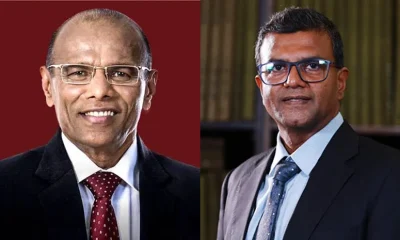
 News5 days ago
Australia declines to release Finance Secy Suriyapperuma’s citizenship details
-
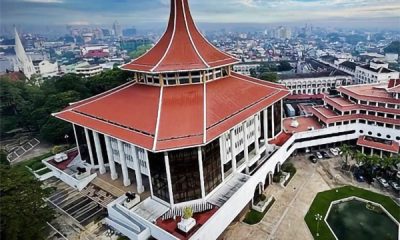
 News5 days ago
22A: BASL suggests CJ recuse himself from hearing petitions
-

 News2 days ago
Eight politicians in drug kingpin probe
-

 Editorial6 days ago
Govts. drag feet as undergrads age
-
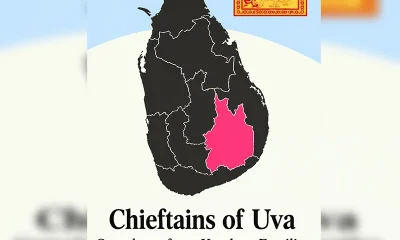
 Features4 days ago
Insights from Chieftains of Uva: Genealogy of two Kandyan Families – Part II
-

 Features4 days ago
Export diversification: Missing the wood for the trees – Part I
-

 Business2 days ago
Sri Lanka opens up: A new season of direct connectivity