
Business
Mechanized tea plucking: A technology that transforms tradition and eases the burden on tea pluckers

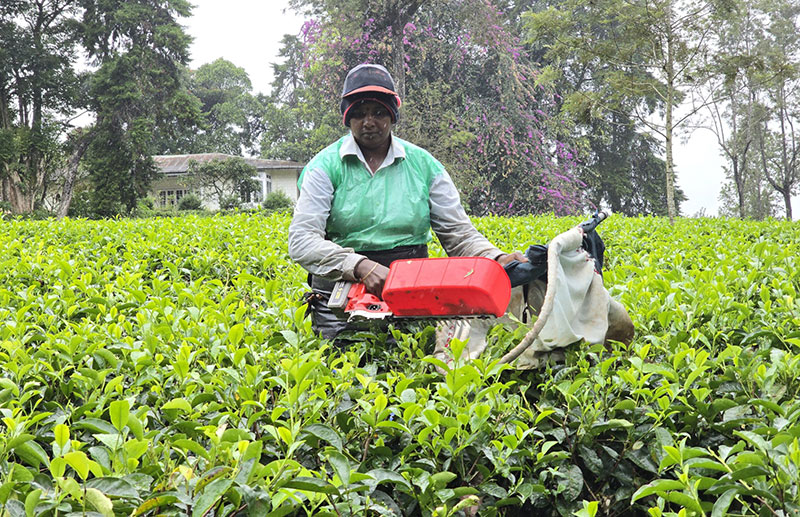
In the misty highlands of Nuwara Eliya, where generations of estate workers have bent over tea bushes from dawn to dusk, a quiet revolution is taking root. A single machine, placed in the hands of a tea plucker, is rewriting decades old rules about what a day’s labour can earn, and who gets to earn it.
Berendina Development Services (Guarantee) Limited (BDS) is a Sri Lanka based non profit, community development organization dedicated to poverty alleviation, financial inclusion and sustainable livelihood enhancement, has spent years standing shoulder to shoulder with estate communities. BDS latest intervention, a bold push to mechanize tea plucking, is now delivering results that go far beyond the tea bush: rising incomes, lighter workloads and a levelling of the playing field for women who have long carried the heaviest load.
The plantation sector remains one of Sri Lanka’s most labour intensive industries, with thousands of families depending almost entirely on daily tea plucking for survival. For generations, manual plucking has required prolonged hours of repetitive bending and reaching under harsh weather and steep terrain. Earnings are directly tied to the quantity of tea harvested each day, meaning productivity limitations translate immediately into income constraints. For households with structural marginalization where alternative employment is scarce, this dependency locks families into a cycle of vulnerability that is hard to break.
Within this context, BDS set out to break it. The introduction of mechanized tea plucking is a strategic livelihood intervention aimed at strengthening income security, boost labour efficiency and building long term resilience across estate communities, as part of BDS’s wider mission to unlock economic opportunity for marginalized communities
Since 2022, BDS has placed tea plucking machines in the hands of 179 estate workers across nine estates in Nuwara Eliya District, Clarendon, Desford, Fordyce, Great Western, Ingestre, Mount Vernon, Palmaston, Drayton and Somerset, each unit valued at around Rs. 58,000. The machines remain the property of BDS, and are provided under a tripartite agreement. Estate Management is responsible for safe custody, security, and operational monitoring, while the beneficiary, as the end user, ensures proper use, maintenance and timely reporting of any issues for accountable and efficient utilization.
To capture the real world dividends of this intervention, BDS conducted an impact assessment at least five months after distribution, covering 97 beneficiaries, 44 women and 53 men, to measure what had actually changed. Most households consisted of 4-6 members and educational attainment levels were relatively low, with 45 respondents having completed only primary education and 37 having completed secondary schooling. A notable factor is that only 1 person has completed G.C.E A/L’s and 13 people have completed G.C.E O/L’s. Most of the beneficiaries are in the age category 40 – 49 years.
The results are nothing short of transformative. The results speak for themselves. Daily tea yields nearly doubled, leaping from 24-25 kilograms to 44-45 kilograms per worker, a 79.7 percent productivity surge. Monthly household incomes climbed by 66.7 percent, adding an average of Rs. 12,500 to family budgets every month. For estate families whose primary or sole source of income is tea plucking, such growth has meaningful implications for food security, educational expenditures, debt management and overall resilience against economic shocks.
The intervention has begun to lift a physical burden carried for generations. Manual plucking involves repetitive hand movements, continuous bending and sustained physical exertion that often leads to fatigue and musculoskeletal strain. By reducing the intensity and duration of labour required to meet daily targets, the machines have delivered a tangible improvement in occupational wellbeing, with beneficiaries integrating machine use into three to six hours of their daily schedules, balancing productivity gains with estate land allocations and operational conditions, and some extending usage further where access allowed to maximize their earning potential.



Dialog Axiata PLC, Sri Lanka’s #1 connectivity provider, announced its partnership with NOLIMIT, enabling customers to make secure LankaQR payments using Dialog Pay across all NOLIMIT outlets island-wide. The partnership extends digital payment convenience to one of Sri Lanka’s leading fashion retail brands, with a network of over 30 outlets, while rewarding customers with complimentary Dialog data on eligible LankaQR transactions.
Customers can now use Dialog Pay to purchase a wide range of fashion apparel, footwear, accessories, beauty products, luggage and lifestyle essentials across NOLIMIT stores nationwide. The partnership provides customers with a secure and convenient way to pay while enjoying greater flexibility when shopping for fashion and lifestyle needs.
Commenting on the partnership, Mr. Sham Mohideen, Marketing Manager of NOLIMIT, said, “Today’s customers expect shopping to be simple, convenient and seamless from start to finish. Our partnership with Dialog Pay is another step in enhancing that experience by introducing a trusted digital payment option across our retail network. Together, we are making fashion and lifestyle shopping more convenient while supporting Sri Lanka’s continued transition towards a more digitally enabled economy.”
Dialog Pay, available through the Dialog Pay App and the MyDialog App, brings together connectivity, digital payments and financial services within a single ecosystem, supporting Dialog’s vision of making digital payments simpler, more accessible and more rewarding for every Sri Lankan. Customers can conveniently activate Dialog Pay using their eZ Cash account or by linking their preferred bank account, enabling them to make secure LankaQR payments, transfer funds, access their digital wallet, open savings accounts and fixed deposits, and apply for loans powered by Dialog Finance. Accepted across more than 100,000 retail outlets nationwide, Dialog Pay rewards eligible QR payments with complimentary Dialog data, encouraging greater everyday adoption while supporting Sri Lanka’s continued transition towards a more digitally connected and cash-light economy.
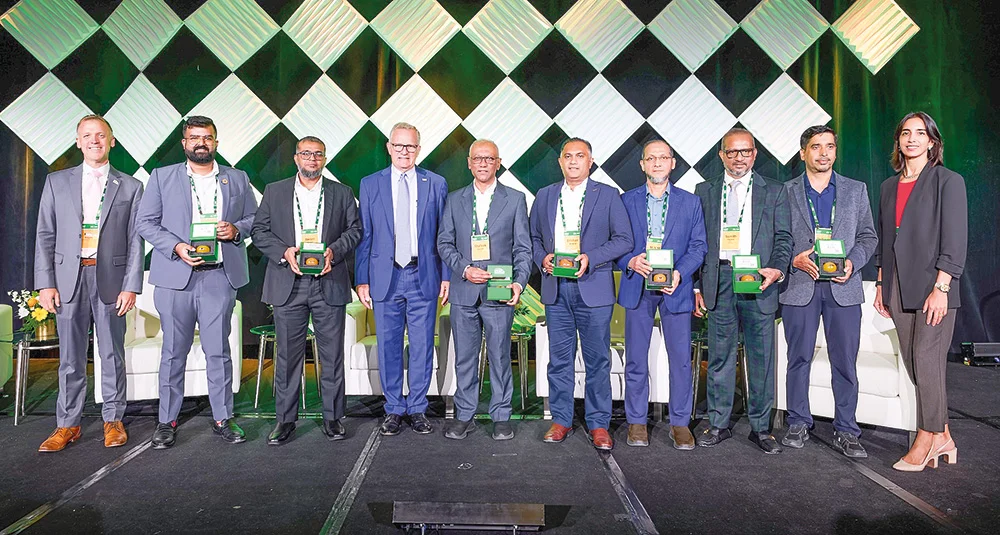
New Anthoney’s Farms, Sri Lanka’s pioneering producer of antibiotic free poultry, has been honoured on the global stage at Soy Connext 2026, the flagship summit of the US Soybean Export Council (USSEC), held from August 5 to 7 at the Hyatt Regency Chicago.
The recognition came during a dedicated sustainability session that brought together a record turnout of more than 800 delegates, the largest in the event’s history. New Anthoney’s Farms was named among global sustainability leaders for its use of the Sustainable U.S. Soy and Fed with Sustainable U.S. Soy labels, standing alongside honourees from the Americas, Greater China and Southeast Asia in what was one of the strongest showings yet for South Asia.
The recognition carries particular weight for New Anthoney’s Farms. In 2023, the company became the first in the South Asia region to secure the Sustainable U.S. Soy licence, verified under the U.S. Soy Sustainability Assurance Protocol. That early move has since made the company a reference point for USSEC when discussing what responsible sourcing looks like in practice, a distinction reflected in the sustainability credentials of Anthoney’s Feeds, the group’s feed milling arm, which underpins the antibiotic free standard the company was built on.
“This recognition reflects a commitment we made years before it became an industry conversation,” said Neil Suraweera, CEO of New Anthoney’s Farms. “Sustainable sourcing and profitability were never competing goals for us. They were always the same goal, and our customers see that in every bird we raise.”
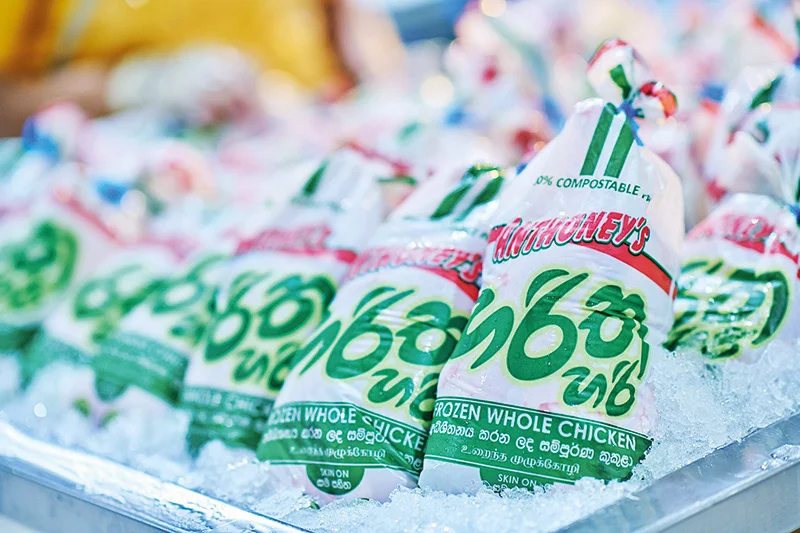
The Chicago honour adds to a year of milestones for New Anthoney’s Farms. The company marked its 40th anniversary in 2026, was named Best Exporter in the Processed Food Category at the 26th Presidential Export Awards organised by the Sri Lanka Export Development Board, and finished as first runner up for Best Stall in the Food and Beverage category at ProFood ProPack. The company also secured up to USD 10 million in investment from the International Finance Corporation, including support from the Global Agriculture and Food Security Program, to expand production capacity by up to 70 percent.
Sri Lanka remains the world’s largest containerised buyer of US soybean meal, importing roughly 255,000 tonnes in 2025 to feed an animal feed industry producing close to 1.3 million metric tons annually, with poultry as its largest customer. New Anthoney’s Farms’ standing at Soy Connext reflects the growing weight of Sri Lanka’s poultry sector within that global supply chain.
Sri Lanka should adopt a diversified water-security strategy, says chief engineer
By Sanath Nanayakkare
For generations, the Jaffna Peninsula has relied almost entirely on an underground freshwater lens. With no major perennial rivers to lean on, the region has long walked a tightrope between water scarcity, seasonal droughts, and a creeping groundwater salinity that has challenged communities across the North. Today, however, a monumental shift is underway along the windswept Vadamaradchi coast.
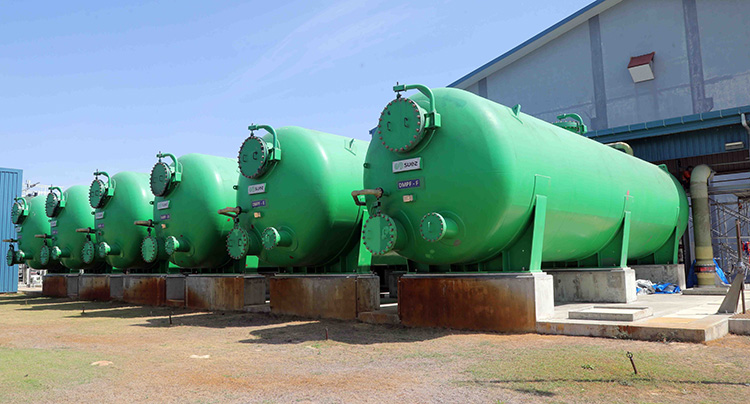
To understand how Sri Lanka is rewriting its water security playbook, one need only look to the Thalaiyadi Seawater Reverse Osmosis (SWRO) Plant.
V. Vijayakanth, Chief Engineer of the Jaffna Kilinochchi Water Supply and Sanitation Project (JKWSSP), recently explained the engineering marvels, environmental safeguards, and long-term vision driving this landmark infrastructure project.
“Building a multi-million-gallon desalination plant on an open, deep-sea coastline facing the Indian Ocean was no small feat,” he said.
Vijayakanth noted that the project required extensive marine, geotechnical, and ecological investigations before a single pipe was laid.
“The scale of the marine installation was striking: an intake and outfall system featuring roughly 1,300 metres of large-diameter pipeline, buried two metres beneath the seabed in water depths reaching up to 12 metres. Because ocean work is strictly dictated by nature, the team had to mobilise an excavator-mounted barge from India and execute a complex offshore operation within a very tight window before the onset of the monsoon.”
“One of the greatest historical hurdles of reverse osmosis technology has been its heavy appetite for electricity. To keep operational costs in check, the Thalaiyady plant integrates state-of-the-art isobaric pressure-exchanger energy recovery systems. These devices capture hydraulic energy from the high-pressure brine reject stream and transfer it directly back to the incoming seawater feed – recovering roughly 95% of available energy and slashing power requirements.”
“Environmental stewardship was equally central to the design. To prevent high-salinity discharge from harming the marine ecosystem, the plant utilizes an offshore outfall equipped with specialized diffusers positioned more than 500 metres from the shore. This ensures rapid mixing within a tightly monitored zone, safeguarding local marine life,” he said.
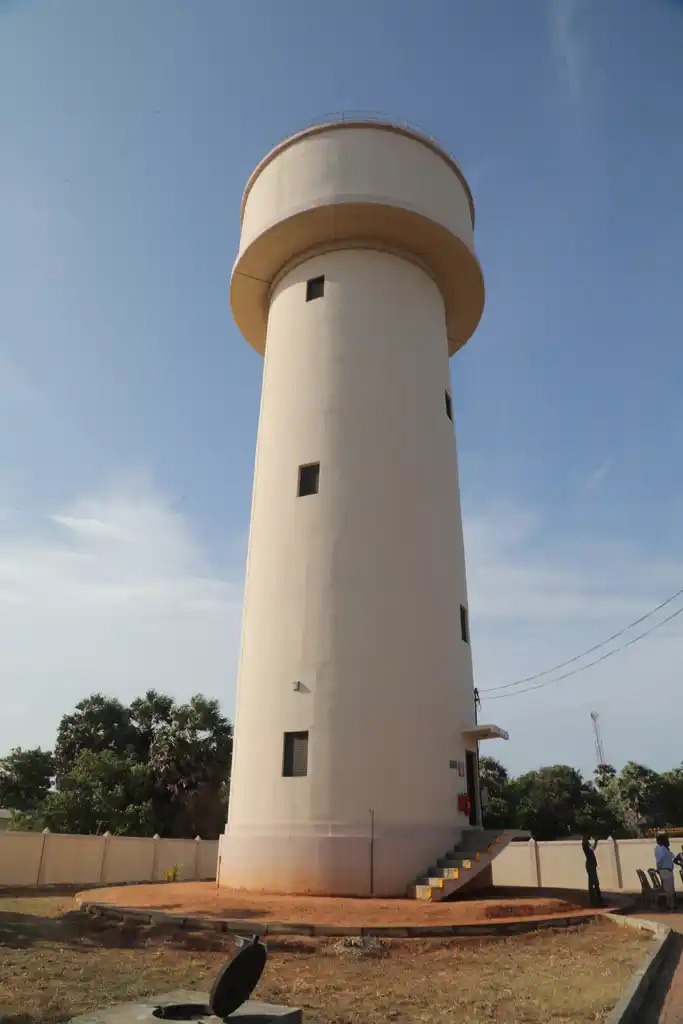
Karaveddi Water Supply Scheme
The impact of the plant is already tangible on the ground. Producing water that meets rigorous national quality standards (SLS 614:2013), the facility feeds into a vast transmission network linked to elevated service reservoirs. These tanks regulate hydraulic pressure across sprawling distribution routes, bringing relief to areas historically plagued by hard, brackish water.
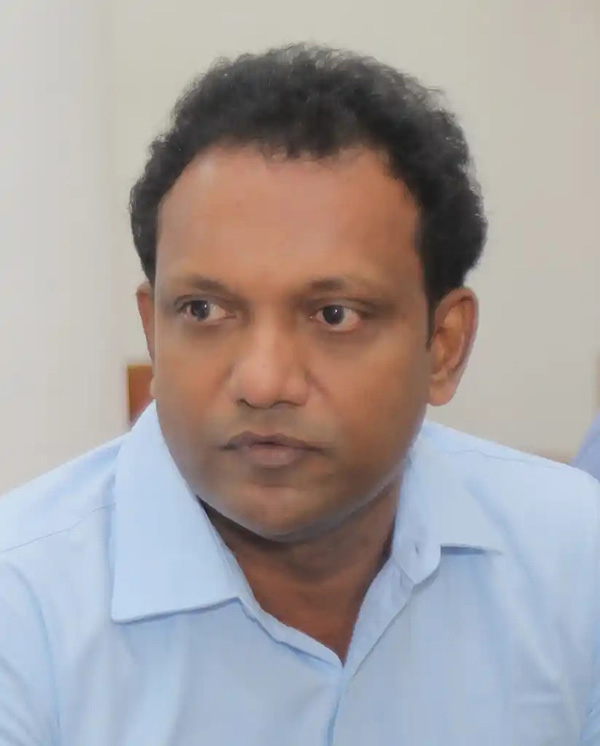
V. Vijayakanth, Chief Engineer of Jaffna Kilinochchi Water Supply and Sanitation Project (JKWSSP)
Currently, about 1,600 households in the Karaveddi Zone are actively connected to the desalinated supply, with water flowing across a regional network stretching from Kodikamam and Jaffna City down to distant island communities like Delft, Kayts and Punguduthivu.
The peninsula’s total daily drinking water demand hovers around 50,000 cubic metres for a population of roughly 600,000. Operating at full capacity, the Thalaiyadi plant yields 24,000 cubic metres per day – meeting nearly half of the region’s current needs.
Yet, planners are already looking decades ahead. Driven by economic development, tourism, and proposed industrial zones like Kankesanthurai, projected potable water requirements for domestic, commercial, and industrial needs are expected to climb from 95,000 cubic metres per day in 2025 to 135,000 by 2045, and 175,000 by 2065. Meeting this future trajectory will require a diversified national strategy combining desalination with surface-water preservation and rainwater harvesting.
When asked whether Sri Lanka should lean exclusively on seawater conversion amid intensifying climate volatility, Vijayakanth emphasised the need for a balanced approach: “Sri Lanka should adopt a diversified water-security strategy, prioritising sustainable surface-water development, groundwater protection, rainwater harvesting, water conservation, treated wastewater reuse and catchment protection. Desalination can complement these sources as a valuable climate-resilient and drought-proof option where appropriate.”
Backed by financial and technical collaboration from the Asian Development Bank (ADB), the project has given the National Water Supply and Drainage Board (NWSDB) invaluable expertise in advanced desalination management. Crucially, a two-year hands-on training program is ensuring that local technical staff master everything from membrane upkeep to preventive maintenance.
As climate variability accelerates, Thalaiyadi serves as a vital proof-of-concept. While energy-intensive desalination cannot replace conventional freshwater sources everywhere, Vijayakanth emphasises that it stands as an indispensable, drought-proof shield for Sri Lanka’s vulnerable dry zones – turning the ocean itself into a secure foundation for the nation’s future.

Counsel for suspect seeks court order directing FCID to probe exports against payments remitted

NOLIMIT joins Dialog Pay Merchant ecosystem

New Anthoney’s Farms recognised as Global Sustainability Leader at Soy Connext 2026

Ravi K granted bail

Kandy courts elevators out of order for ten months

Sri Lanka lose Women’s Champions Trophy hosting rights

‘Dates have the highest sugar content to fight Coronavirus’

Sunday Island 27 December – Headlines

#SundayIsland 17th December – Headlines

Sunday Island – 28th March

Sunday Island Headlines – 21 March

Sunday Island – 21st February – Headlines
-

 News7 days ago
Missing doctor’s body found in Mahiyanganaya
-

 News7 days ago
Australia declines to release Finance Secy Suriyapperuma’s citizenship details
-

 News4 days ago
Eight politicians in drug kingpin probe
-

 News7 days ago
22A: BASL suggests CJ recuse himself from hearing petitions
-

 Features2 days ago
“Wrap Me Up in My Blazer”— A Gentlemanly Bradby Reminiscence
-

 Business4 days ago
Sri Lanka opens up: A new season of direct connectivity
-
 Features6 days ago
Insights from Chieftains of Uva: Genealogy of two Kandyan Families – Part II
-

 Features4 days ago
Redefining ageing in Sri Lanka