
Features
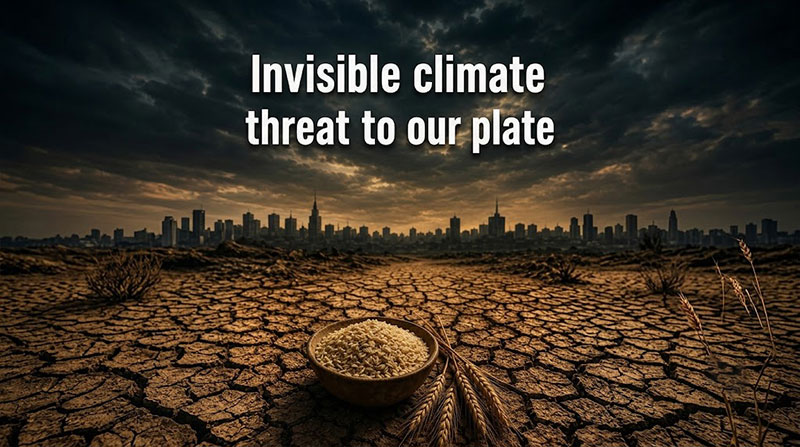
Invisible Climate threat to our plate

by Dr. D. M. S. B. Dissanayaka ✍️
Senior Lecturer
Department of Crop Science
Faculty of Agriculture
University of Peradeniya
When people think about climate change, they usually picture scorching heatwaves, devastating floods, prolonged droughts, or failing harvests. These dramatic events dominate headlines because their impacts are immediate and visible. But another consequence of climate change is unfolding much more quietly, one that reaches our plates every day.
Agriculture is the foundation of our food system, providing the crops and livestock that nourish billions of people every day. Climate change is not only reducing the amount of food agriculture can produce but also changing the nutritional quality of the food we eat.
A bowl of rice, a serving of vegetables, or a plate of beans may look no different from those consumed decades ago. Growing evidence indicates that many staple foods now contain lower amounts of protein, iron, zinc, and several essential vitamins because of changing climatic conditions. In other words, we may be eating enough food while receiving fewer of the nutrients our bodies need.
This silent transformation has profound implications for public health, particularly in developing countries where millions of people rely on a limited number of staple crops for their daily nutrition.
Feeding People Is No Longer Enough
For much of the last century, agriculture had one overriding goal: produce more food. With the world’s population growing rapidly, increasing crop yields was essential, and scientific advances helped farmers achieve remarkable gains in productivity.
Today, however, success can no longer be measured by yield alone.
Scientists now emphasise the concept of nutrition security, ensuring that people receive not just enough calories to satisfy hunger, but also adequate amounts of proteins, vitamins, and essential minerals needed for healthy growth, strong immunity, and disease prevention. Climate change is making this objective increasingly difficult to achieve.
How Climate Change Is Changing Nutritional Value of Crops
Plants depend on a delicate balance of sunlight, water, carbon dioxide, healthy soils, and essential nutrients. Climate change disrupts all of these factors simultaneously.
Rising temperatures speed up plant growth, shortening the time available for grains and seeds to accumulate proteins and minerals. Longer droughts reduce the movement of nutrients from the soil into plant roots, while intense rainfall and flooding wash valuable nutrients out of agricultural soils and damage root systems.
Perhaps the most surprising effect comes from rising levels of atmospheric carbon dioxide (CO₂). Higher CO₂ often stimulates plant growth, allowing crops to produce more leaves, stems, or grains. At first glance, this seems like good news.
However, much of this additional growth comes from the accumulation of carbohydrates rather than essential nutrients. As a result, crops may become larger, but the concentration of proteins, vitamins, and minerals in the edible parts declines, a phenomenon known as the nutrient dilution effect.
Simply put, bigger harvests do not always mean more nutritious food.
The Nutrients We Are Losing
Research from around the world shows that the levels of several nutrients in food crops that are essential for human health are becoming increasingly vulnerable to the effects of climate change.
Proteins, which are essential for growth, muscle development, and tissue repair, often decline in cereal grains. Iron and zinc, two minerals already lacking in the diets of billions of people, also decline under elevated CO₂ levels and heat stress. Magnesium, which supports hundreds of important biochemical processes in the human body, may also be reduced.
Scientists have also reported declines in several B vitamins in staple cereals, while fruits and vegetables exposed to environmental stress frequently contain lower levels of vitamin C and natural antioxidants. These compounds play key roles in strengthening the immune system and protecting the body against disease.
Such changes have been observed in many important food crops, including rice, wheat, maize, legumes, potatoes, and numerous vegetables.
The Hidden Hunger Crisis
The greatest concern is that these nutritional changes are contributing to a growing problem known as hidden hunger.
Unlike conventional hunger, hidden hunger occurs when people consume enough food to meet their energy needs but still lack essential vitamins and minerals. A plate full of rice may provide sufficient calories, yet contain less iron, zinc, or protein than expect.
Worldwide, billions of people already suffer from micronutrient deficiencies. Climate change threatens to worsen this problem, especially in countries where diets depend heavily on staple cereals. Children, pregnant women, older adults, and low-income households are particularly vulnerable because their nutritional needs are greater and dietary choices are often limited.
Science Is Responding
Fortunately, scientists are not standing still.
Plant breeders are developing crop varieties that maintain higher levels of iron, zinc, and other essential nutrients even under heat and drought stress. One of the most promising approaches is biofortification, which uses conventional plant breeding to naturally increase the nutritional value of staple crops. These improved varieties are already helping millions of people obtain healthier diets in many parts of the world.
At the farm level, balanced fertiliser use, efficient irrigation, conservation agriculture, and climate-smart farming practices can help protect both crop yields and food quality.
Meanwhile, advances in precision agriculture, such as satellite monitoring, drones, soil sensors, and artificial intelligence, are helping farmers manage water and nutrients more efficiently while reducing losses to the environment. Researchers are also exploring improved fertiliser formulations and beneficial soil microorganisms that naturally improve nutrient uptake, providing environmentally sustainable solutions for the future.
Looking Beyond Bigger Harvests
For generations, agricultural success has been measured by the size of the harvest. In a changing climate, that measure is no longer enough.
The more important question is not simply how much food we produce, but how well that food nourishes the people who eat it.
The gradual decline in the nutritional quality of crop is one of climate change’s least visible yet most important consequences. Addressing it will require collaboration among scientists, farmers, policymakers, health professionals, and consumers.
Climate change is reshaping our food system in ways that extend far beyond crop failures and rising food prices. It is quietly changing what is on our plates and what is missing from them.
Ensuring that tomorrow’s food remains rich in the nutrients people need is just as important as producing enough food to feed the world’s population. The ultimate measure of agricultural success is not merely filling plates, but nourishing lives.
The writer can be contacted at samanthad@agri.pdn.ac.lk


 At a time when Sri Lanka’s foreign policy is coming under intense scrutiny by some local sections it is only right that impartial and independent commentators shed some clarity on what fundamental foreign policy directions Sri Lanka ought to take. The extremely fluid and complex nature of current international politics renders such an understanding crucially important.
Given its vulnerabilities in a number of spheres Sri Lanka has no choice but to persist in broadly following the path of Non-alignment. That is, it should be ‘a friend of all and an enemy of none’, to the extent possible. However, it does not follow that in the process it could compromise what is seen as its national interest.
The latter point needs stressing against the backdrop of the criticisms the Sri Lankan government has been attracting from some quarters over what is made out to be some opaqueness in security and defence cooperation agreements it has entered into with India. It remains advisable for the Sri Lankan government to enter into pacts of this nature with India, but the government is obliged to disclose the contents of these agreements to the Sri Lankan people without undue delay in consideration of the uncompromisable sovereign rights of a people in a democracy.
However, there is no denying that the government should make it a central foreign policy premise to always work in cooperation with India. A consideration of what it cost Sri Lanka in the past to be in a disharmonious relationship with India and how such policy missteps worked against Sri Lanka’s best interests ought to dictate to Sri Lanka the advisability of maintaining uninterrupted cordial ties with India. Moreover, common sense ought to drive home to a country the costs of being at loggerheads with one’s closest neighbour who has also proved a ‘ready friend in deed.’
That said, it is the bounden duty of Sri Lanka’s diplomatic community or establishment to ensure that such cooperation does not degenerate into a policy of subservience towards India. That is, finesse and farsightedness in local diplomacy become prime requirements.
While India’s geographical location and physical size, besides her other strengths, contribute towards her centrality in regional and world affairs, her neighbours would be thinking and acting far-sightedly if they not only focus on India and her legitimate interests but also ensure continuous friction-free intra-South Asian relations. That is, for them collective South Asian well being should be of fundamental importance.
Much more than for India perhaps, such harmonious ties are of inestimable importance to India’s neigbours who are up against multiple vulnerabilities which are to a great extent regionally rooted. The latter could never, that is, afford to take their minds off the region’s collective development prospects.
The above are some of the reasons why it could prove highly counter-productive and self-defeating for the ‘South Asian Eight’ to render dormant and ineffective the historic SAARC organization. Rather than ‘dead’ SAARC has been allowed to drift into the ‘Limbo of Forgotten Things.’
The growing inter-dependence of the ‘SAARC Eight’ ought to impress on the collectivity the need to step-up regional cooperation in multiple areas which impinge on its members’ legitimate interests. For instance, the youth-led ‘Cockroach’ revolts, first in India and subsequently outside, should convince South Asia that it is continuing to be plagued in a major way by poverty and equity-linked issues. That is, West-inspired, largely market economics-dictated ways to see an end to poverty are simply not working completely.
Likewise climate-related questions are ravaging South Asia in unimaginable ways; Nepal being just one case in point. The rationale for regional cooperation remains valid and undefeated. It is time for revived and stepped-up SAARC cooperation. That is, the solutions to the region’s development dilemmas need to be found in mainly the region.
This amounts to making a case for a continued sense of ‘Southasianness’ among the SAARC countries. That is the conviction should be firm that they know their developmental challenges best and that answers to these issues must be primarily evolved by the grouping itself in cooperation with concerned sections.
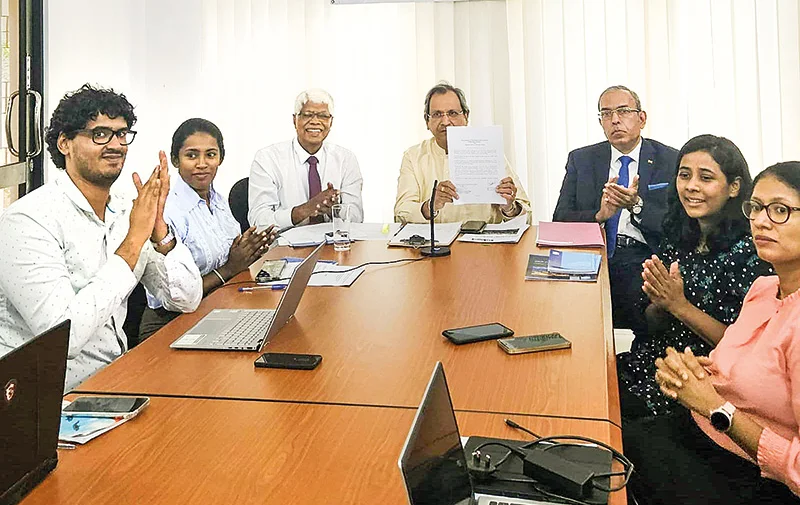
From the above viewpoints the Regional Centre for Strategic Studies (RCSS), Colombo did very well to tie-up with the South Asian University (SAU), India, to increase public awareness on the developmental problems affecting South Asia and for initiating a number collaborative measures that aim at ameliorating them. The relevant agreement was formalized in early September at the RCSS. The sealing of the pact took place under the aegis of SAU President Prof. K.K. Aggarwal and RCSS Executive Director Ambassador Ravinatha Aryasinha.
A press release issued by the organizations said the collaboration aims ‘to foster research networks, partnerships and collaborations for transformative change across South Asia.’ It also mentioned that the partnership marked the first agreement to be signed by SAU with an independent think tank in Sri Lanka.
Among other things, pacts such as the above are bold moves in the direction of fostering a spirit of intellectual independence in those areas of the South facing some of the stiffest developmental challenges. Rather than ‘import’ solutions to these challenges from outside the region, the SAU-RCSS initiative aims at fostering fresh approaches to evolving solutions to problems that are uniquely South Asian.
It is hoped that the SAU and RCSS initiative while leading a to a greater degree of Southern intellectual independence in the area of development thinking would also help in kick-starting the SAARC process all over again in a major way.
What ought to lend fresh urgency to the latter undertakings are fast-breaking current developments in international politics. It ought to be perceived by the most underdeveloped regions of the South that going forward their well being would matter least or not at all to the major powers of both East and West.
For example at the time of writing the foremost among US and Chinese political leaders are meeting in the US in what is made out to be a historic coming together of sorts to address issues of common concern. It is highly unlikely that the parties would be addressing the economic preoccupations of the least developed countries. The same goes for other states that matter from the East and West.
Essentially, the US and China would be looking at ways of strengthening business ties that matter majorly for them. The South and its issues would prove to be of peripheral interest, if at all they happen to matter to the protagonists. Such developments ought to be fresh reminders to the South and their collaborative organizations that there is no escaping self-help and joint solidarity.

by Prof. M.W. Amarasiri de Silva
Adult literacy has for a long time been one of Sri Lanka’s greatest sources of pride, serving as a social indicator that has set the country apart from several of its neighbours in the region. For many years Sri Lanka has been recognised for keeping its literacy rates at a level like those of middle-income countries and even some high-income ones, even though it has faced economic difficulties and political instability. However, since new global research has now shown an unexpected and concerning decline in adult literacy in several high-income countries, it is important to consider what this means for Sri Lanka.
The phenomenon described by Jishnu Das, Yash Dhuldhoya and Ethan Sager, the unexplained fall in functional literacy among adults in wealthy nations. calls for a more thorough examination of the nature of literacy, the pressures exerted by the modern information environment, and the vulnerabilities that Sri Lanka might encounter as it moves towards a more digital, ageing and complex society. Even though Sri Lanka’s basic literacy rates remain high and steady, the global trend acts as a warning that literacy is not a fixed accomplishment but a dynamic capability which must be continually fostered, safeguarded and adapted to changing circumstances.
Decline in functional literacy
The drop in literacy rate in high-income countries is not due to people losing the ability to read or write in the ordinary way. On the contrary, it reflects a decline in functional literacy, which is the capacity to deal with, understand, and apply information in real-life situations. This kind of literacy involves following instructions, comprehending official documents, using digital interfaces, interpreting medical information, and making sense of complicated texts that demand continuous attention.
Researchers stress that the decline cannot be attributed merely to disruptions caused by COVID-19 or the increasing use of smartphones; instead, there is going on something more fundamental: a weakening of the cognitive and informational bases that adults need to function properly in modern society. In countries such as the United States, the percentage of adults regarded as functionally illiterate has increased significantly, indicating that even highly educated societies are having difficulty in keeping up the skills required to handle ever more complex streams of information.
Sri Lanka immune?
At first sight, Sri Lanka seems to be immune from this trend. The country’s adult literacy rate is still above 92 per cent and youth literacy is even higher. According to the 2024 Census, literacy rates exceed 97 per cent among people aged ten and over, with nearly equal levels between the sexes. These figures show the continued strength of Sri Lanka’s system of free education, a system which in the past has guaranteed widespread access to school and has produced generation after generation of citizens who could read and write at a basic level.
There has also been a steady improvement in educational attainment, with an increasing number of adults finishing secondary education and a larger proportion going on to tertiary institutions. Unlike the mysterious drops observed in rich countries, Sri Lanka’s literacy figures demonstrate stability and even a slight improvement.
However, although the surface appearance is reassuring, an even more complicated reality exists. The literacy figures for Sri Lanka only record basic literacy, that is, the ability to read and write simple sentences, and they do not include measures of functional literacy. It is impossible to tell from these statistics whether adults can interpret a bank statement, understand a medical prescription, use an online government portal, or critically assess information that is spreading on social media. As is shown by the global trend, having a high level of basic literacy does not ensure a strong degree of functional literacy. On the contrary, functional literacy can fall even if basic literacy stays the same. This difference is important for Sri Lanka, particularly since the country is currently experiencing rapid digitalization, demographic ageing, and social change.
Major risk factor
A major risk factor is the move towards digital information environments. In high-income countries, researchers believe that the prevalence of smartphones and short-form digital content may be diminishing people’s ability to engage in deep reading. Nowadays, individuals take in information in short, rapid segments by scrolling through social media feeds, quickly reading headlines, and viewing short videos. Such behaviour decreases the opportunity for sustained reading, which is necessary for keeping comprehension, critical thinking, and the capacity to deal with complex information intact.
Sri Lanka is going through a comparable change. There has been a sharp increase in the number of people using smartphones, and social media sites have become the main sources of news, leisure, and communication. Although there are many advantages to having digital access, it also results in a situation where superficial reading becomes the standard approach and could therefore lead to a decline in functional literacy over time.
Demographic ageing as challenge
A further challenge that is coming up is demographic ageing. Sri Lanka is rapidly moving towards becoming an ageing society, with an increasing number of older people who might experience cognitive decline, have less exposure to new information, and enjoy few opportunities for further learning. In high-income countries, ageing populations have led to a fall in functional literacy since older individuals have had difficulty adapting to digital systems and complicated bureaucratic procedures.
The older generation in Sri Lanka, many whom were educated many decades ago under different curriculum standards, could end up becoming increasingly vulnerable in a world in which essential services, such as banking and healthcare, are being moved online. If appropriate support is not provided, the country may witness a growing gap between basic literacy and functional literacy among older adults.
In Sri Lanka, the way in which administration and the workplace are organised has in the past placed greater trust in personal communication and on basic forms of documentation. What in high-income countries would require complex reading is instead carried out through face-to-face contact in Sri Lanka. Nevertheless, this situation is now changing. Government services are becoming available online, banks are introducing digital systems, and in workplaces there is an increasing need for employees to use electronic systems. Since these changes are happening at a faster rate, the demand for functional literacy will increase. Should adults not be able to meet these new demands, Sri Lanka might start to see the kind of decline in literacy that has been seen in other places.
Misinformation and disinformation
Another worry is the spread of misinformation and disinformation. In Sri Lanka, there has already been the quick dissemination of false information via social media, with this having an impact on public health, politics, and social cohesion. Since functional literacy is essential for allowing people to assess sources, doubt the claims made, and tell the difference between reliable information and falsehoods, a lack of functional literacy causes societies to be more open to manipulation, polarisation, and confusion.
The fact that there has been a global drop in functional literacy at the same time as misinformation has increased points to a dangerous feedback cycle: when literacy is low people become more prone to misinformation, and the misinformation in turn damages their ability to think critically about information. Given that the country has a high level of social media use and a lack of digital literacy training, Sri Lanka should take this risk seriously.
Even though there are these risks, Sri Lanka has several advantages which can assist in avoiding a drop in functional literacy. The country’s system of basic education is still strong, showing high enrolment figures and good results in basic literacy.
Families in Sri Lanka still place a great deal of importance on education and reading is still a respected cultural activity. Furthermore, because of its relatively small size and the fact that it has a centralized form of government, it is more efficient than in bigger countries to carry out nationwide literacy campaigns. These strengths offer a firm basis for developing new strategies for protecting and improving functional literacy.
Literacy a process
It should be realised by Sri Lanka that attaining literacy is not a single accomplishment achieved in childhood. In the modern world, literacy must be a skill that is constantly put into practice, kept up to date and adapted to changing circumstances. The fact that adult literacy is declining worldwide shows that even in wealthy countries with well-developed education systems deterioration can occur if adults are not supported in keeping their cognitive and informational abilities. Sri Lanka cannot afford to be careless.
It is necessary for the country to invest in adult education, in programmes concerning digital literacy and in the development of cognitive skills for all age groups. It also needs to establish ways of measuring functional literacy rather than just basic literacy so that policymakers can detect emerging weaknesses and act in advance.
A vital measure is to increase the opportunities for adult learning. Although Sri Lanka has effective literacy programmes based in schools, the country’s infrastructure for adult education is limited. Community centres, libraries, universities, and vocational institutes should take on a more significant role by providing courses, workshops, and reading programmes which are tailored for adults. The programmes should place an emphasis not just on reading and writing but also on digital navigation, critical thinking, and information processing. Adults should be given the chance to practise the skills that are necessary for them to function effectively in a rapidly changing world.
Importance of digital literacy programmes
It is just as important to have digital literacy programmes. Since an increasing number of services are being offered online, adults need to learn how to use digital tools with confidence and in a safe manner. This involves knowing how to fill out online forms, moving around on government websites, using banking apps, and being able to spot misinformation. The digital literacy courses available should be accessible, affordable, and adapted to different age groups, especially older adults who might feel put off by technology. Schools can also contribute by incorporating digital literacy into their curriculum so that future generations acquire good functional literacy skills from an early age.
Sri Lanka should also investigate introducing policies which promote cognitive health among older people. Since cognitive decline can lead to a deterioration of functional literacy, it becomes more difficult for older individuals to deal with information. It is possible to help keep cognitive function by setting up programmes that promote reading, social interaction, physical activity, and continued learning. During regular medical visits, healthcare professionals should include cognitive assessments so that any problems affecting literacy-related skills can be picked up early.
Sri Lanka needs to create tools for measuring functional literacy, since the figures available on basic literacy give an incomplete account of the country’s capabilities. By using assessments of functional literacy like those employed in high-income countries, Sri Lanka would be able to monitor how well its adults can apply their literacy skills in real-life situations.

 The World Championships of Performing Arts (WCOPA) is known globally as the Olympics of performing arts, but Sri Lankans came to know of it more closely when Natharie Wickramasinghe, representing Team Sri Lanka at WCOPA 2026, in Las Vegas, earned a Bronze Medal in the Ethnic/Folklore Dance category.
Behind Sri Lanka’s WCOPA journey is Sri Lanka-born Chris Rajendra, who migrated to the United States in 2007, and deserves special congratulations.
Passionate about discovering and promoting talent, Chris has been actively involved in the pageant and performing arts, industry since 2002.
A major milestone came in 2015, when he introduced WCOPA, to Sri Lanka, for the first time, creating an international platform for Sri Lankan performers.
Sachini Ayendra became the very first candidate to represent Sri Lanka at WCOPA, in 2015, marking the beginning of Team Sri Lanka’s journey.
Chris served as National Director for Team Sri Lanka from 2015 to 2018, and has returned to the role for the 2026–2027 term, continuing his commitment to identifying, developing and promoting Sri Lankan talent internationally.
His involvement in pageantry and performing arts includes:
Recruiter, Miss Nevada United States – 2014

Chris Rajendra: National Director – WCOPA Team Sri Lanka
Manager, Miss Colombia Las Vegas – 2013 to 2017
Director for the West Coast and International Divisions of Ms. Latina International and Ms. International World – 2017
National Director for Team Sri Lanka – WCOPA, 2015–2018 and 2026–2027
Co-National Director for Team USA – WCOPA 2026
In the USA, Chris began his career in retail before transitioning into insurance and financial services, where he built extensive experience in sales, marketing, leadership and business development.
He owned and operated a brokerage, affiliated with multiple insurance companies, and later served as Marketing Director with Transamerica and World Financial Group.
As his business expanded across Las Vegas and California, he continued to hone his expertise in sales, marketing and client relations. He now works as a Sales Executive at Hilton Grand Vacations.
Looking ahead, Chris will shortly launch the application process for Team Sri Lanka 2027, giving talented Sri Lankan performers another opportunity to represent the country on the world stage.
The 2027 World Championships of Performing Arts will take place in Las Vegas, USA, in July or August 2027.
Through his work in both the corporate and performing arts worlds, Chris Rajendra continues to combine leadership, networking and talent development — creating opportunities for Sri Lankan performers to showcase their abilities on a global platform.

Muhammad Shahzad smashes fastest first-class hundred by a Pakistani batter

Gul, Kharote spin Afghanistan to victory over Japan in Asian Games opener

Showerss above 100 mm are likely at some places in the Western, Sabaragamuwa, Central and North-western provinces and in Galle and Matara Districts

Mirabai Chanu wins Asian Games silver as Ri breaks weightlifting record

Trump greets China’s Xi Jinping on arrival for three-day US

BASL calls for conscience vote on 22nd Amendment

‘Dates have the highest sugar content to fight Coronavirus’

Sunday Island 27 December – Headlines

#SundayIsland 17th December – Headlines

Sunday Island – 28th March

Sunday Island Headlines – 21 March

Sunday Island – 21st February – Headlines
-

 News6 days ago
Shanakiyan urges urgent action over reported death sentence for Lankan in Saudi Arabia
-

 News7 days ago
Bid for Basil’s extradition nears final stage: Police
-

 News5 days ago
Namal Rajapaksa Buddhist gambit fails, bail denied
-
 Features5 days ago
Why the spelling Sri Lankan names in English vary
-

 Features5 days ago
Three bands, a new identity: Sri Lankan wolf snake recognised as distinct species
-
 Business5 days ago
SLIIT holds largest-ever convocation
-

 News5 days ago
Govt monitors reported Saudi death sentence – Foreign Ministry
-
 News5 days ago
Vehicle prices drop by up to Rs. 1 mn, says importers’ body