
News
NPC asks NPP to implement promised prisons reforms without further delay

The National Peace Council (NPC) has said that the Negombo prison tragedy demonstrated the urgent need to implement the prison reforms promised in the NPP government’s election manifesto, including reducing overcrowding, strengthening rehabilitation and transforming prisons into institutions that prepare offenders for reintegration into society.
The following is the text of the statement: “The tragic loss of life in the Negombo Prison violence in which 29 people, including seven prison officers, lost their lives and more than one hundred others were injured is a wake-up call to the government. This was a disaster born of systemic apathy, political failure, and societal indifference. While the conditions that made such a disaster possible have accumulated over decades under successive governments, the present government had a duty to anticipate the danger, respond swiftly and competently once violence erupted, and protect the lives of those in its custody. The finding of a large number of weapons inside the prison needs to be specially investigated as it suggests planned action to create strife and chaos. This duty was not fulfilled by those in charge, meaning that the state failed in its most basic duty to protect life.
The chronic overcrowding of Sri Lanka’s prisons, inadequate infrastructure, staff shortages and the influence of organised criminal networks have long been recognised, but sustained action is necessary to deal with these issues. The prison population has reportedly increased from about 28,000 at the end of 2024 to more than 42,000 today, while the prison system has capacity for only around 10,000 inmates. The government’s change of law in making bail more difficult to access in the case of drug-related cases, without considering its implications, has exacerbated the situation. Negombo Prison itself was holding approximately 2,600 prisoners in a facility built for about 650. These conditions made urgent preventive action essential.
The Negombo prison tragedy demonstrates the urgent need to implement the prison reforms promised in the government’s election manifesto, including reducing overcrowding, strengthening rehabilitation and transforming prisons into institutions that prepare offenders for reintegration into society. The NPP government came to power with a mandate to change the system. One of its greatest strengths is that it is widely seen as being free from the links to organised crime and corruption that damaged public confidence in previous governments. That gives it a unique opportunity to undertake reforms that others could not credibly pursue. But integrity alone is not enough. It must be matched by administrative competence and the political will to implement long promised reforms.
While the government’s appointment of a high-powered committee is to be welcomed, its findings must pave the way for radical, structural overhauls. Justice demands urgent and well-defined actions as both prison inmates and jailors remain vulnerable within the prison system. The National Peace Council urges the government to treat the Negombo prison tragedy as a turning point. It should act with urgency to implement meaningful prison reforms, ensure accountability for institutional failures and accelerate the wider programme of reforms promised to the people. This would also strengthen public confidence that the government remains committed to delivering the systemic change for which it was elected.”



Text and Pic by Priyan de Silva
Director General of the Commission to Investigate Allegations of Bribery and Corruption (CIABOC) Ranga Dissanayake has questioned whether some promises contained in the National People’s Power (NPP) manifesto, A Thriving Nation – A Beautiful Life, could be fulfilled even if the government wanted to implement them.
Dissanayake raised the issue during a discussion following the release of the third biannual report on manifesto monitoring by the March 12 Movement, at the BMICH, on Wednesday.
He questioned whether the report had taken into account legal and institutional constraints affecting the implementation of certain pledges.
Citing the proposal to establish Anti-Corruption Investigation Offices in each district, Dissanayake said such offices could be established only with the agreement of CIABOC and that amendments to the Anti-Corruption Act would be necessary.
He also referred to the pledge to abolish the Executive Presidency, noting that successive governments had made similar commitments since 1994. He questioned whether there had been adequate consideration of where the powers vested in the Executive President would be transferred if the system were abolished.
On the proposal to establish a Public Prosecutor, Dissanayake questioned whether the Government intended to maintain the office alongside the Attorney General, who currently performs prosecution-related functions.
Executive Director of the Institute for Democratic Reforms and Electoral Studies (IRES) Manjula Gajanayake said Dissanayake’s remarks should be regarded as his personal views and not as Government policy.
Monitoring and Evaluation Consultants M. Thilakarajah and D.D. Mataharaarachchi presented the third-phase findings, covering January to June 2026.
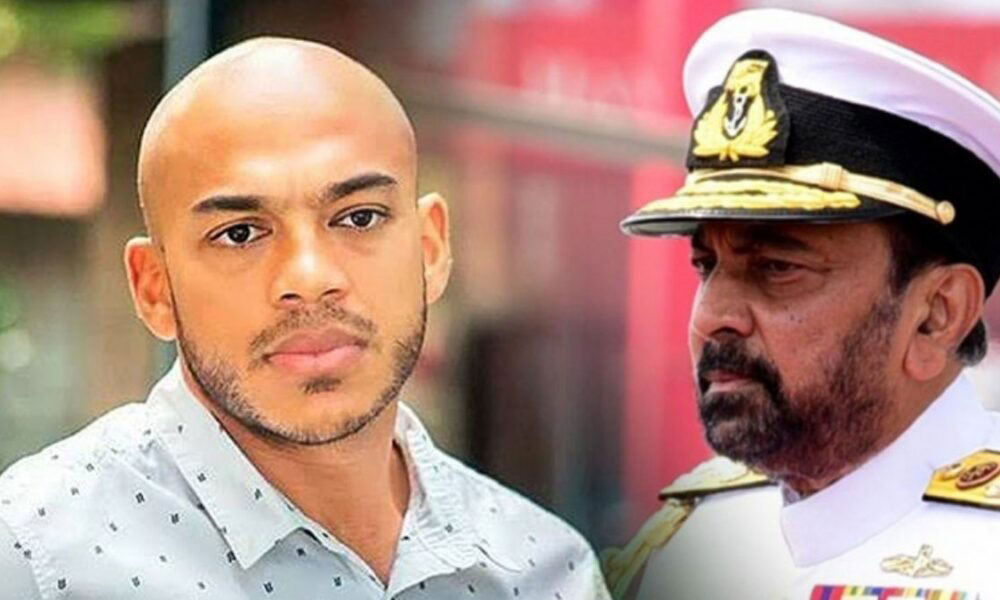
The corruption case filed by the Commission to Investigate Allegations of Bribery or Corruption (CIABOC) against former Navy Commander, Admiral of the Fleet Wasantha Karannagoda, and Yoshitha Rajapaksa was set for a pre-trial conference by the Colombo High Court.
The case was taken up before the Colombo High Court on Thursday (17), when the accused, who are currently out on bail, appeared before the court. After considering the submissions made, the court ordered that the case be called for a pre-trial conference.
The CIABOC had filed the case against the accused, alleging that a corruption offence was committed by sending Yoshitha Rajapaksa, son of former President Mahinda Rajapaksa, for training at the Royal Naval College in the United Kingdom despite him not having the required qualifications.

The Colombo Magistrate’s Court yesterday directed the Inspector General of Police (IGP) to conduct an investigation and submit a report on whether a statement made by former Minister Wimal Weerawansa at a political rally, in Anuradhapura, on September 12, amounted to contempt of court.
Deputy Solicitor General Janaka Bandara, appearing for the Commission to Investigate Allegations of Bribery or Corruption (CIABOC), made the request when a complaint filed against MP Namal Rajapaksa in connection with the Airbus issue was taken up.
Bandara also handed over to court a compact disc containing the relevant speech made by Weerawansa.
After considering the request, Colombo Chief Magistrate Asanga S. Bodaragama directed the IGP to conduct an investigation into the matter and submit a report to court.

Some NPP manifesto promises may be difficult to fulfil – CIABOC DG

Yoshitha and ex-Navy chief Karannagoda’s case fixed for PTC

Court orders probe into Wimal’s rally speech

Court to rule on Dilith’s writ petition on September 30

Shanakiyan urges urgent action over reported death sentence for Lankan in Saudi Arabia

Namal further remanded over Airbus probe

‘Dates have the highest sugar content to fight Coronavirus’

Sunday Island 27 December – Headlines

#SundayIsland 17th December – Headlines

Sunday Island – 28th March

Sunday Island Headlines – 21 March

Sunday Island – 21st February – Headlines
-

 News6 days ago
Gnanasara Thero absconding after SC ruling
-

 News7 days ago
Green Climate Fund (GCF) Regional Dialogue for East and South Asia will be held from 14 to 17 September 2026 at Cinnamon Life at City of Dreams Hotel, Colombo
-

 Opinion5 days ago
From Galkissa (Mount Lavinia) to Tambuttegama
-

 Latest News7 days ago
ITS Giuseppe Garibaldi’ departs Colombo
-

 Business6 days ago
HNB Finance strengthens Board with four independent directors
-

 News2 days ago
US embassy won’t comment on IGP’s probe into joint drug raid
-

 Sports6 days ago
Culture within cricket team worrying authorities
-

 Features5 days ago
Sri Lanka’s university crisis: Brain drain and union action demand urgent reform