
Latest News
Oil prices hit 1-month high as US-Iran attacks dim Strait of Hormuz outlook

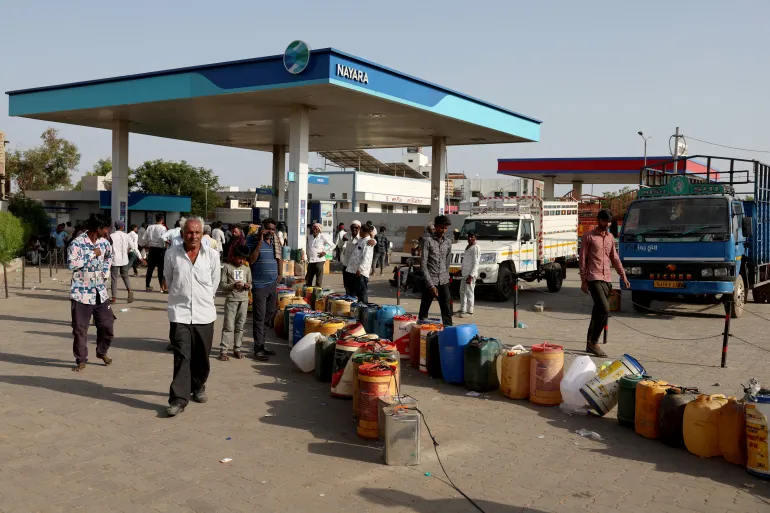
Oil prices have surged to their highest level in a month as renewed hostilities between the United States and Iran continued for a third consecutive day, dampening hopes for a return to normality in the Strait of Hormuz.
Brent crude, the primary international benchmark, rose 2.8 percent on Tuesday, extending a 9.6 percent gain from the previous day.
Brent futures for September delivery stood at $85.67 a barrel as of 07:00 GMT, the highest since June 15.
After easing to pre-conflict levels following Washington and Tehran’s signing of a memorandum of understanding (MoU) for peace last month, Brent has risen 18 percent from its price before the start of the US-Israel war on Iran in late February.
The US Central Command on Monday announced strikes on Iran for a third day, saying its forces targeted Tehran’s ability to attack “innocent civilians and commercial shipping” in the Strait of Hormuz.
Iran’s Islamic Revolutionary Guard Corps said it hit two oil supertankers in the strait and launched missile and drone strikes against US military assets in Kuwait and Bahrain in retaliation for the attacks.
Adding to the market volatility, President Donald Trump said on Monday the US would reimpose its blockade of Iranian ports and begin charging vessels transit fees as the “guardian” of the critical waterway.
“Crude oil is fast losing its strategic petroleum reserve buffer, and a violent repricing up cannot be discounted until the market sees toned-down rhetoric from both parties,” June Goh, a senior oil market analyst at Sparta Commodities in Singapore, told Al Jazeera, referring to the US government’s emergency oil stockpile, which the Trump administration has drawn on to mitigate supply constraints.
After ticking up in recent weeks amid hopes for a permanent peace deal between Washington and Tehran, traffic in the Strait of Hormuz has plummeted amid the renewed threat of violence against commercial shipping.
A total of 57 transits were recorded from Friday through Sunday, a more than 50 percent drop compared with the previous week, according to ship-tracking platform MarineTraffic.
Roughly 130 vessels transited the strait daily before the US and Israel launched their initial strikes on Iran in late February.
“Traffic through Hormuz is grinding to a halt, back to – or even below – our immediate pre-MoU pace,” Rory Johnston, founder of oil market research firm Commodity Context, told Al Jazeera.
“The oil market has proven extremely patient through this crisis, in large part thanks to an ample stock cushion upon which we were able to draw to blunt the sharpness of the supply shock,” Johnston said.
“Unfortunately, much of that cushion has now been depleted, leaving us much more vulnerable to a rerun of March and April.”
[Aljazeera]

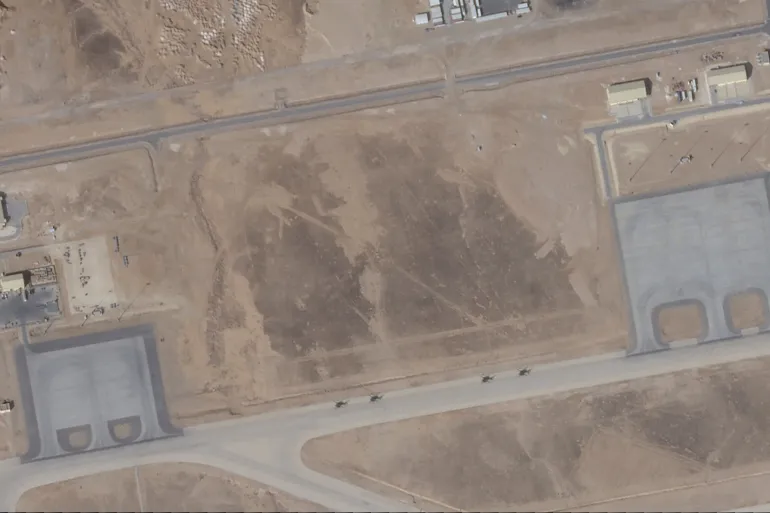
Iran says it launched missiles at two US bases in Jordan following a US attack on Larak Island in southern Iran earlier on Sunday.
In a statement reported by Iranian news agencies on Sunday, the Islamic Revolutionary Guard Corps (IRGC) said the combined missile and drone operation, which it called “Punishment of the Aggressor”, hit the King Hussein and Al Azraq bases in Jordan.
The exchange of attacks is the first flare-up in violence between the two sides since late July.
The IRGC said the strikes “destroyed the technical and repair infrastructure, as well as the enemy fighter deployment sites”, inflicting significant damage.
Jordan reported intercepting eight missiles soon after the IRGC announced the attack.
“Air defence systems intercepted eight missiles that breached the Kingdom’s airspace at dawn today, Monday,” the Jordanian military said in a statement.
No injuries were reported at either base.
“Aggression and crimes will not solve the enemy’s desperation in attempting to weaken the Islamic Republic’s control over the Strait of Hormuz, and every attack will be met with even more devastating responses,” the IRGC statement said.
Tehran had promised to retaliate for Sunday’s US attack on Larak Island.
The strikes risk renewing the military confrontation as Washington shifts from its bombing campaign to a financial pressure strategy on Tehran, and as the US-Israel war on Iran enters its seventh month.
On Monday, the US military denied that its Sunday attacks were an “act of aggression”.
[Aljazeera]
Latest News
Sun directly overhead Neriyakulam, Punewa, Kebithigollewa, Pankulam and Sinhapura at about 12.10 noon today (31)

The sun is going to be directly over the latitudes of Sri Lanka from 28th of August to 07th of September due to its apparent southward relative motion.
The nearest places of Sri Lanka over which the sun is overhead today (31) are Neriyakulam, Punewa, Kebithigollewa, Pankulam and Sinhapura about 12.10 noon.
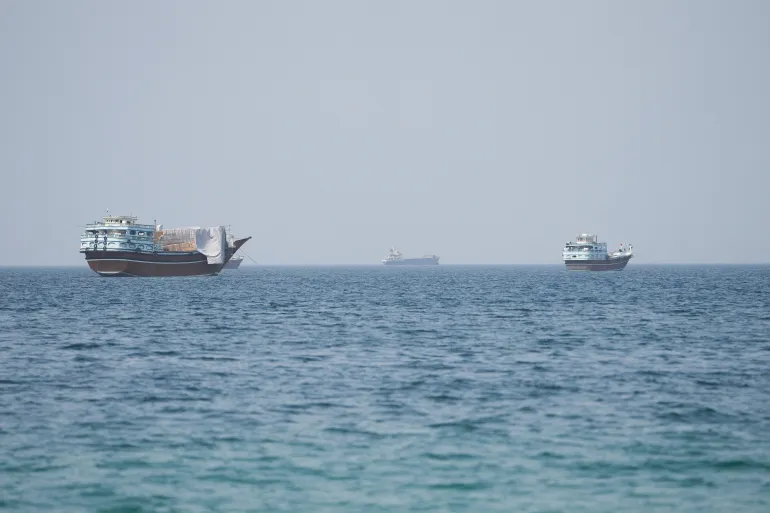
The United States has struck Larak Island in southern Iran in the first attack against the country since late July, a US official has confirmed to Al Jazeera.
Tehran vowed to retaliate for Sunday’s attack. The strikes risk renewing the military confrontation as the US shifts from the bombing campaign to a financial pressure strategy as the US-Israel war on Iran enters its seventh month
The US official said the strikes targeted launchers that were set to fire rockets carrying mines towards the Strait of Hormuz.
Iran’s Fars News Agency had reported that explosions were heard near the island. Later on Sunday, the Islamic Revolutionary Guard Corps (IRGC) confirmed the attack by the “American-Zionist enemy”, saying that it resulted in the killing and injuring of several soldiers.
“This act will be responded to by the sons of Islamic Iran and will result in punishment of the aggressor,” the IRGC said in a statement.
In a statement shared by the news agency, IRGC spokesperson Sardar Mohebi accused the US of making “a strategic and fatal mistake”, for which it will pay consequences “in both the economic and military arenas”.
In recent weeks, the US has been claiming control over the strategic waterway, saying that it is managing to get millions of barrels of oil through the strait under its military protection even as Iran blockades the waterway.
Still, attacks on ships in Hormuz have been reported almost daily, and Iran has maintained that the strait is closed.
Sunday’s strikes show that the US is still willing to use military force despite the focus on sanctions to pressure Iran to make concessions over its nuclear programme and claims of control over Hormuz
(Aljazeera)

Iran attacks US bases in Jordan after US strikes Larak Island

Showers will occur in the Western, North-western and Sabaragamuwa provinces and in Galle, Matara, Kandy and Nuwara-Eliya districts.

Sun directly overhead Neriyakulam, Punewa, Kebithigollewa, Pankulam and Sinhapura at about 12.10 noon today (31)

BASL takes exception to Justice Ganepola being denied a place in SC

Sajith challenges govt. to hold PC polls

Mahendran denies name change allegation

‘Dates have the highest sugar content to fight Coronavirus’

Sunday Island 27 December – Headlines

#SundayIsland 17th December – Headlines

Sunday Island – 28th March

Sunday Island Headlines – 21 March

Sunday Island – 21st February – Headlines
-

 News6 days ago
Missing doctor’s body found in Mahiyanganaya
-

 News6 days ago
Australia declines to release Finance Secy Suriyapperuma’s citizenship details
-

 News3 days ago
Eight politicians in drug kingpin probe
-
 News6 days ago
22A: BASL suggests CJ recuse himself from hearing petitions
-

 Features1 day ago
“Wrap Me Up in My Blazer”— A Gentlemanly Bradby Reminiscence
-

 Business3 days ago
Sri Lanka opens up: A new season of direct connectivity
-
 Features5 days ago
Insights from Chieftains of Uva: Genealogy of two Kandyan Families – Part II
-

 Features3 days ago
Redefining ageing in Sri Lanka