
Latest News
Djokovic breaks Federer’s Wimbledon record to reach quarters


Novak Djokovic claimed the all-time record for most men’s singles match wins at Wimbledon, but had to overcome moments of visible frustration to beat qualifier Roman Safiullin and reach the quarter-finals.
Djokovic had matched Roger Federer’s record with his third-round victory on Friday, and the 39-year-old earned his 106th win at SW19 by defeating the 132nd-ranked Safiullin 7-6 (8-6) 6-3 3-6 6-3 on Sunday.
That is second only to the 120 wins achieved by nine-time women’s champion Martina Navratilova.
The Serb beat Safiullin despite an apparent issue with his eyes early in the contest, while he later received a warning for an audible obscenity and was fortunate to avoid a penalty after firing a ball to the back of the opposite side of the court when he lost serve in the third set.
“Survive to thrive – that’s how I feel,” Djokovic said, reflecting on his performances in the first week.
“Hopefully the thriving part is coming!”
Acknowledging his behaviour during the match, he added: “I’m known for my outbursts and meltdowns, I had a few of those today so I apologise.
“Our mind wanders all the time. It is very hard to keep it in the present moment. Whoever manages to do that is the winner.
Djokovic – who is bidding to match Federer’s men’s record of eight Wimbledon titles and claim an outright record 25th major title – was the overwhelming favourite against Safiullin, but found his latest test far from straightforward.
Safiullin, a former quarter-finalist, was in tears after his stunning third-round victory over rising star Joao Fonseca, having struggled with an injury he feared he would never fully recover from six months ago.
The free-hitting Russian, 28, was rewarded for his persistence when he took his first set in four meetings with former world number one Djokovic to prolong the contest beyond the three-hour mark.
But, just as he did against Arthur Rinderknech in the previous round, Djokovic captured the fourth set to seal victory and set up a last-eight meeting with Canadian third seed Felix Auger-Aliassime or Spain’s Alejandro Davidovich Fokina.
Safiullin appeared full of belief as he began his bid for a monumental upset, responding to Djokovic’s immediate break of serve by winning five of the next six games.
But he could not convert that positive position, faltering as he served for the set at 5-3 and eventually coming up short in the tie-break.
Despite the 125-place ranking gap, Safiullin had continued to prove a nuisance in the second set until he presented Djokovic with an opening in the sixth game, and eventually conceded a fourth break point.
Having to come through three consecutive five-set matches since the final round of qualifying to arrive here began to take its toll as Safiullin required a medical timeout for a left-leg problem during the third set.
But he successfully managed that issue to capture his first set in four tour-level meetings with Djokovic, who landed only 57% of his first serves and took out his frustration on a ball after Safiullin took a sixth break point for a 4-2 lead.
Despite that incident, which was booed by the crowd, Djokovic quickly reset and launched a decisive fourth-set response, breaking to love in the second game as Safiullin’s challenge began to fade.
Lifting over a closing drop shot to serve out victory to love, Djokovic embraced Safiullin at the net – and there was deserved warm applause for the spirited qualifier’s performance as his superb run, in which he also ousted 12th seed Andrey Rublev, came to an end.
Djokovic has now been taken to four sets in three of his four wins at this year’s championships, but remains in the hunt for history after reaching his 17th Wimbledon quarter-final.
[BBC]

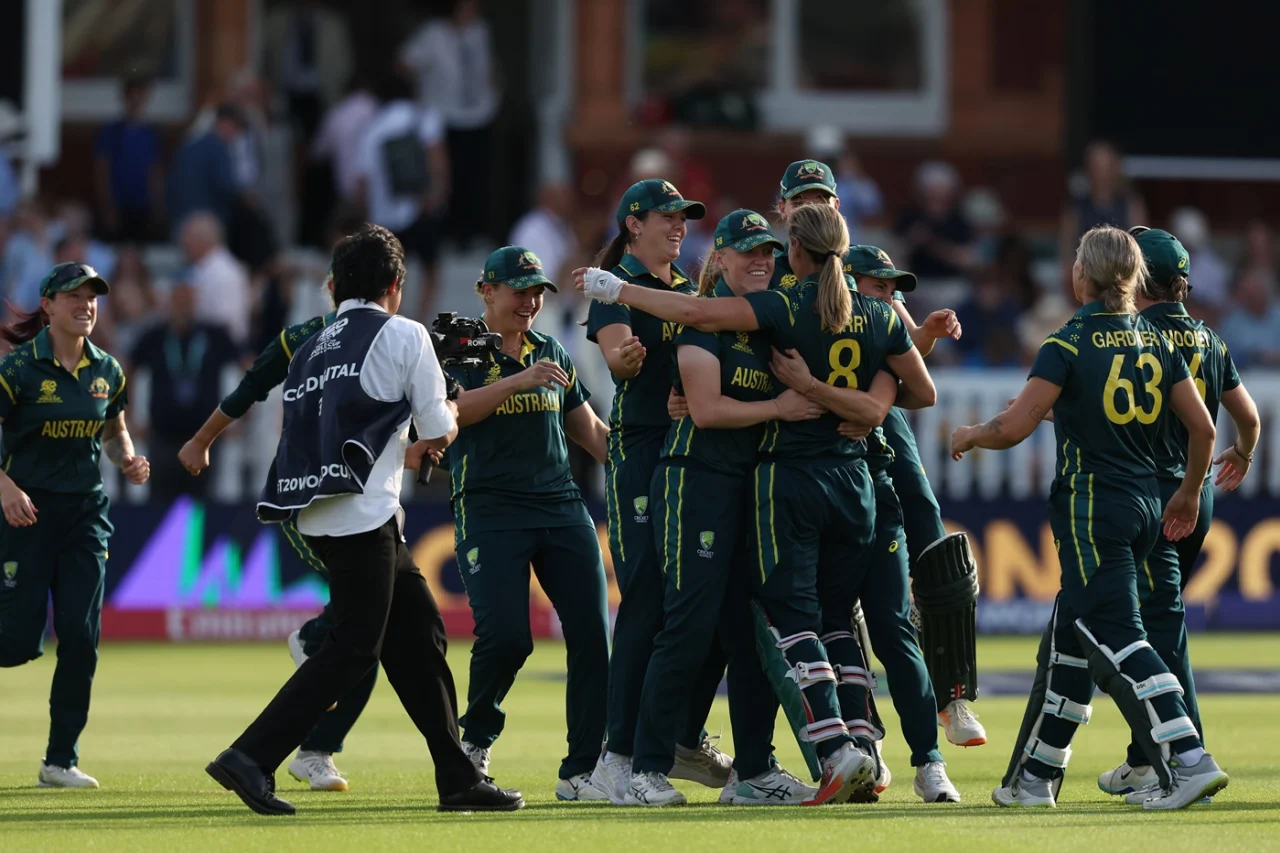
REX CLEMENTINE at Lord’s
The final of the Women’s T20 World Cup turned into a one-sided affair as Australia clinched their seventh title without breaking a sweat against hosts England at Lord’s on Sunday. With both teams unbeaten throughout the tournament, a close contest had been anticipated in front of a sell out crowd, but England were simply no match for the Australians.
The victory was set up by Australia’s bowlers, who mixed their pace intelligently and maintained superb discipline to restrict England to 150 for four in their 20 overs. Their fielding was equally impressive, backing up the bowlers with sharp catching and athletic work in the ring.
On a two paced surface, some felt England had posted a competitive total. But Beth Mooney, such a classy performer, produced another masterclass to guide Australia to a comprehensive seven wicket victory with 17 balls to spare.
Mooney, Australia’s wicketkeeper and left-handed opener, has the same ability as Adam Gilchrist to punish even good deliveries. Having struck an unbeaten half-century in the semi-final against West Indies at The Oval, she delivered again on the biggest stage.
Her unbeaten 64 came off just 49 balls and included ten boundaries. She shared a 100-run stand off only 67 deliveries with Phoebe Litchfield, laying the perfect platform for the chase.
Litchfield, another elegant left-hander, was outstanding during the Powerplay, taking the attack to England as Australia raced to 62 for one in the first six overs. She narrowly missed out on a half-century, making 48 off 35 balls with six fours and two sixes.
After England’s openers departed cheaply, captain Nat Sciver-Brunt kept the hosts in the contest with a fighting half-century. But her 58 came off 53 deliveries and contained only five boundaries, underlining how effectively Australia squeezed the scoring opportunities.
Left-hander Freya Kemp injected some urgency with a brisk 44 off 28 balls, striking four fours and a six, but her late assault proved too little, too late.
It was a remarkable campaign by Australia, who won all seven matches and were rarely stretched throughout the tournament. Their enviable depth, extending through both the batting and bowling departments, once again proved decisive. Above all, their triumph served as another reminder that sustained success at international level is built on the foundations of a strong domestic structure.
Scores:
Australia Women 153/3 in 17.1 overs [Beth Mooney 64, Phoebe Litchfield 48, Ellyse Perry 13*; Charlie Dean 1-28, Lauren Bell 1-38, Sophie Ecclestone 1-24] beat England Women 150/4 in 20 overs [Nat Sciver-Brunt 58*, Alice Capsey23, Freya Kemp 44*; Kim Garth 1-20, Lucy Hamilton 1-19, Sophia Molineux 1-32, Annabel Sutherland 1-34] by seven wickets
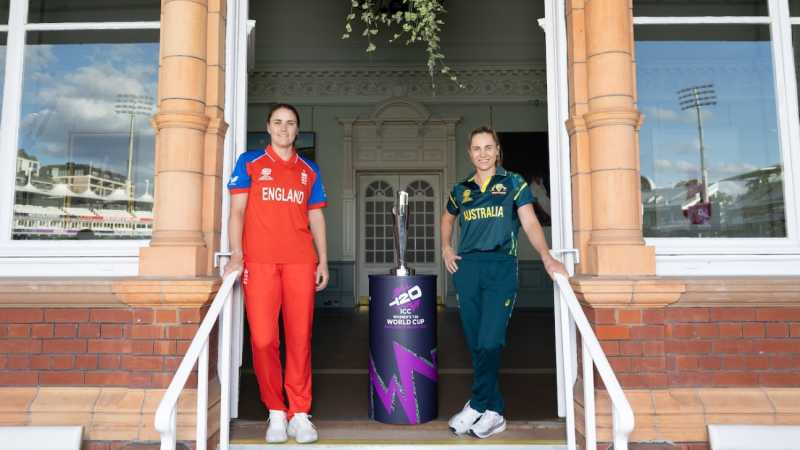
Sophie Molineux called correctly at the toss and inserted England on a bright, warm afternoon at Lord’s, venue for the 2026 Women’s T20 World Cup final.
Both sides were unchanged from comprehensive semi-final victories. Ellyse Perry limped off against West Indies at The Oval on Tuesday but has pulled up well, in the words of her captain, Molineux. Australia also resisted the temptation to bring in Alana King, who has a fine record against England.
“Beautiful day, want to get out and have a run around, put pressure on them early,” Molineux said. “I don’t think the pitch will change too much.”
Nat Sciver Brunt who missed three games during the group stage but returned to top score against South Africa in Thursday’s second semi, said she too would have bowled. “But fresh wicket, runs on the board in a final is no bad thing,” she added.
England and Australia both come into the final unbeaten in the tournament, having won all five group games prior to the knockouts. Two mighty records go head-to-head in this contest, too: England have won all four of the Women’s World Cups (50-over and T20) that they have hosted; but Australia have won all six of the finals (50-over and T20) that the nations have contested.
England: Amy Jones (wk), Danni Wyatt-Hodge, Nat Sciver-Brunt (capt), Alice Capsey, Heather Knight, Freya Kemp, Dani Gibson, Charlie Dean, Sophie Ecclestone, Linsey Smith, Lauren Bell
Australia: Georgia Voll, Beth Mooney (wk), Phoebe Litchfield, Ellyse Perry, Ashleigh Gardner, Georgia Wareham, Annabel Sutherland, Nicola Carey, Sophie Molineux (capt), Kim Garth, Lucy Hamilton
(Cricinfo)
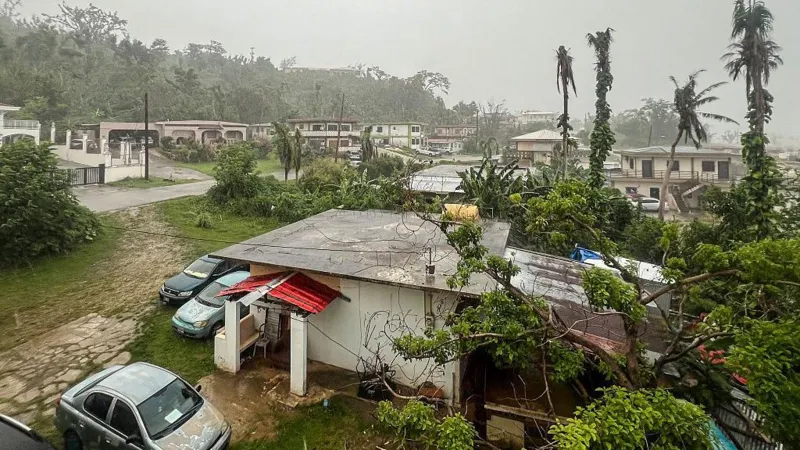
Emergency evacuations are taking place in Guam and the Northern Mariana Islands as a super typhoon bears down on the US Pacific territories.
Bavi is forecast to make landfall early on Monday morning, with winds of up to 257km/h (160mph), according to the US National Weather Service (NWS).
It warned the “very dangerous” storm could cause “catastrophic” damage, with “significant flooding from torrential rains” possible and waves potentially nearly 11m (35ft) high on Monday.
The western Pacific region is particularly prone to tropical cyclones. While storms of this strength are unusual for the US islands, scientists say climate change is making powerful typhoons more common.
Bavi is expected to pass directly over Guam and the Northern Mariana Islands by Monday afternoon, but the NWS warned that destructive conditions could be expected for eight to 10 hours prior to or after the arrival of the storm’s centre.
“The window is rapidly closing to evacuate if directed to do so by local officials, or if your home is vulnerable to high winds or flooding,” the agency said, adding that winds “will pose a deadly threat to those venturing outside”.
Guam, usually a sun-soaked tourist destination with a population of about 170,000, has opened five evacuation centres in its schools. These sites have a maximum capacity of around 1,700 and are primarily intended for vulnerable people.
The island’s civil defence office said at 13:00 local time (03:00 GMT) on Sunday that one of the evacuation sites had already reached maximum capacity and that people were being redirected to another site.
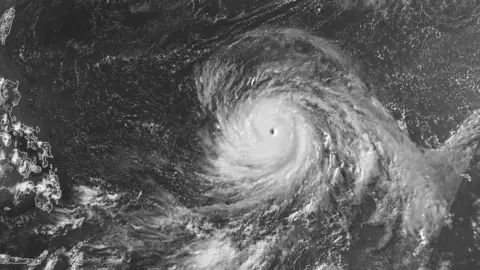
Bavi has been classified as a super typhoon by the Joint Typhoon Warning Center (JTWC), a part of the US Navy responsible for monitoring tropical storms in the western Pacific.
A super typhoon has winds in excess of 130 knots (150mph). JTWC predicts that Bavi will have winds of 150 knots (173mph) when it arrives over the islands, with gusts reaching as high as 180 knots (207mph).
The NWS considers super typhoons to have the equivalent destructive potential as a category four or five hurricane.
Pinky Cubacub, 55, told news agency AFP that she had been boarding up the windows of her eatery in Guam with $500 (£373) worth of plywood.
“I cannot afford to lose so many days. It hurts,” she said. “Because I just started, whatever we’re making right now is just for rent, utilities, and my people, and supplies. I don’t even pay myself yet.”

Japanese tourist Miku Sakurai, 25, told AFP that her return flight to Tokyo on Sunday had been cancelled. “We will stay in the hotel when the storm comes. I am scared,” she said.
Bavi will be the 11th category four or five tropical cyclone to hit US territory in the past decade – one more than the total recorded in the prior 57 years.
A strong El Niño event – a periodic warming of an area of surface water in the Pacific that contributes to weather patterns – is expected to push more tropical storms into these higher intensities.
Guam and the Northern Mariana Islands have already experienced one super typhoon this year – Sinlaku in April, which killed 17 people and caused about $1.5bn (£1.1bn) in damage.
Warmer sea surface temperatures drive more moisture into the atmosphere, supercharging storms.
[BBC]

England no match for ruthless Australia

Djokovic breaks Federer’s Wimbledon record to reach quarters

Australia bowl in final, both teams unchanged

Evacuations in Guam as super typhoon Bavi approaches

India A win series after Gurnoor Brar demolishes Sri Lanka A

China and Russia to hold annual joint naval drills

‘Dates have the highest sugar content to fight Coronavirus’

Sunday Island 27 December – Headlines

#SundayIsland 17th December – Headlines

Sunday Island – 28th March

Sunday Island Headlines – 21 March

Sunday Island – 21st February – Headlines
-

 News7 days ago
LAWASIA warns against ad hoc initiative to increase judges’ retirement ages
-

 Features6 days ago
Climate action to bring South Asia together
-

 News6 days ago
Chamuditha to seek removal of injunction on Youtube programme
-

 News21 hours ago
Singapore-based Buddhist monk marks nearly four decades of humanitarian service
-

 News2 days ago
Freedom 250: US Embassy celebrates America’s 250th Independence Day through magic of American cinema
-

 News3 days ago
CIABOC to question Harak Kata on Rs. 200 mn bribery allegation
-

 News3 days ago
SLAF conducts successful rescue mission under UN command in Central African Republic
-

 Midweek Review5 days ago
H’tota port’s strategic status remains focal point of geopolitical scrutiny