
Foreign News
Tehran selling deal with US as victory – but for Iranians it was necessity

Iran’s leadership is trying to present its emerging memorandum of understanding (MoU) with the US not as a retreat, but as the result of resistance and victory. That is not an easy argument to make.
The country has just gone through a damaging war, the economy is under severe pressure, and parts of the Islamic Republic’s own support base have spent months denouncing any compromise with Washington.
There are also Iranians, both inside the country and abroad, who see the crisis not as a moment for diplomacy, but as an opportunity for regime change.
This is the divided political landscape in which Tehran is now trying to sell the deal.
Senior Iranian officials have framed the deal as a win. Mohammad Bagher Qalibaf, the Speaker of parliament and the leading Iranian figure in the talks, said Iran had taken “a long step towards final victory”.
President Masoud Pezeshkian has described the understanding as potentially transformative, saying that if fully implemented it could resolve many of Iran’s problems and create “a different world” in Iran and the Middle East.
Qalibaf’s role is significant because he is not identified with Pezeshkian’s moderate camp; his public support suggests the deal has backing from more powerful parts of the system even within Islamic Republic Revolutionary Guards.
The leadership is also presenting the agreement as a victory because, in Tehran’s argument, the US and Israel failed to achieve their main objectives.
They did not force Iran into surrender, did not remove the Islamic Republic from power, did not end Iran’s nuclear programme through military action, and did not break Iran’s links to Hezbollah.
Instead, Iran is still at the negotiating table, with Lebanon included in the framework and sanctions relief being discussed.
But this official narrative is contested inside Iran.
One hard-line MP, the deputy chair of parliament’s National Security Committee, has reportedly described the draft deal as a document that would turn Iran into an American colony.
He also accused negotiators of ignoring the supreme leader’s directive not to re-open the Strait of Hormuz to shipping.
That criticism matters because it does not come from outside the system. It comes from within one of the institutions meant to oversee national security.
For months, hard-line voices in parliament, state-aligned media and nightly pro-government gatherings have argued that the US cannot be trusted.
They point to the fact that diplomacy was still taking place shortly before the war began, and say the Trump administration used negotiations as cover while Israel and the US prepared military action. For them, any deal with Washington risks looking like appeasement.
Yet some of these voices appear quieter now. That may suggest that the decision to proceed has been authorised from the highest levels of the state. It does not mean there is full unity.
It might suggest that, for now, the centre of power has judged that the cost of rejecting a deal may be greater than the cost of absorbing hard-line anger.
Economic pressure is central to that calculation.
Iran’s leadership may present the agreement as the result of military leverage, including pressure around the Strait of Hormuz and attacks on US and regional energy interests. But the economy has also forced Tehran’s hand.
The war, sanctions, restrictions on shipping, reduced access to oil markets and hard currency, and very high inflation have all squeezed the country and ordinary Iranians.
For many families, the question is not whether the agreement sounds like victory, but whether it lowers prices and reduces fear of another round of war.
US Vice-President JD Vance has said Iran would not receive taxpayer money but could gain access to billions of dollars if it fulfills its commitments and sanctions are eased. That allows Tehran to sell the deal as a path to investment and reconstruction rather than dependency on America.
Still, the risks are obvious. The details of the memorandum have not been fully published, and negotiations are expected to begin in Switzerland on Friday.
The most difficult issues, the future of Iran’s enriched uranium, the level of enrichment allowed, verification, sanctions relief, Hormuz and Lebanon, remain to be discussed in the talks.
There is also uncertainty over Israel. Its prime minister, Benjamin Netanyahu, has rejected reports that Israel will withdraw from southern Lebanon, saying Israeli forces will remain in Lebanon for as long as necessary.
Donald Trump, meanwhile, has publicly criticised Israel’s conduct in Lebanon, saying too many people have been killed. He also said he was unhappy with an Israeli strike on Beirut shortly before the Iran-US deal was reached, while insisting his relationship with Netanyahu remained excellent.
For Tehran, this visible friction between Washington and Israel is useful. It can be presented as evidence that Iran’s pressure has complicated Israel’s freedom of action. But it also makes the deal fragile.
If Israel continues operations in Lebanon, Iran will face pressure to respond. If Washington cannot restrain Israel, Tehran’s claim that Lebanon is covered by the memorandum may quickly be tested.
The reaction from BBC Persian’s audience suggests the official victory narrative is landing unevenly.
One audience member said they had been very worried about another Israeli attack, but even after hearing about the agreement, they had “no trust” and were worried about whether the country would be properly managed if the deal lasted.
Another anti-regime Iranian, who initially supported US military action, asked what the US attack had achieved, since if it did not lead to political change in Iran: “Our hope was that the ruling system would change. But apart from misery, inflation, and further damage to the economy, what benefit did it have for people?”
Others were more sympathetic to the government’s line. One audience member described Iran as the winner, saying the war showed sanctions are lifted not through “begging”, but through the use of power.
Another welcomed the agreement more cautiously, saying it allowed people to return to work and life with greater peace of mind. “I think it is temporary,” they said, “but we needed a few months of breathing space and calm.”
That may be the most realistic reading. The Islamic Republic is selling the deal as victory because it cannot easily sell it as necessity.
But for many Iranians, its success will not be measured by slogans. It will be measured by whether the war stops, whether prices ease, whether sanctions relief arrives, and whether the leadership can manage the next phase without another sudden escalation.
[BBC]

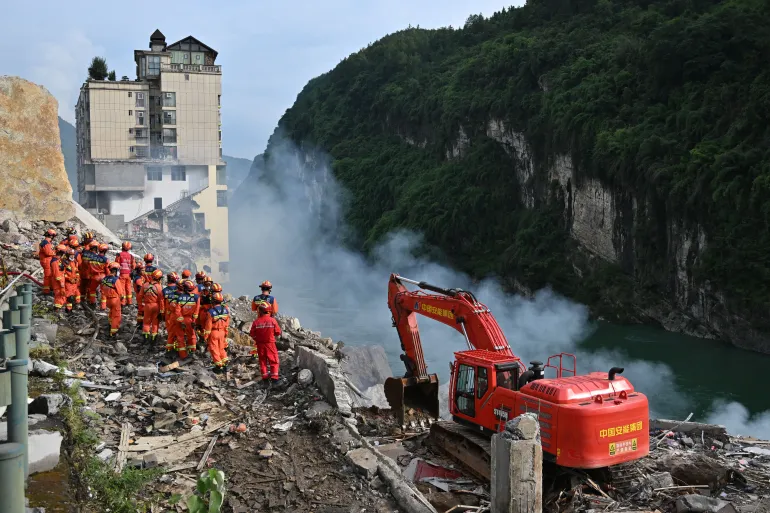
Rescuers are rushing to locate dozens of people missing in the southwestern Chinese city of Chongqing, after a deadly landslide buried homes in the area, according to Chinese authorities.
The landslide took place around 9:10am (01:10 GMT) on Friday in Chongqing’s Pengshui county, killing eight people, leaving 34 unaccounted for and displacing more than 1,100, reported state media.
Footage shared by China’s CCTV broadcaster showed a huge buildup of rocks and dirt covering part of a residential and commercial street at the bottom of a mountain in the region.
Ten people have been rescued from the debris, including two who are seriously injured, reported China’s state-run Xinhua news agency.
Water, electricity and gas supplies were cut off within a one-kilometre (0.6-mile) radius of the landslide to prevent further disruptions. More than 800 rescuers have gone to the site, reported CCTV.

Authorities said they sent more than 8,000 disaster relief items to Chongqing, including tents, folding beds and family emergency kits.
Pengshui county is located in the southeast part of Chongqing, bordering the provinces of Hubei and Guizhou.
The area where the landslide happened is known for “unpredictable” steep terrain, a local official told a news conference, adding that dangerous rocks remain along the sides of the cliff.
The government has allocated 50 million yuan ($7.36m) in natural disaster relief funds to support the rescue and relief operations and to provide assistance to affected residents, the Ministry of Finance and the Ministry of Emergency Management said.
[Aljazeera]

Almost 5,000 people are known to have died in two earthquakes that devastated Venezuela in June, but the United Nations estimates that as many as 50,000 people may still be missing – with many feared buried under rubble.
The number of confirmed deaths is now higher at 4,930, lawmaker Jorge Rodriguez announced on Thursday
The disaster almost a month ago impacted tens of thousands of others. Nearly 17,000 people are wounded, and 21,120 are living in shelters.
Venezuelan teams have been operating since the earthquake struck, but locals say their response has been slow.
“From the very first moment, from when the earthquake happened, there was an immediate response, but from civilians. Civilians and independent people. The state’s response is only being seen now,” Cinthia Pulido, a Venezuelan displaced by the earthquakes, told Al Jazeera. “We’re watching and waiting for some kind of answer.”
International rescue teams sent in the immediate aftermath of the disaster have left as the focus moves to providing humanitarian relief.
“The little I can get is just for me to survive, support my children, and help my mum,” Louismarez Paez, who has also been displaced, told Al Jazeera.
Her mother, she said, does not receive any assistance other than that which she herself provides.
Venezuela has ‘crucial resources’ it cannot access
Venezuela has faced tight US sanctions since 2015, which experts say is making the government’s job even harder.
“Venezuela has crucial resources that it is not being allowed to access,” Mark Weisbrot, senior economist and co-director at the Center for Economic and Policy Research, said.
That includes $11bn blocked by the US and European countries that Venezuela “should legally have”, Weisbrot said.
Earlier this week, a group of 14 Democratic lawmakers in the US sent a letter urging the White House to ease economic sanctions on Venezuela to aid recovery efforts, according to a report from Spanish newspaper El Pais.
The sanctions, they wrote, are “severely hampering urgent relief efforts” and have “severely undermined the country’s response and reconstruction efforts”.
The UN estimates that the recovery efforts in Venezuela could cost the country $37bn.
[Aljazeera]
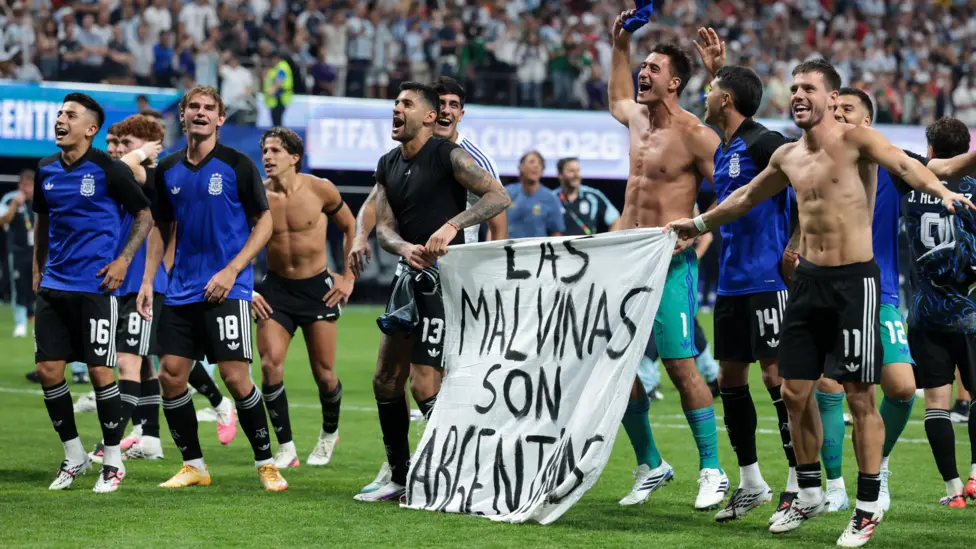
Argentina face the prospect of a Fifa fine after their players celebrated the World Cup semi-final win against England with a banner in support of their country’s claims to the Falkland Islands.
The defending world champions produced a dramatic late comeback in Atlanta, scoring twice to defeat Thomas Tuchel’s side 2-1 and book a showdown with Spain in Sunday’s final.
After the final whistle, Argentina players celebrated while holding a banner reading “Las Malvinas son Argentinas”, which translates as “The Falklands are Argentine”.
The Falkland Islands, a British overseas territory in the south-west Atlantic Ocean, remain the subject of a sovereignty dispute between Britain and Argentina.
The two nations went to war over the group of islands, situated 300 miles off Argentina’s east coast, from April to June 1982.
The 74-day conflict led to the deaths of 655 Argentine and 255 British servicemen. Three people from the islands also died.
In 2014, Fifa fined the Argentine Football Association 20,000 pounds after its players held up a banner with the same message before a friendly against Slovenia.
World football’s governing body said the gesture had breached rules on political action and team misconduct.
[BBC]

Davis cup Asia/Oceania Group IV 2026 to be held in Colombo from 20th to 25th July

Navy brings fisherman in distress off Pothuvil, ashore

Malinga, Asalanka seal Galle Gallants win in LPL opener

Showers may occur in the Western, Sabaragamuwa and North-western provinces and in Kandy, Nuwara-Eliya, Galle and Matara districts

Dengue outbreak gallops ahead: Infections surpasses 73,455, leaving 50 dead

Evidence recorded in money laundering case against Yoshitha Rajapaksa

‘Dates have the highest sugar content to fight Coronavirus’

Sunday Island 27 December – Headlines

#SundayIsland 17th December – Headlines

Sunday Island – 28th March

Sunday Island Headlines – 21 March

Sunday Island – 21st February – Headlines
-
 Features6 days ago
Prison riots and politics: NPP’s biggest challenge and Sri Lanka’s biggest opportunity
-
 Features3 days ago
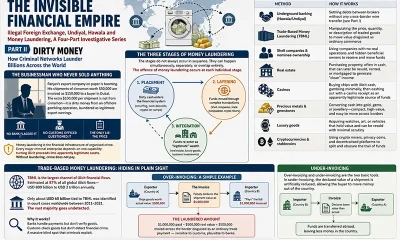
Dirty Money
-

 Editorial6 days ago
Much ado about crime: Fish or cut bait
-
 Features6 days ago
More on Saudi Arabia: ARAMCO and beyond
-

 Sports6 days ago
The banker who rescued Sri Lankan cricket
-

 News1 day ago
Money laundering case against Yoshitha, fixed for pre-trial conference
-
 Midweek Review3 days ago
The sordid tale of theft and tragedy at Finance Ministry
-
 Latest News4 days ago
Oil prices hit 1-month high as US-Iran attacks dim Strait of Hormuz outlook