
Features
Harmonising CBSL’s pragmatism with long-term structural freedom

Beyond the Forex Crossfire:
“The emergency measures of today have a way of becoming the permanent institutional arrangements of tomorrow, unless we actively dismantle them.” — Friedrich Hayek (Nobel Prize-winning Economist & Author of ‘The Road to Serfdom’)
Introduction: The Anatomy of a Dual Narrative
Parliament recently witnessed a fierce macroeconomic clash over the Central Bank of Sri Lanka’s (CBSL) latest Extraordinary Gazette, which accelerated the mandatory conversion of residual export proceeds by the 10th day of the following month. Main Opposition MP Dr. Harsha de Silva vehemently challenged the rationale, questioning whether Sri Lanka was declaring a psychological return to the “crisis era” of 2022–2024.
Almost instantly, the financial markets responded: the Sri Lankan Rupee (LKR) strengthened sharply against the US Dollar, bouncing back to roughly Rs. 330. To the average observer, this creates a profound paradox. How can a policy be criticised as “draconian” and “anti-business” yet yield immediate, positive numerical results? The answer lies in a deep analytical blind spot that dominates public perception. My view is that the public is being forced to choose between two valid, yet seemingly contradictory, economic realities. In short, this article introduces a clear theoretical framework—”Macro-Structuralism vs. Micro-Pragmatism”—to establish new economic knowledge and elevate the conversation above routine political mudslinging.
The Public Blind Spot: Why the Majority Misunderstands the Debate
The fundamental reason the wider public struggles to comprehend this debate is that macroeconomic communication in Sri Lanka is routinely reduced to binary political theater. One side celebrates a strengthening rupee as an absolute victory; the other side decries capital controls as an absolute failure.
In reality, the public fails to recognise that the CBSL and its critics are looking at two different halves of the exact same coin:
· The CBSL operates in the immediate present, focusing on micro-market mechanics to prevent speculative currency hoarding.
· The Opposition focuses on the future, prioritising structural reputation, investor predictability, and international market signals.
Without an analytical framework that links these two perspectives, the public views the issue as a mere partisan disagreement, rather than a sophisticated technical trade-off between short-term stabilisation and long-term economic development.
Micro-Pragmatism: The Financial Justification for CBSL’s Directive
From a technical central banking perspective, the CBSL’s intervention was not only justified but textually necessary. As expectations of rising dollar demand grew—fuelled by discussions surrounding vehicle import liberalisations—exporters began acting as rational corporate agents. Anticipating a potential depreciation of the rupee, they held onto their foreign currency cushions.
This behaviour, while commercially logical for individual firms, triggers a collective crisis: it starves the domestic market of dollar liquidity, creating an artificial shortage that forces the rupee down. When “moral suasion”—informal requests and agreements with commercial banks—fails to change corporate behaviour, the Central Bank must utilise its statutory power. By implementing a strict legal timeline, the CBSL shattered the speculative loop, forced hoarded liquidity back into the banking system, and protected the domestic economy from an inflationary currency shock.
Macro-Structuralism: The Core of the Opposition’s Critique
Conversely, Dr. Harsha de Silva’s critique carries significant weight when viewed through the lens of long-term investment attraction. His argument is built on Macro-Structuralism: the idea that a nation’s regulatory reputation dictates its future growth trajectory.
In my view, forced conversion rules are indisputably crisis-management tools. When an economy enters a normalisation phase, continuing to deploy emergency administrative mandates signals to the global capital market that the domestic financial ecosystem remains fragile and unpredictable. If exporters feel their residual profits are subject to abrupt state appropriation, it introduces policy risk. The long-term danger is (i) capital flight (ii) businesses may under-invoice exports, (iii) delay legal repatriation, or shift their corporate headquarters to hyper-predictable regional hubs like Dubai or Singapore, structurally reducing Sri Lanka’s long-term foreign exchange inflows.
Global Precedents: Compulsion vs. Liberalisation
To understand where Sri Lanka stands, we must look at how the rest of the world navigates this delicate balance (See Table 1):
The global lesson is unambiguous: While administrative compulsion can serve as a temporary emergency buffer—a practice tolerated by the IMF during economic stabilisation phases—no nation has ever achieved sustainable, high-growth status by continuously dictating how private enterprises manage their residual revenue.
The Liquidity Jam: Connecting the SVAT and Conversion Debates
This tension is not new; it mirrors the previous parliamentary friction regarding the abolition of the Simplified Value Added Tax (SVAT). Under pressure from the IMF to eliminate revenue leakages and tax evasion, the government dismantled SVAT. Dr. de Silva vigorously opposed this move at the time—a stance critics labelled as mere populism.
However, I think that the structural link between the SVAT debate and the current export conversion mandate is undeniable. By abolishing SVAT, the state forced exporters to pay taxes on inputs upfront and wait indefinitely for bureaucratic refunds, locking up their domestic liquidity. Now, by tightening the conversion rule, the state is simultaneously restricting its foreign-currency liquidity. When a government squeezes a country’s primary engine of growth—its exporters—from both the domestic tax and foreign-exchange sides, it risks stalling the very development initiatives it aims to protect.
The Balanced Blueprint: Creating a Scaffolding Transition
The path to true, sustainable economic growth requires transitioning from regulatory coercion to institutional stability. The CBSL’s strict conversion directive should not be viewed as a permanent feature of Sri Lanka’s economic policy, but rather as temporary stabilising scaffolding.
To balance immediate financial safety with long-term investor confidence, I think that the state must implement a benchmark-driven policy framework:
· Conditional Sunset Clauses: The CBSL should formally tie the expiration of the mandatory 30-day conversion rule to clear, objective macroeconomic milestones—such as reaching six months of import reserve cover. This transforms a “draconian rule” into a predictable, transparent transitional mechanism.
· Automated VAT Refund Bridges: To alleviate the cash-flow pressure caused by the removal of SVAT, the Ministry of Finance must implement an automated, digital tax-refund system that guarantees input refunds to compliant exporters within 14 days. If the state demands its dollars quickly, it must return its tax cash flows just as rapidly.
· Incentive-Driven Retention (Moving from Force to Reward): Instead of using legal mandates to force dollar conversion, the financial system should use market rewards. Commercial banks must design competitive, inflation-adjusted, rupee-denominated investment products specifically tailored for exporters. To a business, money behaves like water—it flows where it is treated best. If the Central Bank manages the domestic currency competently so it holds its value, and commercial banks offer attractive, high-yielding rupee accounts that beat inflation, market players will choose to convert their dollars voluntarily to maximize their profits. When the rupee becomes a lucrative asset to hold, draconian administrative mandates naturally become obsolete.
Summary
The ongoing debate in Parliament over the Central Bank of Sri Lanka’s (CBSL) sudden tightening of export proceeds conversion rules highlights a fundamental tension in national policy. While the main Opposition, represented by Dr. Harsha de Silva, warns that forced residual conversions mark a return to “crisis-era” draconian dictates that deter investors, the CBSL’s actions have curbed exchange-rate speculation and stabilised the rupee. This article argues that the general public is trapped in an unnecessary dichotomy because political discourse fails to separate Micro-Pragmatic FX liquidity management from Macro-Structural economic signalling. In my view, by transitioning from regulatory compulsion to institutionalised trust, Sri Lanka can balance short-term currency stability with long-term, export-led growth. This is our aspiration.
Conclusion: Trust as the Ultimate Economic Currency
Ultimately, a country cannot build a competitive, export-led economy on a foundation of legal mandates and constant regulatory interventions. While the Central Bank fulfilled its immediate duty by intervening to break a speculative cycle and defend the rupee, the Opposition’s warnings about investor psychology are valid.
True economic modernisation requires recognising that short-term micro-pragmatism and long-term macro-structuralism are not mutually exclusive. By converting the current restrictive mandates into a transparent, transitional framework supported by aggressive tax digitization, Sri Lanka can move beyond reactionary crisis management. In my view, the ultimate goal of national economic planning must be to cultivate an environment in which local and international capital remains in the country, not because a Gazette mandates it, but because institutional trust demands it.
(The writer, among many, served as the Special Advisor to the Office of the President of Namibia, from 2006 to 2012, and was a Senior Consultant with the UNDP for 20 years. He was a Senior Economist with the Central Bank of Sri Lanka (1972-1993). He can be reached via asoka.seneviratne@gmail.com)
By Prof. Asoka S. Seneviratne



When discussions turn to Sri Lanka’s freshwater fish diversity and the urgent need to conserve it, attention is often focused on rivers, streams, reservoirs and water quality.
Yet scientists are increasingly finding that what happens on the land surrounding these waterways can be just as important as what happens in the water itself.
A recent study led by researcher Janamina Bandara of the Wildlife Conservation Society, Galle, together with researchers Sudath Nanayakkara and Sahan Randeniya, highlights how changes in forest cover caused by human activities can significantly influence freshwater fish populations in the hill streams surrounding the Sinharaja rainforest.
Their research sheds light on a relatively understudied aspect of tropical freshwater ecosystems—how alterations to vegetation cover, particularly through commercial cultivation such as tea and cardamom plantations, affect fish communities inhabiting headwater streams.
Hidden Riches of Tropical Streams
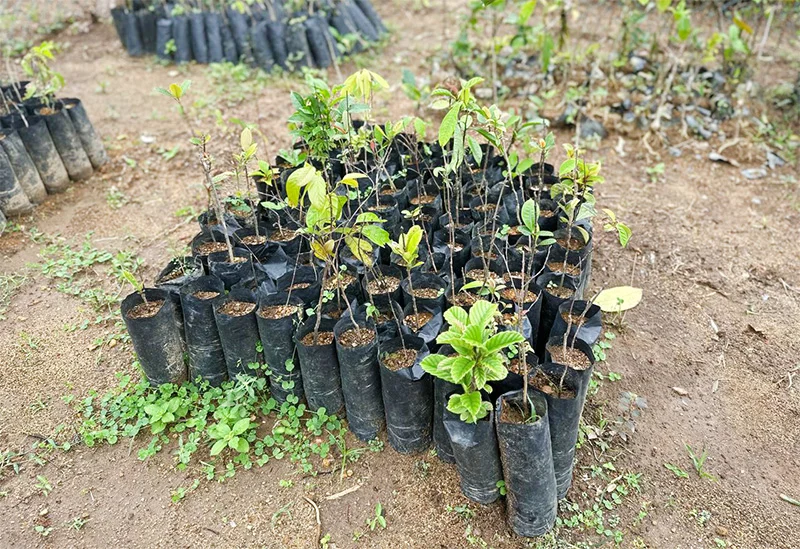
Forest plant saplings
Sri Lanka’s freshwater ecosystems are globally recognised for their remarkable biodiversity and high levels of endemism. However, despite their ecological significance, many ecological processes operating within these habitats remain poorly understood.
“Freshwater ecosystems in the tropics harbour extraordinary biodiversity, but many of the ecological relationships within these systems are still not fully documented,” researcher Janamina Bandara told The Island.
The study focused on sub-montane streams in the Sinharaja landscape, examining how varying levels of forest cover influence freshwater fish assemblages.
Researchers investigated whether fish communities differed between streams flowing through relatively undisturbed forests and those surrounded by modified vegetation resulting from agricultural activities.
Spotlight on a Critically Endangered Species
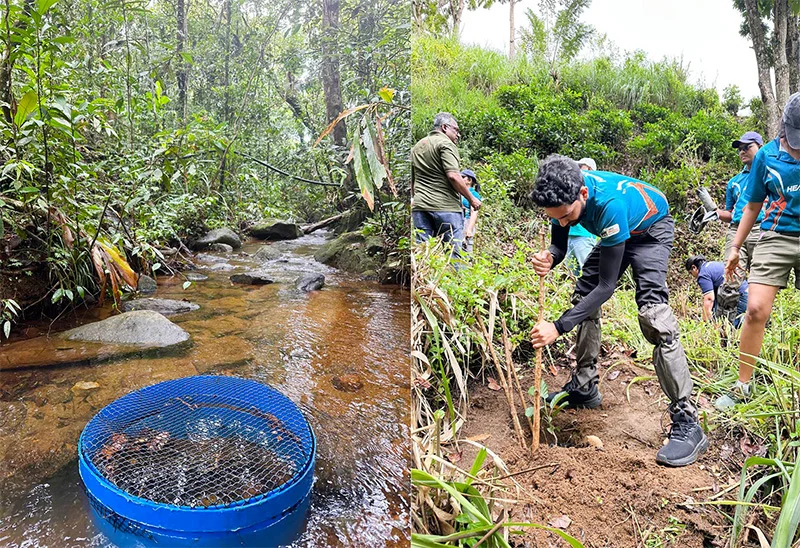
Leaf litter bay / Restoration activities
Particular attention was given to the critically endangered Rakwana loach (Schistura madhavai), a highly restricted endemic fish species first described from the Suriyakanda-Rakwana region.
Commonly referred to as a hill-stream loach, the species inhabits clear, fast-flowing streams and is considered highly sensitive to environmental disturbances.
According to Bandara, while broad community-level analyses did not reveal dramatic differences across all fish populations, species-specific responses painted a very different picture.
“Our findings show that Schistura madhavai exhibits a clear preference for streams flowing through intact forest habitats,” he explained. “The species becomes less common in areas where surrounding vegetation has been altered by human activities.”
Why Forests Matter to Fish
Forests bordering streams play multiple ecological roles. They regulate water temperature by providing shade, contribute organic matter that supports aquatic food webs, stabilise stream banks and help maintain water quality.
When these forests are removed or replaced with plantation crops, the resulting environmental changes can cascade through freshwater ecosystems.
Bandara noted that altered forest cover can influence water chemistry, microclimatic conditions, stream-bed composition and the availability of food resources.
“As riparian vegetation changes, a series of environmental conditions within the stream also change. Sensitive species such as Schistura madhavai appear particularly vulnerable to these shifts and may gradually disappear from modified habitats,” he said.
The research suggests that even subtle changes in habitat structure can have disproportionate impacts on species with narrow ecological requirements.
The Importance of Looking Beyond Numbers

Schistura madhavai
One of the most intriguing findings of the study is that ecosystem degradation may not always be apparent when scientists assess entire fish communities collectively.
In some instances, environmental variables appeared to have little effect on overall fish abundance or diversity. However, when individual species were examined separately, clear patterns emerged.
For example, variations in the amount of detritus—organic matter that accumulates on stream beds and serves as a vital food resource—did not significantly affect the overall fish assemblage. Yet for certain species, including habitat specialists, such changes proved critically important.
“This highlights a key conservation challenge,” Bandara said. “If we only look at total fish numbers or community-wide patterns, we may overlook serious declines occurring among environmentally sensitive species.”
Indicator Species as Ecological Sentinels
The findings underscore the importance of using so-called “indicator species” in environmental monitoring programmes.
Indicator species are organisms whose presence, absence or abundance reflects the health of an ecosystem. Because they respond rapidly to environmental change, they can provide early warnings of ecological degradation.
The Rakwana loach appears to fit this role exceptionally well.
“Species with narrow habitat requirements often act as ecological sentinels,” Bandara observed. “Monitoring them can provide a much clearer picture of ecosystem health than relying solely on broad biodiversity assessments.”
For conservation practitioners, this means that protecting sensitive endemic species may also help safeguard entire freshwater ecosystems.
Restoring Streamside Forests
Perhaps the study’s most important conservation message concerns the restoration of degraded riparian forests—the vegetation growing alongside streams and rivers.
Researchers argue that restoring these streamside habitats should be a priority in freshwater biodiversity conservation efforts.
Healthy riparian vegetation provides shade, reduces erosion, filters pollutants, enhances habitat complexity and supports the intricate ecological interactions upon which aquatic life depends.
“The restoration of degraded riparian forests is likely to be one of the most effective conservation measures for protecting freshwater biodiversity,” Bandara emphasised.
Such efforts could prove particularly valuable in landscapes where agricultural expansion has fragmented natural habitats.
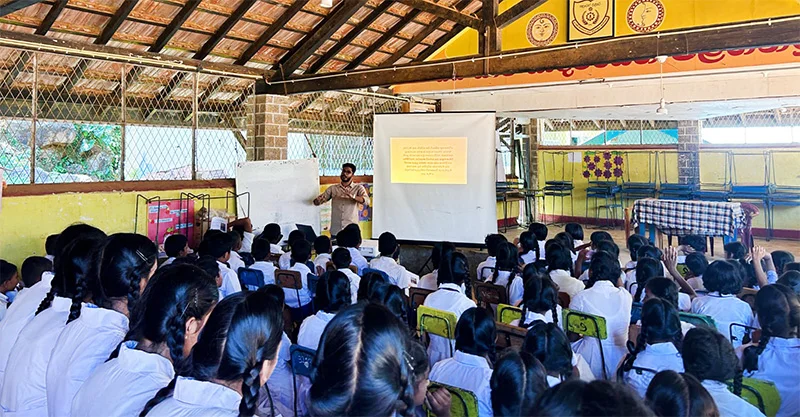
Awareness sessions
A Broader Lesson for Conservation
The study offers a timely reminder that freshwater conservation cannot be achieved by focusing exclusively on water bodies themselves. The surrounding landscape matters immensely.
From the mist-laden streams flowing down the Sinharaja foothills to the countless rivulets nourishing Sri Lanka’s river systems, the fate of freshwater biodiversity is intimately linked to the health of adjacent forests.
As conservationists grapple with accelerating habitat loss and climate-related pressures, the research demonstrates that protecting and restoring forest cover may be just as important as safeguarding the streams themselves.
In the case of the elusive Rakwana loach, the message is clear: save the forest, and you may save the fish.
For Sri Lanka’s unique freshwater biodiversity, that lesson could not be more important.
By Ifham Nizam
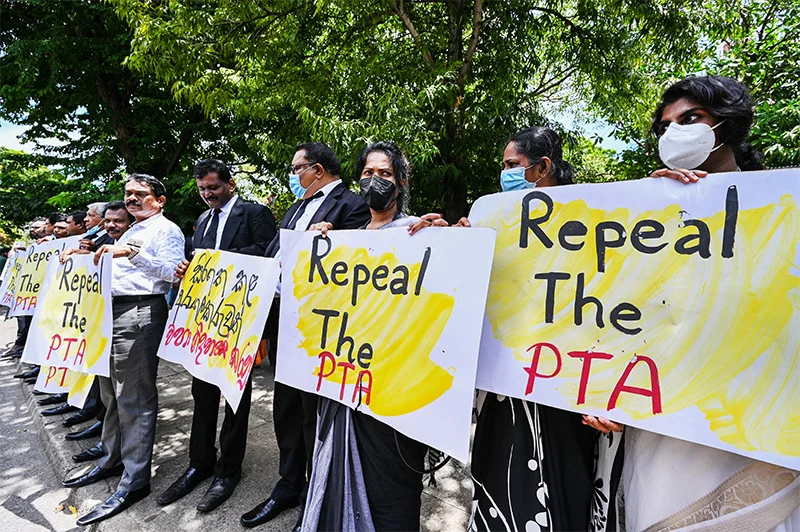
Sri Lankans have reason to take satisfaction in their country’s latest international achievement. Sri Lanka has climbed 14 places in the 2026 Global Peace Index to rank 67 in the world out of 163 countries that were assessed. At a time when global peacefulness is reported to be at its lowest level since the inception of the Index, and when more countries are experiencing deterioration than improvement, Sri Lanka’s progress stands out. The ranking reflects the country’s recovery from nearly three decades of war, its efforts to strengthen political stability and public security, and its resilience in overcoming the economic and political crises of recent years. The Global Peace Index assesses the strength of institutions, societal safety and security, and the capacity of societies to manage conflict peacefully.
The challenge is to consolidate the gains that have been made and address those unresolved issues that continue to cast a shadow over the country’s future. It is in this context that two recent announcements by the government assume particular significance. Foreign Minister Vijitha Herath has announced that the Prevention of Terrorism Act (PTA), one of the most controversial laws in the country, will be repealed and replaced within two months. A report prepared by a committee appointed to make recommendations has already been handed over to him. According to the minister, the new legislation, to be known as the State Prevention of Terrorism Act, incorporates recommendations from civil society and is intended to comply with international standards on counter terrorism.
At the same time, Justice and National Integration Minister Harshana Nanayakkara has reaffirmed the government’s commitment to uncovering the truth about missing persons. During a visit to the Chemmani mass grave excavation site in Jaffna, he stated that the excavations should be completed expeditiously so that justice can be done and assured that the necessary resources have been allocated for the task. The excavations are taking place under judicial supervision with the participation of forensic experts, archaeologists, lawyers and representatives of the Office on Missing Persons. These commitments made by the government address two of the most contentious issues that have troubled Sri Lanka for decades. They also suggest that the government believes the country is now in a position to deal with difficult questions from its past rather than postpone them indefinitely.
After Breakthroughs
The timing of the pledge to repeal the PTA is particularly noteworthy. For many years successive governments promised to replace the law but failed to do so. Sri Lanka undertook to repeal it in 2017 as part of its commitments linked to retaining GSP Plus trade concessions by the European Union. Yet despite repeated assurances the law remained in force. The question therefore arises as to why the government now appears determined to act. One possible explanation is that the Easter Sunday investigations have reached a decisive stage. The investigation into the bombings that killed more than 260 people in 2019 appears to have made significant breakthroughs. If these investigations continue along their present course, it is possible that accountability will extend beyond those who directly carried out the attacks to those who may have facilitated, enabled or been part of a wider criminal conspiracy.
There is broad agreement within society that those who masterminded the dastardly Easter bombing must be held accountable and that the victims deserve the truth and justice. However, it is important that the process by which responsibility is determined is seen by the public to be fair, lawful and impartial. If those accused are convicted following a transparent judicial process that respects due process and the rule of law, the outcome is far more likely to gain acceptance across society. This is where the repeal of the PTA becomes important. A transition from a law associated with prolonged detention and exceptional powers to one that is more consistent with human rights standards would strengthen rather than weaken the legitimacy of the investigations. Accountability obtained through a process that is visibly fair will be more durable and less vulnerable to allegations of political motivation or selective justice.
The Chemmani excavations may also provide an example of how such credibility can be built. The process is taking place under judicial supervision and in full public view with the participation of independent experts. Whatever conclusions emerge, and follow up action is decided on, the process itself should command respect because it is transparent and accountable. The same principles can be applied to the Easter Sunday investigations. Public confidence is strengthened when investigations are conducted openly, when legal safeguards are respected and when the rights of both victims and accused persons are protected. The significance of these investigations may extend beyond the tragedy itself. There is likely to be an overlap between those who are eventually found responsible for the Easter Sunday conspiracy and elements of the state apparatus that exercised power during the final stages of the war.
Setting Precedent
For many years Sri Lanka has struggled to address allegations of wartime abuses. The issue has remained politically sensitive because it touches upon the conduct of those who were regarded by many as wartime heroes. Yet if the Easter Sunday investigations establish that senior officials can be investigated and held accountable when evidence warrants it, an important precedent will have been set. Once the deck is cleared through the Easter Sunday investigations and the judicial process that follows, it may become less difficult to address allegations relating to wartime abuses, including those connected to sites such as Chemmani where evidence is now being painstakingly uncovered. This would also strengthen Sri Lanka’s position internationally.
Since the end of the war in 2009, the country has remained under varying degrees of scrutiny by the United Nations Human Rights Council. In October 2025, the Council renewed the mandate of the Office of the High Commissioner for Human Rights to continue collecting and preserving evidence relating to past violations. The next review of Sri Lanka is due in September this year. The government now has an opportunity to demonstrate that Sri Lanka is capable of addressing difficult issues through its own institutions and according to its own democratic values. The commitments to repeal the PTA and to pursue investigations into missing persons can be seen in that light. Those who were victimized query as to what happened to their loved ones and to the information they know full well they entrusted to the government authorities and to the commissions of inquiry that were appointed. These are opportunities to show that accountability and national ownership can go hand in hand.
Reconciliation requires the difficult task of remembering truthfully. Too often Sri Lanka has sought stability by postponing difficult questions. Yet unresolved grievances do not disappear. They persist across generations and continue to shape political attitudes and communal relationships. Sri Lanka’s rise in the Global Peace Index is an achievement worth celebrating. But the true measure of peace is not only the absence of conflict. It is the presence of justice, trust and confidence in public institutions. The government’s commitments on PTA repeal, the Easter Sunday investigations and the search for truth regarding the disappeared suggest an awareness that old approaches have run their course. The government has an opportunity to break with the patterns of the past. The test now lies in implementation.
by Jehan Perera

 The biggest part of the challenge of a critical scholar in the humanities is having to engage critically with the very realities that define her existence as a social being. She cannot even begin to comment on the focus of her study without creating shock waves that would hit her own self in some form. One could argue that the scholars in the field of the humanities are part of what is being studied in one way or another. Critical scholarship in those fields entails destabilising the ground beneath their own feet.
An essential part of scholarly inquiry is being able to objectify what is being studied and examine it closely but at a distance, that, too, in a manner that scholar’s personal biases do not affect the judgement. Any failure to comply with this requirement immediately brands the study as unscientific. To try to understand this using an example situation, I would assume that a scientist who experiments with sodium and chlorine as chemical elements have the privilege of entering the experiment without any personal and emotional ties to either of the elements, placing one element in contact with the other without having to raise questions about her own existence, and observing and recording the outcome of the experiment without having to simultaneously examine what sort of implications the outcome has had for her as a person. The findings of the experiment may certainly advance her/him in the domain of science, but it is unlikely that the outcome of the study would result in any transformation within her as a social being.
The same privilege is not available for the (critical) scholars in the humanities. What chemical elements are for the scientist, the different social, political, cultural, gender, ethnic, racial, and religious identities are for those in the humanities. What the controlled, and also largely predictable, laboratory environment is for the scientist, the uncontrolled, even erratic, society is for those in the humanities. What the scientific experiments where the composition and behaviour of the individual chemical elements are explored is for the scientist, a close examination of phenomena and topics that cut across the categories of the social, the political, the cultural, and the religious is for those in the humanities.
The relatively clear differentiation or separation that is there between the scientist’s personal space and the laboratory setting where she conducts her research is not there in the case of her counterpart in the humanities. The latter does not have a separate laboratory setting that she can step into from her personal space, as the social space, which is her site of research, has her personal space already embedded in it. The freedom that the scientist has to cut herself off from what shapes her existence as a social and political being, as she enters her laboratory, is not available for her counterpart in the humanities, for the simple reason that the social and the political, which define her life outside her research, is also at the core of what they engage with in their research. Even in a setting where the latter locks herself up in a room and cuts herself off from the rest of society, the social and the political continue to define both her perspective and the object of study. Even the most effective scientist (but may not be the ideal scientist) has the option of taking her life, defined by the social, the political, the cultural and the religious, for granted, as her success is measured purely on the basis of her scholarly output; however, even the most ineffective scholar in the humanities would have to acknowledge the nexus between her personal life and her scholarly life, explicitly or implicitly, and her engagement with the chosen object of study will entail some sort of an engagement with her existence.
To use an example from the field of language studies which my work is primarily in, New Varieties of English, like what is called Sri Lankan English, is a topic that I try to engage with in both my teaching and research. Approached from a critical point of view, Sri Lankan English as a New Variety of English is more a political category than a linguistic one. The claims that you make may be based on linguistic evidence, but the conceptualisation of a separate form of English as Sri Lankan English even on the basis of objective linguistic evidence is primarily a political claim. The creation of such a category invariably results in a reconfiguration of the linguistic terrain of the country. Every claim that is made in favour of Sri Lankan English as a category results in a certain destablilisation of Sinhala and English, which are my first language and second language respectively, and the tense relations between which two languages have shaped my identity in a fundamental way. It is not only the two languages that get shaken; the broader ethnic identities that are associated with the two languages also undergo transformation, and this transformation certainly has an impact on who/what I am.
Even when I find the case for Sri Lankan English to be convincing, I feel compelled to word the arguments carefully. This feeling of compulsion to word the arguments carefully is certainly in recognition of the need to make academically-sound arguments; however, in addition to that, it has also to do with my position outside the social class which has traditionally been seen as having proprietary rights over the language. In that setting, I am less of an academic with an objective mindset than of a strategist who is enmeshed in the ethnic and class relations that define the topic of Sri Lankan English. At the same time, in a context where one’s knowledge of English is a primary determiner of her success in society and what is predominantly valued is the so-called proper forms of English, I have had to ask myself if any claims, including the most convincing, academically-sound ones, in the direction of legitimising Sri Lankan English should not be with caution.
I have also had to reconcile between two seemingly contradictory positions involved in making a case for Sri Lankan English, especially in the context of an English Honours programme, that, too, at a leading university in the country. On the one hand, making a case for Sri Lankan English entails encouraging deviation from the established norm/s of the language; on the other hand, considering the nature of the programme, the need to require the students to make that case using a normative form of English that would be recognised internationally could not be overlooked. At one level, this seeming contradiction could easily be dismissed as hypocrisy, but a closer and more serious reading of the situation would see in it a certain “maneuvering” and “negotiating” that the scholars in the discipline of English Studies stationed in peripheral contexts like ours are constrained to undertake in their engagement with the topic at hand. Although the arguments that get made have the appearance of truth, a close analysis of those arguments would indicate a certain identity politics that is being played. This identity politics has a direct bearing on the identity of the scholar who engages with the topic.
Accordingly, to make a claim in the humanities from a critical point of view is also to question in some form what defines one’s own identity, and this may not be the most comfortable undertaking for many of us in the field. This explains, at least to a certain extent, why some scholarly engagements with history results in mere glorifications of the mainstream historical narratives; why some scholarly engagements with literature and language results in a mere celebration of the mainstream literary traditions and hegemonic languages; how some scholarly engagements with the idea of culture directly subscribe to the position that culture should always be preserved and celebrated. Such approaches leave the status-quo largely untouched, and therefore the amount of unsettling that the scholars have to deal with is minimal. How much value that they are in a position to add to the existing scholarship, of course, is a question.
Any act of critical scholarship in the field of the humanities entails the scholar having to challenge in some form what defines her personal existence. This may not be the most comfortable move to make, but that is the only way the scholar could try to make a contribution of value to the field. It is important that this dilemma that the critical scholars in the humanities have to go through is recognised for what it is.
(Nandaka Maduranga Kalugampitiya is attached to the Department of English, University of Peradeniya.)
Kuppi is a politics and pedagogy happening on the margins of the lecture hall that parodies, subverts, and simultaneously reaffirms social hierarchies.
by Nandaka Maduranga
Kalugampitiya

Lionel Messi scores brace as Argentina beat Austria 2–0 at World Cup 2026

Egypt denied flight to Seattle ahead of final World Cup group match

Mbappe leads France to win over Iraq in lightning-delayed World Cup game

US partially lifts Iran oil sanctions amid ‘encouraging’ talks

England lose 12 WTC points for slow over rate at The Oval

Showers expected in the Western, Sabaragamuwa and North-western provinces and in Galle, Matara, Kandy and Nuwara-Eliya districts.

‘Dates have the highest sugar content to fight Coronavirus’

Sunday Island 27 December – Headlines

#SundayIsland 17th December – Headlines

Sunday Island – 28th March

Sunday Island Headlines – 21 March

Sunday Island – 21st February – Headlines
-
 Features6 days ago
Killing of Colombo’s ancient trees — a warning on UN’s World Desertification Day – 17 June
-

 News4 days ago
Creditor receives USD 2.5 mn as Lankan public bears loss from theft of Treasury funds
-

 News3 days ago
Creditor not yet paid
-
 News3 days ago
Consumers bearing 22% tax burden despite 18% VAT claim: Dr. Harsha de Silva
-

 Opinion5 days ago
Beyond diagnosis: A strategic design for 7% growth by 2029 (Part I)
-
 News6 days ago
India provides military stores worth USD 5.5 mn to SL
-

 Opinion4 days ago
SriLankan Airbus struck by lightning
-

 Editorial2 days ago
Fuel crisis: Beyond price debate