
Business
Sri Lanka, the ‘Singapore of 30 years ago’: SAP veteran sees island as rising digital hub

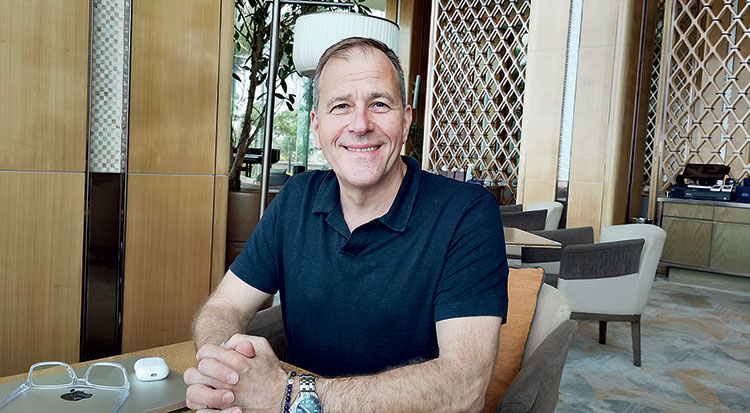
Sri Lanka is no longer merely a cost-efficient back office in the global IT map but is steadily evolving into a high-skill international hub for specialized enterprise software development, particularly in SAP (Systems, Application and Product in data processing), according to Michael Niestroy, Managing Partner of the retailsolutions.
In an exclusive interview with the Sunday Island, Niestroy whose company operates across Europe, North America, Africa and Asia with over 450 employees, said Sri Lanka’s trajectory bears resemblance to Singapore’s early transformation decades ago, driven not only by cost advantages but by capability, education and adaptability.
Explaining the backbone of modern enterprise systems, Niestroy simplified SAP as the invisible architecture behind global commerce.
SAP, he said, powers everything from accounting and logistics to inventory and supply chains.
“When you buy a can of Coca-Cola, there is a strong possibility SAP has been used somewhere in the chain, from manufacturing to transport to retail distribution,” he noted. “In fact, roughly 80 per cent of people globally interact indirectly with SAP systems whether in Europe, Asia, Australia or Sri Lanka.”
He stressed that SAP’s core strength lies in integrating business functions such as finance, inventory management and logistics into a single system that ensures efficiency and real-time decision-making.
Niestroy said Sri Lanka is emerging as one of the first international hubs for fashion-specific SAP expertise, supported by strong English proficiency, a solid education system and reliable infrastructure.
“The primary motivation is not just cost. It is skill. Sri Lanka has developed a highly capable talent pool in this niche,” he said, pointing to long-term users such as MAS Holdings, which has worked with SAP since the late 1990s.
The retailsolutions, he added, sees Sri Lanka as a strategic delivery base that could serve Europe, Southeast Asia, Australia and New Zealand in the future.
“Our expectation is to double our workforce in the coming year. The potential is significant.”
Turning to the rise of Artificial Intelligence, Niestroy struck a cautiously optimistic tone, framing it as an efficiency layer rather than a disruptive job killer.
“AI in SAP is not a single product. It is a platform. It depends entirely on data quality. If you feed bad data, you get bad results. Garbage in, garbage out,” he said.
He described modern “AI agents” as digital assistants that automate parts of workflows, reducing repetitive tasks while improving productivity.
But he rejected fears of widespread job displacement.
“Humans remain the principal. The agent only acts with authority. This is similar to when Microsoft Excel entered accounting. It did not replace accountants. It made them more efficient.”
For graduates, Niestroy described the SAP ecosystem as an open career pathway not restricted to any single academic discipline.
“It is a field students can enter regardless of what they studied. Structured training programmes allow them to grow into specialized roles,” he said.
While acknowledging that administrative processes in Sri Lanka can be slower and more complex than in some competing jurisdictions, Niestroy said investor sentiment remains positive due to workforce quality and macroeconomic stability.
“The trajectory Sri Lanka is on is comparable to Singapore 30 years ago. That suggests a very bright future if momentum is sustained,” he observed.
For Niestroy, the message is clear: Sri Lanka’s value proposition in the global digital economy is shifting, from price competitiveness to intellectual capital.
And in that shift, he believes, lies the country’s long-term advantage.
By Saman Indrajth


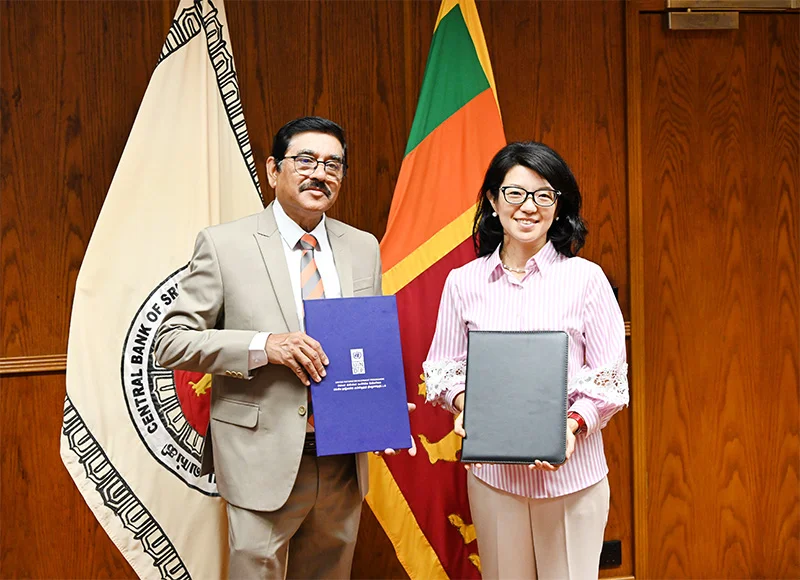
The United Nations Development Programme (UNDP) and the Central Bank of Sri Lanka (CBSL) have strengthened their partnership to advance financial literacy across the country, with a renewed focus on empowering vulnerable communities, strengthening economic resilience and promoting sustainable development.
The two institutions formally launched the second phase of their collaboration recently, reaffirming their commitment to implementing Sri Lanka’s National Financial Literacy Roadmap (2024–2028), a cornerstone of the National Financial Inclusion Strategy (NFIS).
The partnership was marked by a meeting between Central Bank Governor Dr. P. Nandalal Weerasinghe and UNDP Resident Representative in Sri Lanka Ms. Azusa Kubota, together with officials from both organisations.
Building on technical support provided by UNDP during 2024 and 2025, the latest phase seeks to equip individuals, households and businesses with the knowledge required to make sound financial decisions, improve livelihoods and enhance resilience in an increasingly uncertain economic and climatic environment.
The initiative comes at a crucial juncture as Sri Lanka continues its economic recovery while grappling with climate-related challenges that disproportionately affect rural communities and small enterprises.
A key component of the programme will be strengthening the capacity of government outreach officers across all districts to deliver financial literacy training to rural populations and micro, small and medium enterprises (MSMEs).
The training will be based on the Financial Literacy Curriculum developed by the Central Bank, with UNDP supporting the enhancement of modules through the integration of climate-resilient financial management concepts.
The programme aligns closely with Sri Lanka’s Financial Literacy Roadmap and is expected to contribute significantly to improving financial knowledge and access across the country. It is supported by several development and private-sector partners, including the government of Japan, Chrysalis, VISA and Hirdaramani-Lacoste.
Speaking on the importance of the initiative, Central Bank Governor Dr. Weerasinghe said the partnership would help broaden the reach of financial literacy efforts while addressing emerging challenges such as climate-related financial risks.
“We particularly welcome the focus on strengthening financial resilience, climate-related financial preparedness, public awareness campaigns and capacity-building through Training-of-Trainers programmes, he said.
He noted that the initiatives would ensure that different segments of society gain access to practical financial knowledge and develop the skills necessary to foster responsible financial behaviour and improve their overall financial well-being.
UNDP Resident Representative Ms. Kubota underscored the critical role financial literacy plays in creating inclusive and resilient economies.
“Financial literacy is a critical foundation for inclusive and resilient economies. Through our partnership with the Central Bank of Sri Lanka, we have been working to empower individuals, particularly those most vulnerable, with the knowledge and tools needed to make informed financial decisions and build secure livelihoods, she said.
By Ifham Nizam
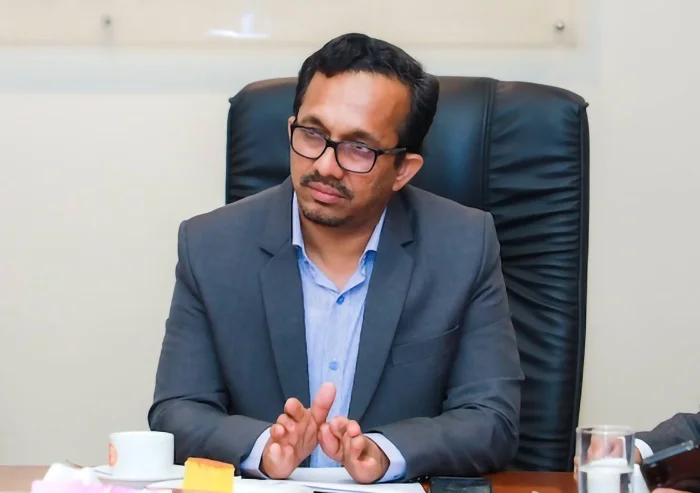
The government’s decision to ban the export of mineral resources in raw form and place all future mineral exploration under state control has triggered fresh debate over how Sri Lanka should develop its untapped mineral wealth and attract foreign investment.
Announcing the new National Mineral Policy, Industry and Entrepreneurship Development Minister Sunil Handunnetti said the country had long failed to capture the full value of its mineral resources by exporting them with minimal processing.
“We will no longer allow mineral resources to leave the country in raw form,” the minister said, arguing that Sri Lanka must move towards value-added industries that generate greater economic returns.
A key feature of the new policy is the transfer of all mineral exploration activities to the state-run Geological Survey and Mines Bureau (GSMB). Under the new system, the GSMB will carry out exploration, publish geological data and subsequently invite investors to participate in commercially viable projects.
Handunnetti defended the move by citing what he described as the failure of the previous licensing regime. According to government figures, 471 exploration licences had been issued since 1993, but only 28 advanced to mining operations, with just 12 remaining active today. The minister alleged that some companies had used exploration licences to boost corporate valuations rather than develop actual mining projects.
He also stressed that mineral deposits located beneath privately owned land belong to the state and should be developed in the national interest.
However, the reforms are likely to attract close scrutiny from foreign investors seeking opportunities in Sri Lanka’s mineral sector.
An independent industry analyst said the policy’s emphasis on value addition is consistent with global trends, as countries increasingly seek to process critical minerals domestically rather than export raw materials.
“The more difficult question is whether a state-controlled exploration model can generate the confidence required by international investors,” the analyst said. “Investors will want access to reliable geological data, transparent licensing procedures and predictable regulations before committing significant capital.”
The analyst noted that the government’s plan to publish exploration data before inviting investment proposals could help improve transparency, but its success would depend on how scientifically the process is implemented.
Sri Lanka possesses commercially valuable deposits of graphite, mineral sands, ilmenite, rutile, garnet, silica and phosphate. As global demand for industrial and strategic minerals continues to grow, the new policy represents a significant test of whether stronger state involvement can translate geological potential into investment, industrial development and export earnings.
“The success of the strategy may ultimately depend on whether the government can balance tighter control over mineral resources with the policy certainty and commercial incentives that international investors typically seek,” the analyst said.
By Sanath Nanayakkare
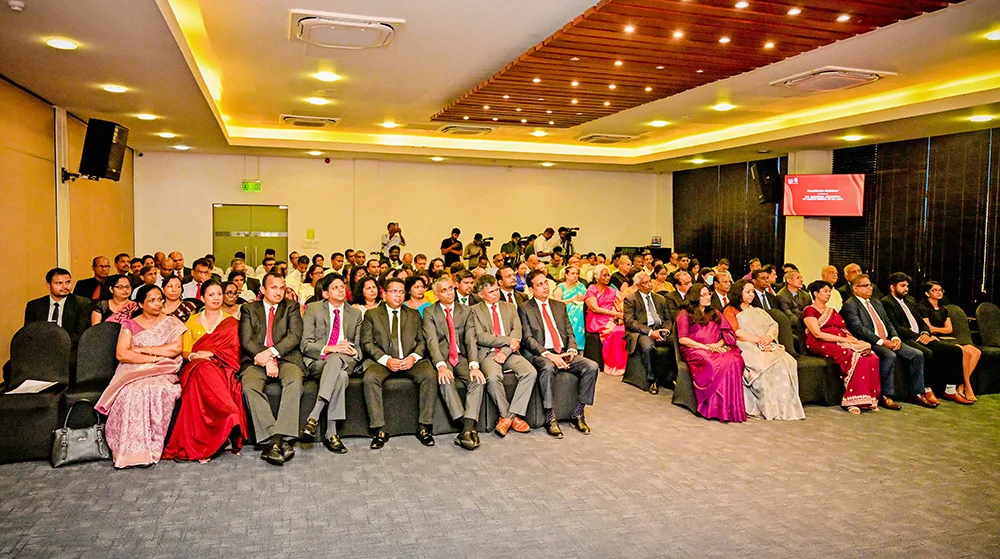
The Institute of Chartered Accountants of Sri Lanka (CA Sri Lanka) felicitated Ms. Samudika Jayaratna, the 42nd Auditor General of the Democratic Socialist Republic of Sri Lanka, at a special ceremony held on Thursday at the Institute.
The event was organised in recognition of her landmark appointment as the first woman to hold this distinguished constitutional office, as well as her decades of dedicated service to the nation’s public financial governance.
The ceremony reflected the accounting profession’s pride in one of its most accomplished members, who has attained the highest constitutional office in public audit. Ms. Jayaratna was warmly received by the President of CA Sri Lanka, Tishan Subasinghe, Vice President Ms. Anoji de Silva, members of the Council, and Chief Executive Officer Ms. Lakmali Priyangika.
A Fellow Member of CA Sri Lanka, Ms. Jayaratna’s appointment stands as a powerful testament to her exemplary professional journey spanning over 25 years. Her career has been defined by an unwavering commitment to excellence, integrity, and the highest standards of public accountability.
The felicitation ceremony drew a large and distinguished gathering, including Chartered Accountants and officials from the National Audit Office.

Complaint of custodial deaths and torture submitted to UN

India provides military stores worth USD 5.5 mn to SL

India promotes INR-LKR settlement mechanism

UK Trade Envoy here for high-level trade and investment engagements

Govt. failure to fill top two courts’ vacancies leaves Judiciary in a conundrum

UNDP, Central Bank deepen financial literacy drive to build economic resilience

‘Dates have the highest sugar content to fight Coronavirus’

Sunday Island 27 December – Headlines

#SundayIsland 17th December – Headlines

Sunday Island – 28th March

Sunday Island Headlines – 21 March

Sunday Island – 21st February – Headlines
-

 News5 days ago
CIABOC summons Yoshitha over his participation in British Navy training programme
-

 Sports2 days ago
Tharanga set for high-profile javelin clash in Ostrava
-

 News5 days ago
Justice Minister responds to social media claims he represented Easter Sunday ringleader
-

 News4 days ago
Commonwealth lawyers urge Lanka to uphold rule of law
-

 Features3 days ago
Politics of protected species
-

 News2 days ago
Theft of USD 2.5 mn from Treasury: CoPF accused of complicity in NPP cover-up
-

 News1 day ago
Beijing Capital Airlines to resume flights to Colombo signalling boost to tourism
-

 Features3 days ago
Of Whales and Submarines: Sri Lanka’s Security Dilemma