
Opinion
Drug crisis: A national security threat warranting a concerted response

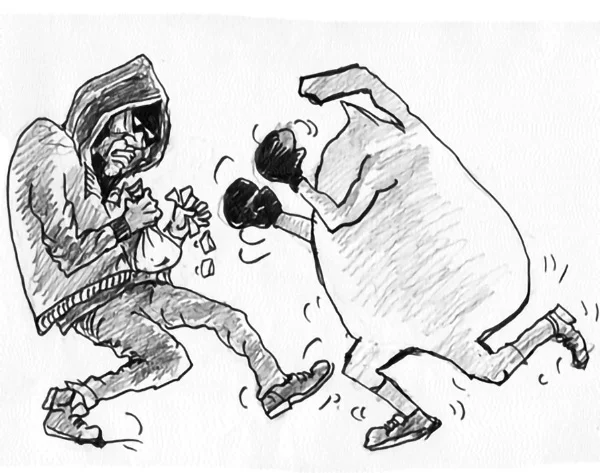
What has happened to our beloved nation, its loving people, and our once high-esteemed culture? At a time when the country has become the cynosure of many through the peace walk led by the Buddhist clergy together with Aloka, with people from all walks of life gathering in support, it clearly shows how deeply our people are yearning for peace, unity, and harmony.
Yet, while this noble message unfolds, an incident of the opposite nature at the very gateway of our nation has brought shame and concern. Allegations involving clergy linked to narcotics raise painful questions about morality, manipulation, and the misuse of trust. If they were trapped knowingly or unknowingly by interested parties, it is even more tragic.
Sri Lanka deserves better. Our people deserve better. Let truth prevail, justice be done, and may our nation return to dignity, wisdom, and peace.
These painful contradictions reveal a deeper truth: Sri Lanka today is confronting not merely isolated scandals, but a growing national crisis. The drug menace has become a direct threat to the nation’s social harmony, economic stability, political order, and long-term security. What was once seen as only a law-enforcement matter must now be understood as a strategic national challenge.
National security is not limited to borders, weapons, or military preparedness. True national security rests on three pillars: social stability, economic resilience, and political confidence. When drugs infiltrate communities, corrupt institutions, destroy youth potential, and empower organised crime, all three pillars begin to weaken. That is the danger Sri Lanka faces today.
Recent large-scale detections by the Sri Lanka Navy, law-enforcement agencies, and intelligence services indicate the seriousness of the threat. If reported seizure figures have sharply increased, it may reflect stronger enforcement as well as the scale of trafficking attempts. Either way, it sends a clear warning: criminal syndicates see Sri Lanka as fertile ground for their operations.
A central question many citizens ask is whether Sri Lanka has become only a transit point, or whether domestic demand itself is driving these operations. Increasingly, observers note that local consumption cannot be ignored. Drug traffickers do not repeatedly risk sophisticated smuggling methods unless profits justify the danger. Where there is sustained demand, supply networks become more determined, more creative, and more ruthless.
This means Sri Lanka is not only confronting traffickers at sea or airports it is confronting an internal market. That market is built through addiction, peer pressure, targeted recruitment, nightlife culture, workplace social circles, and the normalisation of substance use among sections of society. Dealers identify vulnerable youth, socially isolated individuals, thrill-seekers, and stressed professionals. Dependency becomes their business model because dependency guarantees recurring revenue.
The criminal economy behind narcotics has no religion, ethnicity, caste, or political loyalty. These syndicates recognise only profit. They exploit any route, corrupt any system, intimidate any rival, and manipulate any weakness. They may finance violence, use debt bondage, recruit couriers, infiltrate businesses, or exploit social divisions if it protects revenue streams. This is why the drug menace must never be communalised or politicised. Crime has no creed.
Equally dangerous is the corruption ecosystem that narcotics can generate. Where drug money grows, bribery follows. Where bribery spreads, public trust declines. Where trust declines, institutions weaken. Thus, the narcotics problem becomes not only a criminal issue but a governance issue. If left unchecked, it can distort markets, compromise officials, and create parallel power structures.
Sri Lanka therefore stands at a defining moment. The government’s recent emphasis on confronting organised crime and narcotics can become meaningful, but only if it evolves into a sustained national mission rather than a temporary campaign. Raids and arrests are necessary, but seizures alone do not win this war. Every intercepted shipment is a tactical success; it is not yet a strategic victory.
To prevail, Sri Lanka requires three simultaneous lines of effort:
1. Cut Supply
Border security must remain relentless. Agencies such as the Sri Lanka Navy, Sri Lanka Customs, police narcotics units, and intelligence services need modern surveillance, financial investigation tools, and stronger coordination. Maritime interdiction, container screening, asset seizure, and anti-money-laundering action are essential.
2. Reduce Demand
Supply exists because demand exists. This is where schools, families, mosques, temples, churches, kovils, youth clubs, and employers become national security stakeholders. Prevention must begin early. Children need resilience education. Parents need awareness tools. Communities need courage to report suspicious activity. Religious institutions can restore moral clarity and social accountability. Sports, arts, skills training, and employment pathways can redirect vulnerable youth toward dignity and purpose.
3. Rehabilitate Victims
Addiction should not be treated only as crime; it is also a health and social challenge. Many users are trapped, manipulated, or psychologically dependent. Rehabilitation must include counseling, medical support, vocational reintegration, and family healing. A person recovered from addiction is one less customer for traffickers and one more citizen restored to society.
The most successful anti-drug societies combine enforcement with community ownership. Sri Lanka must do the same. Villages, neighborhoods, apartment communities, and workplaces should become protective ecosystems where dealers cannot hide and vulnerable people are not abandoned. When faith leaders, teachers, parents, and police cooperate, traffickers lose anonymity.
There is also an urgent communication battle. Drug culture is often marketed through glamour, rebellion, or status. That false narrative must be defeated. Society must expose the truth: drugs destroy ambition, fracture families, damage mental health, fuel crime, and enrich predators. Prevention messaging must be modern, digital, youth-oriented, and continuous.
Political Will Must Replace Political Theater
Political leadership is equally important. This issue cannot be seasonal, symbolic, or used for partisan point-scoring. A national consensus is needed. Governments may change, but anti-narcotics strategy must remain professional, consistent, and insulated from political interference.
Sri Lanka has overcome terrorism, disaster, and economic hardship through resilience. It can overcome this menace too, obut only through unity, discipline, and moral seriousness. Every parent, teacher, religious leader, police officer, sailor, customs officer, doctor, journalist, and young citizen has a role.
This Is Not Just a Drug War, It Is a Fight for the Soul of the Nation
This is not merely a campaign against drugs. It is a campaign for the soul of the nation. It is about protecting our children, preserving our communities, defending our institutions, and securing our future.
Sri Lanka has awakened to the danger. The moment must not be wasted. If faith, family, and state walk together, drugs will have no place to hide.
Mahil Dole is a former senior law enforcement officer and national security analyst, with over four decades of experience in policing and intelligence, including serving as Head of Counter-Intelligence at the State Intelligence Service of Sri Lanka and a graduate of the Asia Pacific Center for Security Studies in Hawai, USA.
By Mahil Dole



Children are the future of every nation, and the values they learn during childhood shape the society they will eventually lead. In Sri Lanka, where family traditions, respect for elders, and social responsibility have long been important cultural values, the way children are raised remains a topic of great interest. In recent years, many parents and educators have moved away from traditional forms of punishment and embraced more child-friendly approaches to discipline. While protecting children from physical and emotional harm is essential, an important question arises: can a child who grows up without any form of punishment or consequences become a threat to Sri Lankan society?
To answer this question, it is necessary to understand the difference between punishment and discipline. Punishment is often associated with penalties imposed for wrongdoing, while discipline refers to teaching children self-control, responsibility, and respect for rules. Modern child psychology generally discourages harsh physical punishment because it can cause fear, anxiety, and resentment. However, completely removing consequences for inappropriate behavior may create a different set of problems.
Sri Lankan society has traditionally emphasized discipline within the family. Parents, grandparents, and teachers have often played active roles in guiding children’s behavior. Respect for elders, obedience, and good manners have been considered important virtues. While some traditional disciplinary methods may no longer be acceptable, the underlying principle of teaching accountability remains relevant.
A child who never faces consequences for wrongdoing may struggle to understand the boundaries that exist in society. For example, if a child is allowed to insult others, damage property, or ignore rules without correction, they may develop the belief that their actions have no consequences. Such attitudes can become problematic when the child enters school, the workplace, or the wider community.
Sri Lankan schools already face challenges related to student discipline. Teachers often report difficulties in managing classrooms where some students refuse to follow instructions or respect school regulations. When children are not taught accountability at home, educational institutions may find it harder to maintain a productive learning environment. This can affect not only the individual student but also classmates whose education is disrupted.
Another concern is the development of entitlement. A child who is never told “no” may come to believe that personal desires should always be fulfilled. In a society where cooperation and mutual respect are essential, such attitudes can lead to conflicts with peers, teachers, employers, and even family members. Sri Lanka’s social fabric depends heavily on community relationships, and individuals who fail to respect others can weaken these bonds.
The influence of social media and modern technology has added another dimension to this issue. Today’s children have access to information and entertainment on an unprecedented scale. Without proper guidance and consequences, some may misuse technology, engage in cyberbullying, spread misinformation, or develop unhealthy habits. Parents who avoid setting limits may unintentionally expose children to risks that affect both personal development and social well-being.
The workplace offers another example of why accountability is important. Sri Lanka’s economic development depends on a workforce that is disciplined, responsible, and capable of working with others. Employers value punctuality, respect, and professionalism. Individuals who grow up without learning responsibility may find it difficult to meet these expectations, affecting both their personal success and the productivity of organizations.
However, it is equally important not to interpret this argument as support for harsh punishment. Research has shown that excessive physical or emotional punishment can have serious negative effects on children. Fear-based parenting may produce obedience in the short term but can damage confidence, trust, and mental health in the long term. Therefore, the solution is not stricter punishment but more effective discipline.
Positive discipline provides a balanced alternative. It involves setting clear rules, explaining expectations, and applying fair consequences when those rules are broken. For instance, if a child neglects schoolwork, they may lose certain privileges until responsibilities are fulfilled. If they damage property, they can be required to help repair or replace it. Such consequences teach accountability while preserving the child’s dignity.
Sri Lankan parents, teachers, and community leaders all have a role to play in nurturing responsible citizens. Families should create environments where children feel loved and supported but also understand that actions have consequences. Schools should encourage character development alongside academic achievement. Religious and community organizations can reinforce values such as honesty, compassion, and respect for others.
A balanced approach is especially important in a rapidly changing society. As Sri Lanka continues to modernize and integrate with the global community, young people must learn not only their rights but also their responsibilities. Freedom without responsibility can lead to selfishness, while discipline without compassion can lead to fear. The challenge is to find the middle ground.
A punishment-free child can become a concern for Sri Lankan society if the absence of punishment also means the absence of discipline and accountability. Children who never learn consequences may struggle to respect rules, authority, and the rights of others. However, harsh punishment is not the answer. The most effective approach combines love, guidance, clear boundaries, and fair consequences. By raising children who understand both freedom and responsibility, Sri Lanka can build a future generation that strengthens society rather than threatens it.
Saumya Aloysius
(An essayist, children’s writer and freelance writer who holds a Master’s Degree in Sociology from the University of Kelaniya)

On Friday 12 June, 2026, a SriLankan Airlines Airbus 330 was en route from Colombo to Sydney, Australia was about 45 minutes into its flight when a loud bang was heard, accompanied by a blinding flash. In what was assumed to be a lightning strike, the airplane’s left (No. 1) engine was damaged, forcing the aircraft to return to BIA-Katunayake, where it landed safely.
Lightning travels from cloud to cloud or cloud to ground. Because the aircraft is not electrically ‘grounded’, or ‘earthed’, it must have been in the path of the thunder bolt purely by chance. There is also a phenomenon whereby the aircraft may travel through an electrically charged atmosphere (for example a cloud) where an electrical charge could build up and strike, or be emitted, as lightning. In such an instance, pilots hear electrical static in their headsets before the strike. Usually, when lightning strikes an aircraft in flight, the electrical charges remain on the outside, as on a ‘Faraday’s Cage’ apparatus, and the passengers and crew are perfectly safe.
To help the efficient and safe discharge of static electricity from the airplane’s structure, static wicks, or static dischargers, are fitted at the trailing (rearmost) edges of the wings and tail surfaces. When an airplane has landed after a lightning strike, ground engineers count the number of wicks that may have been burnt out to ensure that a minimum (recommended) number is available for a subsequent flight. Sometimes, there is minor damage, like pitting of the paintwork at the points where the charges left the aircraft.
The last instance in the USA of an airplane believed to have been lost due to a lightning strike was on December 8, 1963, when a Pan Am Boeing 707-121, en route from Baltimore, Maryland to Philadelphia, Pennsylvania, suffered a fuel tank explosion, later determined to have been the result of a lightning strike. Since then, aircraft have been rendered immune from lightning damage thanks to extensive research conducted by manufacturers using high-voltage currents.
Interestingly, modern airliners have electronic instrument displays which don’t even flicker when the aircraft is struck by lightning. By a process of connecting all the metallic parts, known as ‘bonding’, the entire fuselage effectively becomes a protective cocoon, so electrical charges caused by lightning will always reside on the outside of the aircraft.
What is unusual in the recent SriLankan Airlines incident is the extent of damage to the left engine. Did it encounter hail or ingest something?
Only a thorough, independent inquiry by aviation safety investigators will reveal the cause.
GUWAN SEEYA

“Vision without execution is hallucination.” – Thomas Edison
Introduction: Stabilisation Is Not Transformation
Sri Lanka has come a long way since the economic collapse of 2022. Inflation has been brought under control. Foreign reserves have improved. Debt restructuring has advanced. Government revenue has increased significantly through taxation reforms. The exchange rate has stabilised, and confidence has gradually returned to financial markets.
These achievements deserve recognition.
However, stabilisation should not be confused with economic transformation. A patient discharged from intensive care is not necessarily healthy. Likewise, an economy that has escaped collapse has not necessarily achieved sustainable prosperity.
The central economic question facing Sri Lanka today is no longer how to avoid another crisis. Rather, it is how to achieve sustained economic growth of at least 7% per annum by 2029.
Unfortunately, much of the current policy debate remains trapped in economic diagnosis. Policymakers, economists, and commentators repeatedly identify familiar problems: (i) low productivity, (ii) weak exports, i(iii) Inadequate innovation, (iv) poor competitiveness, and (v) insufficient investment. While these diagnoses are correct, they are not new.
Sri Lanka now needs economic engineering.
The country requires a clear, measurable, and actionable National Growth Strategy for 2026-2029 that identifies (i) where growth will come from,(ii) what investments are required,(iii) which institutions will lead implementation, and (iv) how success will be measured.
The difference between diagnosis and engineering is the difference between describing a problem and solving it.
The Missing National Growth Target
One of the most striking weaknesses in Sri Lanka’s economic discourse is the absence of a publicly articulated growth target supported by a detailed implementation framework.
Successful economies establish measurable objectives.
Sri Lanka should adopt the following growth trajectory:
2026 – 4%
2027 – 5%
2028 – 6%
2029 – 7%
Such targets would provide direction to investors, public institutions, universities, exporters, and development partners. Without a destination, even the best policies risk becoming disconnected initiatives.
Today, many policy interventions appear fragmented—valuable in isolation but lacking integration into a broader national growth framework.
Growth Will Not Come From Consumption
For decades Sri Lanka relied heavily on consumption, imports, remittances, tourism, and external borrowing.
That model has reached its limits.
No country has achieved sustained prosperity through consumption-led growth alone.
The countries that transformed themselves—Singapore, South Korea, Ireland, Vietnam, and China—generated growth through productive investment, exports, industrialisation, and integration into global markets.
Sri Lanka’s future growth must therefore be driven by investment and exports rather than domestic consumption.
The challenge is not increasing spending but increasing productive capacity.
Export-Led Growth: The First Pillar of Transformation
Every successful Asian growth story has one characteristic in common: exports.
Exports generate foreign exchange, create jobs, attract investment, encourage innovation, and improve productivity.
Sri Lanka should establish an ambitious target of doubling export earnings within the next decade.
This requires moving beyond traditional exports and expanding into:
High-value agriculture
Food processing
Information technology services
Logistics services
Advanced manufacturing
Professional services
Export growth must become a national mission comparable to post-war reconstruction efforts seen elsewhere in Asia.
Without a major expansion of exports, sustained 7% growth will remain elusive.
Manufacturing: The Forgotten Growth Engine
Manufacturing remains the single most important source of rapid economic transformation worldwide. Vietnam provides perhaps the best recent example.
Through (i) industrial zones, (ii) trade agreements, (iii) infrastructure development, and (iv) targeted investment attraction, Vietnam became deeply integrated into Asian production networks.
Sri Lanka possesses strategic advantages:
A prime Indian Ocean location
Strong port infrastructure
Educated labour force
Proximity to India
The country should establish specialised manufacturing clusters focusing on:
Electronics assembly
Medical devices
Processed food products
Boat building
Rubber-based products
Engineering components
Rather than attempting to compete with every country, Sri Lanka should specialise in selected niches where competitive advantages can be developed.
RCEP: The Strategic Door to Asia
Sri Lanka’s future lies increasingly in Asia.
The Regional Comprehensive Economic Partnership (RCEP) represents the largest trading bloc in the world and includes many of the fastest-growing economies.
Membership or closer integration with RCEP supply chains could provide Sri Lankan exporters with access to markets, investment, technology, and production networks that are currently beyond reach.
Unfortunately, discussion on RCEP remains limited compared with its strategic significance.
A dedicated national roadmap for RCEP engagement should become a top economic priority.
The question is not whether Sri Lanka can afford to integrate more deeply into Asia.
The question is whether Sri Lanka can afford not to.
Knowledge Economy: Turning Universities Into Growth Institutions
Sri Lanka’s universities produce thousands of graduates annually, yet their contribution to commercial innovation remains limited.
Globally, universities have become engines of economic development.
Research institutions should not merely produce graduates; they should produce patents, technologies, startups, and commercial solutions.
A national innovation framework should:
Link universities with industry
Encourage commercialisation of research
Support technology transfer
Expand startup financing
Reward innovation and entrepreneurship
Knowledge must become an economic asset rather than an academic exercise.
Dairy, Agriculture, And Import Substitution
Export growth alone is insufficient.
Sri Lanka must also reduce unnecessary import dependence.
The dairy sector offers a compelling example.
For decades, billions of rupees have left the country through dairy imports despite favourable climatic conditions and substantial agricultural potential.
A comprehensive dairy development strategy should focus on:
Improved genetics
Feed production
Commercial farming
Processing investment
Farmer productivity
The objective should be import substitution combined with rural income growth.
The same principle can be applied selectively to other sectors where domestic production is economically viable.
Creating A National Investment Targeting Agency
Sri Lanka does not need another bureaucracy.
It needs a professional institution dedicated exclusively to investment targeting.
Instead of passively waiting for investors, this agency would actively identify and attract strategic investments aligned with national priorities.
Its mandate would include:
Identifying priority sectors
Marketing opportunities globally
Coordinating approvals
Monitoring outcomes
Facilitating technology transfer
Singapore’s Economic Development Board and Ireland’s Industrial Development Agency demonstrate how targeted investment institutions can transform national economies.
Sri Lanka requires a similar mechanism adapted to local realities.
From Economic Diagnosis To Economic Engineering
The next stage of Sri Lanka’s recovery requires a fundamental shift in thinking.
The policy debate must move beyond identifying problems. The country already knows its problems.The challenge is implementation.Every policy proposal should be evaluated against a simple question:
Will this contribute to achieving 7% growth by 2029?
If the answer is no, resources should be redirected.
Economic engineering requires focus, prioritisation, accountability, and measurable outcomes. The era of fragmented initiatives must give way to a coherent national growth strategy.
Summary
Sri Lanka has achieved significant macroeconomic stabilisation, but stabilisation is only the first step toward sustainable prosperity.
To move from recovery to transformation, Sri Lanka should adopt a National Growth Strategy for 2026-2029 built around five pillars:
Export-led growth
Investment-led growth
Manufacturing expansion
Knowledge-economy development
Regional integration through RCEP and Asian supply chains
Supporting sectors such as dairy, tourism, logistics, and information technology should be strategically developed within this framework.
Most importantly, investment must be targeted rather than scattered, supported by specialised institutions and measurable performance indicators.
Conclusion
History demonstrates that no nation has become prosperous by accident. Economic success is rarely the product of isolated policies or short-term political initiatives. It is the outcome of a deliberate strategy pursued consistently over many years.
Sri Lanka stands at a crossroads.
One path leads to modest growth, periodic crises, recurring debt challenges, and continued vulnerability. The other leads to transformation through investment, exports, innovation, manufacturing, and regional integration.
The choice is ultimately strategic.
The time has come for Sri Lanka to move from economic diagnosis to economic engineering.
The future will not be determined by how successfully the country stabilised after the crisis. It will be determined by how effectively it builds the foundations for sustained growth thereafter. If Sri Lanka can articulate and execute a coherent investment-led growth strategy today, achieving 7% growth by 2029 need not be an aspiration.
It can become a national objective—and a national achievement, economic Engineering
The writer, among many, served as the Special Advisor to the Office of the President of Namibia from 2006 to 2012 and was a Senior Consultant with the UNDP for 20 years. He was a Senior Economist with the Central Bank of Sri Lanka (1972-1993). He can be reached via asoka.seneviratne@gmail.com

Developing the human resources needed for construction projects remains a key challenge before us – PM

Children should gain experience through activities such as aesthetics and sports from the primary education stage – PM

Inaugural session of Sirimavo Bandaranaike Vidyalaya Student Parliament held at the Presidential Secretariat

ICC Chairman Meets President

As Lebanon tests US-Iran deal, Trump must rein in Netanyahu, analysts say

Cunha hits Brazil double against Haiti to seal first World Cup 2026 win

‘Dates have the highest sugar content to fight Coronavirus’

Sunday Island 27 December – Headlines

#SundayIsland 17th December – Headlines

Sunday Island – 28th March

Sunday Island Headlines – 21 March

Sunday Island – 21st February – Headlines
-

 News6 days ago
Release of 2025 O/L results likely to be delayed
-

 Sports6 days ago
Tharanga set for high-profile javelin clash in Ostrava
-

 Features7 days ago
Politics of protected species
-

 News5 days ago
Beijing Capital Airlines to resume flights to Colombo signalling boost to tourism
-

 News5 days ago
Theft of USD 2.5 mn from Treasury: CoPF accused of complicity in NPP cover-up
-
 Features4 days ago
Killing of Colombo’s ancient trees — a warning on UN’s World Desertification Day – 17 June
-

 Opinion6 days ago
Decoding Trump’s 12.5% “Forced Labor Tariff” on Sri Lanka
-

 Opinion6 days ago
Palm leaf manuscripts of Sri Lanka – Part V