
Latest News
Peru holds presidential election amid decade of political tumult

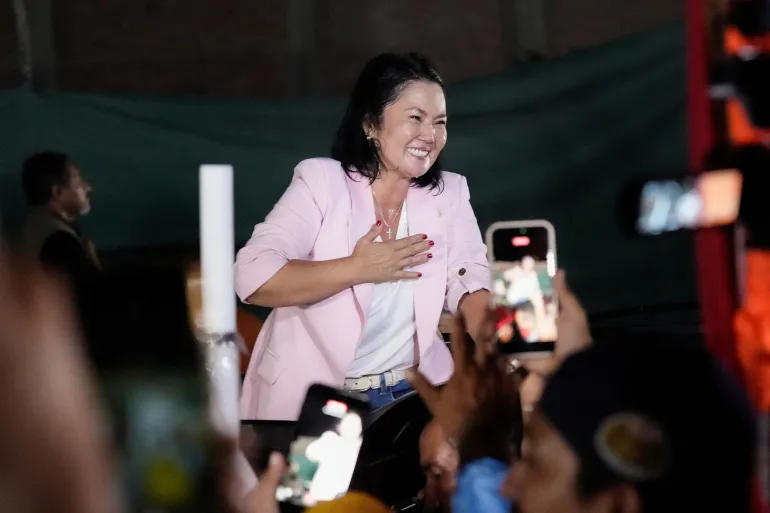
On Tuesday, from a balcony in Lima’s historic San Martin Square, Ricardo Belmont — who, at 80, is Peru’s oldest presidential hopeful — closed his campaign with a message to his supporters.
It was time, he told the crowd, to kick out the corruption that has gripped Peru over the past decade.
“We are no longer a nation. We are just surrogates for these corrupt parties,” said Belmont, a conservative who served as mayor of Lima in the early 1990s. Though initially lesser-known, Belmont has, in recent days, emerged as one of several viable candidates to make the run-off.
As voters head to the polls this Sunday for the first round of Peru’s presidential election, many candidates, like Belmont, are pledging a break from the tumult that has dominated the country’s politics.
In the past decade, nine presidents have passed through the government palace, some only lasting a few months.
Only one has completed a full term. Nearly all have either been imprisoned or involved in criminal investigations, largely related to corruption.
Peruvians have also grown so accustomed to a revolving door of presidents that experts fear it has contributed to an unprecedented level of volatility in this year’s election cycle, not to mention voter apathy.
“We have voters who are frustrated. We have voters who are tired. We have voters who are apathetic,” said Fernando Tuesta, a political scientist at Peru’s Pontifical Catholic University and a former chief of the national elections authority.
He described many voters as sceptical, “approaching this electoral process without enthusiasm”.
The fractures, corruption and infighting in Peru’s politics have resulted in a record list of 35 presidential candidates, many of whom are unknown to most voters.
From this crowded field, two presidential hopefuls are expected to advance to a run-off election in June. Voting is mandatory in the country of 34 million people, but pollsters still expect a high number of blank ballots.
In a country where “outsider” candidates emerge rapidly and fall dramatically, predictions about Sunday’s outcome are changing daily.
And analysts question how much staying power even a successful candidate might have after the race reaches its end.
Signs of uncertainty are easy to spot. Polls have signalled that about one-tenth of Peruvian voters are still undecided about whom to vote for, even days ahead of the election.
Many of the front-runners are also within a few percentage points of each other.
Right-wing candidate Keiko Fujimori, 50, has been consistently at the top in recent weeks, but the race for second place has been a toss-up so far.
Aside from Belmont, top contenders include Lima’s former right-wing mayor, Rafael Lopez Aliaga, the comedian Carlos Alvarez and Jorge Nieto, a former left-wing minister and sociologist.
Tuesta speculates the wide field of candidates emerged as a reaction to the unpredictability of Peru’s current politics. With the margins so tight, many are angling to be this year’s dark horse, the surprise candidate who catapults into the run-off.
“All the candidates think they’re the next outsider and that they’ll shoot up in the polls, so they think, ‘Why would I make an alliance with you if I can do this alone?'” said Tuesta.
The breadth of the field is likely to contribute to voter confusion. To accommodate all the candidates, there were six separate nights of televised debates.
The candidates will also be packed onto one large ballot for election day, which national election authorities have acknowledged will be complicated for voters to understand. On Sunday, voters will also elect members of Congress.
Fujimori, the daughter of the late President Alberto Fujimori, faced political outsider Pedro Castillo, a socially conservative leftist teacher from Peru’s rural north.
She lost by less than a percentage point. This year marks her fourth presidential bid.
But shortly after his term began, Castillo faced impeachment proceedings. Less than a year and a half into his tenure, he attempted to dissolve Congress. He was convicted last year of conspiracy for a rebellion and sentenced to 11 and a half years in prison.
Gonzalo Banda, a political analyst and researcher at the University College London, said Peru’s left wing hasn’t managed to come together around a single candidate in the years following the Castillo administration.
Part of the problem, he explained, is deep-rooted division and a general lack of substantive policies to address voter concerns, like violence and organised crime. That lack of unity has contributed to the long list of candidates this year.
“Overall, it has been a very, very mediocre cast of candidates. Perhaps the most mediocre we’ve had in the last few years. And the tragedy of all this is that Peru is confronting one of its worst security crises, with one of the worst political casts of our times,” said Banda.
Experts like Tuesta argue that the last decade of political instability has all but rendered Peru’s executive branch a secondary power.
By contrast, its unicameral Congress has expanded its might, though its members are largely unpopular among Peruvians.
Part of its influence comes from its impeachment powers. Peru’s Congress can remove presidents for “moral incapacity”, a catch-all term that has been used to denounce anything from undisclosed meetings to security crises.
Paulo Vilca, a researcher at the Institute of Peruvian Studies, explained that the shifting power dynamics have made it difficult for presidents to remain in office.
“In the past, we used to elect presidents for five years. Now, what’s more likely is that they will not last five years,” said Vilca.
But Peru’s unicameral Congress will come to an end this year. On Sunday, Peruvians will vote for a second congressional chamber, a Senate, for the first time since 1990.
Vilca argues that the congressional election may be even more important than this year’s presidential race. But it will also likely deepen Peru’s ongoing political crisis, he added.
He predicts that Congress’s chambers will soon be in conflict with each other, as well as with the president, in a three-way battle for power.
“It is very likely that those who are elected deputies, for example, will not be very satisfied with having a subordinate position in front of the Senate,” Vilca said. “So we’re going to move from a crisis of two to a crisis of three.”

The Senate was eliminated in 1992 by the late President Fujimori, Keiko Fujimori’s father, after he dissolved Peru’s bicameral Congress and implemented military rule.
The younger Fujimori has sought to build on her father’s legacy, and her right-wing party, Fuerza Popular, has become a deciding force in the unicameral legislature.
Keiko Fujimori even pledged to use her party’s power to “govern from Congress” after her defeat in the 2016 presidential race.
Since then, analysts have argued that Fuerza Popular has led efforts to change governmental processes to maintain or expand its power, even at the expense of democratic participation.
One change that it championed and passed in 2025 requires parties to earn at least 5 percent of the overall vote and a minimum of seven seats in the lower chamber to maintain their official political registration. For the Senate, parties must get at least three seats and 5 percent of votes.
Critics have said the measure creates a nearly insurmountable threshold.
“This whole system has been designed by the parties that are currently in Congress. And in particular, the one that has controlled the Constitutional Committee all these years has been Fuerza Popular,” said Vilca.
“I think the purpose of designing this whole model has been to maintain a status quo, which the Fujimori wing has also created in the last five years.”
Vilca is not optimistic that a new Senate will resolve the erosion of power away from the presidency. If anything, he anticipates more conflicts to come.
“My most likely scenario is that the crisis continues,” he said, “that whoever is elected president will enter into confrontation with the Senate”.
[Aljazeera]

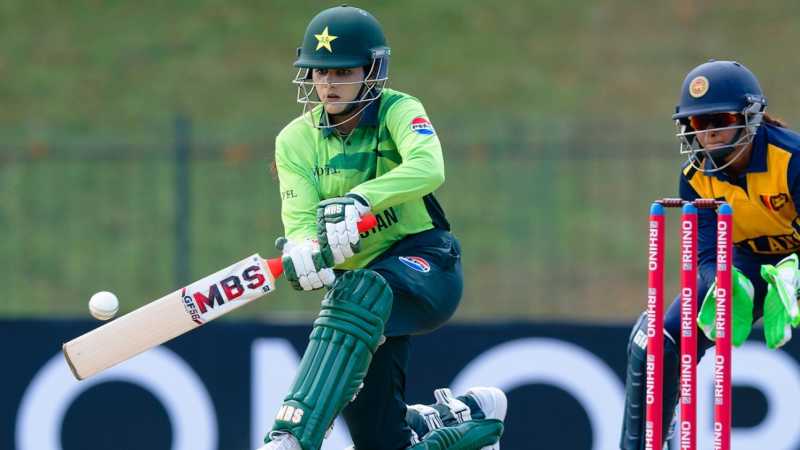
Half-centuries from Gull Feroza and Sidra Amin helped Pakistan start their tour of Sri Lanka on a winning note. After restricting Sri Lanka to 210 for 9, thanks to Nashra Sandhu’s 3 for 42, Pakistan got home with five wickets and seven overs to spare in the first woman’s ODI in Hambantota.
Vishmi Gunaratne, reunited with captain chamari Athapaththu at the top of the order, helped Sri Lanka lay a solid foundation after they opted to bat. The hosts raced to 31 without loss in the first five overs. Gunaratne and Athapaththu soon brought up their fifth fifty-run partnership in ODIs, the most by an opening pair for Sri Lanka.
Once spin came on, the scoring slowed down. Gunaratne was the first to depart when she became Sandhu’s first victim. Athapaththu and Hasini Perera then added 53 for the second wicket before the Sri Lanka captain was bowled by Sandhu. Pakistan applied the squeeze when Sri Lanka were 109 for 2 in the 24th over. The only notable stand for Sri Lanka thereon was between Nilakshika Silva and Kavisha Dilhari, who added 42 for the fifth wicket. But Sri Lanka’s final surge never came and they lost 5 for 32 in the last seven overs to be restricted to a below-par total.
Pakistan hardly broke a sweat in their chase. Feroza struck her fourth successive ODI half-century. She was rapid in the first powerplay, and was the aggressor in the 58-run opening partnership with Sadar Shamas. Feroza then added 90 for the second wicket with Amin, who batted steadily. Feroza eventually fell for a breezy 77-ball 78 while Amin scored 57 off 94 before being dismissed, with victory in sight.
The win was Pakistan’s fifth consecutive ODI win, which put them second on the ICC Women’s Championship points table.
Scores:
Pakistan Women 211 for 5 in 43 overs (Gull Feroza 78, Sidra Amin 57; Kavisha Dilhari 2-37) beat Sri Lanka Women 210 for 9 in 50 overs (Nilakshika Silva 46, Chamari Athapaththu 46; Nashra Sandhu 3-42, Tasmia Rubab 2-34) by five wickets
(CRICINFO)
[Cricbuzzz]


More than 4,200 Israelis storm Al-Aqsa Mosque in Jerusalem

Feroza, Amin, Sandhu shine as Pakistan go 1-0 up against Sri Lanka

Colombo District Waste Management subcommittee convenes at Parliament

Government to coordinate Kotte Rajamaha Viharaya Sri Dalada Maha Perahera

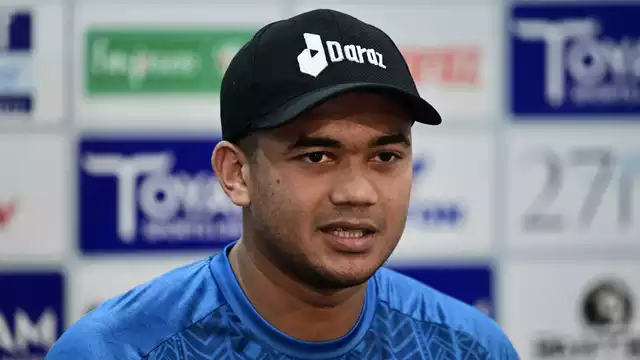
Taskin Ahmed withdraws from LPL to prepare for Australia tour

US and Saudi Arabia announce nuclear cooperation deal

‘Dates have the highest sugar content to fight Coronavirus’

Sunday Island 27 December – Headlines

#SundayIsland 17th December – Headlines

Sunday Island – 28th March

Sunday Island Headlines – 21 March

Sunday Island – 21st February – Headlines
-
 Features5 days ago
Two memorable excerpts from a former SLAF commander’s memoir
-
 Business5 days ago
‘Giving up was never an option’: The fisherman who fought back after losing millions in SL
-

 Latest News6 days ago
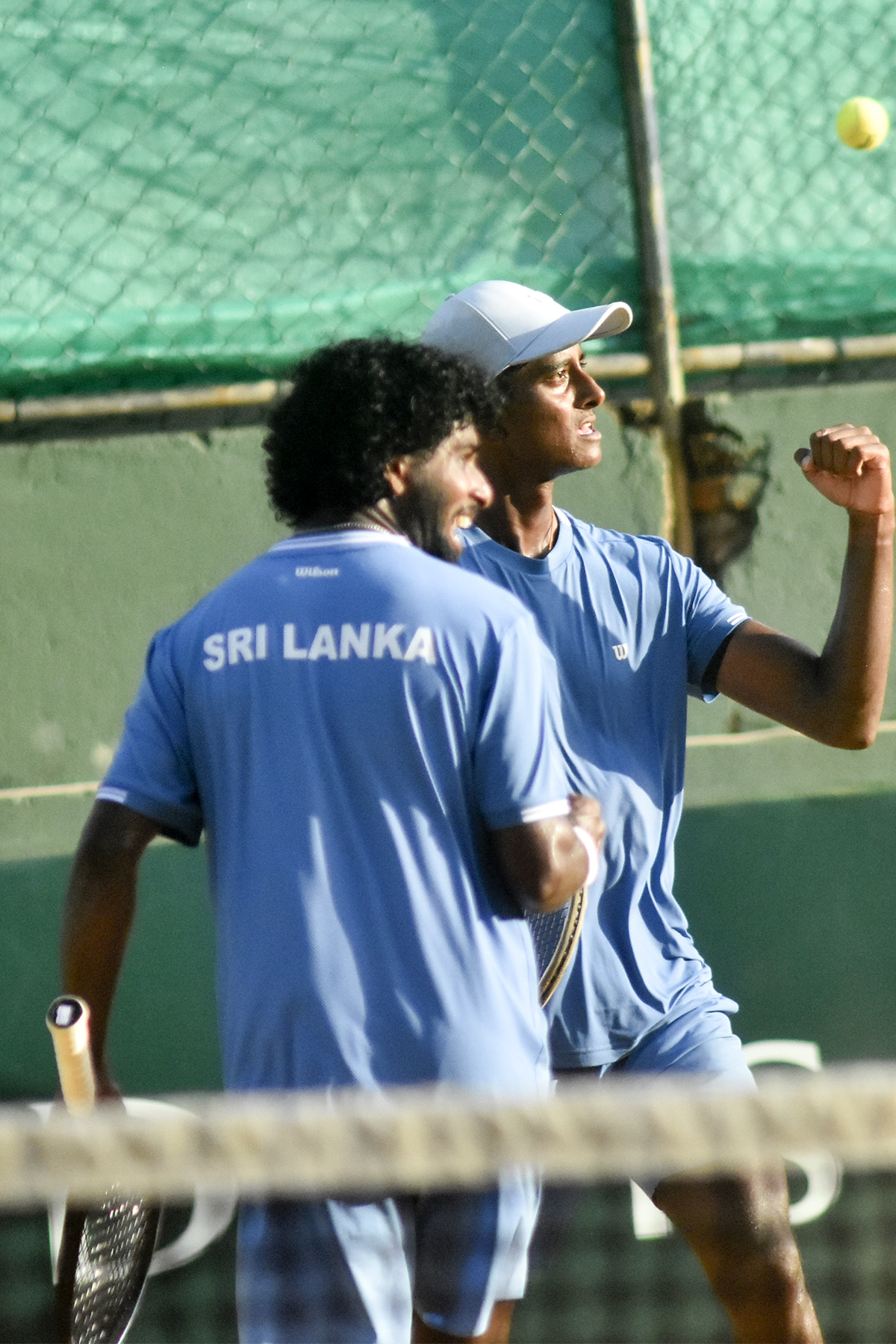
Davis cup Asia/Oceania Group IV 2026 to be held in Colombo from 20th to 25th July
-
 Features5 days ago
Erdoğan’s New Republic
-

 Life style5 days ago
Taste of the Swiss Alps comes to Colombo
-
 News6 days ago
Evidence recorded in money laundering case against Yoshitha Rajapaksa
-
 Midweek Review2 days ago
Three high-profile alleged suicides shaping key investigations
-

 News6 days ago
Dengue outbreak gallops ahead: Infections surpasses 73,455, leaving 50 dead