
Business
‘Tap expertise, not just capital’: A practical path for Sri Lanka’s economy

By Ifham Nizam
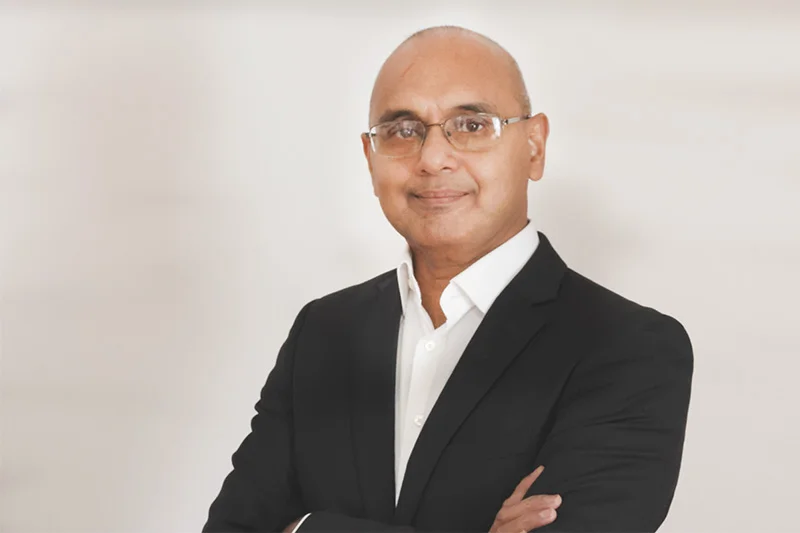
At a time when Sri Lanka continues to grapple with limited fiscal space and structural economic constraints, Gehan de Silva Wijeyeratne, a renowned naturalist who works in finance, is urging a shift in thinking—one that moves away from capital-heavy models and toward the strategic use of global expertise. Keeping his observations deliberately broad, de Silva Wijeyeratne frames Sri Lanka’s challenge in simple but candid terms: the country cannot afford to develop in the same way as wealthier nations, but it can still accelerate progress—if it learns how to access and use knowledge effectively.
“One of the big-picture things we need to do is improve how we find and use expertise,” he said. “If you look at countries like the United Arab Emirates and Singapore, they developed very quickly by buying in expertise and accelerating their progress. They didn’t develop everything on their own.” However, he is quick to point out the key difference. “They had the money to do it. They could afford to go out and buy expertise,” he said plainly. “But Sri Lanka doesn’t have that spending power.” This reality, de Silva Wijeyeratne notes, should not be seen purely as a limitation—but as a reason to think differently.
Sri Lanka’s economic condition makes it difficult to spend on paid foreign consultants, technical specialists, and large-scale advisory services. But according to de Silva Wijeyeratne, the global workscape has changed in ways that make expertise far more accessible than before.
He told The Island Financial Review: “We are in a world now where you can access some areas of expertise without necessarily paying for it in the traditional sense,” he said. “There are people who genuinely enjoy sharing knowledge and contributing, if you create the right work environment. We have to ensure that people who are willing to share their expertise can arrive in the country with their intentions clearly stated up-front and with an appropriate visa obtained quickly and easily so that they know that their visit is legitimate and one which is welcomed.’’
He referenced his article ‘A visa for bringing in expertise and expanding tourism’ published in The Island on Friday 23 May 2025. In this he proposes a special visa to address four strands, volunteering, internships, academic exchange and short term study. The idea is that the visa should be as easy as to obtain an online tourist visa, but the visitor can now apply for a longer term visa for a declared purpose such as volunteering. He was careful to emphasize that the proposed visa is not for paid work and does not give the visitor special rights and any relevant permits and permission need be obtained by the local partner. He suggests that Sri Lanka should begin to see itself less as a capital-constrained economy and more as a platform—one that can attract knowledge flows. “You don’t always need heavy investment upfront. You design a system that people want to engage with, and then value starts to build.” Countries like the United Arab Emirates and Singapore continue to use financial strength to import expertise. De Silva Wijeyeratne notes that Sri Lanka can use an un-paid model to attract expertise using a special visa as proposed to attract people who will be attracted to volunteer or work in Sri Lanka for free due to other reasons. In areas like biodiversity exploration and other nature-based academic work, foreign academics would love to partner with local academics if there was a simple and straightforward way for them to obtain a visa to do so and to arrive for periods for anything from 3 months to a year. As they will be on salaries paid by their academic employer overseas, it will not drain money out of Sri Lanka. On the contrary they will be long staying visitors who are bringing in money like any other tourist but additionally will also bring in knowledge. There are also many retired conservationists who are on a stable retirement income in G20 countries who would be happy to volunteer in projects in Sri Lanka. He notes that countries like India already have a visa for volunteering. “We can make Sri Lanka the go to country for people with expertise in nature who want to work in Sri Lanka on an unpaid basis because they are here to volunteer or work in partnership with local academics” he said. De Silva Wijeyeratne notes that this model will only work in sectors such as the academia or nature conservation where the day job is also a person’s passion. ‘”This will not work in every sector. We will not find a senior city person in finance, working in a voluntary role in a Sri Lankan financial institution. But in many nature-based areas of work, whether is to explore and discover new species of fungi or mosses or to train local naturalists who work in tourism, a special visa that facilitates this and can be obtained within a few minutes will enable Sri Lanka to tap into foreign expertise for free. The interaction with foreign collaborators will also open doors for Sri Lankan counterparts to be invited abroad to jointly present their work at conferences.
For Sri Lanka, the lesson is not to replicate any one model, but to adapt principles that fit its own constraints. “We need to recognise where we are and design accordingly,” he said. “We cannot copy-paste another country’s path. The proposed special visa idea which will also enable foreign interns to come to Sri Lanka for internships will also help grow the economy. For example, we have many large IT companies that develop software for companies in G20 economies. Foreign interns work in Sri Lanka will at a future date be middle or senior managers who may outsource work to Sri Lanka because they have the connections and trust the quality of work coming out of Sri Lanka. He also notes that when local companies engage with foreign interns through their universities, they may find themselves in a more structured programme which will make it easier for companies to also create places for local interns.
De Silva Wijeyeratne’s central argument is straightforward: Sri Lanka must focus on building systems that make it easy—and worthwhile—for experts to engage. “At the moment, we don’t have a clear way of connecting with global expertise,” he said. “Even when people are willing to help, there isn’t a structured mechanism to bring them in and make use of what they offer.”
He stresses that the issue is not a lack of goodwill or global interest, but a lack of organisation. “There is no shortage of people who are willing to contribute,” he said. “The problem is that we haven’t created the channels to absorb that contribution. De Silva Wijeyeratne also highlights the importance of creating a broader ecosystem where expertise translates into economic activity. “It’s not just about getting advice,” he said. “It’s about creating a market environment where that knowledge can lead to real outcomes—business opportunities, innovation, and growth.”
In his view, Sri Lanka must become more open to collaboration and more willing to act on external input. “If you create a system that works, people will come,” he said. “And when they come, they will add value.” While the idea of accessing free or low-cost expertise may sound idealistic, de Silva Wijeyeratne insists it is grounded in reality. “This is not theory,” he said. “We’ve already seen it happen in different sectors. People are willing to contribute, especially when they feel their input will make a difference.” At the same time, he acknowledges that Sri Lanka must improve its own internal capacity to benefit from such engagement.

Business
Cost-effective clearance of goods across borders to determine worth of Customs Paperless Declaration

By Ifham Nizam
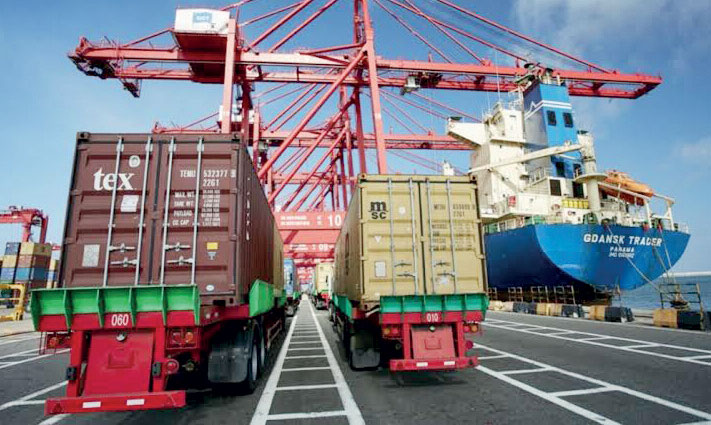
The introduction of the Customs Paperless Declaration from October 1 could mark an important step in Sri Lanka’s efforts to modernise trade, but its real value will depend on whether it reduces the time and cost of moving goods through the country’s borders, Customs House Agents & Traders Association President Mohamed Niyas said.
Niyas warned that digitising Customs declarations alone would not necessarily translate into faster cargo clearance or lower costs for businesses.
‘Expecting a dramatic improvement in clearance speed under the present conditions is like expecting Ferrari performance from a Morris Minor configuration, he said.
For importers and exporters, the issue extends well beyond paperwork. Every additional hour or day that cargo remains in the clearance chain can have wider consequences for businesses, including increased port and storage-related costs, additional working-capital requirements, uncertainty over delivery schedules and disruptions to production and distribution.
Niyas said the competitiveness of Sri Lanka’s trading sector ultimately depended on how efficiently goods could move through the country’s border-clearance system.
‘The real bottleneck is not merely the absence of paper. It is the entire clearance ecosystem—the limitations of the existing ASYCUDA World system, excessive regulatory interventions by Other
Government Agencies, multiple approvals, physical examinations, manual interventions, fragmented processes and institutional constraints, he said.
He cautioned that unless these bottlenecks were addressed, there was a risk that the paperless initiative would merely digitise existing bureaucracy.
‘If these underlying constraints remain unchanged, there is a real risk that the new paperless system could become another “copy-and-paste road show”—where an old, complex clearance process is simply transferred onto a digital screen without fundamentally changing the process itself, Niyas said.
For businesses dependent on imported raw materials, machinery, components and other inputs, clearance efficiency can directly affect the wider supply chain.
Delays at the border can create uncertainty for manufacturers, distributors and retailers, while exporters can face difficulties meeting delivery schedules when imported inputs or export consignments are held up.
Niyas therefore argued that the success of the October 1 initiative should be judged by its impact on trade flows rather than by the number of declarations processed electronically.
‘Paperless does not automatically mean faster, he said. ‘Digitising a slow process does not make the process fast. It only makes the slow process digital.’
He said Sri Lanka needed to move towards what he described as “process-less Customs”—a system in which unnecessary procedures are eliminated rather than simply converted into electronic procedures.
Among the reforms he called for are simplification of Customs declarations and approval workflows, improvements to the functionality of ASYCUDA World, greater use of risk-based inspections and better integration of Other Government Agency approvals.
Niyas also called for the elimination of repetitive document submissions and physical endorsements, greater use of pre-arrival processing, sufficient capacity for digital document uploads and clearly defined service-level timelines for Customs and OGAs.
By Sanath Nanayakkare
As global attention has fixed on the high-level diplomatic choreography at the United Nations General Assembly in New York, a subtler, yet profound geopolitical signal was sent from Colombo, yesterday.
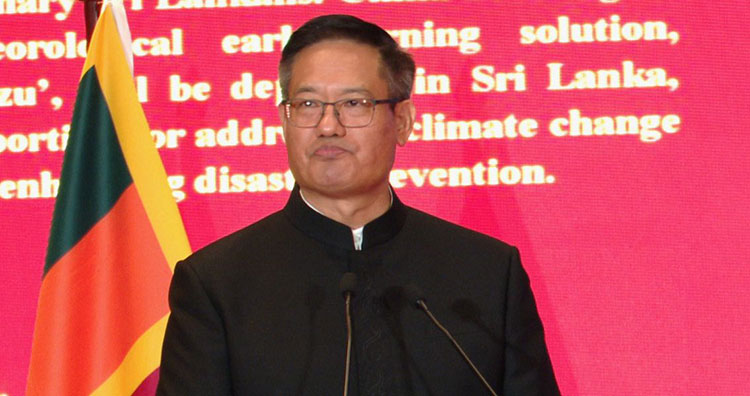
In a major address marking the founding anniversary of the People’s Republic of China, newly appointed Chinese Ambassador Wei Huaxiang chose to anchor bilateral relations not just in modern trade or infrastructure, but in a shared respect for Sri Lanka’s legacy of non-aligned independence.
By explicitly invoking Sri Lanka’s foundational role in the 1976 Non-Aligned Summit, Beijing was doing something unexpected in an era defined by fierce great-power rivalry: it was officially validating a small island nation’s right to maintain an independent foreign policy stance.
The Strategic Value of Independence
For decades, nations caught in the crosshairs of major-power competition have faced intense pressure to pick sides. Yet, Ambassador Wei’s embrace of Colombo’s non-aligned tradition signaled a different diplomatic playbook. Instead of demanding alignment, Beijing was framing its partnership as a reliable counterbalance to regional pressures. By honouring Sri Lanka’s diplomatic autonomy, China was effectively reassuring smaller economies that sovereign independence and robust economic cooperation can coexist.
Beyond Ports and Industrial Zones
This diplomatic framing reframed the narrative surrounding major collaborative ventures like the Colombo Port City and Hambantota Port. While foreign analysts often view these projects exclusively through the lens of strategic rivalry, Beijing’s diplomatic messaging tied them back to a historical ethos of solidarity—evoking memories of the 1952 Rubber-Rice Pact.
By marrying economic projects with a stated respect for non-alignment, China is positioning itself as a steadfast stakeholder that respects Sri Lanka’s internal agency during difficult economic and political seasons.
As both nations look toward major milestones in 2027—including the 70th anniversary of diplomatic ties—this nuanced diplomatic move revealed how historic traditions are being leveraged to navigate modern multipolar realities.
For global observers, the takeaway was clear: in the shifting architecture of Asian geopolitics, respecting a nation’s historical neutrality may just be the most effective way to secure a lasting partnership, a diplomatic masterclass that Ambassador Wei Huaxiang executed in style.
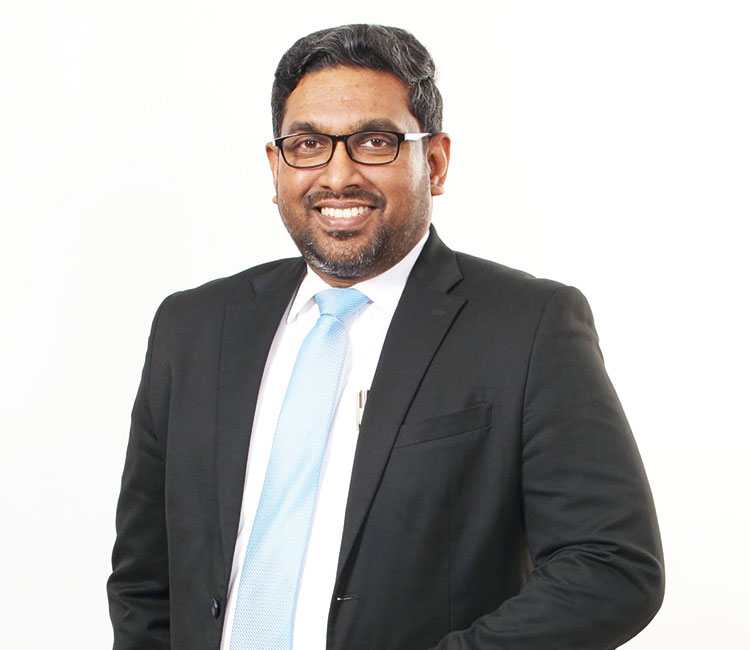
Sri Lanka Insurance Life (SLIC Life), the nation’s largest and strongest Life Insurer, is pleased to announce the appointment of Dr. Sameera Dharmasena as its new Chief Executive Officer, effective 22nd September 2026.
Dr. Dharmasena is a distinguished insurance professional with over 21 years of experience in the Sri Lankan insurance industry, having held senior leadership positions across several leading insurance companies affiliated with some of Sri Lanka’s largest business conglomerates. His extensive career spans both local and multinational insurance environments, bringing together broad industry expertise, strategic leadership and a strong commitment to the advancement of the insurance profession.

Sajith vows to scrap 22A under future govt.

Two retired female Navy officers remanded over disappearance of two women during war

FSP: Govt. moving to introduce far more sinister legislation to replace PTA

Habeebu Lebbe sworn in as MP

Banks tighten online security as fraudsters outpace safeguards

ITAK seeks India, US intervention to save Lankan on Saudi death row

‘Dates have the highest sugar content to fight Coronavirus’

Sunday Island 27 December – Headlines

#SundayIsland 17th December – Headlines

Sunday Island – 28th March

Sunday Island Headlines – 21 March

Sunday Island – 21st February – Headlines
-

 News6 days ago
Shanakiyan urges urgent action over reported death sentence for Lankan in Saudi Arabia
-

 News5 days ago
Namal Rajapaksa Buddhist gambit fails, bail denied
-

 Features5 days ago
Why the spelling Sri Lankan names in English vary
-

 Features5 days ago
Three bands, a new identity: Sri Lankan wolf snake recognised as distinct species
-
 Business5 days ago
SLIIT holds largest-ever convocation
-

 News5 days ago
Govt monitors reported Saudi death sentence – Foreign Ministry
-
 News5 days ago
Vehicle prices drop by up to Rs. 1 mn, says importers’ body
-

 Business5 days ago
All-new Bolero MaXX Pik-Up unveiled in Lanka