
Business
LankaPay–Weixin Pay tie-up set to transform tourism receipts and digital payments landscape

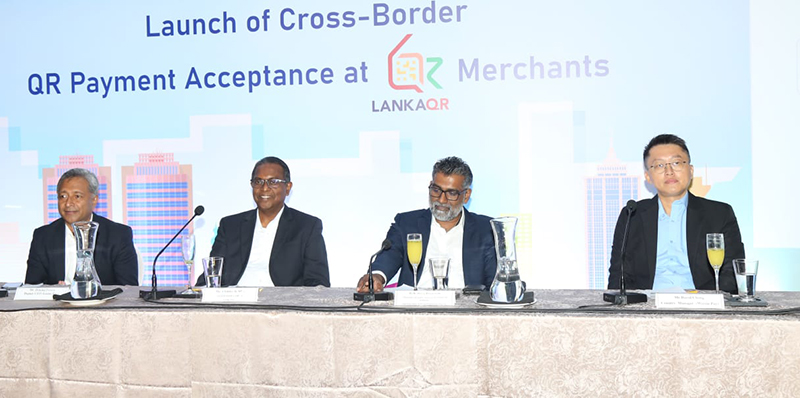
Authorities took a decisive leap towards integrating with the global digital economy this week, as LankaPay unveiled cross-border QR payment acceptance in partnership with Weixin Pay—a move widely seen as a game-changer for tourism earnings, financial inclusion, and merchant empowerment.
Launched in Colombo on March 24, the initiative enables millions of Weixin Pay users—particularly from mainland China—to seamlessly transact at more than 400,000 LANKAQR merchants islandwide. In effect, Sri Lanka has plugged directly into one of the world’s most powerful digital payment ecosystems, removing long-standing friction points faced by high-spending inbound travellers.
This is more than a technological upgrade—it is a strategic economic intervention.
At a time when Sri Lanka is aggressively positioning itself to attract higher tourist inflows and boost foreign exchange reserves, enabling trusted, home-grown payment platforms for key source markets such as China could significantly influence visitor spending behaviour. Global travel trends consistently show that tourists spend more when payment systems are frictionless, familiar, and secure.
Weixin Pay, deeply embedded in everyday life in China, dominates both online and offline transactions across sectors—from retail and dining to transport and services. Its integration into Sri Lanka’s LANKAQR network effectively allows Chinese visitors to replicate their domestic payment experience, eliminating currency conversion hassles and reducing reliance on cash.
LankaPay Chief Executive Officer Channa de Silva underscored the broader national significance of the initiative.
“We are extremely pleased to enable Weixin Pay acceptance in Sri Lanka. This collaboration reflects our continued commitment to providing secure, seamless, and internationally interoperable payment solutions. By connecting global travelers with Sri Lanka’s LANKAQR network, we aim to enhance payment convenience while supporting local merchants and contributing to the broader growth of the economy,” he said.
Ben Yang, Managing Director of Weixin Pay for Southeast Asia and North America, pointed to the rapid expansion of outbound Chinese travel and the critical role of payment accessibility.
“This partnership will enable travellers to transact seamlessly while offering local businesses new opportunities to engage with global customers,” he noted, highlighting Sri Lanka’s growing appeal as a destination.
Beyond tourism, the ripple effects of this integration are expected to be far-reaching.
For Sri Lanka’s micro and small enterprises—many of which operate at the fringes of the formal financial system—the development opens a direct gateway to international consumers without requiring sophisticated infrastructure. A simple QR code now connects a roadside vendor, boutique hotel, or small retailer to one of the largest consumer markets in the world.
This has profound implications for financial inclusion. Digital transaction records can strengthen creditworthiness, improve access to financing, and gradually formalise segments of the informal economy—addressing structural constraints that have long hindered MSME growth.
From a policy standpoint, the move also aligns with efforts led by the Central Bank of Sri Lanka to modernise the national payments framework. LANKAQR, built on internationally recognised EMVCo standards, has already laid the foundation for a unified, interoperable QR ecosystem. The onboarding of a global giant like Weixin Pay signals the system’s maturity and international readiness.
Crucially, the initiative is expected to support stronger foreign exchange inflows at a time when external sector stability remains a priority. By capturing tourist spending digitally within the formal financial system, the country stands to improve transparency, efficiency, and revenue tracking.
Analysts say Sri Lanka is now catching up with regional competitors that have aggressively integrated with Chinese and other global payment platforms to attract high-value tourists. In that context, this partnership is both timely and necessary.
With cross-border payment interoperability fast becoming a benchmark for competitive tourism markets, LankaPay’s latest move positions Sri Lanka as a more accessible, digitally strong destination.
By Ifham Nizam

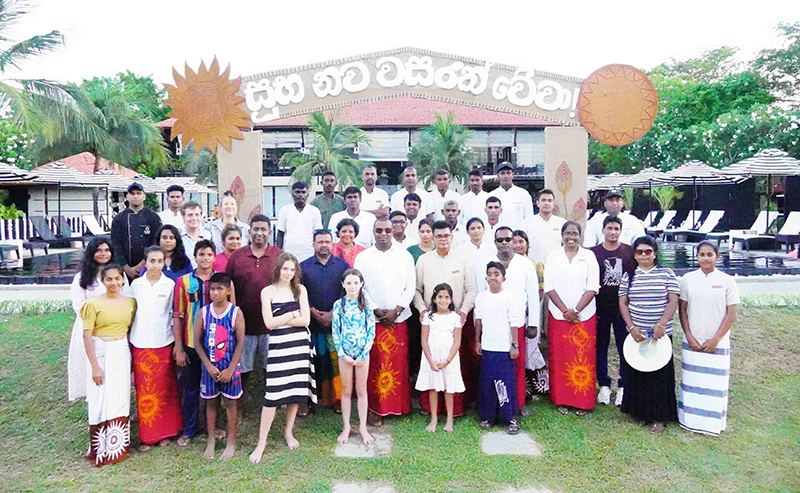
There is something about Avurudu that naturally fills every corner of Sri Lanka with energy and connection, and this year, that spirit extended to the shores of Pasikudah. At Sun Siyam Pasikudah, part of the Prive Collection within The House of Siyam, the Sinhala and Tamil New Year was celebrated on 14 April with a vibrant, full day programme that brought together guests and team members in true festive spirit, warm, lively, and centred around shared traditions and generous feasts.
The day followed the rhythm that Sri Lankan families know well. At the auspicious hour determined by the almanac for the New Year, the hearth at The Kitchen was ceremonially lit and the milk pot set to boil, symbolising warmth, unity, and the drawing in of abundance for the year ahead. This followed another auspicious moment at noon where a Traditional Sweet Table was laid out, where kiribath, kokis, kavum, aasmi and more were on offer, prepared by the resort’s culinary team and enjoyed by guests who had gathered, some for whom this was the most natural thing in the world, and others encountering the tradition for the very first time.
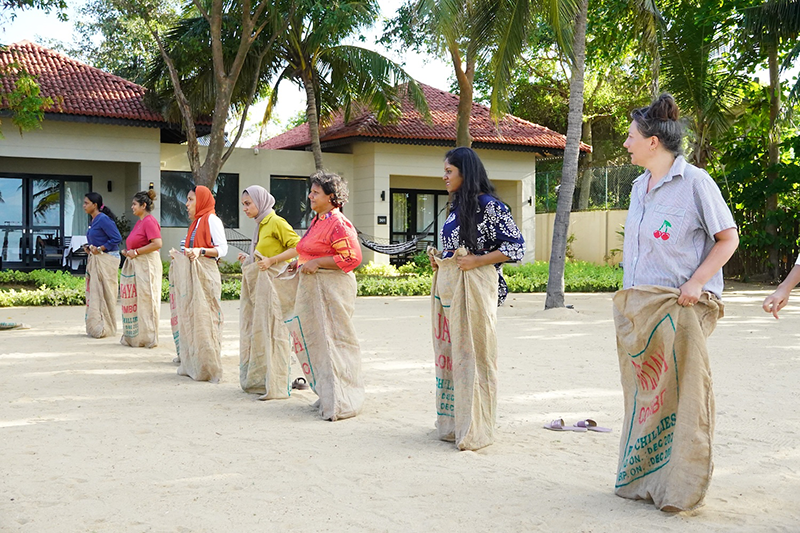
From 3:00 PM onwards, the afternoon opened into games. The resort grounds hosted the full run of Avurudu classics: Kana Muttiya (Pot Breaking), Kaba Adeema (Tug of War), Banis Kama (Bun Eating Contest), Balum Pipirawima (Balloon Blowing), Kotta Pora (Pillow Fighting), the Sack Race, Spoon Race, Blindfold Yogurt Feeding, Eyeing the Elephant, and Finding the Coin on the Plate. Guests of all ages joined in, and the kind of laughter that filled the afternoon is really the only way to describe what Avurudu at its best feels like.
“Avurudu is one of those occasions where the feeling in the air does all the work. The auspicious timings, the lighting of the hearth, the sweet table, the games in the afternoon: each of these carries its own meaning, and when you observe them properly and together, the day takes on a quality that is hard to replicate at any other time of year. We wanted our guests, wherever they had travelled from, to feel genuinely part of that, not simply watching from the outside. I think the day showed that Pasikudah is a place where that kind of celebration feels entirely at home,” said Arshed Refai, General Manager, Sun Siyam Pasikudah
The celebration is also a reflection of a broader moment for this stretch of the Sri Lankan coast. Pasikudah has long been known among those who seek it out: a bay of extraordinary calm and clarity, unhurried in a way that the island’s busier coastal destinations rarely are. What has shifted in recent years is that more people are finding it. Sri Lanka welcomed over 600,000 international visitors in the first quarter of 2025, generating tourism revenue of USD 1.025 billion, and the East Coast is increasingly part of that conversation. Sun Siyam Pasikudah has been central to placing Pasikudah on that map.
The resort’s 34 pavilions, offered in one and two bedroom configurations across garden and beach settings, are styled in a way that is quietly striking: monochrome interiors with warm golden accents, spacious and well-considered, always with the ocean close by. Dining is spread across The Kitchen, The Cellar, The Slice and Grill, The Tea House, and The Bar, with destination dinners available for guests who want a private evening under the stars. Sailing excursions along the coastline, spa and wellness, and encounters with local arts and crafts complete what Sun Siyam Pasikudah offers throughout the year.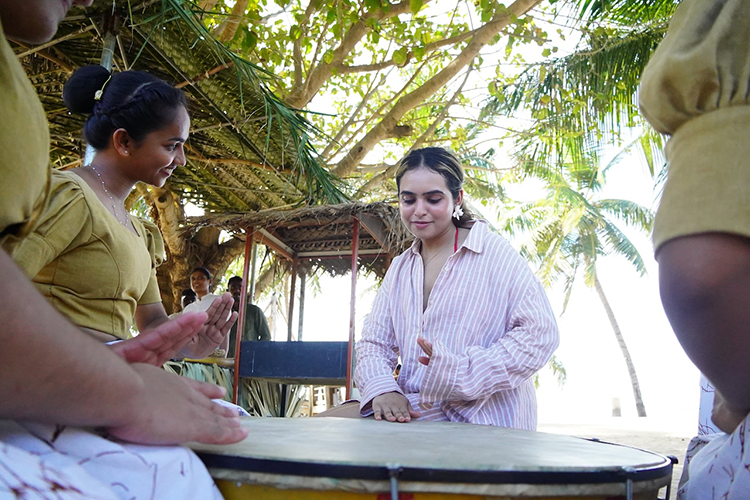
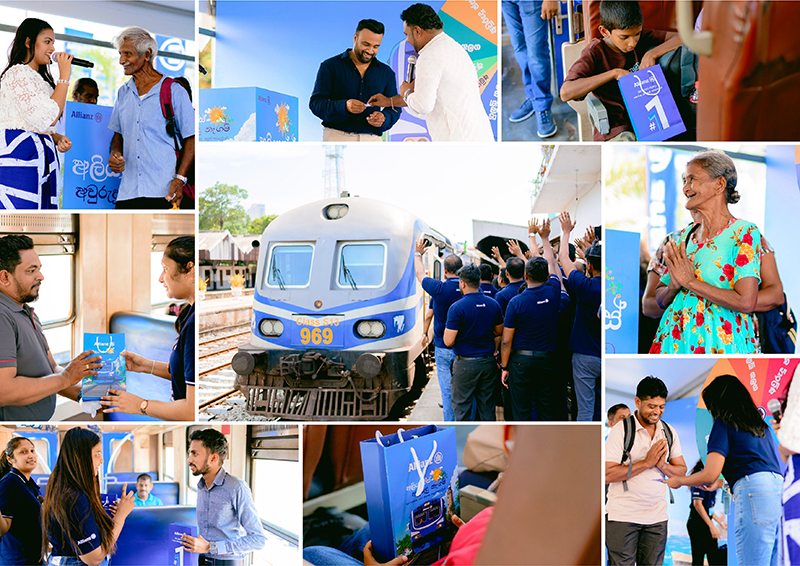
During the Sinhala and Tamil New Year, a time defined by togetherness, tradition and returning home, Allianz Insurance Lanka Limited once again stood alongside Sri Lankan communities by continuing its Avurudu Negam initiative for the second consecutive year, expanding its reach to support families during the festive travel period.
Building on the positive response to last year’s programme, Allianz Avurudu Negam 2026 was shaped to make the journey home special and loved during Avurudu. In response, Allianz offered ticket refunds to eligible passengers travelling on the Galu Kumari service from Maradana, supporting passengers journeying home to celebrate the New Year with loved ones.
Passengers boarding from Maradana and Fort and travelling beyond Galle up to Belliatta were eligible for the refund, helping make the journey home more affordable at a meaningful time of year. Acknowledging that financial strain frequently continues even after the celebrations conclude, Allianz extended the refund window until 30th April, easing the cost of returning to Colombo after Avurudu.
To complement this support, Allianz added a heartfelt touch rooted in New Year tradition. Traditional oil cakes were distributed to passengers boarding from Maradana, allowing families to take a familiar symbol of Avurudu back home and share it around their festive tables.
Allianz also prioritised protection during this period. Passengers eligible for the refund were given the option to obtain free Allianz Personal Accident Insurance, reflecting the belief that protection does not end with a journey, but continues wherever people go. In addition, these passengers were included in an LKR 1 million raffle draw, as an extension of the existing campaign, offering one winner shopping vouchers redeemable at outlets of their choice and support that extends beyond the New Year season.
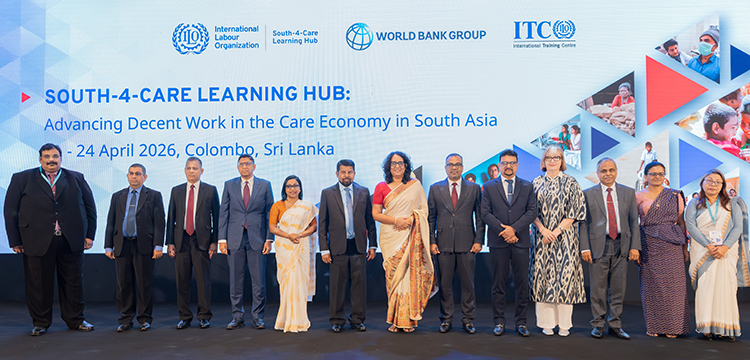
Discussions at the ILO-organized South-4-Care Learning Hub highlighted that progress in the care economy across South Asia is within reach when governments, employers and workers act together through coherent policies and social dialogue.
Countries across South Asia came together to advance decent work in the care economy through a four-day South-South knowledge exchange and capacity-building initiative organized by the International Labour Organization (ILO), in partnership with the World Bank Group, and in collaboration with the International Training Centre of the ILO (ITCILO).
The South-4-Care Learning Hub: Advancing Decent Work in the Care Economy in South Asia, taking place from 21–24 April 2026 in Colombo, provided a regional platform for South-South and Triangular Cooperation, enabling countries at different stages of development to exchange experiences, build capacity and identify pathways of building towards gender-responsive and resilient economies.
Delivering the inaugural address, Dr. Harini Amarasuriya, Prime Minister of the Democratic Socialist Republic of Sri Lanka highlighted stated that “the care issue, the care economy, is no longer a peripheral issue. It is central to how our economies function and how our societies sustain themselves”.
“Labour force participation is not simply about productivity, it is about access to opportunity, dignity and inclusion,” she said, adding that no form of work, whether paid or unpaid, formal or informal, should remain invisible, undervalued, or underprotected.
Participants underscored that advancing decent work in the care economy in South Asia requires coordinated and sustained action grounded in social dialogue, public investment and policy coherence. Discussions highlighted the importance of strengthening care systems through inclusive policies that respond to rising care needs while improving working conditions and protections for care workers.
The panels emphasized the critical role of national actors- including governments, employers’ organizations, trade unions, private sector actors and experts- in shaping effective care policies and services. Participants shared practical experiences and initiatives demonstrating how social dialogue, partnerships and coordinated action can translate policy commitments into tangible outcomes.
Care work – both paid and unpaid – is essential to the functioning of societies and economies. It enables people to participate in the labour market, supports families and communities, and underpins productivity and economic growth. Yet across South Asia, care work remains undervalued and unevenly distributed, with women bearing a disproportionate share. Limited access to affordable and quality care services continues to restrict women’s labour force participation and deepen gender inequalities.

Death of the Sperm Whale

Fertile soil basis of sound farming

Heat Index at Cautiin Level in the Northern, North-central, North-western, Western, Sabaragamuwa, Eastern and Southern provinces and in Monaragala district during the day time

Has Malimawa govt. become Yahapalanaya II ?

Legislature’s meek submission to overbearing Executive

Measles rearing its head again in SL

‘Dates have the highest sugar content to fight Coronavirus’

Sunday Island 27 December – Headlines

#SundayIsland 17th December – Headlines

Sunday Island – 28th March

Sunday Island Headlines – 21 March

Sunday Island – 21st February – Headlines
-
 News3 days ago
Rs 13 bn NDB fraud: Int’l forensic audit ordered
-

 Business6 days ago
Harnessing nature’s wisdom: Experts highlight “Resist–Align” path to resilience
-

 Opinion4 days ago
Shutting roof top solar panels – a crime
-

 News6 days ago
Gratiaen Trust announces longlist for the 33rd Annual Gratiaen Prize
-

 News5 days ago
From Nuwara Eliya to Dubai: Isha Holdings markets Agri products abroad
-
 News6 days ago
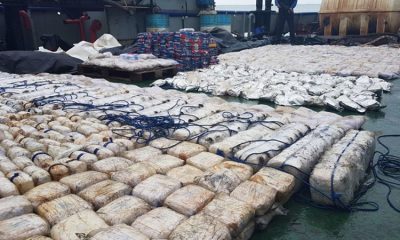
Heroin haul transported on 50-million-rupee contract
-

 News4 days ago
Church calls for Deputy Defence Minister’s removal, establishment of Independent Prosecutor’s Office
-

 News5 days ago
‘Agents of the devil’ seeking to block Easter probe, Cardinal warns