
News
Substandard coal deepens energy crisis, warns former CEB Chief

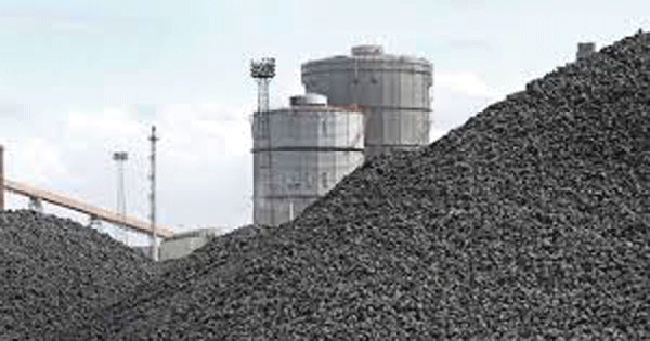
The ongoing controversy surrounding the importation of substandard coal to the Lakvijaya (Norochcholai) Coal Power Plant has spiralled into a full-blown national energy crisis, with severe technical disruptions, mounting financial losses, and growing fears of widespread power outages, a former General Manager of the Ceylon Electricity Board has warned.
Speaking with authority shaped by decades of experience, the retired electrical engineer did not mince his words: “This is not a routine operational issue. This is a systemic failure that is now threatening energy security.”
At the heart of the crisis lies the compromised quality of coal supplied to the Lakvijaya plant, the country’s largest coal-fired power station.
According to the former CEB chief, the plant’s generation capacity has dropped sharply due to coal that fails to meet the required Gross Calorific Value (GCV) of 5,900 kcal/kg.
“Generation losses in the range of 80 to nearly 180 megawatts are not minor fluctuations. They represent a serious erosion of base-load capacity at a time when demand is steadily rising,” he said.
The technical consequences have been immediate and severe. Coal mills—critical components in pulverising coal for combustion—have reportedly clogged due to high ash content and poor grindability, particularly in Unit 3.
Engineers have been forced to resort to diesel-fired burner guns to stabilise boiler operations, a move the former GM described as “a costly and inefficient emergency measure.”
“Diesel is not meant to be a fallback for sustained operations. It is a last resort. When you start relying on it regularly, you are effectively admitting that the system is failing,” he added.
Beyond immediate disruptions, the long-term risks to infrastructure are deeply concerning. Substandard coal increases the likelihood of slagging and fouling within boilers, potentially leading to overheating and irreversible damage.
“You are not just losing power generation today—you are shortening the lifespan of multi-billion-rupee assets,” he warned.
The financial fallout has been equally staggering. Internal estimates from the CEB and the Public Utilities Commission of Sri Lanka suggest that losses from multiple coal shipments range between Rs. 7.5 billion and Rs. 8.5 billion.
Compounding the crisis is the cost of replacement power. With the coal plant unable to operate at full capacity, authorities have increasingly turned to diesel-based emergency generation.
“The economics are brutal,” the former GM explained. “A unit of electricity from coal costs roughly Rs. 20 to 25. Diesel generation can go up to Rs. 60 or even Rs. 75. That gap translates into tens of millions of rupees in additional daily expenditure.”
He estimated that the country is incurring an extra burden of over Rs. 50 million per day due to this forced shift—costs that ultimately fall on the public.
Even more troubling, he noted, is that contractual penalties imposed on suppliers are insufficient to offset the losses.
“The recoverable penalties are nowhere near the actual damage. There is a gap of nearly Rs. 2 billion, which means the taxpayer is left footing the bill,” he said.
The environmental implications of the crisis add another layer of urgency. One shipment reportedly contained ash levels as high as 21 percent—almost double the acceptable standard.
“This means thousands of tonnes of additional waste. Where is it going? How is it being managed?” the former GM questioned.
Worse still, when diesel burners are used to stabilise boilers, Electrostatic Precipitators (ESPs)—designed to capture harmful fly ash—must be temporarily shut down. This results in the release of toxic particulates into the atmosphere.
“You are talking about emissions containing mercury, arsenic, and lead. These are not abstract risks. They have direct consequences for public health, particularly for communities living around Norochcholai,” he stressed.
The crisis has also exposed serious lapses in procurement and governance. The former GM pointed to the reduction of procurement timelines from 42 days to just 21 days, as well as the lowering of supplier eligibility thresholds.
“These are not procedural tweaks—they fundamentally alter the integrity of the procurement process,” he said, adding that such changes may have limited competition and allowed less experienced suppliers into the system.
He also raised concerns over reports that coal had been fed directly into boilers before independent quality verification.
“If true, that is a dangerous precedent. Quality assurance exists for a reason. Bypassing it undermines operational safety and accountability,” he noted, while acknowledging the CEB’s position that direct feeding was intended to avoid double handling.
Looking ahead, the timing of the crisis could not be worse. With the southwest monsoon approaching, experts fear that delays in procurement or the rejection of substandard shipments could push fresh imports into a period when rough seas make unloading at Norochcholai extremely difficult.
“If shipments are delayed into the monsoon window, you are staring at a real risk of supply disruptions. That is when load shedding becomes unavoidable,” the former GM warned.
He called for immediate corrective measures, including stricter quality enforcement, transparent procurement practices, and accountability at all levels.
“This is a preventable crisis. But it requires decisive action. Otherwise, we are heading towards a situation where technical failure, financial loss, and environmental damage converge into a national emergency,” he said.
By Ifham Nizam



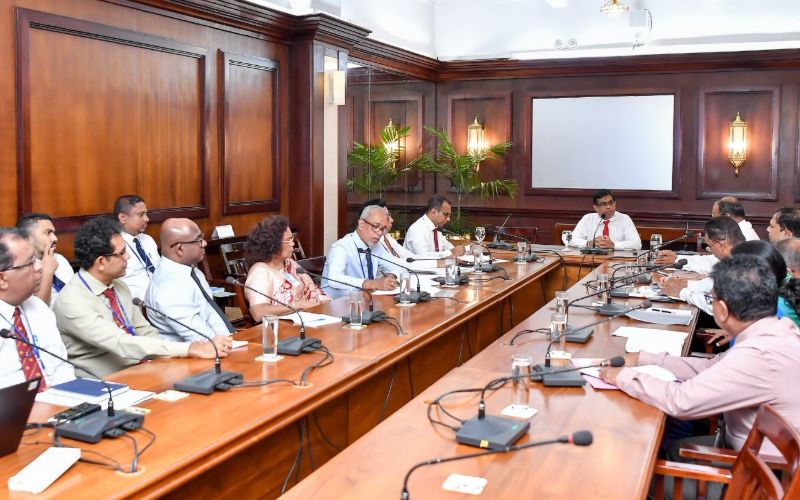
A discussion on the modernisation initiatives required within the Sri Lanka Customs and measures to encourage exporters in support of implementing the National Export Development Plan (NEDP) 2026–2030 was held on Wednesday (17) morning at the Presidential Secretariat under the patronage of Secretary to the President, Dr. Nandika Sanath Kumanayake.
The meeting, organised by the Revenue Administration Reform and Modernization Bureau established under the Presidential Secretariat, focused extensively on the modernisation measures required within Sri Lanka Customs to facilitate the expansion of exports.
During the discussion, the Secretary to the President instructed Sri Lanka Customs to enhance the capacity, facilities and modernisation of the Export Facilitation Centre, where export containers are inspected, in order to create a more efficient and exporter-friendly environment.
Attention was also drawn to developing a programme aimed at encouraging exporters across the country to enter the export sector. The Secretary to the President further emphasised the need to review the Temporary Import for Export Processing (TIEP) scheme currently operated by the Customs Industrial Facilitation Division and to introduce a programme to support small and medium-sized enterprises (SMEs) that have not yet engaged in export activities.
The meeting also explored the possibility of decentralising customs operations to support the expansion of the export sector, with particular attention given to establishing a Customs Export Centre in Jaffna.
Discussions were also held on removing barriers affecting exports conducted through e-commerce platforms. It was decided to hold further discussions with the Department of Posts on measures that could be taken jointly to streamline these processes.
Participants also discussed introducing digital systems to expedite document processing, thereby reducing both, time and costs, as well as implementing a risk-based assessment mechanism that would provide greater facilitation for low-risk exporters.
It was further decided that Sri Lanka Customs, the Sri Lanka Export Development Board (EDB) and other relevant institutions would meet monthly under the leadership of the Revenue Administration, Reforms and Modernisation Bureau of the Presidential Secretariat to review progress, identify challenges faced by exporters and discuss appropriate solutions.
The National Export Development Plan has been formulated in line with the national vision, “A Thriving Nation – A Beautiful Life”, with the objective of enhancing Sri Lanka’s export competitiveness and achieving an ambitious yet realistic export revenue target of USD 36 billion by 2030.
Director General of Customs Wimal Liyanagama, Chairman of the Sri Lanka Export Development Board (EDB) Mangala Wijesinghe, Additional Directors General of Sri Lanka Customs T. Loganathan and L.K.S.D.K. Arewatta, Director of the Sri Lanka Export Development Board Dr. Sanjeewa Rathnasekara, Director of the Revenue Administration, Reforms and Modernisation Bureau of the Presidential Secretariat W.L.C. Thilakasiri and senior officials from Sri Lanka Customs and the Sri Lanka Export Development Board were also present.
[PMD]

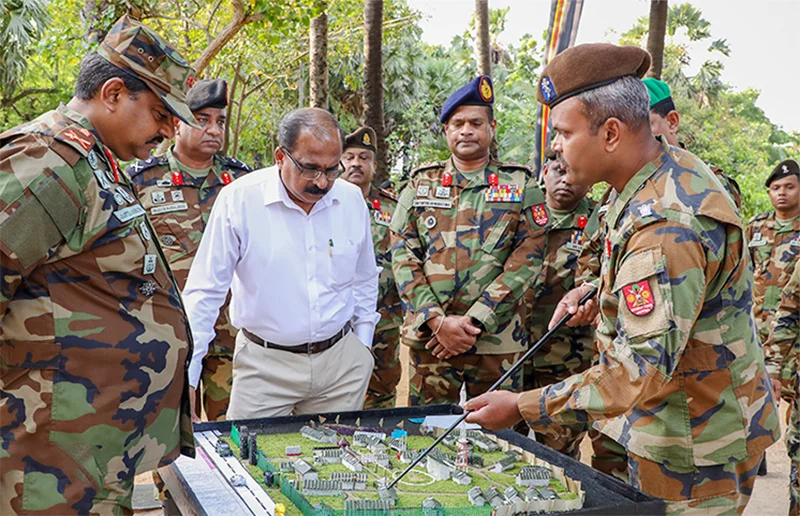
The NPP government is trying to maintain a balance between continuing demands for releasing north-east land held by the military and post-war security requirements, says Deputy Defence Minister Major General Aruna Jayasekera (Retd), who has undertaken a series of visits to the northern and eastern provinces in the recent past to explore ways and means of releasing the land, without compromising national security requirements.
Since the armed forces brought the war to a successful conclusion in May, 2009, releasing of both privately- and state-owned land began cautiously in October, 2009, and by now over 90 percent of both categories have been released. At the height of the war, before the launch of Eelam War IV, in August 2006, Jaffna peninsula had the largest concentration of troops assigned to four Divisions.
In the first week of June, Deputy Minister Jayasekera visited the Trincomalee District to ascertain the situation. The Defence Ministry said that the Deputy Minister had assessed the current status of such lands and received briefings from senior military officers and relevant officials on security and administrative aspects regarding the properties.
Following the field inspection, the Deputy Minister chaired a meeting at the Governor’s Secretariat Office where the discussion focused on what the Defence Ministry called a balanced and practical approach to address land-related issues, protect the livelihoods of the people, and ensure that national security requirements were properly managed.
Jayasekera, with a career spanning well over three decades, retired in November, 2019, after having last served as the Eastern Commander for about a year.
During his June visit, the Deputy Minister visited various security forces establishments, including the 22 Infantry Division.
A senior retired military official said that those who had been demanding that all security forces held land, both state- and privately-owned, be released, have conveniently forgotten that this was made possible due to the eradication of the LTTE.
The Deputy Defence Minister conducted a series of field visits in the Jaffna and Wanni regions to assess the security situation and operational commitments. According to the Defence Ministry, the Deputy Minister addressed senior tri forces personnel at the Security Forces Headquarters – Jaffna (SFHQ-J) and the Security Forces Headquarters – Wanni (SFHQ-Wanni).
The Deputy Minister chaired civil-military coordination meetings in the Mannar and Jaffna districts to the ongoing land ownership issues, fostering socio economic growth, and streamlining local infrastructure layout in close cooperation with the regional administrative mechanism. The Ministry said that the Deputy Minister inspected agricultural zones, private residences and public common areas, presently placed within the operational infrastructure of the Sri Lanka Navy across several locations, in Mullikulam, Silawathura, Talaimannar, Wankalapadu, and Pallimune.
Members of Parliament for the Vanni Electoral District, Selvam Adaikalanathan, Kader Masthan, Thurairasa Ravikaran and the District Secretary for Mannar were also present at the meeting where matters related to socio economic grievances, local infrastructure demands, and land rights of the local residents were central topic in the agenda.
The Deputy Minister of Defence chaired a second meeting at the Governor’s Office in Jaffna where the main focus was existing land issues in the districts of Vavuniya, Mannar, Mullaitivu, Kilinochchi, and Jaffna.
The Jaffna proceedings were co-chaired by the Minister of Fisheries, Aquatic and Ocean Resources and Chairman of the District Coordinating Committee for the Jaffna and Kilinochchi Districts Ramalingam Chandrasekar and Deputy Minister of Co-operative Development Upali Samarasinghe.
The Defence Ministry said that stability depended on striking an optimal balance between prioritising national security obligations and resolving outstanding issues related to both state owned and privately used lands. “We are implementing a transparent mechanism to swiftly transition designated lands back into the hands of local communities for housing, fishing, and agriculture.”
The participation of the Commander of the Army and the Commander of the Navy underscored the importance of the discussions held in the north.
In the Mannar region the focus was on lands, presently used by the Navy, in the areas of Mullikulam, Silawathura, Talaimannar, Wankalapadu, and Pallimunai.
Authoritative sources said that since the end of the war, the military had given up held areas and what remained occupied were essential for security purposes. The depletion of the area under direct control should be examined taking into consideration gradual overall reduction of combined security forces strength over the years. At the end of the war, the Army had approximately 205,000 officers and men, both regular and volunteer. That figure has been reduced to 150,000 to 160,000. In line with the government thinking the Army strength would be brought down to 100,000 by 2030, a plan first announced by President Ranil Wickremesinghe.
By Shamindra Ferdinando

Colombo Chief Magistrate Lahiru de Silva yesterday granted bail to Yoshitha Rajapaksa, second son of former President Mahinda Rajapaksa, on three sureties of Rs. 5 million each, and imposed an overseas travel ban.
The Commission to Investigate Allegations of Bribery or Corruption (CIABOC) arrested Yoshitha yesterday morning when he called over to make a statement regarding an ongoing investigation into his recruitment to the Sri Lanka Navy and training at the UK Royal Naval Academy.
CIABOC said that the arrest had been made in connection with an investigation into the 2006 recruitment of cadet officers to the executive branch of the Sri Lanka Navy.
It has been alleged that individuals were recruited without meeting the required qualifications and state funds were used outside established procedures for their training at the Royal Naval Academy in the UK.

Oil prices fall, stocks rally as US, Iran sign framework to end war

Kane double fires England past Croatia in World Cup thriller

G7 leaders to boost Ukraine air defences, tighten sanctions on Russia

Discussion on Sri Lanka Customs’ contribution for National Export Development Plan

Gill and Kishan hundreds carry India past 400 and to victory

Arnautovic scores penalty as Austria beat World Cup debutants Jordan 3-1

‘Dates have the highest sugar content to fight Coronavirus’

Sunday Island 27 December – Headlines

#SundayIsland 17th December – Headlines

Sunday Island – 28th March

Sunday Island Headlines – 21 March

Sunday Island – 21st February – Headlines
-
 News6 days ago
CIABOC summons Yoshitha over his participation in British Navy training programme
-

 News3 days ago
Release of 2025 O/L results likely to be delayed
-

 News6 days ago
Justice Minister responds to social media claims he represented Easter Sunday ringleader
-

 Sports3 days ago
Tharanga set for high-profile javelin clash in Ostrava
-

 Features4 days ago
Politics of protected species
-

 News3 days ago
Theft of USD 2.5 mn from Treasury: CoPF accused of complicity in NPP cover-up
-

 News2 days ago
Beijing Capital Airlines to resume flights to Colombo signalling boost to tourism
-

 News5 days ago
Commonwealth lawyers urge Lanka to uphold rule of law