
Business
Iran war threatens Sri Lanka’s fragile recovery; SMEs face “Survival Crisis” – Prof. Rohan de Silva

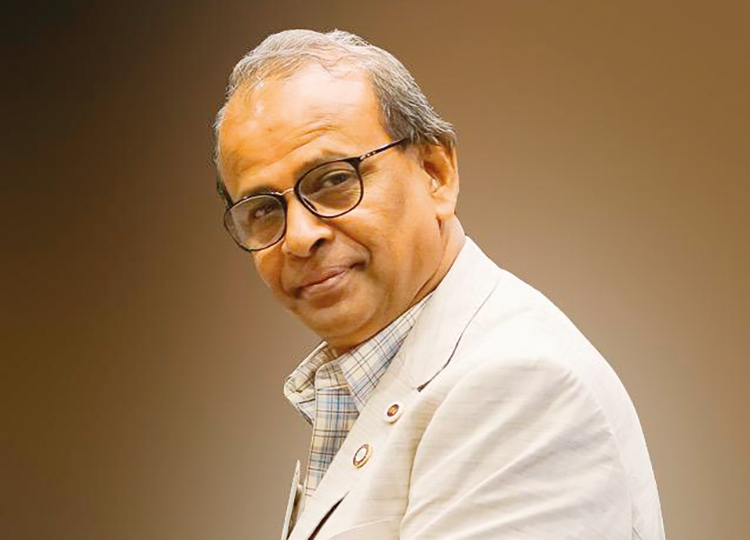
Sri Lanka’s already fragile economic recovery—still reeling from the aftermath of the 2019 Sri Lanka Easter Bombings, the pandemic, and the 2022 financial collapse—is now under renewed strain as the ongoing Iran war sends shockwaves through global energy, trade, and financial systems, experts warn.
Chartered Interior Architect and economic commentator Prof. Rohan de Silva cautioned that the Iran conflict is not an isolated external shock but a “multiplier crisis” that could severely undermine Sri Lanka’s recovery trajectory—particularly for small and medium enterprises (SMEs), which form the backbone of the economy.
Energy Shock Rekindles Crisis Conditions
At the heart of the emerging pressure is the sharp escalation in global oil prices and supply disruptions linked to instability around the Strait of Hormuz—a critical artery for global energy flows.
“Sri Lanka, which already spends around USD 4 billion annually on fuel imports, is extremely vulnerable to such shocks,” Prof. de Silva said. “Any disruption in supply chains or price spikes will immediately translate into domestic inflation and reduced economic activity.”
The situation, he noted, could force authorities to revisit emergency measures reminiscent of the 2022 crisis, including fuel rationing, restricted working days, and reduced transport services—directly impacting productivity.
Inflation Surge and Currency Pressures
Rising oil prices are expected to trigger a fresh wave of cost-push inflation, affecting transport, food, and essential goods. Increased war-risk insurance and shipping delays are further inflating import costs, placing additional pressure on the Sri Lankan rupee and already strained foreign reserves.
“The real danger is a re-triggering of balance of payments stress,” Prof. de Silva warned. “Higher fuel import bills, combined with potential declines in remittances from the Middle East and weaker export earnings, could destabilize external accounts once again.”
Sri Lanka’s export sectors are also facing mounting challenges. Tea exports to Iran and Gulf markets risk disruption, while apparel shipments are being delayed due to rerouted shipping lanes and rising freight costs.
“Transit times are increasing by up to two weeks in some cases. That erodes competitiveness and reliability—two key pillars for export markets,” Prof. de Silva explained.
Industrial supply chains are similarly under strain, with delays in raw materials and petroleum-based inputs threatening production continuity across sectors.
However, the most severe impact is being felt by SMEs, which Prof. de Silva described as “financially exhausted after enduring repeated shocks since 2019.”
“These businesses have not fully recovered from the Easter attacks, COVID-19 shutdowns, and the 2022 economic collapse. Now, they are facing a fresh crisis that is simultaneously increasing costs and reducing demand,” he said.
Operating expenses—including fuel, electricity, and logistics—have surged sharply, while constrained transport and reduced working days are limiting both customer access and employee attendance.
“This is a classic margin squeeze. For many SMEs, profits are not just shrinking—they are disappearing,” he added.
Compounding the crisis is tightening access to finance. With interest rates remaining elevated to control inflation, banks are becoming increasingly risk-averse, leaving SMEs struggling to secure working capital.
At the same time, declining household purchasing power is dampening demand, particularly in non-essential sectors such as retail, interior design, and construction-related services.
“Consumers are cutting back. SMEs are losing revenue streams. It’s a dangerous cycle,” Prof. de Silva said.
Export-oriented SMEs are also facing order cancellations and payment delays from Middle Eastern buyers, further squeezing foreign exchange inflows.
Employment and Social Pressures Mount
The SME crisis is already spilling over into the labour market. Businesses are reducing staff, cutting working hours, or halting expansion plans altogether.
“If this trend continues, we could see rising unemployment and underemployment, particularly among youth,” Prof. de Silva warned.
He also highlighted the risk of returning migrant workers due to instability in Gulf economies, which could intensify domestic job market pressures.
A Multi-Shock Economy on Edge
Prof. de Silva stressed that Sri Lanka is now grappling with a cumulative “multi-shock cycle”:
2019 Easter attacks → Tourism collapse
COVID-19 pandemic → Prolonged shutdowns
2022 economic crisis → Currency and fuel collapse
Iran war → External energy, trade, and financial shock
“Each crisis has weakened the resilience of SMEs. What we are seeing now is not recovery, but survival,” he said.
Without targeted intervention, Prof. de Silva warned of widespread SME closures, job losses, and a prolonged delay in national economic recovery.
“The Iran war is amplifying every existing vulnerability in Sri Lanka’s economy. SMEs are at the frontline of this crisis—and without immediate policy support, the consequences could be severe and long-lasting,” he cautioned.
By Ifham Nizam


HNB FINANCE PLC has strengthened its Board with the appointment of four Independent Non-Executive Directors, effective September 8, 2026.
The new directors are Renuke Wijayawardhane, Shanti Gnanapragasam, Nabiha Mohamed and Dr. Thisuri Wanniarachchi, who collectively bring extensive experience in financial regulation, banking, risk management, corporate finance, investment strategy, development finance and public policy.
Wijayawardhane, an Attorney-at-Law and capital market professional, retired in July 2025 as Chief Regulatory Officer of the Colombo Stock Exchange after more than 31 years with the Exchange. His experience covers securities regulation, corporate governance, market infrastructure and compliance.
Gnanapragasam has over four decades of banking experience spanning treasury, risk management, credit and trade finance. She currently serves as an Independent Non-Executive Director of Cargills Bank, Wealth Trust and Vision Fund Lanka.
Mohamed is a corporate finance and investment professional who previously served as Lead Transaction Advisor at the State-Owned Enterprise Restructuring Unit of the Ministry of Finance, where she led five divestiture transactions worth over US$600 million.
Dr. Wanniarachchi brings over a decade of experience in development finance, institutional reform and social protection, including work with the World Bank and the Government of Sri Lanka.

Prime Lands Residencies PLC has completed and officially handed over The Palace Gampaha, described as the largest planned gated residential community in Gampaha, to its homeowners.
The development, which commenced construction in 2021, is located two kilometres from Gampaha town and 100 metres from the Colombo-Kandy main road.
Spread across 13.5 acres, The Palace Gampaha comprises 480 two- and three-bedroom apartments in a ground-plus-three-floor development, with prices starting from Rs. 27.5 million.
The project allocates about 80% of its land to landscaped areas and common facilities, while the remaining 20% is used for apartment development. Facilities include a swimming pool, gymnasium, clubhouse, library, community kitchen, laundry, mini-mart and a daycare centre managed by the Lyceum Group.
The fully gated community also incorporates solar power for common areas, underground electricity cabling and a sewage treatment plant with water recycling facilities.
Prime Residencies said all statutory approvals required for the handover had been secured, including certifications from the Condominium Management Authority and registration of the Condominium Plan and Deed of Declaration.
Prime Group Chairman Premalal Brahmanage said the project reflected the company’s vision of creating large-scale residential communities designed to enhance the quality of life of Sri Lankan families.
The project is the latest addition to Prime Group’s portfolio of more than 70 gated community and apartment developments.

Sri Lanka’s Non-Vessel Operating Common Carrier (NVOCC) sector is losing ground despite the expansion of the industry in several regional markets, Sri Lanka Association of NVOCC Agents (SLANA) Chairperson Swabha Wickramasinghe said.
Wickramasinghe, re-elected for a third consecutive term at SLANA’s ninth Annual General Meeting last week said the continued difficulty in collecting Colombo Terminal Handling Charges (THC) as a separate land-based cost was among the key challenges facing the industry.
She said the practice placed Sri Lanka at a competitive disadvantage as principals consider the overall economics of operating through Colombo.
“When Sri Lanka becomes less commercially attractive compared with other regional destinations, the consequences eventually reach our members,” she said.
Wickramasinghe said a committee had been proposed at a recent meeting with the Minister and Deputy Minister to evaluate the THC issue, urging the authorities to expedite its appointment and review.
She also called for an early solution to the problem of uncleared salt containers at the Port of Colombo, which has resulted in delays in releasing empty containers.
With more than 75 NVOCC lines operating in Sri Lanka, she stressed the sector’s importance to regional trade, particularly links with India and China.
Ports Minister Anura Karunathilaka said Sri Lanka should expand regional business while exploring areas such as bunkering, freight forwarding and e-commerce logistics.

Death toll from Philippines ferry fire rises to 76, with more still missing

Anthropic boss Dario Amodei calls for AI development to slow down

It’s spin vs spin as India and Sri Lanka battle for Asia Cup title

Atmospheric conditions are favorable for afternoon thundershowers in most parts of the Island today [13]

Gnanasara Thero absconding after SC ruling

House to debate 22A, Judicature Bill next week

‘Dates have the highest sugar content to fight Coronavirus’

Sunday Island 27 December – Headlines

#SundayIsland 17th December – Headlines

Sunday Island – 28th March

Sunday Island Headlines – 21 March

Sunday Island – 21st February – Headlines
-

 Sports2 days ago
DDS set to lose Test captaincy
-

 Features6 days ago
After the parade: What a traffic OIC’s walk-out tells us
-

 Editorial6 days ago
Arrests as theatre
-
 News5 days ago
Thailand shuts door on undesirables from Sri Lanka
-

 Latest News6 days ago
Harshitha’s composed knock seals Sri Lanka’s semi-final berth
-

 News6 days ago
‘Choka Malli’ slips out of country before travel ban
-
 Business5 days ago
CEB successor company breaks into top three in competitive BESS tender
-

 News2 days ago
Sri Lanka faces new grid challenge as rooftop solar surges: former CEB GM