
News
Fuel rationing begins: Police deployed as queues return

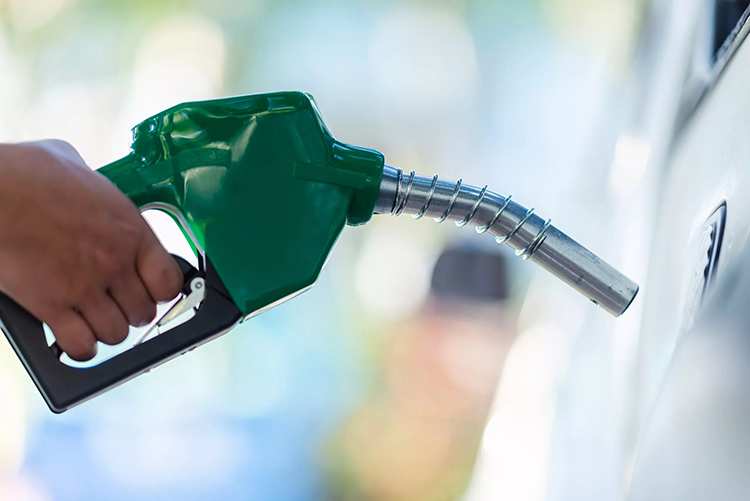
Long queues of vehicles once again lined roads near filling stations across the country yesterday as authorities reintroduced the QR-based fuel quota system, prompting the deployment of police officers to manage traffic and maintain order.
The measure comes against the backdrop of escalating tensions in the Middle East and global oil supply disruptions which officials say have triggered panic buying and fuel hoarding despite assurances that the country is not facing an immediate shortage of fuel.
DIG in charge of Traffic and Road Safety Range DPGJ Senadeera said police officers had been deployed to major filling stations to regulate traffic and prevent congestion caused by large crowds gathering to obtain fuel.
Speaking to the media, Senadeera said the queues were largely the result of panic.
“The public need not panic. Once the QR code system is in place, each category of vehicle will receive the required amount of fuel,” he said.
According to the DIG, traffic congestion near fuel stations was mainly caused by motorists attempting to stockpile fuel.
“Many people who require only a small quantity of fuel are attempting to obtain larger amounts due to fear and uncertainty. This behaviour has created long queues and congestion,” he said.
“If people remain calm and obtain only the amount of fuel they require, these problems will not arise. The system has been introduced precisely to prevent long queues and ensure efficient distribution,” Senadeera added.
Meanwhile, the Ministry of Energy announced that the QR code system for fuel sales came into effect at 6 am yesterday (15), making it mandatory for motorists to present a valid QR code to obtain fuel.
Authorities said the measure had been introduced in response to abnormal increases in demand for fuel and concerns over disruptions to global supply chains caused by the ongoing military situation in the Middle East.
A public notice issued by the ministry stated that the petroleum supply chain had been adversely affected by the Middle East conflict, while local demand had risen sharply in recent days, placing pressure on the country’s fuel reserves.
Officials also noted that certain groups had been purchasing excessive quantities of fuel illegally, prompting the government to introduce the QR code mechanism to curb hoarding and ensure fair distribution.
Under the system, each vehicle category will be entitled to a fixed weekly fuel quota.
According to the Ministry of Energy, the allocations are as follows: Buses – 60 litres, Motor lorries – 200 litres, Vans – 40 litres, Three-wheelers – 15 litres, Motor cars – 15 litres, Motorcycles – 5 litres, Land vehicles – 25 litres, Special purpose vehicles – 40 litres and Quadricycles – 5 litres.
Managing Director of the Ceylon Petroleum Corporation (CPC), Mayura Neththikumarage, insisted that the introduction of the QR code system did not indicate a fuel shortage.
“There is no issue with fuel availability. The system was introduced after we observed people collecting fuel in large quantities and queues forming over the past three to four days,” he said.
Neththikumarage said the primary objective of the QR code system was to ensure that the public could obtain fuel without having to wait in long queues.
Fuel distribution under the new system commenced at 6.00 a.m. yesterday, with priority initially given to motorists who had previously registered and obtained QR codes.
Those who had earlier registered for the system can continue to use their existing QR codes, provided the vehicle ownership and registered mobile number remain unchanged.
Motorists who have not yet registered can obtain a QR code through the official website fuelpass.gov.lk, while those whose vehicle ownership or mobile numbers have changed are required to re-register their details.
Meanwhile, the Ministry of Energy said a separate fuel distribution mechanism would be implemented for vehicles engaged in essential services and production activities.
Private passenger transport buses will receive fuel through depots operated by the Sri Lanka Transport Board, the ministry added.
Amid the situation, Minister Dr. Nalinda Jayatissa appealed to the public to use fuel responsibly and avoid unnecessary travel.
“As a government, we request the public to think not only about their own families but also about the country. Manage fuel consumption carefully and avoid unnecessary travel during this period,” the minister said at an event held in Moratuwa.
He stressed that rationed fuel consumption was essential to ensure that available stocks could be sustained while global uncertainties continue.
Authorities reiterated that the QR code system had been introduced as a precautionary measure to manage fuel distribution effectively and prevent panic-driven shortages.
Police meanwhile urged motorists to cooperate with traffic officers stationed near filling stations and refrain from forming unnecessary queues, warning that panic buying would only worsen congestion and inconvenience the public.
by Norman Palihawadane

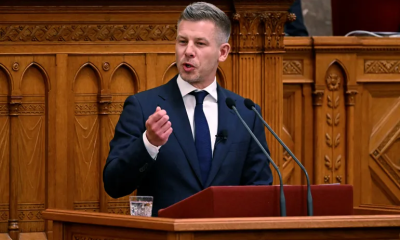



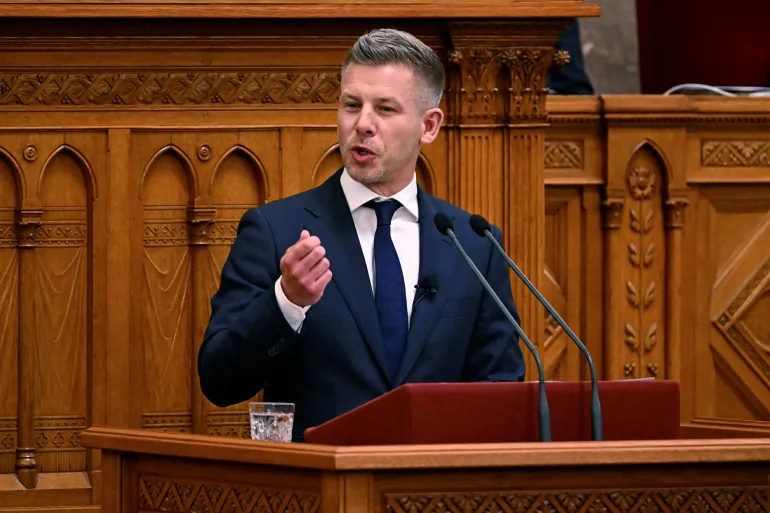
Peter Magyar has been sworn in as Hungary’s new prime minister, almost a month after parliamentary elections that ended Viktor Orban’s 16 years in power.
Magyar, 45, who leads the centre-right Tisza party, was propelled into office on promises of change after years of economic stagnation under Orban, and strained ties with key allies, including the European Union.
On Saturday, Magyar invited Hungarians to “step through the gate of regime change”.
His party has a huge parliamentary majority, winning 141 of the 199 seats.
However, Magyar faces several challenges in his new role, including restoring Budapest’s relations with the EU, reviving the economy and tackling a budget deficit that reached almost three-quarters of its full-year target by April.
A ceremony was held inside Hungary’s neo-Gothic parliament building as Magyar was sworn in. The EU flag, removed under Orban, was displayed inside the chamber for the first time in 12 years.
The newly appointed parliamentary speaker, Agnes Forsthoffer, used her first decision in office to order the flag’s reinstatement, describing the move as “the first symbolic step on this path [back to Europe]”.
The new prime minister aims to strike a deal with the EU that would unlock around $20bn in frozen funding. The money was withheld over concerns about worsening human rights under Orban and a decline in the rule of law.
During Orban’s tenure, Hungary drifted further away from the EU as ties with Moscow deepened. The former prime minister used his veto in the European Council to oppose sanctions on Russia and block support for Ukraine.
Theofanis Exadaktylos, a professor of European politics at the University of Surrey, told Al Jazeera that Magyar will need to prove he is different from Orban while dealing with the bureaucracy left behind by his predecessor.
“The challenges for the new PM are primarily related to the extensive presence of the previous regime. Orban was in power for such a long time and he has managed to change Hungary substantially from an administrative point of view. To that end, uprooting the previous establishment will be a challenge,” he said.
“The second [challenge] will be to establish himself as different to the previous regime. Considering his background there will be sceptic voices, however let’s not forget that ideologically he belongs to the right,” he continued.
“Nonetheless, his election marks a turning point in Hungary showcasing that the previous regime had started to lose ground in its popular basis. The third challenge is the way he will reconnect Hungary to the European Union: to that end, he has a bit of work to do from a diplomatic point of view to create new allies within the Union.”
Magyar’s rise to prime minister is widely regarded as a remarkable feat. He was largely unknown in Hungarian politics until early 2024, when he became embroiled in a public dispute with Orban’s ruling Fidesz party, of which he had previously been a prominent member.
[Aljazeera]
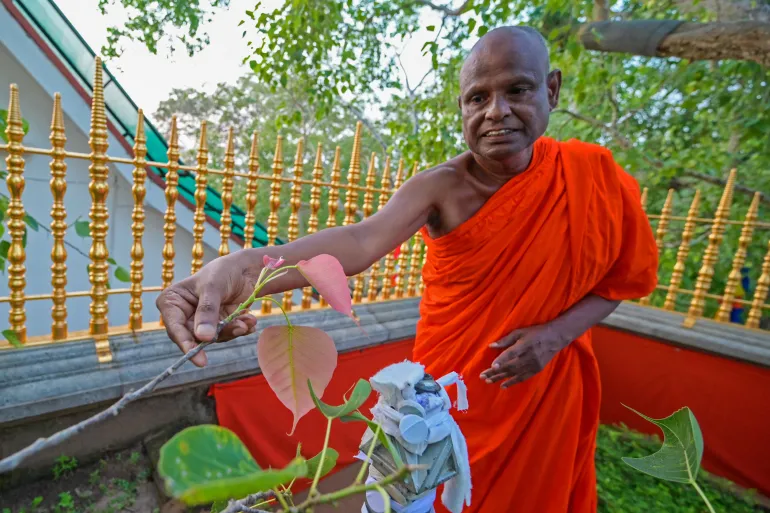
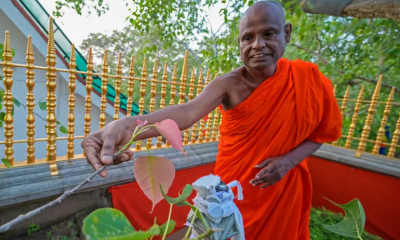
A prominent Buddhist monk has been arrested in Sri Lanka for allegedly sexually abusing an 11-year-old girl, in the highest-profile case involving a local religious leader.
Authorities took 71-year-old Pallegama Hemarathana into custody on Saturday from a private hospital in the capital, Colombo, where he had checked in for treatment as a criminal probe against him progressed.
Hemarathana is accused of committing the abuse in 2022 in a highly venerated temple in Anuradhapura, where he is the chief priest.
Authorities said the victim’s mother has also been arrested for aiding and abetting the monk.
“We will be guided by the magistrate on further action,” a police statement said Saturday.
Hemarathana, who had been subject to a foreign travel ban, was detained on the orders of the chief magistrate in Anuradhapura, after child protection authorities cited complaints of delays in his arrest, reported Sri Lanka’s Daily News. It said the court instructed police to arrest Hemarathana and bring him before the court “without delay”.
There have been several cases of clergy abusing children in Sri Lanka, but the latest arrest involves the most senior monk to be accused of such a crime.
Last month, 22 monks were arrested at Colombo’s international airport after 110kg (242lbs) of cannabis were found hidden in their bags, in what was the biggest drug smuggling discovery ever in the facility.
[Aljazeera]
Business
Trade, Investment and Tourism Cooperation Forum strengthens economic ties between Sri Lanka and Vietnam

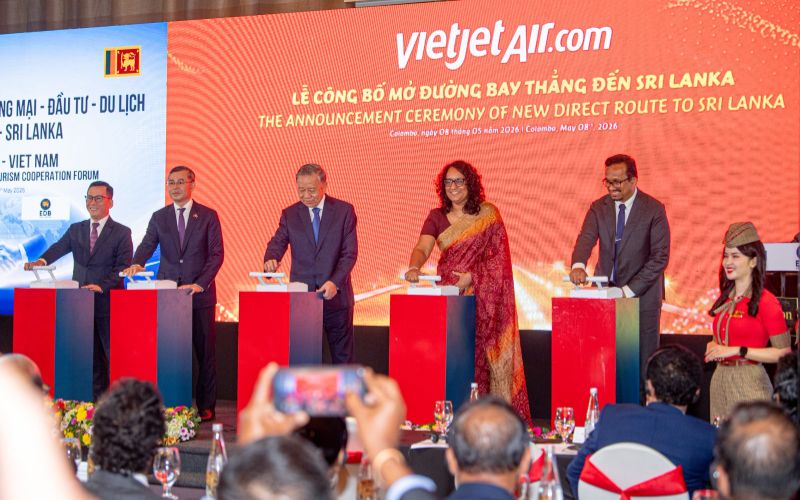
Marking a significant milestone in strengthening bilateral relations between Sri Lanka and Vietnam, the Sri Lanka– Vietnam Trade, Investment and Tourism Cooperation Forum was successfully held on Friday (08) at the Hilton Colombo.
The Forum, jointly organised by the Vietnam Chamber of Commerce and Industry and the Sri Lanka Export Development Board, was held in parallel with the State Visit of President Tô Lâm of the Socialist Republic of Vietnam and General Secretary of the Central Committee of the Communist Party of Vietnam. The event was attended by President Tô Lâm and Prime Minister Dr. Harini Amarasuriya.
The Forum underscored the importance of the longstanding bilateral relationship between the two countries and reflected the shared commitment to expanding economic cooperation.
The primary objective of the Forum was to further strengthen bilateral economic ties by focusing on key priorities including the expansion of trade, promotion of investment and enhancement of tourism cooperation. The event also provided an opportunity to explore new avenues of collaboration, strengthen business-to-business engagement and facilitate greater market access by bringing together senior government officials, entrepreneurs and industry leaders from both countries on a common platform.
During the Forum, direct air connectivity between Colombo and Ho Chi Minh City was officially launched. The new services, operated by Vietnam Airlines and VietJet Air, are expected to further strengthen relations between the two nations and their people.
Six Memoranda of Understanding covering key areas of cooperation were also signed during the Forum. In addition, a notable development was the establishment of the Sri Lanka–Vietnam Business Council under the Ceylon Chamber of Commerce.
Alongside the Forum, the Sri Lanka Export Development Board organised a business networking session, providing Sri Lankan and Vietnamese entrepreneurs with the opportunity to engage directly with one another. The event received strong participation from the private sectors of both countries, with businesses expressing keen interest in expanding trade and establishing resilient supply chains.
Representing Sri Lanka at the event were Minister of Industry and Entrepreneurship Development, Sunil Handunnetti, Minister of Environment , Dr. Dhammika Patabendi, Deputy Minister of Industry and Entrepreneurship Development ,Chathuranga Abeysinghe, Deputy Minister of Ports and Civil Aviation, Janitha Ruwan Kodithuwakku, Deputy Minister of Tourism Ruwan Ranasinghe, Secretary to the Ministry of Industry and Entrepreneurship Development, Thilaka Jayasundara, Secretary to the Ministry of Trade, Commerce, Food Security and Cooperative Development, K.A.Vimalenthirarajah, Chairman of the Export Development Board Mangala Wijesinghe along with several other dignitaries and officials.
Representing Vietnam were Politburo Member, Secretary of the Party Central Committee and Chairman of the Central Organisation Commission , Nguyen Duy Ngoc, Politburo Member, Secretary of the Party Central Committee and Chairman of the Central Commission for Policies and Strategies , Nguyen Thanh Nghi, Politburo Member, Deputy Prime Minister and Minister of National Defence, Phan Van Giang, Politburo Member and Minister of Public Security, Luong Tam Quang and Politburo Member and Minister of Foreign Affairs, Le Hoai Trung, among others.
(PMD)

Peter Magyar sworn in as Hungary’s PM, ending Orban’s 16 years in power

Senior Sri Lankan monk arrested for alleged child sex crimes

Trade, Investment and Tourism Cooperation Forum strengthens economic ties between Sri Lanka and Vietnam

Accelerate projects related to resolving the public’s drinking water issues – President Instructs Officials

President of Vietnam and delegation departs Sri Lanka

Trump announces three-day ceasefire in Russia-Ukraine war

‘Dates have the highest sugar content to fight Coronavirus’

Sunday Island 27 December – Headlines

#SundayIsland 17th December – Headlines

Sunday Island – 28th March

Sunday Island Headlines – 21 March

Sunday Island – 21st February – Headlines
-
 News3 days ago
MIT expert warns of catastrophic consequences of USD 2.5 mn Treasury heist
-
 News5 days ago
CJ urged to inquire into AKD’s remarks on May 25 court verdict
-
 News6 days ago
USD 3.7 bn H’tota refinery: China won’t launch project without bigger local market share
-
 News7 days ago
Easter Sunday Case: Ex-SIS Chief concealed intel, former Defence Secy tells court
-

 Business7 days ago
Dialog Surpasses 1,000 5G Sites, Strengthening Nationwide 5G Coverage
-

 Editorial3 days ago
Clean Sri Lanka and dirty politics
-

 Editorial6 days ago
Deliver or perish
-
 Opinion5 days ago
Security, perception, and trust: Sri Lanka’s delicate balancing act