
Editorial
Judges in the buff

Saturday 27th March, 2021
The Opposition would have the public believe that the UNHRC resolution against Sri Lanka could have been avoided if the government had cared to do so. Its MPs sounded like a group of apologists for the western bloc, when they waxed eloquent, in Parliament, on the UNHRC decision, the other day. There was absolutely no way the government could prevent hostile actions of the UNHRC, which is acting at the behest of the western powers bent on punishing the SLPP leaders and the war-time military personnel for defeating terrorism and ending the armed conflict, which the US and its allies used as an excuse for their involvement here to further their geo-strategic interests. However, there are others who could have obviated the need for the UNHRC resolution at issue.
No need for the UNHRC resolution against Sri Lanka would have arisen if the US, the UK and their hangers-on had made LTTE eschew violence and agree to a political solution, when they acted as the self-appointed ‘Co-chairs’ of a peace process which Sri Lanka was forced to enter into, in the early noughties. If they had cared to tame the LTTE, the Eelam War IV could have been prevented. Instead, they gave kid-glove treatment to the LTTE in spite of its blatant truce violations and acts of terrorism and went so far as to tie the implementation of a USD 4.5 billion aid pledge to the progress to be made in ‘peace talks’ between Sri Lanka and the LTTE. Thus, the US- led forces helped promote LTTE terrorism by tying the hands of Sri Lanka.
Likewise, if India had desisted from creating the LTTE to settle scores with Sri Lanka, or disarmed the outfit in keeping with the Indo-Lanka Accord, in the late 1980s, tens of thousands of lives could have been saved, and there would have been no need for UN involvement here. It, however, acted wisely later by helping Sri Lanka in more ways than one during the final Eelam War. Having done so, it has been supporting the UNHRC witch-hunt against those who neutralised the LTTE!
Let it be repeated that the leaders of the present dispensation are facing UNHRC hostility because they dared defeat terrorism and, thereby, brought to an end massacres, political assassinations, child abductions, extortion and gun-running. They may be blamed for many things including corruption, abuse of power, suppressing democratic dissent, nepotism, environmental destruction, etc., but the fact remains that they and the Sri Lankan military deserve praise for having eradicated LTTE terrorism and making all Sri Lankans, especially children, safe.
Time was when husbands and wives did not travel together lest their children should be orphaned in case of terror attacks on buses and trains. Parents were scared of sending their children to school in the North and the East as the LTTE abducted them and turned them into cannon fodder. The TNA leaders are now in a position to champion democracy because the LTTE has been defeated. While Prabhakaran was alive, they chose to lick his boots instead of fighting for democracy. Some of them are commemorating the dead LTTE leaders who gave them doormat treatment!
The end of Sri Lanka’s war has benefited everyone except the economic refugees masquerading as war victims, arms dealers, and the western powers.
There was only one way the present-day leaders could have prevented hostile UNHRC action against Sri Lanka; if they had emulated their predecessors and continued with the flawed ceasefire with the LTTE, during the previous Rajapaksa government, instead of defeating terrorism, there would have been no trouble for them or the Sri Lankan military, in Geneva, but nobody except LTTE backers would have been safe in this country, and thousands of more lives would have been lost.
Meanwhile, the Geneva resolution at issue is an indictment of the Opposition as well. The UNHRC has frowned on the postponement of the Provincial Council elections. The SJB leaders, as powerful Cabinet ministers in the yahapalana government, were responsible for manipulating the legislative process to postpone the PC elections indefinitely for fear of losing them. Let the UNHRC be informed that the blame for what has befallen the PCs in the Northern and Eastern Provinces as well as in other parts of the country should be apportioned to the TNA, which, together with the JVP, helped the yahapalana government postpone the PC polls, in the most despicable manner, while promoting devolution of power.
The US, the UK, the EU and India stand accused of having helped engineer the 2015 regime change here, and, therefore, they cannot absolve themselves of the blame for what the yahapalana government did or did not do. So, the question is whether they have any moral right to make an issue of the postponement of the PC polls, having remained silent thereon while their puppets were in power here.


Thursday 8th Octobber, 2026
Hardly a day passes in this country without a torrent of news about politicians whose actions evoke memories of famous poets, thinkers, historians and jurists of yore, such as Juvenal, Edward Coke, Lord Acton and Niccolò Machiavelli. This has been particularly so during the past several weeks.
Speaker Dr Jagath Wickramaratne has dismissed a privilege issue raised by SJB MP Ajith P. Perera. He has ruled that as the Presiding Authority and guardian of Parliament’s powers, rights and privileges, the Speaker cannot be subjected to a privilege complaint or disciplinary inquiry by a committee subordinate to the Chair in respect of actions taken in his official capacity. MP Perera’s complaint was that his parliamentary privileges had been breached because no formal action had been taken or final decision made on a written request submitted on August 3 by 18 Opposition MPs seeking the appointment of a Special Select Committee to investigate delays in the judicial system and prison overcrowding. The Speaker ruled that there was no prima facie breach of parliamentary privilege.
Far be it from us to tell the Speaker how to exercise his discretionary powers. Yet we cannot help repeating a question from Juvenal’s Satires: Who guards the guards? (Quis custodiet ipsos custodes?) This famous question, which Juvenal deliberately left hanging, has since become modern shorthand for the broader problem of unchecked power without accountability. Are discretionary powers cartes blanches that place those who wield them above the law and the rules and regulations governing the vital institutions under their purview? Shouldn’t the exercise of such powers be firmly grounded in morality to guard against misuse and impunity?
Juvenal’s Satires are a caustic critique of social inequality, political corruption, decadence and the behaviour of the Roman elite. His work is of particular relevance to Sri Lanka, as it is also the source of the well-known phrase “bread and circuses” (panem et circenses). The only difference is that people here are treated to endless political circuses and theatre without reasonably priced bread or rice. Sri Lankans were waiting in long queues near filling stations, with the government struggling to restore uninterrupted fuel supplies, when news broke of another high-profile arrest.
Speaker Wickramaratne’s ruling has come less than two weeks after the enactment of the controversial 22 nd Amendment (22A) to the Constitution, introduced by the JVP-NPP government to raise the retirement age of the superior court judges allegedly with an ulterior motive. 22A became law in a manner that contravened the time-honoured principle nemo judex in causa sua (‘no one should act as a judge in a case in which they have a personal interest), rooted in Roman law and given its classic common-law formulation by Sir Edward Coke.
22A cleared its constitutional hurdle in the Supreme Court and was then steamrollered through Parliament. As one bad apple spoils the barrel, so one obnoxious law can undermine an entire legal system. Legendary jurists such as Coke would turn in their graves if they knew of the enactment of 22A.
Of all political thinkers, the only one whose counsel Sri Lankan politicians appear to have taken to heart is Machiavelli, particularly his advice on keeping and breaking promises, as evidenced by the sheer number of unfulfilled election pledges. Most of them have also taken a leaf out of the book of Joseph Goebbels, the Nazi regime’s master propagandist if the manner in which they repeat lies is anything to go by. They win elections, promising to usher in good governance, but once they realise their goal, their conduct becomes a textbook example of Lord Acton’s famous dictum about power.
Citizen Perera surely does not aspire to be in the same league as Juvenal, Acton, Coke et al., but his assessment of Sri Lankan politics and politicians is no less noteworthy: mole thiyanakota bale ne, bale thiyanakota mole ne, which can be roughly translated as, “When one has brains, one has no power, and when one has power, one has no brains.” Nothing exemplifies this truism more than the conduct of current Opposition politicians, who appear to be acting sensibly and that of their ruling-party counterparts, who appear to have taken leave of their senses.
Wednesday 7th October, 2026
Fuel queues have returned, with long lines of vehicles reported at filling stations in many parts of the country. Foreign companies engaged in fuel trade have reportedly curtailed supplies, claiming that they are incurring substantial losses as fuel prices determined by the Ceylon Petroleum Corporation (CPC) are not sufficient to cover their costs despite a 70-rupee diesel subsidy. The government appears to be watching helplessly while fuel queues are lengthening.
Energy Minister Anura Karunathilaka has told Parliament that the government expects fuel supplies to return to normal in a day or two. Instead of adopting such a fatalistic attitude, the government ought to do everything in its power to ensure an uninterrupted fuel supply.
Experts questioned the advisability of opening the petroleum sector to foreign companies, without adequate safeguards to protect the country’s energy security. Their warnings went unheeded. Today, the CPC’s market share is reported to have shrunk significantly, with many of its filling stations currently run by four foreign companies, which curtail fuel supplies if the CPC-determined prices do not meet their expectations.
The incumbent government cannot be held responsible for the petroleum-sector agreements which are allegedly favourable to foreign companies. Yet, while in opposition, the JVP/NPP leaders pledged to review all vital agreements, particularly the one with the IMF, claiming that they were detrimental to the country’s interests. Before the 2024 elections, they promised to abolish fuel taxes. Such pledges helped them muster enough popular support to win elections. They went so far as to amend the Constitution to raise the retirement ages of the superior court judges purportedly to tackle a huge case backlog. Why haven’t they resorted to such radical action to address fuel queues?
It is imperative that the government ensure transparency in fuel pricing, as we have argued previously. The public should be shown the complete cost reflective pricing formula together with the exact international benchmark, exchange rate, landed cost, taxes, levies, CPC costs, any loss-recovery component, etc., every time pump prices are revised. Consumers have a right to know how fuel prices are calculated. Taxes and levies account for a significant component of the prices motorists pay for fuel.
The JVP-NPP government is coming under increasing pressure to reduce taxes on fuel. There is no gainsaying that fuel needs to be taxed, but taxation should not become excessive. The government has to raise state revenue substantially and manage public funds prudently to prevent another rupee crisis, but it should be neither as miserly as Silas Marner or Ebenezer Scrooge nor as ruthless as Shylock.
While out of power, all leftist movements project themselves as Robin Hood and his Merry Men, promising to champion the rights of the poor, fight corruption, and redistribute wealth through progressive or “Robin Hood” taxes, but the JVP/NPP, ensconced in power, is behaving like Prince John and the Sheriff of Nottingham, squeezing taxpayers dry to raise government revenue. A single-minded pursuit of higher state revenue, by fair means or foul, can only aggravate the woes of the public and eventually fuel political discontent.
One may recall that there were protracted power cuts for weeks, if not months, during the SLPP-UNP government, but they came to an abrupt end following a massive electricity tariff hike. Is it possible that the current fuel shortage is also being allowed to create the conditions for another price increase? Shortages often precede price hikes in this country.
Market models that work in Western countries, where governments are strong enough to stand up to powerful corporations, cannot necessarily be replicated in the developing world, where private companies are guided by Rafferty’s rules, and the state has to intervene to prevent exploitation and safeguard the national interest. The current fuel crisis provides a compelling argument for the JVP-NPP government to reinvigorate the CPC by expanding its filling-station network, thereby ensuring a reliable fuel supply and strengthening the country’s energy security.
Tuesday 6th October, 2026
The US has been doing everything in its power to force Iran into submission, but without success. Its no-holds-barred methods of warfare remind us of some ruthless warriors of yore, who even weaponised hunger to achieve their military goals. Many were the instances where Genghis Khan’s army laid siege to fortified cities and cut off supplies to force its enemies to surrender. During the American Civil War, General Philip Sheridan’s scorched-earth campaign in Virginia’s Shenandoah Valley was so thorough that he reportedly boasted that even a crow flying across the Valley would have to carry its own provisions.
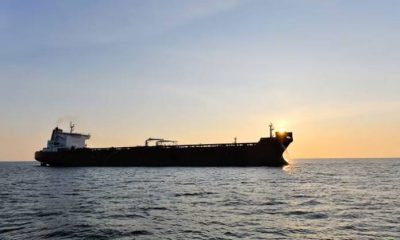
A recent Wall Street Journal report has revealed that Sri Lanka is under US pressure over 20 Iranian oil tankers stranded in international waters off the island. It has been reported that some of those oil carriers, anchored about 15 miles (24 km) off Sri Lanka’s south-western coast, are running short of food, fuel and fresh water. However, Foreign Affairs Minister Vijitha Herath has claimed that the US has not asked Sri Lanka not to provide food and water to the Iranian vessels.
In 04 March 2026, a US submarine sank an Iranian frigate, IRIS Dena, in an unprovoked torpedo attack, which claimed 104 lives off the southern coast of Sri Lanka. Seven months on, the US stands accused of trying to starve an undisclosed number of Iranian sailors on board about 20 oil tankers. Strangely, the powerful nations that pontificate to the Global South about the virtues of human rights and humanitarian assistance are looking the other way. The stranded Iranian sailors must be provided with food, water and medical care. Powerful nations and the UN ought to step in to ensure that the Iranian tanker crews receive lift-sustaining supplies of food and water and medical care urgently.
We believe that the international maritime and seafarers’ law imposes obligations on states to ensure the safety and basic welfare of seafarers, including access to essential supplies and medical assistance. There is a strong humanitarian precedent that the world must follow. One may recall that during the early stages of the Ukraine conflict, the Maritime Safety Committee of the International Maritime Organization expressed serious concerns over the Ukrainian seafarers lacking access to fresh food, water and medical supplies, and called for humanitarian assistance to reprovision the stranded ships. It also stressed that civilian seafarers should not become collateral victims of political or military conflicts. This principle must apply to the stranded Iranian seafarers as well.
The civilised world must not look on while the crew members of the Iranian oil tankers are reportedly languishing without access to essential supplies. There have been some instances of radical humanitarian interventions in support of the Palestinians trapped in Gaza. The Global Sumud Flotilla, the largest maritime mobilisation for Palestine in history, is a case in point. Israel thwarted an attempt by the courageous Global Sumud Flotilla activists on a peaceful solidarity mission to break Israel’s blockade of the Gaza Strip and deliver medical aid and supplies to the Palestinians facing a catastrophic humanitarian crisis. If a large number of boats from different countries set sail simultaneously carrying provisions for the trapped Iranian tanker crews, will the US be able to stop them?
It may be recalled that the US was among the western nations that forced Sri Lanka to continue to send food and medical supplies to the LTTE-held areas during the Eelam war although it was obvious that the LTTE seized most of them. They were right in insisting that Sri Lanka was duty bound to ensure that civilians in the conflict zone had access to food, water and medicines among other things. But why aren’t the US and its allies equally considerate towards the Iranian sailors trapped between the Scylla of US military aggression and the Charybdis of enforced global submission?
Foreign Minister Herath has said the Sri Lankan government has not supplied goods to vessels subjected to US sanction, and private sector individuals providing goods and services to ships have a responsibility to understand the prevailing circumstances and act responsibly. Minister Herath has only obfuscated the issue. If his claim that the government is not under US pressure is true, then Sri Lanka can reprovision the Iranian vessels urgently, can’t it?

Showers above 100 mm are likely at some places in the Western, Sabaragamuwa, Central, Uva and Southern provinces and in Anuradhapura district

PSTA worse than PTA: FSP

Shiranthi R remanded until 13 Oct.

Former NSB Chairman Kariyawasam granted bail

Katchatheevu row: India SC urges fishermen to avoid Sri Lankan waters

Remembering Juvenal, Coke, Acton and Machiavelli

‘Dates have the highest sugar content to fight Coronavirus’

Sunday Island 27 December – Headlines

#SundayIsland 17th December – Headlines

Sunday Island – 28th March

Sunday Island Headlines – 21 March

Sunday Island – 21st February – Headlines
-

 Editorial6 days ago
Colombo Port drug bust: The plot thickens
-

 Features4 days ago
The first woman in the foreign service or Ceylon Overseas Service it was then called
-

 Editorial5 days ago
Fuelling discontent and protest
-

 News3 days ago
Geneva takes up Sallay’s case and govt. ignores opportunity to answer accusations
-

 Latest News5 days ago
Tharindu Rathnayake, bowlers secure Asian Games Bronze for Sri Lanka
-
 Foreign News5 days ago
Ten injured after car crashes into rugby supporters in Australia
-

 Features3 days ago
Sri Lanka Cricket Bill: Governance reform is not yet a cricket strategy
-
 News4 days ago
Nearly 20 Iranian tankers stranded off Lanka amid US sanctions