
News
Islamic organisations: PSTA more draconian than PTA


Fourteen Islamic organisations, in a joint letter to President Anura Kumara Dissanayake, have said the proposed Protection of the State from Terrorism Act (PSTA) is more draconian than the existing Prevention of Terrorism (Temporary Provisions) Act, which the ruling NPP pledged in its election manifesto to abolish without any replacement.
The organisations have warned that at a time when Sri Lanka is attempting to recover from economic bankruptcy, climate-related disasters, corruption and ethno-religious tensions, the introduction of such legislation could damage the country’s global image.
“In a country striving to promote self-sufficiency while attracting foreign investment, tourism and export growth, and fostering national unity, the proposed anti-terror law will project a frightening image of Sri Lanka internationally and should therefore be abandoned in the national interest,” the letter said.
Full text of the letter released under National Shoora Council letterhead: 14 Muslim civil society organisations urge President AKD to abandon PSTA in the national interest!
Fourteen Muslim national level community organisations in a joint letter to President Anura Kumara Dissanayake have told the President that the proposed ‘Protection of the State from Terrorism’ (PSTA) draft law is more draconian than the existing Prevention of Terrorism (Temporary Provisions) Act (PTA), which the NPP in its election manifesto pledged to abolish altogether without referring to a replacement!
The 28.02.2026 dated letter to President with copy to Justice and National Integration Minister Harsha Nanayalkkara states “In a country struggling to recover from economic bankruptcy, climate disasters, corruption as well as ethno-religious tensions and working towards encouraging self-sufficiency, foreign investments, tourism, exports and national unity, the proposed anti-terror law will give Sri Lanka a frightening image of the country globally and ought to be abandoned in the national interest.”
The NSC-led organisations have appreciated the need for laws securing national security of the country, but has pointed out that a large number of new laws with wide powers to the security sector have already been enacted and are sufficient to deal with terrorism. In addition, the Public Security Ordinance has conferred immense powers on the President and the forces to deal with any emergency.
The civil society organisations have also urged the government not to subjugate the national interest of Sri Lanka to those of any foreign power or deep state entities.
In the joint letter, the organisations have set out nine provisions in the PSTA as some of the reasons why the replacement draft is more draconian than the PTA.
“The following are some of the reasons:
NO MORE LEGITIMATE PROTESTS UNDER PSTA, AGAINST FOREIGN GOVERNMENTS OR INTERNATIONAL ORGANISATIONS : PSTA seeks to protect not only the government of Sri Lanka but also “any other government or an international organization” preventing the people of Sri Lanka for example, (a) demonstrating to compel foreign governments such as China, the US, or India from continuing environmental pollution adversely causing climate change to the detriment of Sri Lanka or (b) protesting against arbitrary tariffs imposed by powerful countries to the detriment of Sri Lanka adversely affecting the cost of living of Sri Lankans. Such acts by Sri Lankans would constitute “acts of terrorism”, as proposed in the PSTA, which are anti-democratic and not found even in the draconian PTA!
PERIOD OF REMAND OR DETENTION UNDER PSTA DOUBLED INSTEAD OF BEING REDUCED: The Court of Appeal has held in a number of cases under the PTA that even one year in remand or detention without trial amounts to punishment contrary to the exception in Article 13(4) of the Constitution. But instead of reducing the period of state custody for a maximum of three months, the PSTA has extended the minimum period of state custody from 01 year in the PTA (amendment no. 12 of 2022) to a minimum of 02 years under the new draft, which two-year period for the judiciary to grant bail, can also be deprived of by a Detention Order from the executive official, the Secretary of Defence!
MASS MEDIA BROUGHT BACK UNDER THE TERRORIST NET ONCE AGAIN: The Print media, the electronic media, the internet, visuals and writings anywhere including private letters and social media, have been brought under the terrorist net supervision described in the PSTA as “terrorist publication”, with a possible jail term for violations, of a maximum of 15 years and/or fine of Rs 15 million! The PTA too had a provision prohibiting publication of terrorist related investigations or news with a maximum jail sentence of five years but this was abolished by PTA amendment 12 of 2022. PSTA is more draconian than the PTA, this being one of several instances in the PSTA of a platform for assault on the freedom of expression of the people!
EXECUTIVE SITS OVER THE JUDICIARY; DEFENCE SECRETARY’S DETENTION ORDERS OF SUSPECTS, CANNOT BE OVERRULED BY MAGISTRATES OR HIGH COURT JUDGES:Instead of totally scrapping the power vested in the “executive” namely the Secretary of Defence (earlier exercised by the President) and the Superintendents of Police to detain suspects in State Custody and instead of vesting the power in Magistrates in the “judiciary”, ‘Detention Orders’ can be issued under the PSTA by a Ministry Secretary depriving the liberty of subjects without hearing the suspects, unlike before Magistrates and High Court Judges who hear all sides in open Court to consider bail or remand.
DETENTION ORDERS(DO) BY SECRETARY DEFENCE UNTIL CONCLUSION OF TRIAL: Section 58 of the draft law enables the executive via Secretary Defence to detain a suspect from the date of arrest till conclusion of trial, making a mockery of the presumption of innocence until convicted and depriving the suspect of a fair trial.
INVESTIGATING POLICE EMPOWERED TO RETAKE PSTA SUSPECT REMANDED UNDER JUDICIAL CUSTODY BACK TO POLICE CUSTODY WITHOUT PRISON SUPERVISION: Section 58(2) of the draft law enables the Secretary Defence to remove a suspect upon issuing a DO from remand custody and keep the suspect in police custody without prison officials, placing the suspects in threatening circumstances even while the trial is ongoing, depriving the accused of a fair trial, provisions unheard of in the history of criminal trials!
This provision will alarm the suspects from complaining of torture while in custody!
CIVIL SOCIETY ORGANISATIONS, TRADE UNIONS, POLITICAL PARTIES & RELIGIOUS ORGANISATIONS CAN BE BANNED BY PRESIDENT WITHOUT ANY DUE PROCES: PSTA empowers the President to proscribe (ban) any organization, without any judicial intervention; due process; inquiry or at least a show cause notice on the organization where the President has reasonable grounds to believe that any organization is engaged in any act amounting to an offence under this Act” (depends on the President’s belief only, without any due process or a conviction by a Court of law) “or is acting in an unlawful manner prejudicial to the national security of Sri Lanka or any other country” The PSTA gives exceptionally very broad powers for civil society to be threatened with being banned without being heard. This is a draconian power being given to the President who in his manifesto promised to scrap the Presidency altogether. This provision is a grave threat not only to the freedom of association of the civil society associations but also to trade unions, political parties and religious organisations!
NORMALISING EMERGENCY POWERS UNDER AN ACT OF PARLIAMENT: Curfew orders (sec. 64), Restriction Orders (64), Empowering the Armed Forces through PSTA (24) etc. are exercised by the President presently only in the extraordinary circumstances of a State of Emergency being duly declared! PSTA will empower the government to exercise emergency powers at the drop of a hat and will normalise the exercise of extraordinary powers as ‘normal powers’ adversely threatening peoples’ freedom, in the name of protecting them and paving the way for Sri Lanka becoming a Police State!
PSTA HAS NOT DEFINED TERRORISM but has categorized a large number of acts, open to multiple and inaccurate interpretations, as constituting “terrorist acts”. The PTA had only 10 acts in section 2, and more clearly and restrictively set out than in the PSTA. The proposed new law has an everwidening list of offences, naming them all as “terrorist acts”! We see the PSTA more draconian than even the widely condemned PTA.
We urge the Justice Ministry and the government to forthwith repeal the PTA and abandon the PSTA in the national interest as the recently enhanced laws are more than adequate!
1. National Shoora Council
2. RPSL Consortium
3. All Ceylon Union of Muslim League Youth Fronts (ACUMLYF)
4. All University Muslim Students’ Association (AUMSA)
5. Conference of Sri Lankan Malays (COSLAM)
6. Sri Lanka Jama’athe Islami (SLJI)
7. Khatheebs and Muazzins Association of Sri Lanka (KMA)
8. Salamah Society
9. Al Muslimaath
10. Centre for Islamic Studies (CIS)
11. Sri Lanka Muslim Media Forum (SLMMF)
12. Ahadiyya Federation
13. All Ceylon Thowheed Jamath (ACTJ)
14. Association of Muslim Youth of Sailan (AMYS)

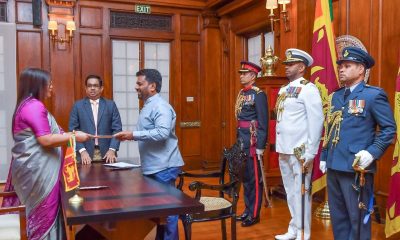


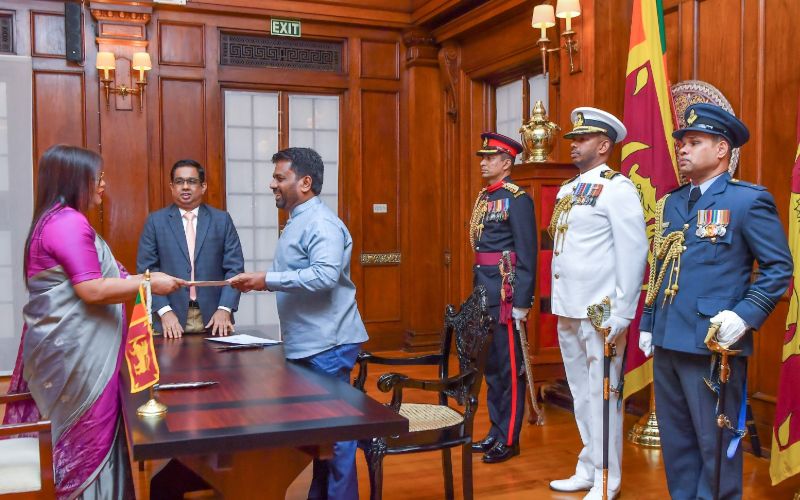
Ms Sajeewani Dilka Lakmali Karunannayake was sworn in as a Judge of the Court of Appeal before President Anura Kumara Dissanayake at the Presidential Secretariat this afternoon (03).
She previously served as an Additional Solicitor General at the Attorney General’s Department.
The appointment has been made to fill a vacancy on the Court of Appeal.
Secretary to the President Dr Nandika Sanath Kumanayake was also present on the occasion.
(President’s Media Division)
Latest News
Sun directly overhead Madampe, Thorayaya, Thotagamuwa, Rattota and Kalavanchikudy about 12.09 noon today (03)


The sun is going to be directly over the latitudes of Sri Lanka from 28th of August to 07th of September due to its apparent southward relative motion.
The nearest places of Sri Lanka over which the sun is overhead today (03) are Madampe, Thorayaya, Thotagamuwa, Rattota and
Kalavanchikudy about 12.09 noon.

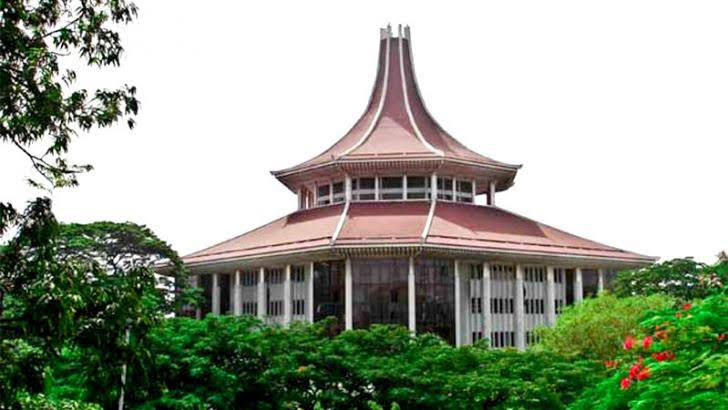
Attorney-at-Law Sugandhika Fernando, on behalf of the Vinivida Foundation, petitioned the Supreme Court yesterday (02), seeking a full bench, excluding Chief Justice Preethi Padman Surasena, to hear the petitions challenging the 22nd Amendment Bill. She also requested that the hearing be suspended immediately until the matter was fully heard and determined.
Among the respondents are Chief Justice Surasena, the first respondent, and Attorney General Parinda Ranasinghe. Justices Yasantha Kodagoda, Shiran Gooneratne, Achala Wengappuli and Priyantha Fernando have also been named as respondents.
The petitioner has sought to have quashed the decision of the first respondent to appoint a five-member bench, which she alleged was made in violation of the norms of public law. She also sought a bench comprising all Supreme Court judges, excluding those cited as respondents, to hear the special determination applications on the 22nd Amendment.
The petitioner further contended that Chief Justice Surasena, who is due to retire on December 1, 2026, would be the main beneficiary of the 22nd Amendment.
The hearing of the petitions continued for a second day yesterday (02) before a five-member Supreme Court bench comprising Chief Justice Preethi Padman Surasena and Justices Achala Wengappuli, Arjuna Obeyesekere, Sampath Abeykoon and Gihan Kulatunga.
The hearing, which commenced on Tuesday morning, continued for nearly 12 hours, until 10:30 p.m.
Solicitor General Viraj Dayaratne, appearing for the Attorney General, submitted yesterday that the Government had presented the 22nd Amendment Bill to the Constitution and the Judicature (Amendment) Bill with the objective of expanding and streamlining the country’s judicial system.
After the Solicitor General’s submissions concluded, counsel representing the petitioners requested an opportunity to respond to the Solicitor General and the intervening petitioners. However, the Chief Justice declined to allow the petitioners’ counsel to make further oral submissions, concluded the determination hearing and directed them to file written submissions instead.

New Court of Appeal Judge Sajeewani Dilka Lakmali Sworn In

India to host inaugural Women’s Champions Trophy in February

Sun directly overhead Madampe, Thorayaya, Thotagamuwa, Rattota and Kalavanchikudy about 12.09 noon today (03)

Afternoon thundershowers in the Northern, North-central, Eastern and Uva provinces in next few days, starting from today (03).

22A: SC urged to suspend hearing, appoint full bench

Govt. seeks NATO assistance

‘Dates have the highest sugar content to fight Coronavirus’

Sunday Island 27 December – Headlines

#SundayIsland 17th December – Headlines

Sunday Island – 28th March

Sunday Island Headlines – 21 March

Sunday Island – 21st February – Headlines
-

 News7 days ago
Eight politicians in drug kingpin probe
-

 Features5 days ago
“Wrap Me Up in My Blazer”— A Gentlemanly Bradby Reminiscence
-

 Business7 days ago
Sri Lanka opens up: A new season of direct connectivity
-

 Features4 days ago
When Sri Lankan stories find their own voice
-

 Features7 days ago
Redefining ageing in Sri Lanka
-

 Editorial7 days ago
The toxic legacy of two lakes
-
 Business7 days ago
Jaffna Teaching Hospital secures lifeline water supply via ADB-funded Thalaiyadi sea water desalination plant
-
 Features5 days ago
JVP/NPP government as seen from outside by Lionel Bopage now domiciled in Australia