
Foreign News
Human rights court orders reparations for forced sterilization case in Peru


The Inter-American Court of Human Rights (IACHR) has ordered Peru to pay reparations to the family of Celia Ramos, a mother of three whose death resulted from a campaign of forced sterilizations during the 1990s.
Thursday’s landmark ruling stated that the 34-year-old Ramos was coerced into sterilization against her will, causing an allergic reaction that led to her death.
The court ordered Peru to pay her family $340,000 as part of the ruling.
It noted that the Peruvian government had “failed to fulfill its obligation to initiate and conduct a thorough investigation” into Ramos’s case, heightening the strain on her family.
“Ms Ramos Durand’s family members — especially her three daughters, who were children at the time of the events — suffered profound harm as a consequence of the sterilization and death of Celia Edith Ramos Durand and the impunity surrounding the case,” the IACHR wrote in its decision.
Peru’s campaign of forced sterilization took place under the late President Alberto Fujimori, whose tenure included widespread human rights abuses that continue to cast a shadow over the country.
The scheme largely targeted poor and Indigenous women who were often tricked or coerced into sterilisation procedures.
This week’s ruling is the first time the human rights court has weighed in on the issue, which has been the subject of years of legal contestation in Peru.
“After almost 30 years of searching for justice, the Inter-American Court of Human Rights recognised the responsibility of the Peruvian state in the forced sterilization and death of Celia Ramos,” the Peruvian feminist organisation DEMUS said in a social media post, celebrating the ruling.
“This ruling marks a fundamental step in reparations for Celia, her family and the thousands of victims of forced sterilizations in Peru.”
As many as 314,000 women and 24,000 men were sterilized against their will in Peru under Fujimori’s government, which sought to forcibly lower the birth rate as a means of addressing poverty.
The procedures were particularly invasive for the women involved, and some suffered long-term complications, including death.
Family members often received little information about the circumstances that led to loved ones dying after the unnecessary operations. Some survivors did not realise what had happened to them until years later, when they discovered they were unable to have children.
In Ramos’s case, the 34-year-old mother had gone to a state health clinic for medical assistance on July 3, 1997, but was instead forced to undergo tubal ligation.
Ramos, however, suffered a severe allergic reaction during the procedure. She was placed in a recovery room, but the clinic was not able to treat her adequately.
In its decision, the IACHR explained that the clinic “lacked the necessary equipment and medications for adequate risk assessment or to handle emergencies”.
Ramos was ultimately transferred to an intensive care unit in the city of Piura, where she died 19 days later, on July 22, 1997.
The state did not carry out an autopsy and declined to share details with her family.
The compensation outlined in this week’s ruling includes reimbursement for the costs of medical procedures conducted to save Ramos’s life and the estimated loss of income from her death.
In October 2024, the Committee on the Elimination of Discrimination against Women at the United Nations ruled that Peru’s sterilization programme amounted to sex-based violence and discrimination against poor, rural and Indigenous women.
The committee’s statement cited a lack of adequate medical facilities and a lack of informed consent, just as the IACHR did in its decision this week.
“The victims described a consistent pattern of being coerced, pressured, or deceived into undergoing sterilizations at clinics lacking proper infrastructure or trained personnel,” committee member Leticia Bonifaz said.
“The procedures were carried out without informed consent from these victims, with some of them, especially those from remote areas, unable to read and speak Spanish, or fully understand the nature of the procedure.”
Scholars have concluded that Fujimori’s sterilization campaign was driven, in part, by racist views among government officials who saw rural, Indigenous communities as an obstacle to economic modernisation.
[Aljazeera]


A court in Malta has acquitted businessman Yorgen Fenech of masterminding the murder of prominent anti-corruption journalist Daphne Caruana Galizia.
Fenech, 44, was acquitted on Wednesday at the end of a jury trial. He had been tried on charges of complicity to murder and for the lesser charge of criminal association to commit murder.
If found guilty, Fenech could have faced life in prison.
Caruana Galizia’s family were seen weeping in the packed courtroom in Valletta after the businessman was cleared of both counts by an 8-1 margin following eight hours of deliberation by the jury.
“Nine years after Daphne’s brutal assassination, the institutional failures that enabled her murder remain unaddressed and unreformed,” the slain reporter’s family said in a statement.
“Lasting justice means no person should ever face the same risks again. Our country failed to protect Daphne’s life. It owes it to her to prevent other lives being lost.”
Fenech’s family members were seen celebrating the jury’s decision.
The killing of Caruana Galizia in October 2017 shocked Europe’s journalist community and set off a political firestorm in Malta, focusing international attention on its police and judiciary.
Dubbed a “one-woman WikiLeaks”, Caruana Galizia had exposed corruption at the highest level in the Mediterranean island country, shining a spotlight on links between Malta’s business and political elites. She was 53 when she was killed.
Prosecutors argued that Fenech had wanted Caruana Galizia killed because she was about to reveal information about him.
Fenech has denied the accusations. His defence instead pointed fingers at his one-time friend Keith Schembri, the former chief of staff of then-Prime Minister Joseph Muscat and a target of Caruana Galizia’s blogs.
Muscat, who was never linked to the murder, stepped down in January 2020 due to the political fallout from the assassination.
Police told the court that Schembri had never been a suspect. He has denied any role in the murder.
An independent inquiry in 2021 found that officials in Malta had failed to protect Caruana Galizia from threats to her life before her death.
[Aljazeera]
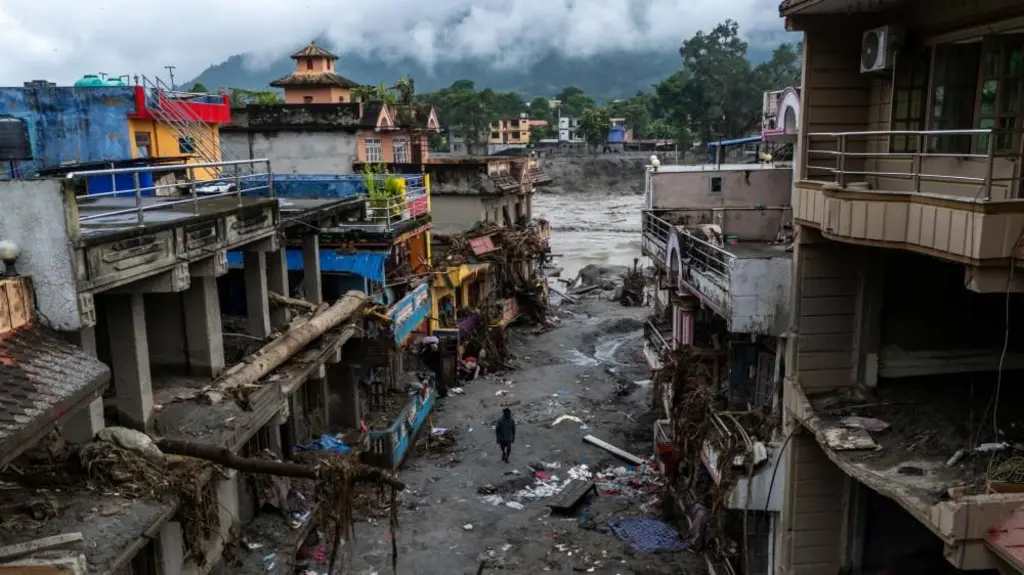
A head teacher’s quick decision to evacuate his school saved 900 pupils from deadly flash floods along the Nepal-Tibet border
Rajendra Dawadi tells the BBC he was tipped off about incoming flood waters and moved students to higher ground with just minutes to spare. One pupil says she and her friends survived by just 10 seconds and watched as a nearby bazaar was swept away
Wednesday’s disaster has killed at least 794 people and more than 2,500 people are missing in Nepal, local officials say
In Tibet, the official death toll is 16, with 546 reported to be missing, according to Chinese state media –
[BBC]

A ferry carrying around 260 people has capsized off the coast of northern Cyprus with a search underway for survivors, according to local media.
The catamaran-style boat was travelling from the port of Kyrenia, also known as Girne, and started sinking a few kilometres off the coast of the island state on Sunday.
There were no immediate reports of casualties.
[Aljazeera]

Shree Charani, Prema Rawat spin Pakistan out for 55 in one-sided contest

Sun directly overhead Bentota, Thiniyawala, Iththakanda, Udawalawe, and Kataragama about 12.08 noon t9day (06)

Showers above 75 mm are likely at some places in the Uva and Eastern provinces.

Tharanga creates history with Diamond League crown in Brussels

UN welcomes Lanka’s anti-graft drive, seeks end to impunity

Dispute which triggered listed company director being detained at BIA resolved

‘Dates have the highest sugar content to fight Coronavirus’

Sunday Island 27 December – Headlines

#SundayIsland 17th December – Headlines

Sunday Island – 28th March

Sunday Island Headlines – 21 March

Sunday Island – 21st February – Headlines
-

 Features7 days ago
When Sri Lankan stories find their own voice
-

 News7 days ago
BASL takes exception to Justice Ganepola being denied a place in SC
-

 News4 days ago
Denied of promotion to SC despite vacancies, justice Gurusinghe retires
-

 Latest News4 days ago
Grade 5 scholarship exam results released
-

 News4 days ago
22A: SC urged to suspend hearing, appoint full bench
-

 Midweek Review5 days ago
The local and global dynamics of Sri Lanka’s 22nd Amendment
-

 Business7 days ago
ADB-funded Thalaiyadi plant serves as blueprint for vulnerable dry zones in Sri Lanka
-

 News5 days ago
Ai-CHA expands Lankan footprint with new Negombo outlet