
Business
Confidence holds for now, but medium-term warning signals emerge

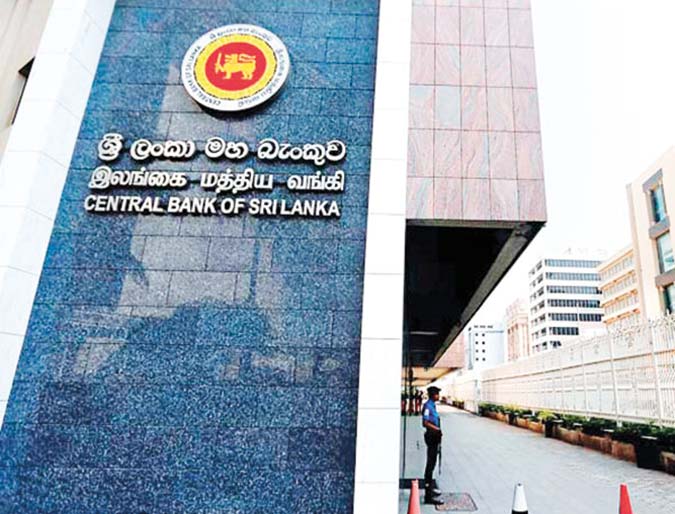
Inside the Central Bank’s Systemic Risk Survey
Sri Lanka’s financial sector enters the first half of 2026 with a cautiously steady footing, but undercurrents of concern over general domestic macroeconomic risks are growing more pronounced, according to the latest Systemic Risk Survey conducted by the Central Bank of Sri Lanka (CBSL).
The H1 2026 survey, carried out between December 19, 2025 and January 16, 2026 among 147 financial sector institutions, reveals a nuanced risk landscape: short-term confidence in the financial system remains positive, yet medium-term confidence has weakened, while the perceived probability of a high-impact negative event has edged up in both time horizons .
The CBSL has reclassified the previous broad category of ‘domestic macroeconomic risks’ into two distinct segments beginning H2 2025:
Fiscal and sovereign-related risks
General domestic macroeconomic risks
This refinement underscores the Central Bank’s intent to differentiate between sovereign balance sheet pressures and broader macroeconomic vulnerabilities such as growth slowdowns, inflation dynamics, labour market conditions and structural imbalances.
Survey responses for H1 2026 show that general domestic macroeconomic risks remain among the key concerns flagged by market participants. While no single risk category emerged as overwhelmingly dominant, perceptions were widely dispersed across several categories, indicating a multi-dimensional risk environment rather than a single flashpoint .
For businesses, this dispersion is telling. It suggests that the financial system is not currently gripped by a singular systemic threat but is instead facing a matrix of interlinked pressures – domestic macro fragilities, fiscal constraints, global uncertainties and institutional risks.
One of the more cautionary signals from the survey is the uptick in the perceived probability of a ‘high impact negative event’ in both the short term (next one year) and the medium term (next three years) .
Translated, market participants see a slightly elevated likelihood of a significant adverse shock.
In the Sri Lankan context, such a shock could stem from domestic macroeconomic strains, renewed inflationary pressures, currency volatility, growth disappointments, or fiscal slippages or from external spillovers amplified through trade, capital flows or geopolitical tensions.
Encouragingly, perceptions of overall confidence in the financial system remain positive in the short term. However, medium-term confidence has moderated .
The CBSL notes that this softening may reflect uncertainties prevailing during the survey period, including natural hazards and geopolitical tensions [such as U.S. and Israel attacking Iran] . For financial institutions and corporates alike, this indicates that while immediate systemic stability is not in question, risk buffers and contingency planning will be crucial over the next three years.
The Systemic Risk Survey, introduced in 2017 by the CBSL’s Macroprudential Surveillance Department, canvasses risk officers across licensed banks, finance companies, insurance firms, unit trust managers, stockbrokers, rating agencies and financial infrastructure providers .
For H1 2026, respondents assessed risks across seven major categories:
Global macroeconomic risks
Fiscal and sovereign-related risks
General domestic macroeconomic risks
Risks related to financial infrastructure
Financial market risks
Risks related to financial institutions
General risks
The broad spread of concerns across these categories suggests that the financial system is in a phase of recalibration rather than acute stress. However, the prominence of general domestic macroeconomic risks reinforces a key message for policymakers: structural reform momentum, fiscal discipline and macro stability remain central to sustaining financial sector resilience.
For corporate leaders and investors, the survey’s findings carry three strategic implications:
Growth stability, inflation management and policy consistency will heavily influence risk perceptions going forward.
Medium-term planning must factor in uncertainty. Even if near-term conditions appear stable, capital allocation decisions should account for potential volatility over a three-year horizon.
Risk is systemic, not isolated. The absence of a single dominant risk category implies interconnected vulnerabilities rather than a contained sectoral issue.
In essence, Sri Lanka’s financial system is not signalling alarm – but neither is it complacent.
For policymakers, the message is equally clear: maintaining macroeconomic credibility and strengthening buffers will be decisive in keeping confidence anchored – not just for the next year, but for the years beyond, the findings of the survey signalled.
-SN

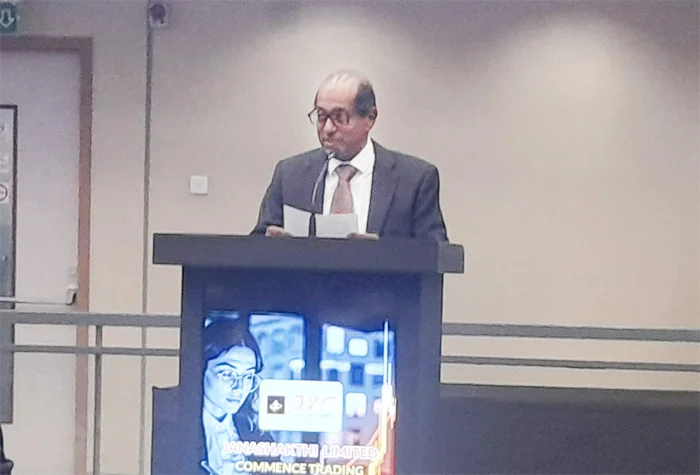
A Janashakthi Group (JXG) IPO was a landmark event for the local capital market, valued at over Rs. 5 billion, making it the largest IPO on the CSE in the last 14 years.
‘The company emphasises that the success of the issue was critical not only for the firm but also for the broader market sentiment, said Group Chairman Chandan de Silva.
Senior Group leadership along with Founder and Chairman Emeritus Chandra Shafter rang the opening bell of the CSE, marking the successful conclusion of the IPO listing. The event was held recently at the CSE head office at the WTC building.
De Silva making the keynote address said that market conditions were “hugely positive” when the IPO was initially approved in early February.
He also said that this IPO was thrice oversubscribed and has more than 20000 shareholders throughout the country.
However, a “drastic shift” in market sentiment occurred following the finalisation of the IPO, primarily driven by ongoing events in the Middle East, which created significant concerns regarding the offering’s success.
To mitigate these risks, Janashakthi Limited engaged in proactive pre-marketing of the issue to both local and foreign investors. These investors provided firm commitments for substantial subscriptions, provided they were given reasonable assurances of receiving allocations based on their pre-commitments.
The company stated that these preferential allotments were made based on practical considerations to ensure the IPO’s success while remaining within the Listing Rules of the CSE.
By Hiran H Senewiratne

HNB Life recently hosted its first Sales Convention at the ITC Ratnadipa, following the launch of its new brand identity, bringing together its advisor distribution force to celebrate a year of exceptional performance and continued momentum.
The event marked a significant milestone for the company, highlighting the strength and consistency of its advisor channel, which has delivered steady growth over the past five years. In 2025, the channel recorded an impressive 28% growth in Gross Written Premium (GWP) and a 25% increase in New Business Premium (NBP), reaffirming its critical role in driving the company’s success.
A total of 622 awards were presented during the evening, recognizing the dedication, and outstanding achievements of HNB Life’s advisors across the island.
Further highlighting the channel’s excellence, HNB Life recorded its highest-ever number of MDRT qualifiers for the advisor channel, reaching 132, a 51% growth over last year, which also includes 1 Top of the Table (TOT) and 5 Court of the Table (COT) members.
The convention also served as a platform to unveil several key initiatives aimed at empowering advisors and strengthening their journey as trusted Life Planners under the new HNB Life identity.
Speaking at the convention, Lasitha Wimalaratne, Executive Director / Chief Executive Officer of HNB Life stated, “This convention is not just a celebration of numbers, but a celebration of consistency, commitment, and the spirit of our people. As we step into this new chapter as HNB Life, it is inspiring to see our advisor force continue to raise the bar year after year. Their dedication is what drives our growth and strengthens the trust our customers place in us. My sincere congratulations to all our winners for their outstanding achievements, and my appreciation to every member of our Advisor Distribution Management for their continued efforts. It is this collective strength that will power us forward as we aim for even greater milestones in the years ahead.”
Harindra Ramasinghe, Executive Vice President / CBO – Advisor Distribution Channel of HNB Life added, “Our advisor distribution channel has once again demonstrated its strength. The growth we are witnessing is not by chance, it is built on discipline, capability, and a deep understanding of customer needs. I would like to extend my sincere appreciation to the entire Distribution Management Team including our SBU Heads, Regional Managers, Zonal Managers, Branch Managers and our dedicated training teams who continuously guide and push this team to be their very best. Their role behind the scenes plays a vital role in shaping the success we celebrate today. With the new initiatives introduced, and many more exciting developments in the pipeline, we are confident that we will continue to reach even greater heights and redefine what excellence looks like in the years ahead.”
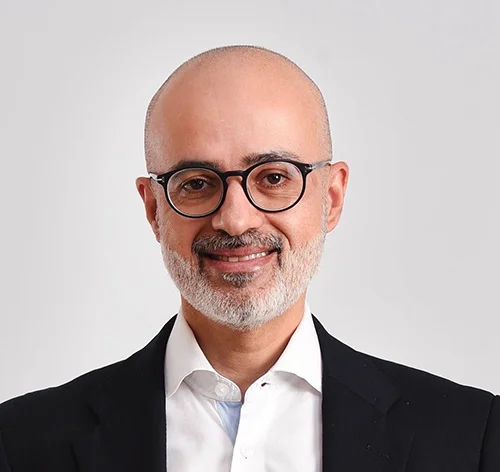
Sri Lanka: Visa (NYSE: V), a global leader in digital payments, announced that Suresh Sethi has been appointed Group Country Manager for India and South Asia. In this role, Suresh will lead Visa’s strategy and operations across India, Bangladesh, Sri Lanka, Nepal, Maldives and Bhutan.
Suresh succeeds Sandeep Ghosh, who is leaving Visa for other opportunities. Based in Mumbai, Suresh will report to Stephen Karpin, Regional President, Asia Pacific, Visa.
Stephen Karpin, Regional President, Asia Pacific, Visa, said, “India and South Asia region continues to be among Visa’s most dynamic and strategically important markets. Suresh brings expertise and knowledge that will accelerate Visa’s aspiration to be the best way to pay and be paid. I am confident he will build on Visa’s strong foundations in the region, alongside clients, partners and policymakers to advance digital payments.”
He added, “I thank Sandeep for his leadership over the last four years, and for facilitating the smooth transition of the business to Suresh.”
Suresh Sethi, Group Country Manager, India and South Asia, Visa, stated, “I am pleased to join Visa at a defining moment for digital payments in India and South Asia. The next phase of growth will be driven by scale, trust, and innovation across an increasingly diverse payments ecosystem. Visa’s global capabilities, strong partnerships, and technology leadership provide a powerful platform to accelerate adoption, deepen acceptance, and deliver secure, inclusive, and high-impact payment solutions.

Explanation sought from AKD on ‘Russian energy supplies’

US reiterates its commitment to enhancing relations with Northern Sri Lanka

Rooftop Solar at Crossroads as Sri Lanka Shifts to Distributed Energy Future

Indonesia-SL agreement on Visa Exemption for Diplomatic and Official passports soon

Six-year prison term for Rs 15,000 bribe

The pointer who showed the moon: Professor Y. Karunadasa (1934–2026)

‘Dates have the highest sugar content to fight Coronavirus’

Sunday Island 27 December – Headlines

#SundayIsland 17th December – Headlines

Sunday Island – 28th March

Sunday Island Headlines – 21 March

Sunday Island – 21st February – Headlines
-
 News6 days ago
Whistleblowers ask Treasury Chief to resign over theft of USD 2.5 mn
-

 News6 days ago
No cyber hack: Fintech expert exposes shocking legacy flaws that led to $2.5 million theft
-

 News3 days ago
BIA drug bust: 25 monks including three masterminds arrested
-

 Business4 days ago
Nestlé Lanka Announces Change in Leadership
-

 News3 days ago
Banks alert customers to phishing attacks
-

 News1 day ago
Treasury chief’s citizenship details sought from Australia
-

 News4 days ago
Hackers steal $3.2 Mn from Finance Ministry
-
 Business6 days ago
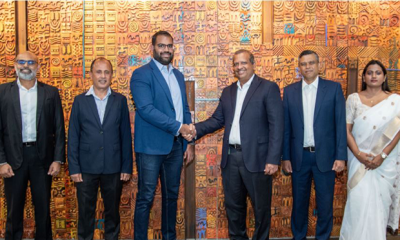
Dialog Enterprise partners Star Garments: Pioneering 5G innovation in Sri Lanka’s apparel industry