
Latest News
India win big to set up knockout clash with West Indies


India set up a virtual quarter-final against West Indies on Sunday with a comfortable win against Zimbabwe on a night that Abhishek Sharma scored his maiden World Cup fifty and India made a small tweak in their batting combination to unleash the second-highest total in T20 World Cups, going two past the 254 Zimbabwe conceded in their last match. Six men batted for India, their innings lasted 15 to 30 balls, and their strike rates ranged from 158.33 to 275. In all, they hit 17 sixes, the most for India in a single T20 World Cup innings.
Zimbabwe asked India to bat first expecting help for fast bowlers. Their reading of conditions was accurate, but the execution was much better from the much more experienced India bowlers, who kept them to 33 in five overs, post which there was hardly any way back.
Zimbabwe, now out of the tournament, dropped two costly catches, taking their tally in Super Eight to five in two matches after having missed just one in the whole first round. A defiant unbeaten 97 from Brian Bennett was the only consolation for them.
Samson breaks up left-hand cluster
India finally admitted their cluster of three left-hand batters at the top was giving offspinners a match-up to exploit, that Suryakumar Yadav was not going to be promoted to No. 3, and sacrificed some lower-order hitting of Rinku Singh to bring in Sanju Samson. Zimbabwe were anyway looking to open with their tall fast bowlers, both of whom Samson hit for sixes down the ground off the back foot in the first two overs. He eventually fell for just 24 off 15, but he was part of India’s biggest opening stand this tournament: 48 off 3.4 overs.
Unlike earlier matches, Abhishek neither charged at the quick bowlers nor gave away his stumps. It took him only three balls to unveil an inside-out drive over extra cover for four. It turned out to be a no-ball as well, and he sent the free hit for a straight four. Abhishek got to 33 off 13 in the powerplay as Zimbabwe refrained from using spin before the field spread out.
As soon as the powerplay ended, Sikandar Raza and Brian Bennett bowled two overs without a boundary to Abhishek and Ishan Kishan. Neither of them panicked, Ishan used power, Abhishek his feet, and both got past the hurdle.
It took only his 26 balls but Abhishek’s maiden World Cup fifty was the second-slowest of his 11 scores of 50 or above in T20Is.
Dropped catches hurt Zimbabwe
Had Zimbabwe held on two pretty straightforward chances, Kishan would have been dismissed for 26 off 19 and Suryakumar for eight off four. The duo ended up with 38 off 24 and 33 off 13. The innings was set up beautifully for Hardik Pandya and Tilak Varma to finish off.
The finishing kick
Hardik Pandya and Tilak Varma added an unbeaten 84 off 31 balls, hitting four sixes each, almost racing each other. Hardik was the only one that ended up with a fifty, but he had a headstart of 12 runs when Tilak came out to bat. Tilak was the quicker one, striking cleanly from the first ball, using space both in front of and behind square. Hardik mainly used power to go down the ground, and caught up with and went past Tilak with two sixes off the last two balls of the innings.
Early movement makes it a bridge too far for Zimbabwe
Arshdeep Singh conceded just one boundary in his first two overs, Hardik extracted appreciable seam movement with the new ball, and at 25 for 0 in four overs, Zimbabwe were looking at 14.5 per over to stay alive in the tournament.
Spinners strike
Axar Patel, left out for the last match because of an abundance of left-hand batters, took two balls to get a wicket, that of the left-hand batter Tadiwanashe Marumani. Varun Chakravarthy took to 19 his streak of taking at least one wicket in a T20I with the wicket of Dion Myers.
Bennett shines, cause for concern for India
In the end, India were comfortable victors by 72 runs, but they will not like that Varun went for 35 runs, conceding three sixes, and that their sixth bowler Shivam Dube had a terrible night out with 46 off two overs. Thanks to South Africa’s win over West Indies earlier in the day, India were under no pressure to secure a big win so they did experiment more than they usually would have.
Zimbabwe ended up getting 184 thanks largely to Bennett, who showed he had a higher gear in him after he went the first round scoring in the 130s without a single six. Here he hit six sixes and scored at 164.4. As the hundred approached, though, Arshdeep shut Zimbabwe out with three wickets in two overs, which also meant Bennett was starved of strike in the end. Arshdeep went past Jasprit Bumrah as India’s leading wicket-taker in T20 World Cups.
Brief scores:
India 256 for 4 in 20 overs (Sanju Samson 24, Abhishek Sharma 55, Ishan Kishan 38, Suryakumar Yadav 33, Hardik Pandya 50*, Tilak Varma 44*; Richard Ngarava 1-62, Blessing Muzarabani 1-42, Tinotenda Maposa 1-40, Sikandar Raza 1-29) beat Zimbabwe 184 for 6 in 20 overs (Brian Bennett 97*, Tadiwanashe Marumani 20, Sikandar Raza 31, Tony Munyonga 11; Arshdeep Singh 3-24, Varun Chakravarthy 1-35, Axar Patel 1-35, Shivam Dube 1-46) by 72 runs
[Cricinfo]

Latest News
Heat Index at Caution Level in the Northern, North-central, North-western, Western, Sabaragamuwa, Eastern and Southern provinces and in Monaragala district

Warm Weather Advisory
Issued by the Natural Hazards Early Warning Centre
Issued at 3.30 p.m. on 15 April 2026, valid for 16 April 2026.
The Heat index, the temperature felt on human body is likely to increase up to ‘Caution level’ at some places in the Northern, North-central, North-western, Western, Sabaragamuwa, Eastern
and Southern provinces and in Monaragala district.
The Heat Index Forecast is calculated by using relative humidity and maximum temperature and this is the condition that is felt on your body. This is not the forecast of maximum temperature. It is generated by the Department of Meteorology for the next day period and prepared by using global numerical weather prediction model data.
Effect of the heat index on human body is mentioned in the above table and it is prepared on the advice of the Ministry of Health and Indigenous Medical Services.
ACTION REQUIRED
Job sites: Stay hydrated and takes breaks in the shade as often as possible.
Indoors: Check up on the elderly and the sick.
Vehicles: Never leave children unattended.
Outdoors: Limit strenuous outdoor activities, find shade and stay hydrated.
Dress: Wear lightweight and white or light-colored clothing.
Note:
In addition, please refer to advisories issued by the Disaster Preparedness & Response Division, Ministry of Health in this regard as well. For further clarifications please contact 011-7446491

Pakistan’s army chief, Field Marshal Asim Munir, has landed in Iran as part of a delegation to hold high-level talks on the resumption of talks between Iran and the US.
Iran’s army has warned it will block trade through the Red Sea along with the Gulf and Sea of Oman if the US naval blockade on Iranian ports continues.
The US military says it has “completely halted economic trade going into and out of Iran by sea” as its blockade in the Strait of Hormuz continues for a second day.
US President Donald Trump says the war is “close to over” after hinting at a second round of face-to-face talks with Iran in Pakistan in the coming days.
(Aljazeera)

More than 200 Iranian sailors left stranded in Sri Lanka after a US torpedo attack are returning home after being stuck in the country for more than a month.
On Wednesday, Sri Lanka’s Deputy Defence Minister, Aruna Jayasekara, confirmed 32 sailors rescued from the Iris Dena and 206 from Irins Bushehr, had left the country.
The Iranian warship, Iris Dena, sank on 4 March about 40km (25 miles) from Sri Lanka’s southern coastline after it was hit by a torpedo from a US submarine, killing 104 sailors.
On March 5, Sri Lanka took control of the Iranian naval vessel, Irins Bushehr, after it had requested to dock at one of country’s ports after one of its engines malfunctioned.
Speaking to Reuters, Jayasekara confirmed the crew of both ships were flown out on Tuesday night.
The stranded sailors were granted 30-day entry visas by the Sri Lankan government and were housed in navy and air force camps.
The Iris Dena had been returning from a military exercise hosted by India when it was attacked.
Video released by the US Department of Defense after the incident showed a ship being struck, causing the stern to rise up before exploding.
The bodies of 84 Iranian sailors killed in the attack were recovered and later repatriated in a chartered plane arranged by Iran.
Its sinking in international waters came just a few days into the current US-Israeli war with Iran and marked a dramatic widening of the conflict.
Iran has since launched retaliatory strikes across the Middle East – targeting Gulf countries allied with the US.
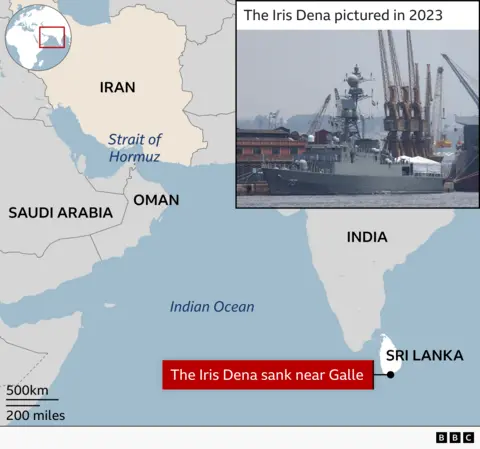
About 15 Iranian sailors will remain in Sri Lanka to operate the Irins Bushehr, which is anchored off Trincomalee in the northeast of the island.
Sri Lankq had allowed the Iranian vessel to dock at a north-eastern port on 5 March after hours of discussion, with its president saying they would “never hesitate to protect humanity”.
“Our position has been to safeguard our neutrality while demonstrating our humanitarian values,” President Anura Kumara Dissanayake said in a statement at the time.
“[Sri Lanka] intervened in a way that demonstrated our commitment to international conventions, protecting the reputation and dignity of our country, and protecting human lives,” he said.
Sri Lanka has maintained a long-standing policy of non-alignment since it became independent in 1948.
It has strong economic and diplomatic ties with both Iran and the US.
(BBC)

Heat Index at Caution Level in the Northern, North-central, North-western, Western, Sabaragamuwa, Eastern and Southern provinces and in Monaragala district

Pakistani army chief in Tehran amid bid to restart US talks

Sri Lanka repatriates 238 Iranian sailors stranded after US torpedo attack

Indonesian Navy Sailing Ship KRI BIMA SUCI – 945 makes port call in Colombo

PM initiates children into learning at the auspicious time while observing New Year traditional customs and rituals

Navy seize an Indian fishing boat poaching in seas north of Mannar

‘Dates have the highest sugar content to fight Coronavirus’

Sunday Island 27 December – Headlines

#SundayIsland 17th December – Headlines

Sunday Island – 28th March

Sunday Island Headlines – 21 March

Sunday Island – 21st February – Headlines
-

 News4 days ago
CEB orders temporary shutdown of large rooftop solar systems
-

 News7 days ago
AG: Coal procurement full of irregularities
-
 Features4 days ago
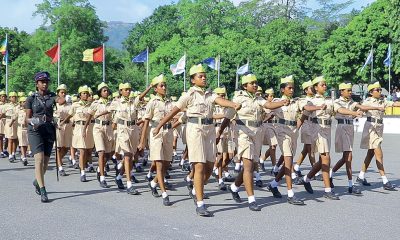
From Royal College Platoon to National Cadet Corps: 145 years of discipline, leadership, and modern challenges
-

 Business6 days ago
Israeli attack on Lebanon triggers local stock market volatility
-

 Business7 days ago
Hayleys Mobility introduces Premium OMODA C9 PHEV
-

 Business6 days ago
HNB Assurance marks 25 years with strategic transformation to ‘HNB Life’
-

 Latest News3 days ago
PNS TAIMUR & ASLAT arrive in Colombo
-

 Sports7 days ago
DS to face St. Anthony’s in ‘Bridges of Brotherhood’ cricket encounter