
Opinion
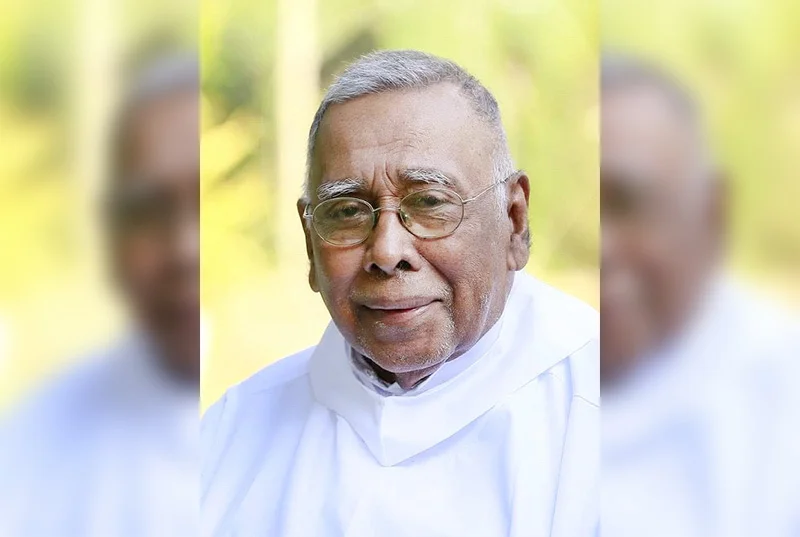
A beloved principal has departed!

“When the principal sneezes, the whole school catches a cold. This is neither good nor bad; it is just the truth. The principal’s impact is significant; his focus becomes the school’s focus.” These are Whitaker’s words and they illustrate the predominant role that a principal has to execute in a school. The Wallace Foundation has identified the following as the five key responsibilities of a school principal.
- Establishing a school wide vision of commitment to high standards and success of all students.
- Ensuring that learning is at the centre of all activities.
- Cultivating leadership in others
- Improving achievement by focusing on the quality of instruction.
- Managing people and resources at hand.
Rev. Fr. Stephen Abraham is one such principal who fulfilled these commitments at the highest level possible at St. Anthony’s College, Katugastota, for a period of 15 years from 1979 to 1994. He was born on the 15th of February 1933 and ordained a Priest in the Benedictine Order of the Catholic Church on 17 December 1964. His demise was on 21st February 2026, on the fourth day of the period of lent in the catholic calendar. As such he has been in the service of God as a priest for 62 years of his life of 93 years. This article contains extracts from a piece that I wrote when he celebrated the Golden Jubilee of his priesthood in December 2014.
St. Anthony’s College went through a burdensome period after the handing over of the school to the government as the teachers, support staff and parents were baffled about the direction of the school. It is at this stage that Fr. Stephen was appointed as the Principal. In his own inimitable manner he took control with authority and raised the confidence of the staff and the community. This was needed as the confidence was at its lowest ebb and he had the vision to realise that boosting the level of confidence had to be the priority. As the famous quote says “A good leader inspires others with confidence in him; a great leader inspires them with confidence in themselves”. He could not have done this without self-confidence which he had in abundance. Alongside, he laid his emphasis on maintaining a strict code of discipline as it had degraded due to the unfortunate incidents paving way for the handing over of the school.
A quality that any good principal should possess is to be a great communicator. Fr. Stephen had a natural ability to be dexterous with people. He made connections with each person showing them that he cares about their own situations. Through these connections he set high expectations for each individual letting them know that they cannot get away with mediocrity. The articulation and eloquence of his expression convinced people of his opinions and decisions. He is blessed with a sound sense of humour and it helped to ease tensions and resolve conflicting situations. More importantly, he was passionate about his responsibilities as the head of the school and he spent all his time and energy with the sole objective of creating a proper environment for the students to be responsible learners striving for personal excellence. Fr. Stephen was everywhere in the school and knew everything that was happening within the premises and he made himself visible at all times. He fits well with the description of a leader in Harold Seymour’s quotation “Leaders are the ones who keep faith with the past, keep step with the present, and keep the promise to posterity”. No wonder therefore, that he is considered as an outstanding principal.
In 1979 when the school celebrated its 125th anniversary, Fr. Stephen invited His Excellency the President J. R. Jayewardene as the chief guest of the Prize Giving ceremony. His emphasis on discipline is highlighted through this excerpt from his speech at this function. “The progress of any society depends mainly on discipline and discipline is not come by so easily unless the members of the society work towards it. No nation can be great unless its students aspire to greatness. But all this calls for training which is impossible without quality in teaching. Teachers should command the greatest respect in the land. Teaching is not a mere avocation, it is indeed a vocation and a very noble one at that.”
When it comes to educating the youth, Fr. Stephen believed in developing the whole person. This is reflected in the emphasis that he laid not only in the academic arena but also the field of extra-curricular activities. He believed that inculcating, promoting and enhancing values such as compassion, integrity, courage, appreciation, determination, gratitude, loyalty and patience are crucial for the proper upbringing of the younger generation. In 1980, he invited the Prime Minister Hon. R. Premadasa for that year’s prize giving ceremony and in the principal’s address he said “When our young charges leave this emotionally safe and secure world of school with all its disciplines, they must be able to adjust to the wider world in which they must live and work. It is our responsibility to see that they leave the College mentally, spiritually and physically whole, so that they in turn may assume the roles they will be called upon to fulfill in the future”, demonstrating his belief in the advocacy of values.
He identified sports activities as a healthy medium to instill discipline and an acceptable value system and did his utmost in promoting, encouraging and popularising all types of sports in the school. With his foresight and guidance, the school gained new heights in almost all spheres of sports activity. Just to name three great sportsmen who had their grounding in that era are Muttiah Muralidharan – record breaking cricket bowler, Priyantha Ekanayake – a respected past rugby captain of Sri Lanka and president of SLRFU and Udaya Weerakoon – a former national and world inter airline badminton champion.
He did not neglect the expansion of the infra-structure in the school in keeping with the needs of the time. Some of the projects completed during his time were the building of a two-story block of classrooms with the assistance of funds released by the Prime Minister, completion of the indoor sports complex and later a pavilion named after the famous Antonian cricketer Jack Anderson, with the help of the old boys association.
The inspiration that Fr. Stephen Abraham had as Principal within the school community of St. Anthony’s College can be aptly described by John Quincy Adam’s quotation ” May God grant him the eternal reward!
R.N.A. de Silva
The author had his secondary education at St. Anthony’s College, Katugastota, and later served as a member of its staff
rnades@gmail.com



The Island newspaper’s lead news item on the 12th of April 2026 was on the CEB request to shut down rooftop solar power during the low demand periods. Their argument is that rooftop solar panels produce about 300 MW power during the day and there is no procedure to balance the grid with such a load.
We as well as a large academic and industrial consortium members have been trying to promote solar energy as a viable and sustainable power source since the early 1990’s. We formed the Solar Energy Society and made representations to Government politicians about the need to have solar power generation. This continuous promotional work contributed to the rapid increase in PV solar companies from three in the early 1990’s to over 650 active PV solar companies established today in the country. These companies have created tens of thousands of high-quality jobs, as well as moving in the right direction for sustainable development.
However, all these efforts appear to have been in vain since the CEB policy makers have continuously rejected solar energy as a viable alternative. Their power generation plans at that time did not include solar energy at all but only relied on imported coal power plants and diesel power generation. Even at the meetings where CEB senior staff were present, we emphasised the importance of installation of battery storage facilities and grid balancing for which they have done nothing at all over the past three decades. Now they have grudgingly accepted the need to include solar energy, which was an election promise of the present government. The government policy is that Sri Lanka should go for renewables to satisfy 70% of its energy needs by 2030 and soon move towards the green hydrogen technology by using solar and wind energy.
The question is why the diesel generators and hydropower stations cannot be shut off one by one to accommodate the solar power generated during the daytime. Unlike a coal-fired plant, diesel generators and hydro power plants can be shut off in a relatively shorter period of time. Norochchalai Lakvijaya power plant produces around 900 MW of power while the total country requirement is 2500 MW on a daily basis. The remainder is provided by diesel generators, hydro and other renewable energy sources.
The need for work to achieve this goal of grid balancing should be the primary responsibility of the CEB. Modern grid balancing systems are in operation in countries such as Germany where around 56% of its energy come from renewable sources. They also plan to increase this to reach 80% of the energy required through renewables by 2030. Our CEB is hell bent on diesel power plants. Who benefits from such emergency power purchases is anybody’s guess?
The Government and the CEB should realise that all roof top solar plants are privately financed through personal funds or bank loans with no financial burden on the Government. It is a crime to request them not to operate these solar panels and get the necessary credits for the power transmitted to the national grid. It appears that the results of CEB’s lack of grid balancing experience and unwillingness to learn over three decades have now passed to the privately-funded rooftop solar panel owners. It is unfortunate that the Government is not considering the contributions of ordinary individuals who provide clean power to the national grid at no cost to the Government. Over 150,000 rooftop solar panels owners are severely affected by these ruthless decisions by the CEB, and this will lead to the un-popularity of this new government in the end.
by Professors Oliver Ileperuma and I M Dharmadasa
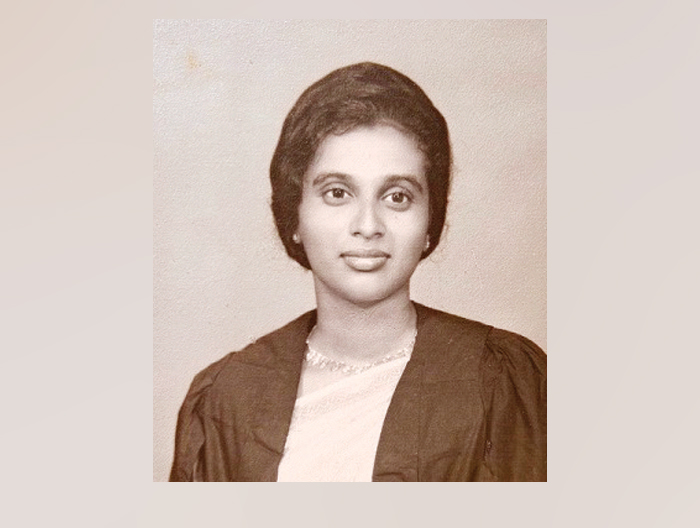
It was with shock that I realized that the article in the Sunday Island of April 5 about the winsome graduate gazing serenely at her surroundings was, in fact, an obituary about Nilanthi Jayasinghe, a former colleague who I had held in high esteem. I had lost touch with Nilanthi since my retirement and this news that she had passed away, saddened me deeply
I knew and had worked with Nilanthi – Mrs Jayasinghe as we used to call her – at the Open University of Sri Lanka in the 1990s. As Director, Operations, she was a figure that we as heads of academic departments, relied on; a central bastion of the complex structure that underpinned academic activities at Sri Lanka’s major distance education provider. Few people realize what it takes to provide distance education in an environment not geared to this form of teaching/learning – the volume of Information that has to be created, printed and delivered; the variety of timetables that have to be scheduled; the massive amount of continuous assessment assignments and tests that have to be prepared and sent out; the organization of a multitude of face-to face teaching sessions; the complex scheduling of examinations and tests – all this needed to be attended to for a student population of more than 20,000 and for 23 centres of study dotted across Sri Lanka.
It was an unenviable task but Nilanthi Jayasinghe with her flair for organization, handled it all with aplomb and a deep sense of commitment. If there were delays and inconclusive action on our part, she never reprimanded but would work with us to sort things out. Her work as Director, Operations brought her into contact with staff across the spectrum-from the Vice-Chancellor to the apprentice in the Open University’s Printing Press. Nilanthi treated everyone with dignity and as a result, was respected by all at the university. She was sensitive, kind-hearted, a good friend who would readily share problems and help to solve them. The year NIlanthi retired, I was out of the island. When I came back to the Open University, I felt bereft without the steadfast support of her stalwart presence .
The article in the ‘Sunday Island’ describes her life after retirement, looking after family members and enjoying the presence of a granddaughter.
After a lifetime of commitment to others, Nilanthi Jayasinghe truly deserved this happiness.
May she be blessed with peace.
Ryhana Raheem
Professor Emeritus
Open University of Sri Lanka.
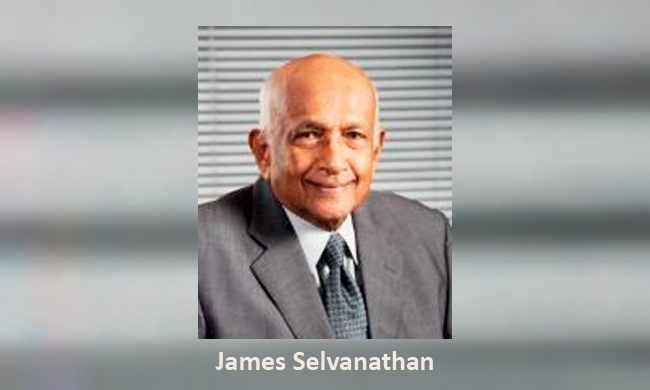
James Mather (Selvan to all of us) who passed away recently at the age of 95 was one of the leading Chartered Accountants in the country. He was the senior partner of Ernst and Young for long years, and the mentor for a generation of chartered accountants. He was confidante and adviser to many of the leading businessmen of his time. His career spanned over six decades. A man who never sought the limelight, he was very influential in Ceylon/Sri Lanka’s business world.
Selvan Mather was born in 1930 to a well-known Christian family in Jaffna. His father, Rev. James Mather was Head of the Methodist Church in Ceylon. Selvan was educated at Trinity College Kandy, and he had a life-long connection with the school. He entered the University of Ceylon in the late 1940s, at a time when Ivor Jennings was Vice-Chancellor.
He read economics and passed out with an honours degree. For short periods he was in the Department of Income Tax and with the newly established Central Bank of Ceylon. The Central Bank facilitated him to go to England to qualify as a chartered accountant. His two referees, when seeking admission to an accountancy firm in the U.K. were M.D.H. Jayawardena, then Minister of Finance and the Auditor General of Ceylon, L.A. Weerasinghe. Being a chartered accountant was a rare event those days.
On his return from England, his career was with Ernst and Young where he became senior partner. He was close advisor and confidante to many of the leading businessmen. He was admitted to its Hall of Fame by the Institute of Chartered Accountants.
To strike a personal note, I got to know him 50 years ago when he applied for a fellowship given by the Asian Productivity Organisation (APO) in Tokyo. I was in the Ministry of Planning and Economic Affairs at the time, and the Ministry was handling APO affairs in Colombo. He told me later that he enjoyed his time in Tokyo. From that time, we kept up a friendship with him and Nelun, which lasted 50 years.
My wife, Rukmal, and I lived in Windsor England, for about 25 years. During that time, Nelun and Selvan were regular visitors to England. I remember taking him for long walks in Windsor Great Park, and on the grounds of Eton College which were nearby. We went on long car tours in England covering the Cotswolds, the Peak districts and the Potteries. I remember celebrating Selvan’s 70th birthday in London at a Greek restaurant, along with his great friends, Nihal and Doreen Vitarana. Memories remain, although Selvan is no more.
In the last decades of his life we saw Nelun and him often. A few of us, Manik de Silva, Nihal and Srima Seneviratne and a few others met regulsrly for lunch. We will all miss Selvan who was mine of his life and times very much.
Selvan leaves his wife Nelun and three children and their husbands – Rohan, Shyamala and Indi, and Rehana and Akram. It was a close-knit family and they will miss him.
Leelananda De Silva.

Dasun Shanaka handed one-year PSL ban

Nahid, Tanzid help Bangladesh level New Zealand series

Five UAE cricketers given citizenship through naturalisation

Moni, Sharmin help Bangladesh register maiden ODI win against Sri Lanka

Advisory for Severe Lightning issued for all provinces of Sri Lanka

Oil prices rise after Trump says Iranian ship seized

‘Dates have the highest sugar content to fight Coronavirus’

Sunday Island 27 December – Headlines

#SundayIsland 17th December – Headlines

Sunday Island – 28th March

Sunday Island Headlines – 21 March

Sunday Island – 21st February – Headlines
-

 News5 days ago
PNS TAIMUR & ASLAT set sail from Colombo
-

 Business3 days ago
Harnessing nature’s wisdom: Experts highlight “Resist–Align” path to resilience
-

 News3 days ago
Gratiaen Trust announces longlist for the 33rd Annual Gratiaen Prize
-

 Latest News7 days ago
“I extend my heartfelt wishes to all Sri Lankans for a peaceful and joyous Sinhala and Tamil New Year!” – President
-

 News2 days ago
From Nuwara Eliya to Dubai: Isha Holdings markets Agri products abroad
-

 News3 days ago
Heroin haul transported on 50-million-rupee contract
-

 Latest News4 days ago
Singapore Zoo’s first Sri Lankan leopard cubs make their public debut
-

 Latest News7 days ago
US blockade of Iran would worsen global energy crisis, analysts say