
News
Ex-TRCSL Chairman Palpita enlarged on bail

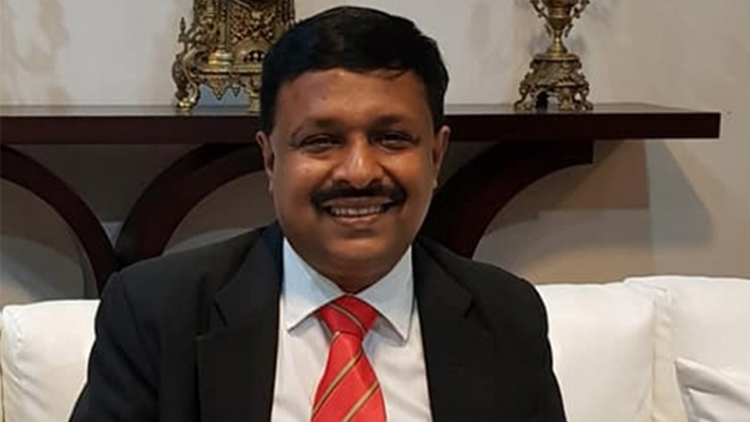
Former Mass Media Ministry Secretary and former Telecommunications Regulatory Commission of Sri Lanka (TRCSL) Chairman Anusha Palpita was yesterday released on bail by the Colombo Chief Magistrate’s Court.Colombo Chief Magistrate Asanga S. Bodaragama granted bail after considering submissions made by officials of the Bribery Commission and counsel for the defence.
The Magistrate ordered the suspect’s release on two personal surety bonds of Rs. 5 million each and imposed a foreign travel ban.
When the case was taken up, Bribery Commission officials informed court that a report had been called regarding alleged investments made by the suspect in the stock market. They sought a further date to present facts pertaining to those reports.
Appearing for the suspect, Attorney-at-Law Kanchana Ratwatte submitted that his client had been in remand custody for nearly a month and was prepared to extend full cooperation to investigators. He moved for bail on that basis.
After hearing both sides, the Magistrate observed that no reasonable grounds had been placed before court to further remand the suspect and ordered his release on bail. The case was fixed for 29 May.
Palpita was arrested on 23 January in connection with an investigation initiated by the Bribery Commission over the alleged failure to disclose the source of assets amounting to Rs. 46 million.
The Commission stated that he had arrived at its office on the day of his arrest to give a statement and was taken into custody thereafter.
He was arrested on allegations of amassing assets and property disproportionate to his declared income during a specified period, following a probe into wealth allegedly accumulated beyond his lawful earnings.





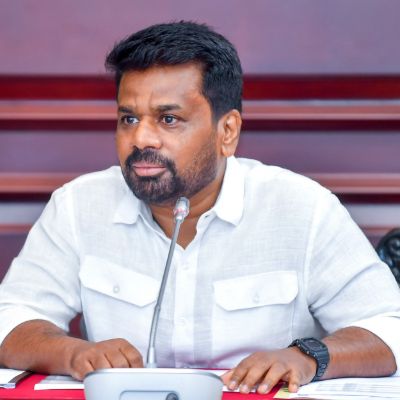
A discussion to review the progress of projects being implemented under the 2026 budget allocations for the Ministry of Agriculture, Livestock, Land and Irrigation, and to consider the Ministry’s budgetary requirements for 2027, was held on Tuesday (07) morning at the Presidential Secretariat under the chairmanship of President Anura Kumara Dissanayake.
During the meeting, the progress of projects implemented in 2026 by institutions under the Ministry, including the Department of Agriculture, the Department of Agrarian Development, the Department of Export Agriculture and the Institute of Post-Harvest Technology (IPHT), was reviewed individually. Attention was also focused on institutions requiring restructuring to enhance efficiency and effectiveness.
The President instructed that all irrigation projects maintained by various institutions, departments and local authorities should be regulated through a single district-level unit. He also directed that irrigation rehabilitation projects being implemented across the island be comprehensively mapped.
Emphasising the need to maximise the utilisation of funds allocated under the 2026 Budget, the President instructed officials to further promote concessionary bank loan facilities available to young entrepreneurs in the agriculture and industrial sectors.
The President also instructed officials to submit a report containing proposals for the integrated and systematic management of extension services currently operating under various ministries. He further highlighted the importance of holding separate discussions on individual subject areas to ensure seamless coordination between the Provincial Councils and the Central Government.
The President also directed officials to submit new proposals and projects aimed at promoting export agricultural crops and increasing the value of related products.
The meeting also reviewed projects launched in recent years with foreign loan assistance. As many had exceeded their scheduled completion dates, the President instructed officials to expedite their completion. He further emphasised that, in future, no project financed through foreign loans should be approved without a clear understanding of its intended outcomes.
It was also noted that the Government had incurred a significant financial burden due to the failure to complete certain projects initiated in previous years within the stipulated timeframe. Accordingly, it was decided to review projects that had not been completed on schedule.
The discussion also highlighted the importance of replacing outdated projects and programmes that have continued for many years without delivering tangible results with more productive agricultural programmes.
Minister of Agriculture, Livestock, Land and Irrigation K.D. Lalkantha; Minister of Labor and Deputy Minister of Finance and Planning Dr. Anil Jayantha Fernando; Deputy Minister of Agriculture and Livestock Namal Karunaratne; Deputy Minister of Land and Irrigation Aravinda Senarath; Secretary to the President Dr Nandika Sanath Kumanayake; Secretary to the Treasury and Ministry of Finance, Planning and Economic Development, Dr.Harshana Suriyapperuma; Senior Additional Secretary to the President Kapila Janaka Bandara; Secretary to the Ministry of Energy and Senior Additional Secretary to the President Russell Aponsu; Secretary to the Ministry of Agriculture, Livestock, Land and Irrigation D.P. Wickramasinghe; and officials of the Ministry of Finance, Planning and Economic Development and the Ministry of Agriculture, Livestock, Land and Irrigation were also present at the discussion.
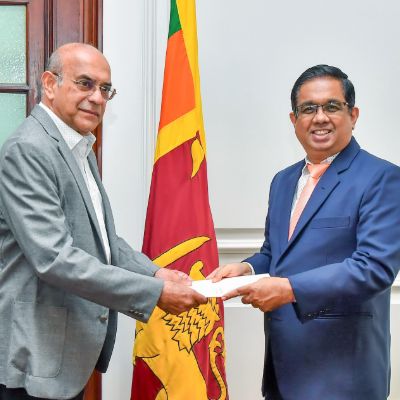
A Committee of Inquiry was appointed on Tuesday (07) by Secretary to the President Dr Nandika Sanath Kumanayake, with Cabinet approval, to conduct a comprehensive investigation into the unrest that occurred at Negombo Prison on 5 and 6 July and to report on the circumstances that led to the incident.
The Committee is chaired by retired Supreme Court Judge Priyantha Fernando. Its other members are Additional Solicitor General and President’s Counsel Milinda Gunatilake and President’s Counsel Mohan Weerakoon. Senior Assistant Secretary to the President K.L.D. Asela has been appointed Secretary/Convener of the Committee of Inquiry.
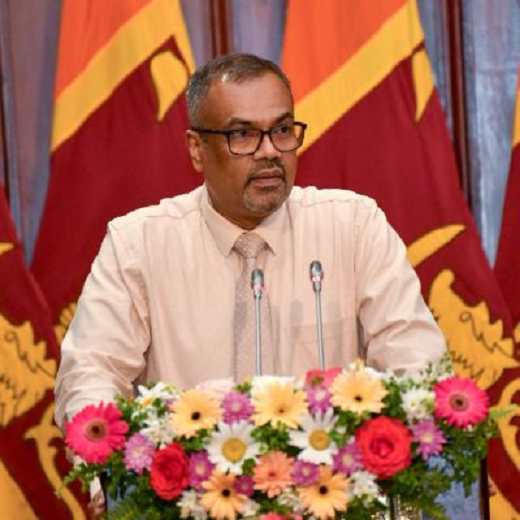
The inaugural ceremony of “Badhu Shakthi 2026” (“බදු ශක්ති 2026”) National Tax Week, organised by the Revenue Administration Reform and Modernisation Unit of the Presidential Secretariat with the objective of strengthening State revenue generation and accelerating the country’s future development process, was held on Monday (06) morning at the Presidential Secretariat under the patronage of Speaker Dr Jagath Wickramaratne.
“Badhu Shakthi 2026” is a year-round national programme aimed at transforming the negative public perception of taxation into a positive one while fostering a culture of voluntary tax compliance. To mark its commencement, a National Tax Week will be observed across the island from 6 to 10 July.
A nationwide media and public awareness campaign will be conducted in parallel, including the distribution of leaflets and a range of promotional activities designed to educate the public directly and encourage greater tax compliance.
Addressing the inaugural event, Speaker Dr Jagath Wickramaratne stated that “Badhu Shakthi 2026” is not simply a tax collection campaign but a national initiative aimed at cultivating responsible citizens who love their country.
Further elaborating, the Speaker said:
“Today marks a significant milestone in our country’s future development and economic stability. The strength and sustainability of any sovereign nation depend on its economic independence. Taxation is one of the key instruments for strengthening State revenue and driving national development.
However, taxation has long been viewed negatively by many people. That perception was largely shaped by those responsible for collecting taxes and by successive administrations. When people develop a sense of national responsibility, their attitudes begin to change. For many years, taxes were regarded as a burden. History has shown us that tax evasion occurred on a significant scale, and it must be acknowledged, however reluctantly, that such practices often enjoyed political patronage.
In the past, the public had little understanding of how their tax contributions were utilised. Taxpayers lacked a clear vision of the benefits derived from the taxes they paid. The present Government has succeeded in changing this situation by fostering a more positive public attitude towards taxation. I wish to pay tribute to all taxpayers who contribute towards the Government’s national development agenda.
Today, people have confidence that the taxes they pay are being put to good use. Expressways, highways and power infrastructure projects are now being implemented using domestic funds. There is a sense of pride among the public that construction of the Kandy Expressway has commenced without obtaining loans from any external source. Cabinet approval has also been granted to commence work on the Kurunegala–Galewela Road.
Today, Sri Lanka has grown stronger as a nation capable of financing development activities through domestic resources rather than relying on foreign borrowing.
In ancient times, the country’s great stupas, reservoirs and irrigation networks were built through the collective contribution of the people. Likewise, Sri Lanka can become a prosperous and developed nation only through collective effort. The taxes collected today are being utilised for the welfare of the people. This was clearly demonstrated when the Government allocated Rs. 500 billion in response to Cyclone Ditwah. In addition, substantial benefits are now being provided to the public through the President’s Fund. Educational assistance is being extended to schoolchildren across every corner of the country. All of these initiatives are being financed through domestic resources.
It is essential that the public are made aware of the real benefits derived from tax revenue and of the development projects being implemented. This will strengthen public confidence in the transparent use of tax revenue. The primary objective of this national programme is to broaden the country’s tax base, improve tax compliance, reduce tax evasion and foster a positive attitude towards taxation. If everyone pays their fair share of taxes, the tax burden borne by others can be reduced.
We do not build a beehive with a single bee. It is created through the collective effort of thousands of bees, making it a remarkable achievement. Likewise, ‘Badhu Shakthi 2026’ is not merely a tax collection campaign. It is a national movement to cultivate responsible citizens who love their country. I extend my sincere appreciation to everyone who has dedicated themselves to making this important initiative a success.”
Labour Minister and Deputy Minister of Finance and Planning Anil Jayantha Fernando:
Labour Minister and Deputy Minister of Finance and Planning Dr. Anil Jayantha Fernando said that a proper understanding of taxation among citizens would enable Sri Lanka to make greater progress towards economic and social transformation.
He noted that while individuals naturally pursue their own personal goals and aspirations, many of these objectives cannot be achieved in isolation. The success of any society depends on cooperation and collective effort.
He further stated:
“Today, paying taxes has become a much simpler process. As a result, tax collection is now carried out more efficiently and systematically. At the same time, the Government recognises its responsibility to ensure that tax revenue collected fairly is managed prudently and utilised for the benefit of society. If the Government fails to demonstrate sound financial discipline, people will lose confidence and become reluctant to pay taxes. This was evident in the past.
Accordingly, the Government has introduced a tax administration system founded on strong fiscal discipline. We will not tolerate fraud, corruption or waste. If we are to rebuild this country, every citizen must contribute willingly and with a sense of national responsibility. This should not be driven solely by legal obligation. We are confident that the people of Sri Lanka will fulfil this responsibility.”
Deputy Minister of Economic Development Nishantha Jayaweera, Director General of Customs Wimal Liyanagama, Director General of Excise M.B.N.A. Premaratne, and Commissioner General of Inland Revenue Rukdevi Fernando also addressed the gathering.
Among those present were Director General of Public Relations to the President Dharmasiri Gamage, senior officials of the Presidential Secretariat, the Ministry of Finance, Sri Lanka Customs, the Department of Excise, the Inland Revenue Department, as well as taxpayers and other invited participants.

Pakistan searches for Boeing cargo plane missing over Arabian Sea

President chairs 2027 Pre-Budget talks on Agriculture Ministry

Committee Appointed to investigate unrest at Negombo Prison

Archer, Tongue hand India their biggest T20I defeat

“Badhu Shakthi 2026” National Tax Week begins

Renovated Narahenpita Railway Station reopens to the public under the ‘Dream Destination’ initiative

‘Dates have the highest sugar content to fight Coronavirus’

Sunday Island 27 December – Headlines

#SundayIsland 17th December – Headlines

Sunday Island – 28th March

Sunday Island Headlines – 21 March

Sunday Island – 21st February – Headlines
-
 News4 days ago
Singapore-based Buddhist monk marks nearly four decades of humanitarian service
-

 News5 days ago
Freedom 250: US Embassy celebrates America’s 250th Independence Day through magic of American cinema
-
 News6 days ago
CIABOC to question Harak Kata on Rs. 200 mn bribery allegation
-
 News6 days ago
SLAF conducts successful rescue mission under UN command in Central African Republic
-

 News3 days ago
AI concerned over proposed SL military deployment in Haiti
-
 News5 days ago
UNEP support pledged to strengthen Sri Lanka’s Environmental Priorities
-

 Business6 days ago
‘Dialog Air Fibre powers a new era of Ultra Fast Home WiFi’
-

 Features4 days ago
The NPP’s New Challenge: Balancing Easter Lawfare and Economic Welfare