
Sports
Old and new at the SSC, just like Pakistan

[Cricbuzz]

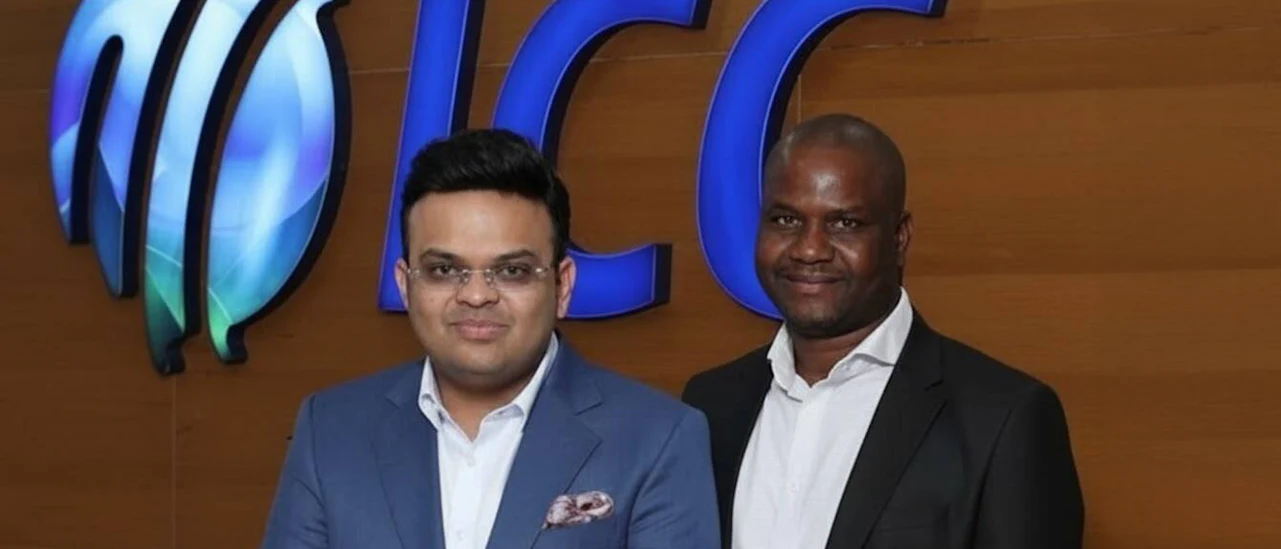
The International Cricket Council (ICC) has appointed Tavengwa Mukuhlani as its Deputy Chairperson through November 2027.
Mukuhlani, who currently serves as the Chairman of Zimbabwe Cricket and represents the nation on the ICC Board, is set to take over the position from Imran Khwaja, following the latter’s departure.
Mukuhlani serves on the ICC Finance and Commercial Affairs (F&CA) and Nominations Committees, and he chairs the HR and Remuneration Committee. He will become the first Zimbabwean to be appointed as the Deputy Chair of the ICC.
His appointment comes at a pivotal moment for African cricket as Zimbabwe prepare to co-host the ICC Men’s Cricket World Cup 2027 alongside South Africa and Namibia. Leveraging his extensive leadership at Zimbabwe Cricket and regional expertise, Mukuhlani will provide valuable direction as the ICC brings the flagship tournament back to Africa for the first time in 24 years.
ICC Chairman, Jay Shah said, “I warmly congratulate Tavengwa Mukuhlani on his appointment as Deputy Chair of the ICC. “His experience in cricket administration, understanding of the global game and commitment to its development will be invaluable to the ICC Board.
“Tavengwa has earned the confidence of his fellow Directors, and I look forward to working closely with him to strengthen cricket across our Members and create greater opportunities for the game to grow worldwide. His election is also a significant milestone for Zimbabwe, as he becomes the first Zimbabwean to serve as Deputy Chair.
“With cricket expanding globally and returning to the Olympic Games, strong leadership will be vital. I wish Tavengwa every success in his new role.”
Tavengwa Mukuhlani said, “I am deeply honoured by the confidence placed in me by my fellow ICC Board Directors and grateful for the opportunity to serve as Deputy Chair of the ICC. “I look forward to working closely with our Chairman, Mr. Jay Shah, whose leadership, energy and ambition have brought a clear sense of purpose to the ICC, with a strong focus on growing cricket, creating opportunities for our Members and reaching new audiences and markets.
“Cricket is entering an exciting period, particularly with its return to the Olympic Games and continued global expansion. I look forward to supporting our Chairman, Mr. Jay Shah and fellow board directors in advancing our shared priorities and serving the best interests of cricket globally.”
[ICC]
Latest News
Isle of Man teenage all-rounder Lucy Barnett ICC Women’s Player of the Month for August 2026
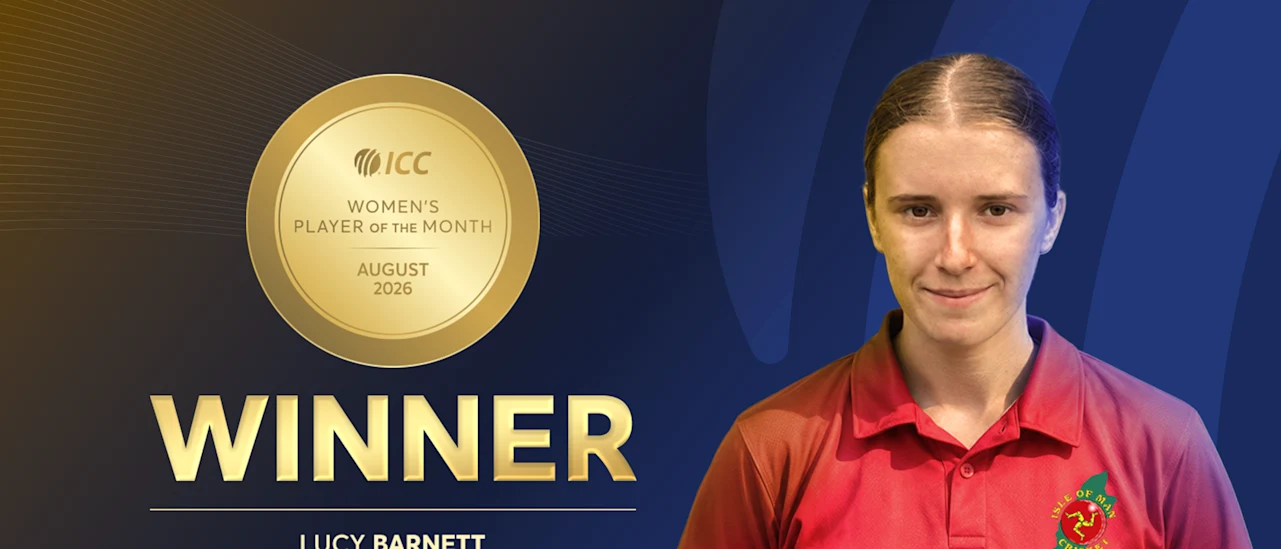
Lucy Barnett played a pivotal role in Isle of Man’s run to the Women’s Continental Cup final, finishing the tournament as the leading run-scorer.
The 19-year-old beat competitions from Suleeporn Laomi and Nannapt Koncharoenkai of Thailand to the award.
She enjoyed an outstanding campaign, registering a century and two fifties across the competition.
Barnett began with an unbeaten 71 against Romania, guiding Isle of Man to a comfortable run chase in just 13.1 overs.
After scoring only four runs against Greece, she responded in spectacular fashion against Norway, smashing an unbeaten 123 from 64 balls to help her side finish top of the group.
She also made an impact with the ball in those two matches, taking 1/8 against Greece and 1/11 against Norway.
Her strong run continued in the final against Turkey, where she was Isle of Man’s highest scorer with a 59, while also contributing two wickets for 22 runs.
Across four T20Is, Barnett amassed 257 runs at an exceptional average of 128.50 and a strike rate of 178.47.
With the ball, she claimed four wickets at an economy rate of 3.80 and an average of 14.25.
Speaking on the recognition, Barnett revealed the award gives her an added motivation to keep performing at the highest level.
“Winning the ICC Player of the Month award is an incredible feeling and, honestly, still feels a little unbelievable as I am making history of sorts for the Isle of Man,” Barnett said.
“I knew I had a strong month, but to be recognised ahead of so many others is something I’m immensely proud of and will cherish for a very long time.
“It’s a fantastic time for women’s cricket, and to have the spotlight on me now is a truly special feeling.
“I’m grateful to the ICC for this honour and to all my team-mates, coaches and officials who have made my international journey such an enjoyable and rewarding one.
“This award gives me even more motivation to keep pushing myself, and I hope to carry this form into the matches ahead and create many more special moments for my team.”
[ICC]
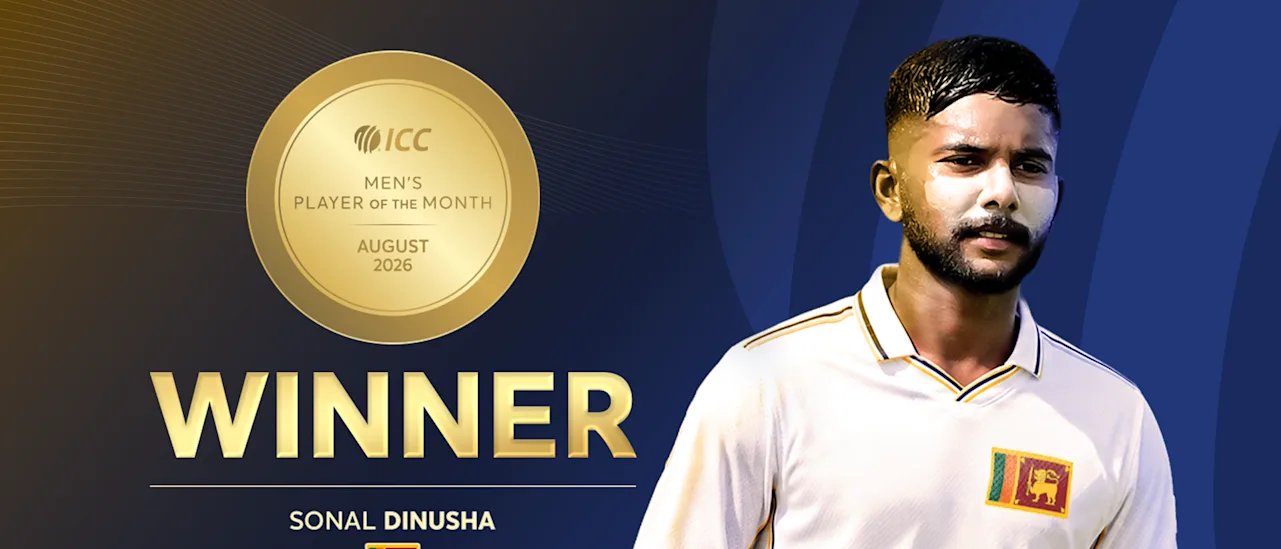
Sonal Dinusha has been named the ICC Men’s Player of the Month for August 2026.
This marks Dinusha being crowned with the accolade for the first time in his career.
Having played only three Tests for Sri Lanka coming into the ICC World Test Championship series against India, the left-handed batter was the leading run-getter in the two-match series.
Dinusha finished with 420 runs, averaging a spectacular 140, with three centuries and a half-century to his name.
“This recognition means so much to me, especially so early in my career, and I’m truly grateful to the ICC for this honour,” Dinusha said while reflecting on his latest achievement.
While Sri Lanka lost the first Test by 165 runs, Dinusha managed to score 100 in the first innings, followed by 84 runs in the second.
In the second Test, with the hosts battling to avoid a series sweep, Dinusha scored twin centuries in the two innings (103 and an unbeaten 133) to orchestrate a famous draw.
“The series against India will always hold a special place in my heart,” Dinusha added.
“Scoring three centuries was a dream come true, made even more meaningful by achieving them in Colombo and Galle in front of our home fans. “Although we didn’t get the overall result we hoped for, the way our team fought back in the second match showed the character, belief and determination we have as a side. I’m proud to have shared that fight with my teammates.
Dinusha made his Test debut for Sri Lanka last year, during the home series against Bangladesh.
In a short time, the all-rounder has made a big impact while representing his team in the longest format, an achievement he isn’t taking for granted.
“Representing Sri Lanka is a privilege I never take for granted, and this recognition gives me even more motivation to keep learning, improving and contributing to the team.
“I’ll continue to give my very best for Sri Lanka in the months and years ahead.”
The hosts managed to keep the series at 1-0, and Dinusha was named the Player of the Match in Colombo.
[ICC]

Zimbabwean Tavengwa Mukuhlani appointed Deputy Chair of the ICC until November 2027.

DIMO KNIGHTS 2026 Reinforces a Culture of Recognition and Growth

Isle of Man teenage all-rounder Lucy Barnett ICC Women’s Player of the Month for August 2026

Sonal Dinusha named the ICC Men’s Player of the Month for August 2026.

USA midfielder sues doctors after on-pitch cardiac arrest

River home to 500 crocodiles chosen as Olympic rowing venue

‘Dates have the highest sugar content to fight Coronavirus’

Sunday Island 27 December – Headlines

#SundayIsland 17th December – Headlines

Sunday Island – 28th March

Sunday Island Headlines – 21 March

Sunday Island – 21st February – Headlines
-

 Sports7 days ago
DDS set to lose Test captaincy
-

 News7 days ago
Sri Lanka faces new grid challenge as rooftop solar surges: former CEB GM
-

 Latest News7 days ago
Shafali, Deepti power India into sixth T20 Asia Cup final
-

 News5 days ago
Gnanasara Thero absconding after SC ruling
-

 Latest News6 days ago
Sri Lanka thwart Fatima Sana challenge to secure Asia Cup final spot
-

 News6 days ago
Ammunition cache found in old Kandy bungalow
-

 Editorial7 days ago
A flight of fancy
-

 News6 days ago
Green Climate Fund (GCF) Regional Dialogue for East and South Asia will be held from 14 to 17 September 2026 at Cinnamon Life at City of Dreams Hotel, Colombo