
Latest News
India vs Pakistan match is a godsend for T20 World Cup hosts Sri Lanka

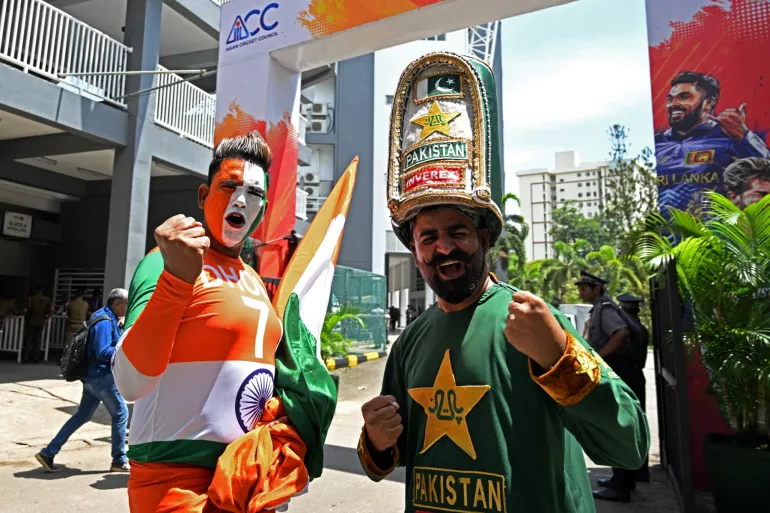
Almost 30 years ago today, India and Pakistan formed a combined cricket team to take on Sri Lanka ahead of the 1996 Cricket World Cup in an unprecedented moment of unity in the sport’s history.
The two age-old rivals put aside their differences and came together in an act of solidarity to support a fellow South Asian team, who faced the threat of match boycotts in a tournament they had battled hard to host.
India versus Pakistan is the most highly marketed fixture at every multination tournament – the World Cup, Asia Cup or Asian Games – whether it’s a men’s, women’s or Under-19 event.
Few sporting events globally carry the weight and anticipation of an India-Pakistan cricket match. So, when Pakistan’s government ordered its team not to face India at the ongoing T20 World Cup, the tournament was briefly pushed into a state of chaos.
It also left Sri Lanka, the designated host of the fixture, holding its collective breath.
A week of negotiations led to a dramatic late U-turn by the Pakistani government and the match will now take place as scheduled on Sunday at the R Premadasa International Cricket Stadium in Colombo.
But what if the boycott had gone ahead? The impact could have been catastrophic, not just for Pakistan, but also for the International Cricket Council (ICC), as well as Sri Lanka.
With the crisis seemingly averted, the island nation stands poised to reap the benefits in its financial landscape, diplomatic standing and community.
The tourism and hospitality industry was one of the hardest hit during Sri Lanka’s financial meltdown and this match will see an enormous influx of fans from India and Pakistan coming into the country.
Hotels in and around Colombo were fully booked out well ahead of the tournament but the industry braced itself for heavy losses after Pakistan threatened a boycott.
“There’s been a massive impact since the boycott was announced,” Sudarshana Pieris, who works in Sri Lanka’s hospitality sector, told Al Jazeera.
“All major hotels in Colombo were fully booked by Indian travel agencies well ahead of the match and once the boycott was announced, we lost almost all of those bookings,” he said.
“But after Pakistan reversed their decision, hotel room rates shot up by about 300-400 percent at five-star establishments in Colombo.”
It’s not just hotels but several other local businesses – from street vendors to high-end restaurants – who are hoping for an increased footfall and spending over the weekend.
These short trips and the experiences they offer could influence visitors to extend their stay or return to Sri Lanka on holiday, long after the game has ended, in a potential long-term benefit to the industry.
Another relatively underestimated impact of the game would be the employment opportunities it creates, albeit temporarily, in the media, event management, security and transportation industries.
Asanka Hadirampela, a freelance journalist and broadcaster currently working as a Sinhala language commentator for the World Cup, recognises the marquee match as a great opportunity from a personal standpoint.
“This is my first World Cup as a broadcaster,” Hadirampela said.
“The India-Pakistan fixture is the biggest and most-watched game of the tournament. So to get to work on such a match is exciting and I consider it a special achievement.”
The lines are always blurred between sport and politics in South Asia.
So while the financial gains are expected to be significant, the fixture’s impact on the region’s geopolitical environment cannot go amiss.
Pakistan’s boycott, too, was explicitly political, as confirmed by the country’s Prime Minister Shehbaz Sharif when he said that they were offering support to Bangladesh after the Tigers were kicked out of the tournament by the ICC.
The reversal of Pakistan’s decision, which they said came after requests to reconsider the boycott by several regional “friends”, was steeped in politics, too.
Sri Lanka’s President Anura Kumara Dissanayake reportedly had a phone conversation with PM Sharif, urging his government to rethink their decision to boycott the game as the successful staging of this encounter would not only position Sri Lanka as a capable host of global sporting events but also reinforce its standing as a neutral mediator in a region fraught with geopolitical complexities.
Sri Lanka and Pakistan have always maintained strong diplomatic relations, which have extended to the cricket field as well.
Sri Lanka were one of the first teams to travel to Pakistan following their 10-year ostracisation from international cricket, which came as a result of a terrorist attack targeting the Sri Lankan team in March 2009.
When Al Jazeera reached out to Sri Lanka Cricket (SLC), its vice president Ravin Wickramaratne confirmed that SLC did, indeed, reach out to the Pakistan Cricket Board (PCB) after the boycott was announced.
“We asked them to reconsider the decision,” Wickramaratne said.
“It [boycott] would have impacted Sri Lanka economically, whether directly or indirectly.
“We have always had a good relationship with the PCB and we have always supported them, so we’re happy with their decision.”
A little over 24 hours ahead of the match in Colombo, there is a sense of palpable excitement and a growing buzz around the fixture as it returns from the brink of cancellation.
As of Saturday morning, 28,000 tickets had been sold for the game but local organisers expect a capacity crowd of 40,000 to make it into the stands.
Come Sunday, thousands more will line the streets in and around Maligawatte, the bustling Colombo suburb that houses the famous Premadasa Stadium.


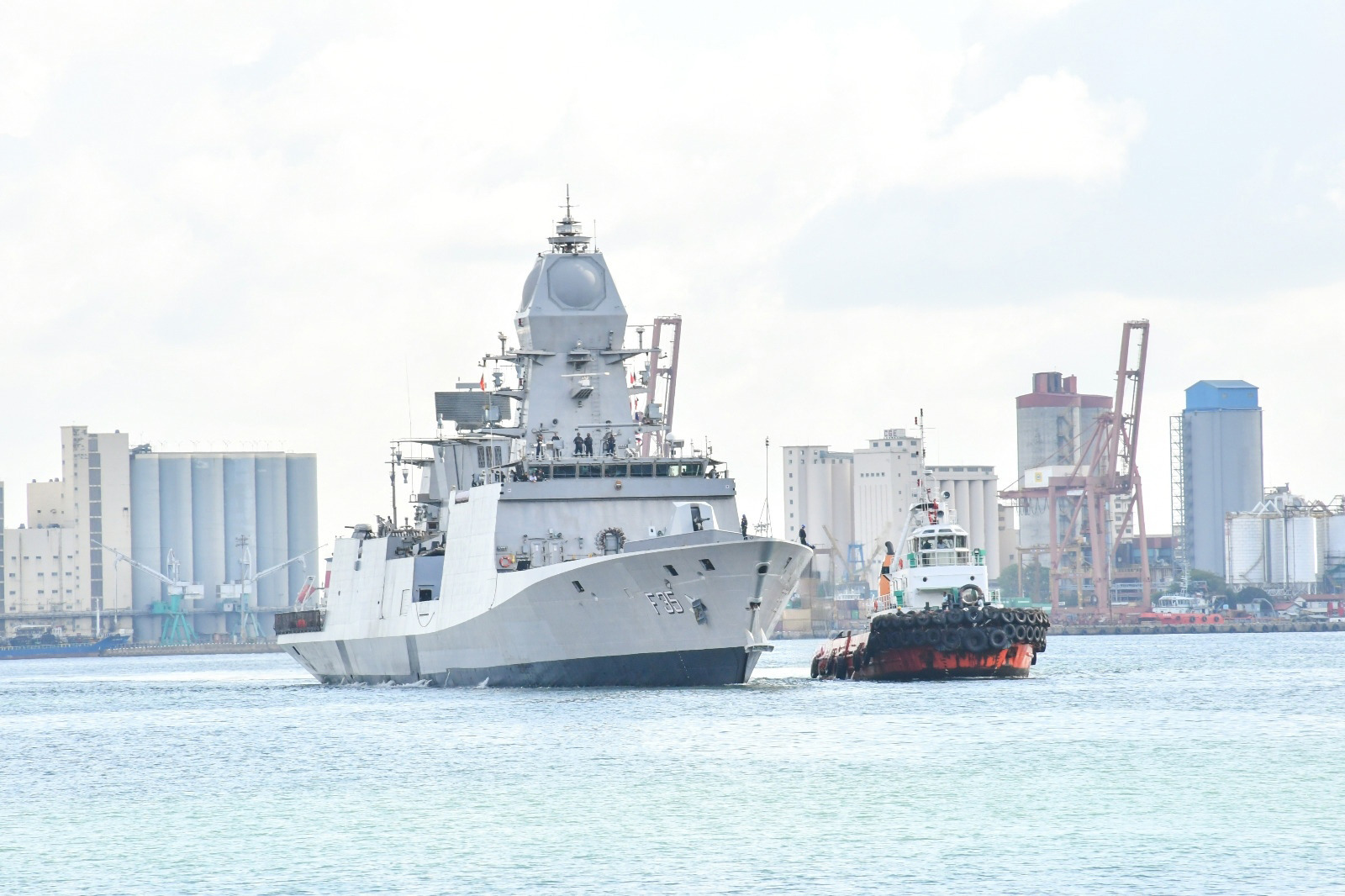
The Indian Naval Ship (INS) Udaygiri arrived at the Port of Colombo on an official visit today, 8 September 2026, where it was received by the Sri Lanka Navy in accordance with time-
honoured naval traditions.
INS Udaygiri is a 149.02m long Frigate, Commanded by Captain Vikas Sood. Meanwhile, the Commanding Officer of the visiting ship is scheduled to call on Commander Western Naval
Area, Rear Admiral Harsha De Silva at the Western Naval Command Headquarters.
Captain Sood served as the Defence Adviser at the Indian High Commission in Sri Lanka from July 2020 to October 2023.
During their stay in the island, the crew of INS Udaygiri will participate in several goodwill events organized by the Sri Lanka Navy to enhance camaraderie between the two forces.
The visiting personnel are also scheduled to visit prominent tourist and cultural locations across the island.
Additionally, Sri Lanka Navy personnel are expected to visit the ship for capability observation and knowledge sharing, and will conduct onboard training during its stay.
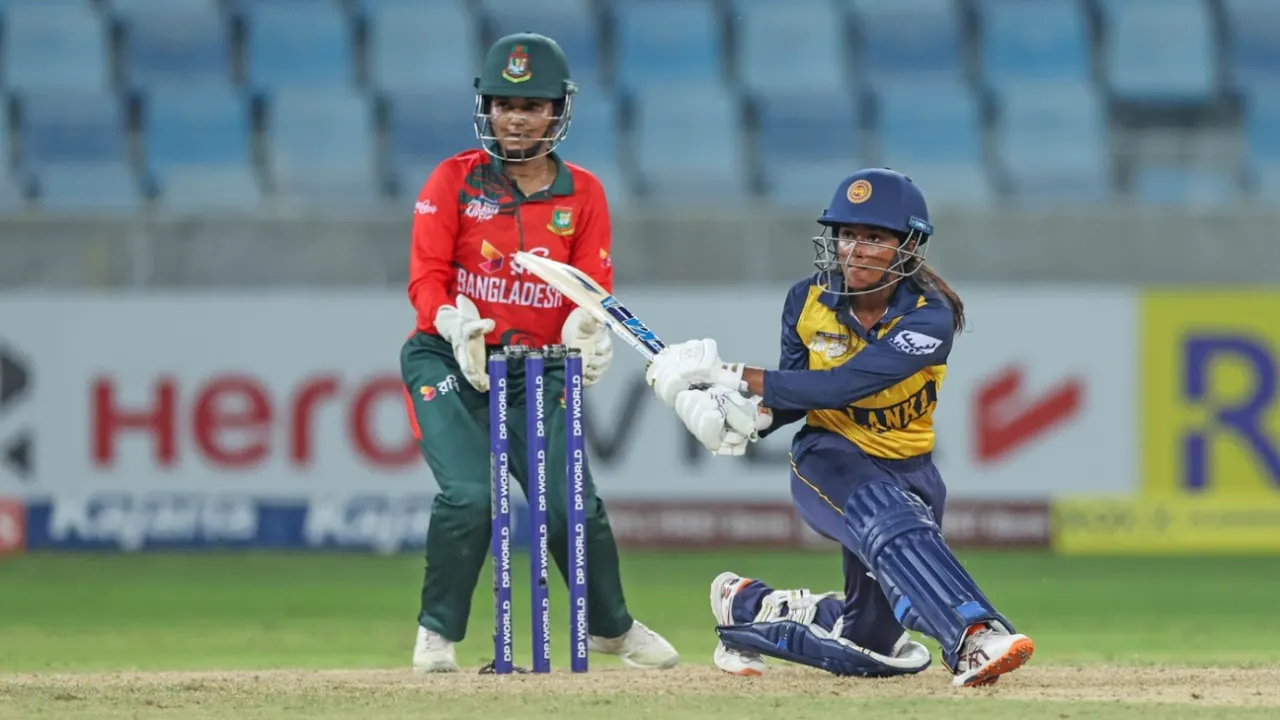
Harshitha Samarawickrema’s splendid 48 not out off 37 balls took Sri Lanka over the line in a low-scoring thriller against Bangladesh. The defending champions secured a semi-final berth with a four-wicket win, and by virtue of topping Group B, will play the side that finishes second in Group A on Friday.
An excellent opening spell of 2 for 17 from Marufa Akter put Bangladesh in firm control of the match after they posted a below-par target of 115, thanks to Chamudi Prabodha’s career-best figures of 3 for 21.
Sri Lanka found themselves behind the required run rate for much of the chase after losing their top order inside the powerplay and slipping to five down by the tenth over. But a resolute Samarawickrama brought Sri Lanka back into the contest by absorbing the pressure throughout the middle overs before landing the final punches to seal the win. This was Sri Lanka’s seventh consecutive win over Bangladesh.
Praboda strangles Bangladesh
This was only the sixth international match the 17-year-old left-arm spinner had played after making her debut against Pakistan in a three-match T20I series last month, and she doubled her tally of wickets on Sunday.
As Bangladesh looked to rebuild after Juairiya Ferdous fell in the fifth over, Praboda struck in her first over, the seventh of the match, to send the dangerous-looking Dilara Akter back to the hut two balls after being hit for a boundary by her. Dilara made a run-a-ball 26 after adjusting to the slow surface. She made her attacking intent known in the third over when she dispatched three consecutive balls from Sri Lanka pacer Chethana Vimukthi for boundaries.
Praboda and the other Sri Lankan spinners bowled with great discipline and used their variations with great guile to put a stranglehold on the Bangladesh batters, who managed just 114 for 8.
With Sobhana Mostary (34 off 41) and Shorna Akter (9 off 14) stretching their steady 41-run stand into the death overs, the Bangladesh dugout must have anticipated a much bigger total than what they eventually managed. Their hopes were bulldozed by Praboda in her last over as she accounted for both batters inside three balls. The left-arm spinner bamboozled Mostary with flight to have her stumped before drawing Dilara into chipping a tossed-up delivery back to her.
An unlucky outing for Athapaththu
Nilakshi Silva and Vimukthi dropped sitters off Chamari Athapaththu’s bowling, with the former putting down Mostary in the 14th over. Athapaththu eventually got a wicket in her last over, but missed out on a second when on-field umpire Humaira Farah turned down a clear caught-behind appeal off the last ball of her spell.
During the chase, her stay at the crease lasted only two balls, as Fahima Khatun took a sharp catch at first slip when she advanced down the pitch to smash Marufa over the top of her head. That shot, on any other day, would have landed in the stands, as is often the case when Athapaththu charges at the bowlers.
Marufa turns a straightforward chase into a contest
Bangladesh needed early wickets to make a contest of what many expected to be a cakewalk for Sri Lanka, with the required rate below a run-a-ball at the start of the chase. Marufa delivered exactly what was needed, accounting for both Sri Lankan openers.
Marufa had Athapaththu caught at first slip off the last ball of the first over before bowling a jaffa in her next over, rattling Imesha Dulani’s stumps with one that ripped through the gate. Her three powerplay overs yielded 2 for 17.
Sri Lanka’s middle order crumbled under pressure as Sanjana Kavindi was bowled by Sultana Khatun off the last ball of the powerplay. They were soon five down for 44 in the tenth over, but a gutsy 38-run stand between Samarawickrama and Nilakshika Silva brought them back into the contest and threatened to take the game away from Bangladesh.
Desperate for a breakthrough, Bangladesh captain Nigar Sultana returned to her trump card in the 17th over, and Marufa obliged with a perfect over to shift the momentum back in her side’s favour. The seamer bowled Silva and conceded only four runs to finish with career-best T20I figures of 3 for 21. It was the fourth time in her 48-match T20I career that she had taken three wickets in the format.
Samarawickrama finishes the job
Ritu Moni had been immaculate in her first three overs, but Samarawickrama plundered 16 runs off her last over – the most conceded in an over in the match – to swing the game in Sri Lanka’s favour.
A lucky inside edge off the second ball raced to the fine-leg boundary as Moni followed Samarawickrama after she backed away to make room on the off side. The next ball landed straight into the advertising cushion at midwicket as the batter swept the medium pacer for six. She then danced down the wicket to launch Nahida Akter for a towering six down the ground, reducing the equation to two off the final over.
The win came off the second ball of the final over, with the ball trickling past the keeper after brushing her pad.
Scores:
Sri Lanka Women 115 for 6 in 19.2 overs (Imesha Dulani 12, Harshitha Samarawickrama 48*, Nilakshika Silva 18, Kaushini Nuthyangana 11*; Marufa Akter 3-21, Sultana Khatun 1-14, Ritu Moni 1-29) beat Bangladesh Women 114 for 8 in 20 overs (Dilara Akter 26, Juairia Ferdous 14, Solbhana Mostary 34, Fahima Khatun 14; Sugandika Kumari 2-22, Chamari Athapaththu 1-20, Chamudi Praboda 3-21, Kavisha Dilhari 1-17) by four wickets
[Cricinfo]
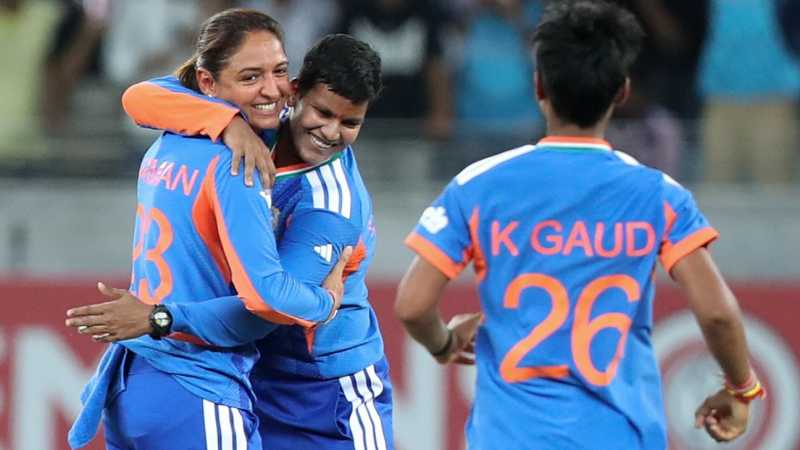
Pakistan were bowled out for 55, their lowest total in T20I cricke. A collapse where they lost six wickets for eight runs in 29 balls set them so far back that they couldn’t even bat out 20 overs. Harmanpreet Kaur, who broke new ground by becoming the first player – male or female – to lead her team 150 times in T20Is, had the time of her life celebrating each wicket and eventually scoring the winning runs as well.
Shree Charani shines
Old-fashioned left-arm spin is having a resurgence. India men have found Manav Suthar. India women already had N Shree Charanin. The No. 1-ranked T20I bowler in the world picked up two wickets in her first over on Saturday.
The flight on the ball drew Gull Feroza out of her crease. The drift in had her looking leg side. The dip and the turn resulted in a leading edge and a simple catch to point. The bowler did everything right. The batter did everything wrong. Shawaal Zulfiqar was the only Pakistan batter to put any kind of pressure on India. Charani had her lbw for 14 off 14 and from there it was a procession.
Pakistan’s batting troubles
Playing their 200th T20I, Pakistan went from 27 for 0 to 35 for 6 before the innings was halfway done. They could not find a risk-free way to score runs, absorbing long periods of dot balls and trying to get out of it by playing low-percentage shots, often against the turn, on a Dubai pitch that was offering plenty of it. Only the openers got to double digits and only Zulfiqar was able to score a run a ball.
Rawat’s support act
Prema Rawat finished with figures of 4-0-9-3. Nineteen of her 24 balls were dots. All of that is remarkable considering she is a legspinner, whose release points tend to be just shy of the perpendicular. Like Shane Warne. From there, they turn their wrist over and it can either be awesome or awful. Rawat’s release point is perpendicular, maybe even beyond it, like Rashid Khan’s. And she doesn’t turn her wrist. For the most part, she just flicks the ball out the front of her hand. This gives her better control at the cost of big turn and in T20Is, that trade-off is well worth it. Nobody could hit Rawat off her line and length and when Sadaf Shamas tried, she got bowled off her pads.
A simple enough chase
Scores:
India Women 57 for 3 in 8.4 overs (Shafali Verma 12, Harmanpreet Kaur 18*, Deepti Sharma 12*; Fatima Sana 3-17) beat Pakistan Women in 18.1 overs 55 (Muneesha Ali 13, Shawal Zulfiqar 14, Shafali Verma 1-10, Shree Charani 3-07, Deepti Sharma 2-05, Prema Rawat 3-09) by seven wickets
(Cricinfo)

UN Delegation Meets Chief of Staff to the President

Afghanistan to host Zimbabwe, Bangladesh in ODI tri-series

Sandhu’s 6 for 7 seals Pakistan’s semi-final spot

INS Udaygiri makes port call in Colombo

Showers in the Uva, Central and Eastern provinces and in Polonnaruwa district

22A: Exclusion of 8 petitions questioned, action filed against SC Registrar, others

‘Dates have the highest sugar content to fight Coronavirus’

Sunday Island 27 December – Headlines

#SundayIsland 17th December – Headlines

Sunday Island – 28th March

Sunday Island Headlines – 21 March

Sunday Island – 21st February – Headlines
-

 News6 days ago
Denied of promotion to SC despite vacancies, justice Gurusinghe retires
-

 Latest News6 days ago
Grade 5 scholarship exam results released
-

 News6 days ago
22A: SC urged to suspend hearing, appoint full bench
-

 Midweek Review7 days ago
The local and global dynamics of Sri Lanka’s 22nd Amendment
-

 News4 days ago
Namal remanded until Sept. 18 over Airbus deal investigation
-

 Latest News3 days ago
Tharanga creates history with Diamond League crown in Brussels
-

 News6 days ago
Govt. seeks NATO assistance
-

 News7 days ago
40 professional organisations and TU oppose proposed 22A