
News
Civil society questions PCoI blaming majority community extremists ‘nourishing’ Islamic extremists


The Easter Sunday Commission has incorrectly and inappropriately labelled majoritarian extremism as well as minoritarian extremism as “Islamic” and “Buddhist” extremism, argues a group of Muslim civil society activists.
M. M. Zuhair PC, former MP, Latheef Farook, Journalist and Author, Mass L. Usuf, Attorney-at-Law and Advocacy Columnist and Mansoor Dahlan, Theology Scholar, issued the following statement in this regard: “The Easter Sunday Commission has said (at page 471) that “The thowheed (Wahhabis) ideology is at the core of the Islamic extremism prevalent in the country. This was further fermented by Buddhist extremism which was not checked at an early stage”. In our view these are unacceptable observations, because as pointed out in our earlier statement we do not subscribe to the Western right wing extremist propagandist narrative of naming and shaming Islam or Buddhism for the extremist views or conduct of a few amongst their respective followers. Erroneous narratives such as “Islamic” extremism or “Buddhist” extremism will be wrongfully exploited before international fora for attack by anti-Sri Lankan interest groups.
“There are in our country, majoritarian extremism as well as minoritarian extremism, adverted to in the Commission’s report but incorrectly and inappropriately stereotyped as “Islamic” and “Buddhist” extremism.
“We also do not accept that ‘thouheed’ or ‘thouheed ideology’ is at the core of extremism prevalent in the country. No doubt there had been differences of opinion within the Muslim community on methodology and ritualistic practices at different times in the country. There had been similar rifts amongst followers of other religions as well. This is a common phenomenon amongst followers of all religions.
“But it is noteworthy that the 21/4 attacks were never against any segment of the Muslims by other Muslims! Majoritarian extremism, intolerance and inciting anti-minority hatred and failure on the part of the authorities to prosecute according to law, some of which have been referred to though inadequately in the report, had led to the violent extremist terrorist attacks of 21/4.
“We do not accept the Commission’s observations above referred to for the reason that incorrect reasoning and erroneous actions thereon may not help the country to avoid a recurrence of similar attacks. Blind implementation of some of the recommendations, we fear may provoke radicalization and communal conflicts. On the other hand actions to be taken, must prevent and not be the new causes for the recurrence of another despicable 21/4!
“It must be pointed out that the composition of the five-member Commission was exclusively pan-Sinhala. The 32-member Commission staff was pan-Sinhala. The Attorney General’s team which assisted the fact finding Commission erroneously described in the report as the “Prosecution” team was pan-Sinhala. The investigation team of 44, except for one retired SSP was pan-Sinhala! Nevertheless the Commission had been forthright (A) to blame (at page 15) extremist groups in the majority community for ‘nourishing Islamic’ extremist groups; (B) to pointedly refer (at page 464) to the rise of “Buddhist” extremism between 2012 and 2015 though blamed only on the BBS; (C) to advert to (at page 361) Buddhist extremist organisations such as BBS as “vocal critics of Islamic extremism and wahhabism in particular”; (D) that the BBS “went beyond targeting the Muslim community in general with hate speech” and identifying two speeches one at Maharagama on 17th February 2013 and the other at Aluthgama in June 2014 containing “without any doubt hate speech”’ (E) that the Attorney General file charges against the hate speech maker; (F) in naming Sihala Rawaya, Mahasohon Balakaya, Sinhale Jathika Balamuluwa and Sinhale Jathika Sanvidanaya among others as “anti-social Sinhala Buddhist Movements” and recommending action.
“Furthermore the Commission report states (at page 29) that the Sufi group “believes that one of their leaders is God”. This is shockingly false. Sufis believe Allah alone as God. We need to remember that Sufism is a well-recognized facet of Islam. So is ‘Thouheed’ which means monotheism or ‘oneness’ of Allah. It is clearly distinguished from the Christian concept of ‘trinity’. Every Muslim believes in the oneness of Allah.
“Sufis as well as ‘Muwahhideens’ who are called by their critics as ‘Wahhabis’ too believe in the oneness of Allah (as opposed to multiple Gods). Though every Sufi and ‘Muwahhideen’ (‘wahabi’) is a believer in the ‘oneness’ or ‘singleness’ of Allah or ‘thowheed’, not every Muslim is required or compelled to practice Sufism or follow the 18th century (1703-1787 ) scholar Muhammed Ibn Abdul Wahhab’s thoughts. Muslims follow the Quran and the Sunnah, meaning the sayings and practices of the Prophet Mohammed. The views of Islamic jurists and scholars may be followed, in given situations, if they are not in conflict with the Quran. We must take care to avoid attacks on Islam, because that will be globally resisted and exploited by interest groups at international fora.”

Latest News
Sun directly overhead Kalpitiya, Talawa, Sinharagama, Galkadawala, Nachchaduwa, Padikaramaduwa, Gomarankalla and Verugal about 12.10 noon today (01)


The sun is going to be directly over the latitudes of Sri Lanka from 28th of August to 07th of September due to its apparent southward relative motion.
The nearest places of Sri Lanka over which the sun is overhead today (01) are Kalpitiya, Talawa, Sinharagama, Galkadawala,
Nachchaduwa, Padikaramaduwa, Gomarankalla and Verugal about 12.10 noon.
… stresses need for action if claims were proved false
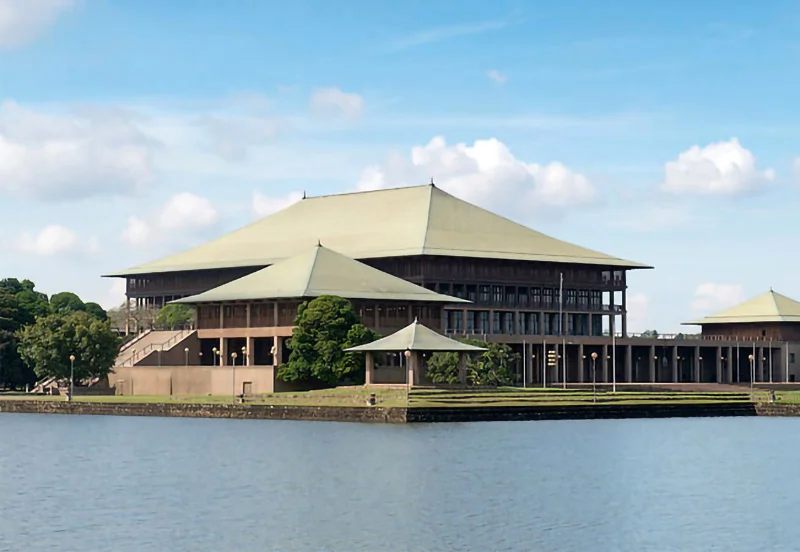
Samagi Jana Balawegaya (SJB) MP Dayasiri Jayasekera has sought a clarification from Speaker Dr. Jagath Wickremaratne regarding several allegations against Chief Justice Preethi Padman Surasena, in Parliament, recently.
In a letter dated 31 August, Jayasekera has asked the Speaker whether he received any documentary evidence from MPs in support of the allegations at issue. The SJB MP has also inquired about the steps taken by the Speaker regarding the allegations and whether the issue had been taken up with the relevant agencies authorised to probe the assets of the CJ and members of his family.
MP Jayasekera confirmed that he had raised the issue with the Speaker, following the accusations relating to the high profile X-Press Pearl case, which received significant public attention in the recent past.
The Kurunegala District MP has also asked the Speaker whether the latter contemplated taking action in case the allegations were proved false to ensure that the dignity of the Chief Justice and the judiciary was safeguarded.
Among the issues raised by MP Jayasekera are the acquisition of valuable property in Colombo by the CJ’s son, the circumstances in which he was able to procure the property, as well as accusations regarding the CJ’s birth certificate, marriage certificate and birth certificates of his children.
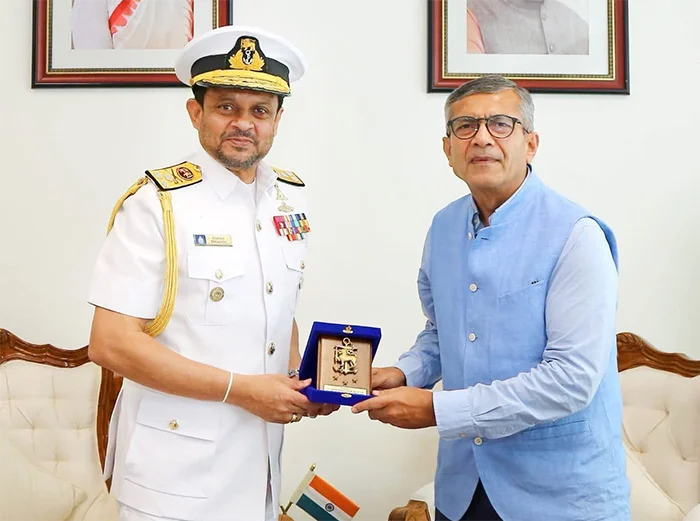
Navy Chief Vice Admiral Damian Fernando held a series of strategic-level discussions with senior Indian defence and military officials during a three-day official visit to New Delhi. He returned on Sunday (30).
Navy Headquarters said that the two sides discussed ways to further strengthen maritime security cooperation between the two Navies in support of security in the Indian Ocean region. They also exchanged views on expanding training opportunities and capacity-building programmes, as well as other areas of bilateral importance.
During his visit to New Delhi, Vice Admiral Fernando also held official discussions with India’s Chief of Defence Staff, General N.S. Raja Subramani, Defence Secretary Rajesh Kumar Singh and Vice Chief of the Air Staff, Air Marshal Ashutosh Dixit and defence industry representatives. Discussions at these meetings focused on bilateral defence cooperation, joint training programmes, and opportunities to enhance air and maritime cooperation in the Indian Ocean Region.
As part of efforts to further expand cooperation in naval training and professional development, Vice Admiral Fernando also met Vice Admiral Sameer Saxena, Flag Officer Commanding-in-Chief of India’s Southern Naval Command, at its headquarters in Kochi, Kerala. The two sides discussed existing naval training exchange programmes and opportunities for introducing and expanding further training initiatives. The meeting followed the Commander of the Sri Lanka Navy’s visit to INS Dronacharya, the Indian Navy’s training establishment where he previously completed the Long Gunnery and Missile Course.

Nahida, Marufa help Bangladesh brush aside Indonesia

Showers will occur in the Western, Sabaragamuwa, Southern and Uva provinces and in Kandy and Nuwara-Eliya districts

Sun directly overhead Kalpitiya, Talawa, Sinharagama, Galkadawala, Nachchaduwa, Padikaramaduwa, Gomarankalla and Verugal about 12.10 noon today (01)

SJB asks what Speaker intended to do about allegations against CJ

Navy Chief attends strategic-level discussions in Delhi

ICRS: Sustained and collective efforts critical to address issue of missing persons

‘Dates have the highest sugar content to fight Coronavirus’

Sunday Island 27 December – Headlines

#SundayIsland 17th December – Headlines

Sunday Island – 28th March

Sunday Island Headlines – 21 March

Sunday Island – 21st February – Headlines
-

 News4 days ago
Eight politicians in drug kingpin probe
-

 Features2 days ago
“Wrap Me Up in My Blazer”— A Gentlemanly Bradby Reminiscence
-

 Business4 days ago
Sri Lanka opens up: A new season of direct connectivity
-

 Features4 days ago
Redefining ageing in Sri Lanka
-
 Features6 days ago
Insights from Chieftains of Uva: Genealogy of two Kandyan Families – Part II
-
 Latest News5 days ago
Nepal-Tibet floods: What happened, what caused them and who is missing?
-

 Editorial6 days ago
Warning of power cuts: El Niño and corruption
-

 Features6 days ago
Export diversification: Missing the wood for the trees – Part I