
Latest News
French MPs take first step to ban social media for under-15s

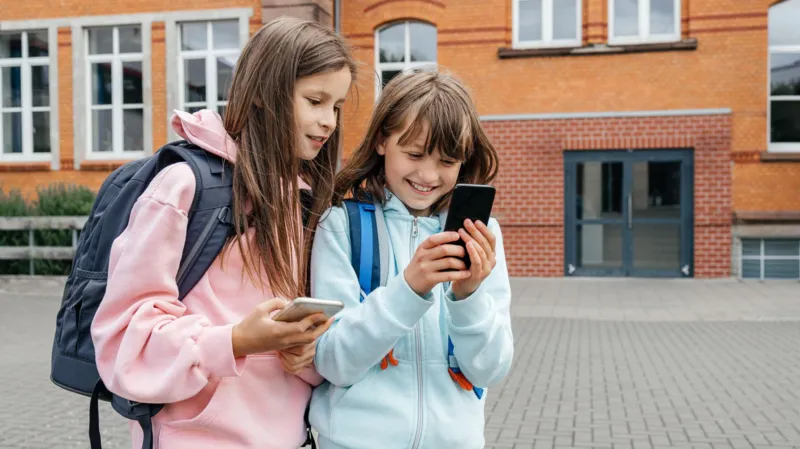
France’s National Assembly has taken a first step towards banning social media access for under-15s, a proposal backed by President Emmanuel Macron.
Lawmakers in the lower house on Monday agreed key elements of the bill, and are now expected to vote on the full text. The bill still needs to be approved by the upper house, the Senate.
If the legislation is passed, young teenagers would not be able to use networks such as Snapchat, Instagram and TikTok.
The French move is part of a worldwide trend towards restricting social networks for children, triggered by growing evidence of the damage they can cause to mental health. A similar law was passed in Australia late last year.
“With this law we will set down a clear limit in society,” said Laure Miller, a lawmaker behind the bill, as quoted by Le Monde.
“We are saying something very simple: social networks are not harmless,” she added. “These networks promised to bring people together. They pulled them apart. They promised to inform. They saturated us with information. They promised to entertain. They shut people away.”
Macron has said he wants the ban in place by the start of the school year in September. “We cannot leave the mental and emotional health of our children in the hands of people whose sole purpose is to make money out of them,” he said last month.
Under the new text, the state media regulator would draw up a list of social media networks that are deemed harmful. These would be simply banned for under 15-year-olds.
A separate list of supposedly less harmful sites would be accessible, but only with explicit parental approval.
The bill is believed to have a good chance of passing, with pro-Macron parties likely to be joined by the centre-right Republicans (LR) as well as the populist right-wing National Rally (RN).
Another clause would ban the use of mobile telephones in senior schools (lycées). The ban is already in effect in junior and middle schools.
If the law is passed, France will need to agree on the mechanism for age-verification. A system is already in place that requires over 18 year-olds to prove their age when accessing online pornography.
In Europe, Denmark, Greece, Spain and Ireland are also considering following the Australian example. Earlier this month, the UK government launched a consultation on banning social media for under 16s.
The basis of the proposed French law is a text drawn up late last year by deputy Laure Miller, who chaired a parliamentary committee enquiry into the psychological effects of TikTok and other networks.
Separately, the government was told to draw up its own legislation, after Macron decided to make the issue a centrepiece of his last year in office.
The president has been sidelined from domestic politics since the Assembly elections which he called in 2024 resulted in a hung parliament, and the social media ban has been a rare chance to court public favour.
For a time the cause risked falling victim to bickering between Macron and his one-time prime minister Gabriel Attal (Miller is an MP from Attal’s party). But in the end the government appears to have rallied behind the Miller bill.
If the text is approved, it will pass before the upper house, the Senate, in the next month. Macron said he had asked the government of Prime Minister Sébastien Lecornu to use a fast-track procedure to get the legislation on the books by September.
Without resort to the fast-track (which permits a single reading as opposed to two in each of the two houses), the law would have little chance of getting past the legislative backlog created by Lecornu’s difficulties in passing a budget.
The bill has already had to be redrafted to take account of questions raised by the Council of State, the body which previews draft legislation to ensure it conforms with French and European law.
A 2023 law which proposed a similar ban on social media for young teenagers proved inoperable after courts decided it broke European law.
[BBC]

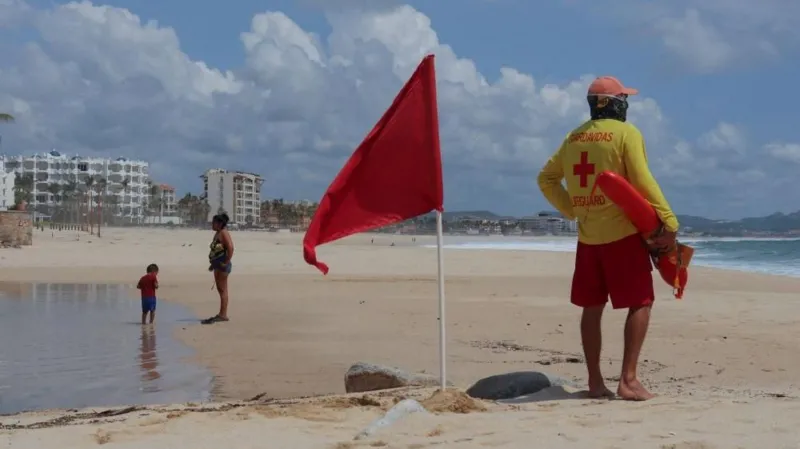
People living on the northern Pacific coast of Mexico are bracing for the arrival of Hurricane Polo, which is forecast to make landfall later on Monday or early on Tuesday.
The category three storm, with maximum sustained winds near 115 mph (185 km/h), is expected to move over the state of Baja California Sur, a region popular with tourists and home to the resort destination of Los Cabos.
Meteorologists at the US-based National Hurricane Center (NHC) have warned of heavy rainfall which could lead to life-threatening flooding and mudslides, especially in areas of steep terrain.
Residents on Sunday stocked up on essentials such as drinking water and food as the storm approached.
The NHC warned of the storm surge Hurricane Polo could unleash, which it said could be accompanied by large and destructive waves.
In Cabo San Lucas, famous for its natural rock arch, the authorities restricted access to the beaches. Some restaurants also closed in the town, which acts as a base for sport fishers and whale watchers.

The regional government of Baja California Sur has ordered schools to remain closed on Monday as a preventive measure.
Governor Víctor Manuel Castro Cosío said temporary shelters had been opened should residents need to be evacuated.
The federal authorities have also deployed thousands of members of the navy and the army along with specialised machinery.
Polo has been slowly moving towards Mexico’s coast line.
Meteorologists said it was being fuelled by extremely warm waters caused by the El Niño climate phenomenon.
(BBC)
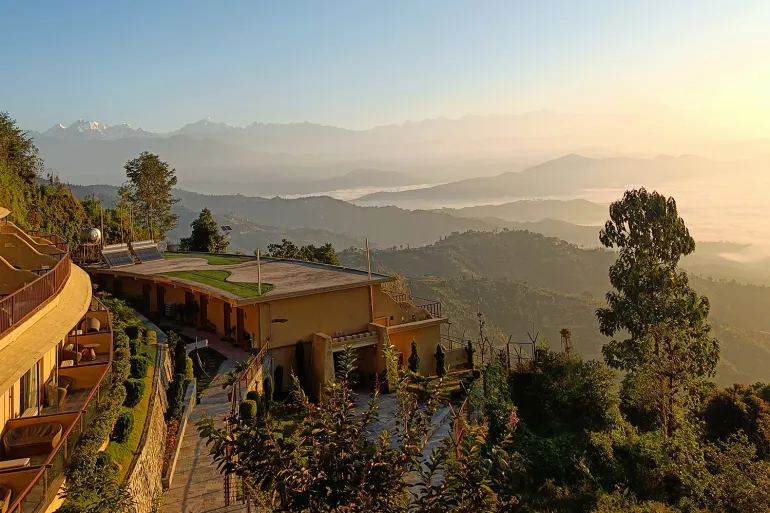
Like every year, Pushpraj Rimal, a tour planner and taxi driver in Nepal’s capital, Kathmandu, was looking forward to September for his business to boom.
But what he got instead was a series of cancellations by tourists after catastrophic floods last month killed more than 1,450 people and destroyed key highways, deeply impacting the Himalayan nation heavily dependent on tourism.
“It is still a lockdown kind of situation,” the 42-year-old told Al Jazeera nearly a month after the disaster.
Pushpraj, who speaks Nepali and Hindi, works on commission for several hotels and trekking companies in Kathmandu and the scenic town of Pokhara, known for its lake nestled in the Annapurna mountain range. Pokhara also serves as a base for Himalayan trekkers.
Nepal’s tourist season peaks after the monsoon ends in August and the skies are clearer. Tourism attracts thousands of international travellers, accounting for nearly 8 percent of Nepal’s gross domestic product and employs more than 1 million people.
Last year, Nepal saw more than 1.15 million tourists visiting the country, nearly a third of them during the September-November season.
But the floods this year, triggered by a glacial mountain collapse along the Nepal-Tibet border in the north, have pushed tourists away from the unaffected areas as well.
“I had rented two cars for two months, but I have done one fourth of the business I usually do in a season. Tourists generally start pouring in from September, but most of them have cancelled this year,” he said.
“I will get no commissions from the hotels or trek organisers, nor has the taxi business worked well. … I am now waiting for the season to end.”
Rimal has two children, Hema, 14, and Rahul, 12, whom he had promised a tablet this Dussain, a prominent Hindu festival that usually falls in October. “But it seems impossible now. I will have to break their hearts and my promise to them for the very first time.”
(Aljazeera)

World javelin leader Rumesh Tharanga lived up to his reputation to win Sri Lanka a highly anticipated gold medal, beating wet weather and track conditions at the Asia Games in Nagoya Japan a little while ago.
He took the lead with a massive 88.33 metres effort in his penultimate throw before sealing the contest with 88.55 metres throw.
He beat a strong field inclusive of reigning Olympic champion Arshad Nadeem of Pakistan. (Reemus Fernando)

Mexico’s Pacific coast braces for Hurricane Polo

Washout against Afghanistan sends India into semi-finals

‘Still a lockdown’: Deadly floods hit Nepal tourism as peak season begins

Tharanga wins highly anticipated Asian Games gold

Tharanga on cusp of Asian Games Gold

Rain threat looms over lopsided India vs Afghanistan quarter-final

‘Dates have the highest sugar content to fight Coronavirus’

Sunday Island 27 December – Headlines

#SundayIsland 17th December – Headlines

Sunday Island – 28th March

Sunday Island Headlines – 21 March

Sunday Island – 21st February – Headlines
-

 News6 days ago
Mastermind Naufer Moulavi among 15 found guilty
-

 Midweek Review6 days ago
Thileepan’s fast unto death: An authentic narrative that many missed
-
 News7 days ago
Protest against setting up of cement factory in highly populated area near BIA
-

 Editorial7 days ago
Trouble beginning in earnest
-

 Latest News5 days ago
Showers above 100 mm are likely at some places in the Western, Sabaragamuwa, Central and North-western provinces and in Galle and Matara Districts
-
Editorial6 days ago
Big Bad Bills
-
 News7 days ago
Police may seek clarification from US
-

 News7 days ago
Govt. confident of 2/3 majority despite NPP split speculation